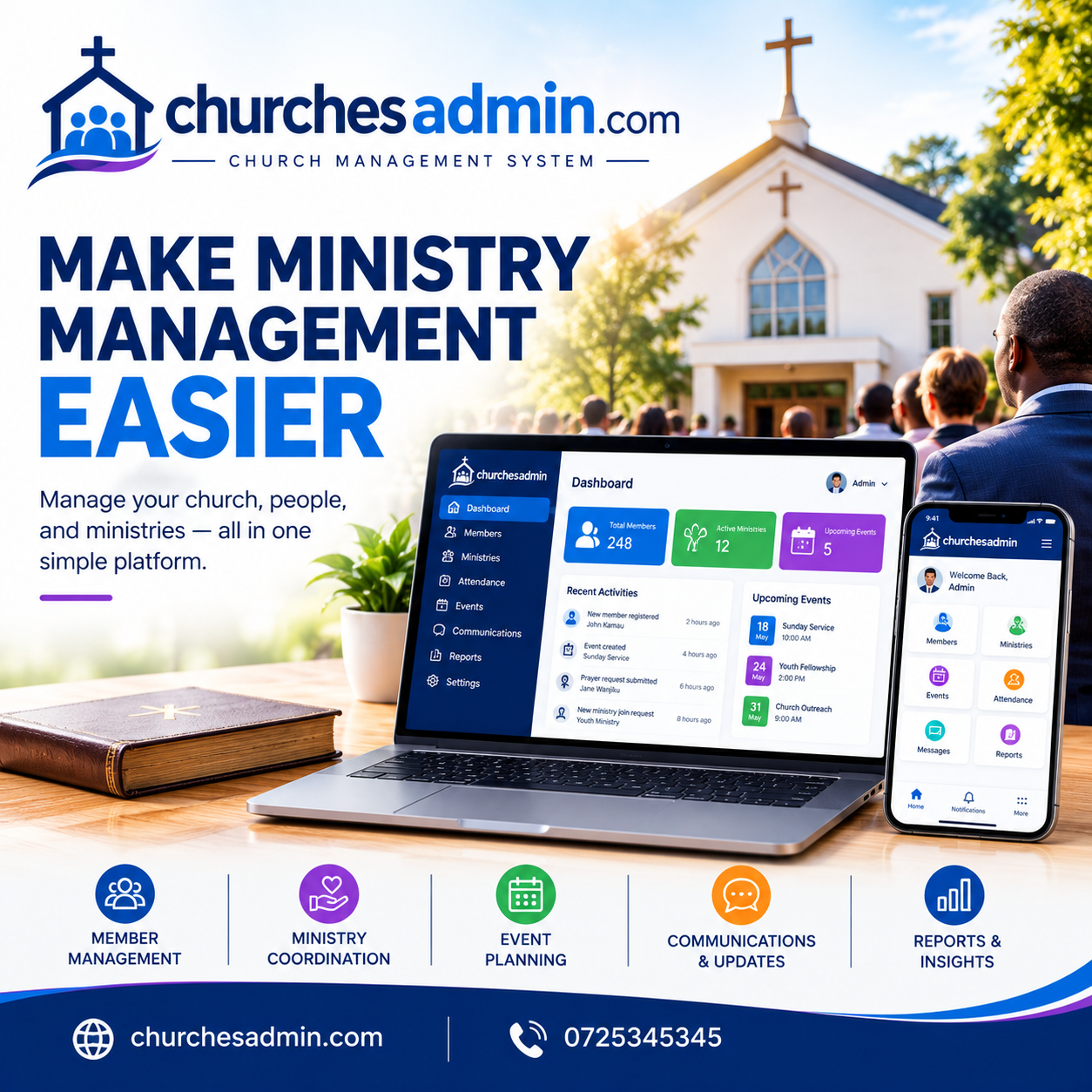
Church Communication Platform for Member Engagement

Church Communication Platform for Member Engagement: 10 Smart Things Buyers Should Compare in 2026

Church Communication Platform for Member Engagement: 10 Smart Things Buyers Should Compare in 2026

Church Communication Platform for Member Engagement is a strong buyer-intent keyword because the visitor is usually comparing providers, prices, features, timelines, and proof before making a decision.

Church Communication Platform for Member Engagement is one of the fresh buyer-focused topics ChurchesAdmin should publish around today because it matches what serious buyers are searching before they request a demo, quote, rollout plan, or implementation support.

For church leaders, administrators, treasurers, and branch coordinators, the real problem is missed member follow-up, incomplete giving records, volunteer clashes, branch-reporting delays, and fragmented communication. A useful article should answer the questions that serious buyers ask before they contact a provider or request a quotation.

Table of Contents

  • Church Communication Platform for Member Engagement
  • Church Communication Platform for Member Engagement service
  • Church Communication Platform for Member Engagement provider
  • Church Communication Platform for Member Engagement company
  • best Church Communication Platform for Member Engagement

Why Church Communication Platform for Member Engagement Matters

This search usually comes from a person who already feels the pain. They may be losing enquiries, wasting time with manual work, struggling with deadlines, missing records, or comparing suppliers before paying.

The right content should make the decision easier. It should explain the problem clearly, show the features that matter, reduce fear, and give the visitor a simple next step.

ChurchesAdmin can use this topic to attract qualified visitors who are closer to buying because they are searching around a real need.

Important Features Buyers Should Expect

  • clear onboarding – helps buyers get a clearer, faster, and more reliable outcome.
  • secure records – helps buyers get a clearer, faster, and more reliable outcome.
  • fast communication – helps buyers get a clearer, faster, and more reliable outcome.
  • mobile access – helps buyers get a clearer, faster, and more reliable outcome.
  • reports and updates – helps buyers get a clearer, faster, and more reliable outcome.
  • support after delivery – helps buyers get a clearer, faster, and more reliable outcome.
  • clear process – buyers should understand what happens before, during, and after delivery.
  • mobile friendly experience – users should be able to access the service or platform comfortably on phones.
  • useful reports or updates – clients should see progress, records, or results without repeated follow-up.
  • reliable support – the provider should support improvements after launch or delivery.

How to Compare Providers

Start with workflow fit. The provider should understand the exact users, tasks, deadlines, records, communication channels, payments, and reports involved.

Next, compare trust. Look for clear service pages, examples, practical explanations, realistic promises, visible contacts, and content that answers real questions.

Then compare long-term value. The best option is not always the lowest quote. The right provider should save time, reduce confusion, improve experience, and make future growth easier.

Mistakes to Avoid

Choosing Only by Price

Cheap work can become expensive if it creates weak design, unclear communication, poor support, missing features, or repeated revisions.

Ignoring the Real User

A solution must work for the people who use it daily. If users find it confusing, the project loses value quickly.

Publishing Thin Content

SEO pages should not only repeat keywords. They should answer buyer questions and explain the next step clearly.

How to Get Started

Write down the exact result you want. Include the users, current problem, documents, deadlines, records, payments, reports, and the main action you want visitors or customers to take.

Then contact a provider with a clear request. Share the pain points and ask for a practical plan, timeline, and support process.

Why Choose ChurchesAdmin?

ChurchesAdmin helps churches manage members, giving, attendance, events, groups, communication, and reports with less manual work.

Frequently Asked Questions

Who needs Church Communication Platform for Member Engagement?

Church Communication Platform for Member Engagement is useful for church leaders, administrators, treasurers, and branch coordinators, especially when the current process is manual, unclear, slow, or hard to scale.

What should buyers compare first?

Compare workflow fit, support, examples, communication, features, timelines, and whether the provider understands the real problem.

Can the solution be customized?

Yes. A serious provider should shape the solution around users, records, reports, content, communication, and growth plans.

Conclusion

Church Communication Platform for Member Engagement is worth targeting because it connects to real buying intent. The best content should educate the visitor, build confidence, and make the next enquiry easy.

Deep Buyer Guide for Church Communication Platform for Member Engagement

Before making a decision, buyers should separate must-have requirements from nice-to-have extras. The must-have items are the features that protect revenue, save time, improve communication, or prevent operational confusion. A buyer searching for Church Communication Platform for Member Engagement is rarely looking for a vague overview. They normally want a practical answer that helps them choose a provider, compare options, understand implementation, and avoid a poor purchase.

The first useful step is to define the current workflow. Write down who starts the request, who approves it, where records are stored, how payments or submissions are confirmed, and which reports management needs at the end of the week or month. This exercise exposes gaps quickly. If the current process depends on scattered spreadsheets, WhatsApp screenshots, email attachments, or one person who remembers everything, the buyer should prioritize a solution that brings those records into one controlled workflow.

The second step is to compare accountability. Good providers explain how the work will be planned, who owns each stage, what information is needed before kickoff, and how progress will be reviewed. Weak providers often jump straight to price without clarifying the operating problem. For ChurchesAdmin, the strongest content should help the reader think like a serious buyer: define the result, protect the user experience, check the support model, and make sure the final solution can keep improving after launch.

The third step is to check reporting and visibility. Many organizations do not only need a service; they need evidence that the service is working. Reports, dashboards, status updates, audit trails, and clear records reduce conflict because teams can see what happened, when it happened, and what still needs attention. This is especially important when the topic affects money, customers, students, members, tenants, voters, staff, stock, or compliance.

Future growth also matters. A good solution should allow more users, more records, more requests, more services, and better reports without forcing the organization to start again from zero. Buyers should ask whether the solution can handle new branches, new counties, new departments, new roles, new payment methods, or new reporting needs. The cheapest first option can become expensive if it blocks growth six months later.

Strong SEO content supports both trust and rankings. A long article should not fill space with repeated claims. It should answer real questions, explain trade-offs, use the focus keyword naturally, link to useful pages, and give the reader a clear next step. When visitors feel that the article understands their problem, they are more likely to enquire, request a quote, book a demo, or compare the provider seriously.

Implementation Checklist

  • Problem definition: describe the current bottleneck and the measurable result the buyer wants.
  • User roles: list administrators, managers, customers, students, members, tenants, staff, or external users who will interact with the process.
  • Data records: define the records, documents, payments, messages, reports, and approvals that must be captured.
  • Security: decide who can view, edit, approve, export, or delete sensitive records.
  • Support: confirm how training, bug fixes, updates, and improvements will be handled after launch.

These details make the buying conversation more productive. Instead of asking only for a general quote, the buyer can explain the workflow and ask for a practical rollout plan. That gives the provider enough context to recommend a sensible scope, timeline, and support path. It also helps the buyer avoid vague proposals that look cheap but leave critical work undefined.

Questions Buyers Should Ask

Buyers should ask how long implementation will take, what content or data must be prepared, how user training will work, and what happens after publishing or launch. They should also ask for examples of similar work, a clear contact path, and an explanation of what is included in the first delivery versus future improvements. These questions protect both sides because they make expectations clear before money changes hands.

Another useful question is how success will be measured. For some buyers, success means more enquiries. For others, it means faster reconciliation, fewer missing records, lower admin workload, better tenant communication, smoother elections, stronger academic support workflows, better farm records, more reliable connectivity, or clearer executive reporting. The right metric depends on the business problem, so the article should connect the keyword to outcomes that matter.

Finally, buyers should check whether the provider understands the local context. In Kenya and surrounding markets, details like M-Pesa, county operations, mobile-first users, WhatsApp communication, school and SACCO structures, landlord workflows, rural connectivity, and small-team administration can shape the success of a project. A generic solution may look good but fail in daily use if it ignores these realities.

Deep Buyer Guide for Church Communication Platform for Member Engagement

Before making a decision, buyers should separate must-have requirements from nice-to-have extras. The must-have items are the features that protect revenue, save time, improve communication, or prevent operational confusion. A buyer searching for Church Communication Platform for Member Engagement is rarely looking for a vague overview. They normally want a practical answer that helps them choose a provider, compare options, understand implementation, and avoid a poor purchase.

The first useful step is to define the current workflow. Write down who starts the request, who approves it, where records are stored, how payments or submissions are confirmed, and which reports management needs at the end of the week or month. This exercise exposes gaps quickly. If the current process depends on scattered spreadsheets, WhatsApp screenshots, email attachments, or one person who remembers everything, the buyer should prioritize a solution that brings those records into one controlled workflow.

The second step is to compare accountability. Good providers explain how the work will be planned, who owns each stage, what information is needed before kickoff, and how progress will be reviewed. Weak providers often jump straight to price without clarifying the operating problem. For ChurchesAdmin, the strongest content should help the reader think like a serious buyer: define the result, protect the user experience, check the support model, and make sure the final solution can keep improving after launch.

The third step is to check reporting and visibility. Many organizations do not only need a service; they need evidence that the service is working. Reports, dashboards, status updates, audit trails, and clear records reduce conflict because teams can see what happened, when it happened, and what still needs attention. This is especially important when the topic affects money, customers, students, members, tenants, voters, staff, stock, or compliance.

Future growth also matters. A good solution should allow more users, more records, more requests, more services, and better reports without forcing the organization to start again from zero. Buyers should ask whether the solution can handle new branches, new counties, new departments, new roles, new payment methods, or new reporting needs. The cheapest first option can become expensive if it blocks growth six months later.

Strong SEO content supports both trust and rankings. A long article should not fill space with repeated claims. It should answer real questions, explain trade-offs, use the focus keyword naturally, link to useful pages, and give the reader a clear next step. When visitors feel that the article understands their problem, they are more likely to enquire, request a quote, book a demo, or compare the provider seriously.

Implementation Checklist

  • Problem definition: describe the current bottleneck and the measurable result the buyer wants.
  • User roles: list administrators, managers, customers, students, members, tenants, staff, or external users who will interact with the process.
  • Data records: define the records, documents, payments, messages, reports, and approvals that must be captured.
  • Security: decide who can view, edit, approve, export, or delete sensitive records.
  • Support: confirm how training, bug fixes, updates, and improvements will be handled after launch.

These details make the buying conversation more productive. Instead of asking only for a general quote, the buyer can explain the workflow and ask for a practical rollout plan. That gives the provider enough context to recommend a sensible scope, timeline, and support path. It also helps the buyer avoid vague proposals that look cheap but leave critical work undefined.

Questions Buyers Should Ask

Buyers should ask how long implementation will take, what content or data must be prepared, how user training will work, and what happens after publishing or launch. They should also ask for examples of similar work, a clear contact path, and an explanation of what is included in the first delivery versus future improvements. These questions protect both sides because they make expectations clear before money changes hands.

Another useful question is how success will be measured. For some buyers, success means more enquiries. For others, it means faster reconciliation, fewer missing records, lower admin workload, better tenant communication, smoother elections, stronger academic support workflows, better farm records, more reliable connectivity, or clearer executive reporting. The right metric depends on the business problem, so the article should connect the keyword to outcomes that matter.

Finally, buyers should check whether the provider understands the local context. In Kenya and surrounding markets, details like M-Pesa, county operations, mobile-first users, WhatsApp communication, school and SACCO structures, landlord workflows, rural connectivity, and small-team administration can shape the success of a project. A generic solution may look good but fail in daily use if it ignores these realities.

Deep Buyer Guide for Church Communication Platform for Member Engagement

Before making a decision, buyers should separate must-have requirements from nice-to-have extras. The must-have items are the features that protect revenue, save time, improve communication, or prevent operational confusion. A buyer searching for Church Communication Platform for Member Engagement is rarely looking for a vague overview. They normally want a practical answer that helps them choose a provider, compare options, understand implementation, and avoid a poor purchase.

The first useful step is to define the current workflow. Write down who starts the request, who approves it, where records are stored, how payments or submissions are confirmed, and which reports management needs at the end of the week or month. This exercise exposes gaps quickly. If the current process depends on scattered spreadsheets, WhatsApp screenshots, email attachments, or one person who remembers everything, the buyer should prioritize a solution that brings those records into one controlled workflow.

The second step is to compare accountability. Good providers explain how the work will be planned, who owns each stage, what information is needed before kickoff, and how progress will be reviewed. Weak providers often jump straight to price without clarifying the operating problem. For ChurchesAdmin, the strongest content should help the reader think like a serious buyer: define the result, protect the user experience, check the support model, and make sure the final solution can keep improving after launch.

The third step is to check reporting and visibility. Many organizations do not only need a service; they need evidence that the service is working. Reports, dashboards, status updates, audit trails, and clear records reduce conflict because teams can see what happened, when it happened, and what still needs attention. This is especially important when the topic affects money, customers, students, members, tenants, voters, staff, stock, or compliance.

Future growth also matters. A good solution should allow more users, more records, more requests, more services, and better reports without forcing the organization to start again from zero. Buyers should ask whether the solution can handle new branches, new counties, new departments, new roles, new payment methods, or new reporting needs. The cheapest first option can become expensive if it blocks growth six months later.

Strong SEO content supports both trust and rankings. A long article should not fill space with repeated claims. It should answer real questions, explain trade-offs, use the focus keyword naturally, link to useful pages, and give the reader a clear next step. When visitors feel that the article understands their problem, they are more likely to enquire, request a quote, book a demo, or compare the provider seriously.

Implementation Checklist

  • Problem definition: describe the current bottleneck and the measurable result the buyer wants.
  • User roles: list administrators, managers, customers, students, members, tenants, staff, or external users who will interact with the process.
  • Data records: define the records, documents, payments, messages, reports, and approvals that must be captured.
  • Security: decide who can view, edit, approve, export, or delete sensitive records.
  • Support: confirm how training, bug fixes, updates, and improvements will be handled after launch.

These details make the buying conversation more productive. Instead of asking only for a general quote, the buyer can explain the workflow and ask for a practical rollout plan. That gives the provider enough context to recommend a sensible scope, timeline, and support path. It also helps the buyer avoid vague proposals that look cheap but leave critical work undefined.

Questions Buyers Should Ask

Buyers should ask how long implementation will take, what content or data must be prepared, how user training will work, and what happens after publishing or launch. They should also ask for examples of similar work, a clear contact path, and an explanation of what is included in the first delivery versus future improvements. These questions protect both sides because they make expectations clear before money changes hands.

Another useful question is how success will be measured. For some buyers, success means more enquiries. For others, it means faster reconciliation, fewer missing records, lower admin workload, better tenant communication, smoother elections, stronger academic support workflows, better farm records, more reliable connectivity, or clearer executive reporting. The right metric depends on the business problem, so the article should connect the keyword to outcomes that matter.

Finally, buyers should check whether the provider understands the local context. In Kenya and surrounding markets, details like M-Pesa, county operations, mobile-first users, WhatsApp communication, school and SACCO structures, landlord workflows, rural connectivity, and small-team administration can shape the success of a project. A generic solution may look good but fail in daily use if it ignores these realities.

Deep Buyer Guide for Church Communication Platform for Member Engagement

Before making a decision, buyers should separate must-have requirements from nice-to-have extras. The must-have items are the features that protect revenue, save time, improve communication, or prevent operational confusion. A buyer searching for Church Communication Platform for Member Engagement is rarely looking for a vague overview. They normally want a practical answer that helps them choose a provider, compare options, understand implementation, and avoid a poor purchase.

The first useful step is to define the current workflow. Write down who starts the request, who approves it, where records are stored, how payments or submissions are confirmed, and which reports management needs at the end of the week or month. This exercise exposes gaps quickly. If the current process depends on scattered spreadsheets, WhatsApp screenshots, email attachments, or one person who remembers everything, the buyer should prioritize a solution that brings those records into one controlled workflow.

The second step is to compare accountability. Good providers explain how the work will be planned, who owns each stage, what information is needed before kickoff, and how progress will be reviewed. Weak providers often jump straight to price without clarifying the operating problem. For ChurchesAdmin, the strongest content should help the reader think like a serious buyer: define the result, protect the user experience, check the support model, and make sure the final solution can keep improving after launch.

The third step is to check reporting and visibility. Many organizations do not only need a service; they need evidence that the service is working. Reports, dashboards, status updates, audit trails, and clear records reduce conflict because teams can see what happened, when it happened, and what still needs attention. This is especially important when the topic affects money, customers, students, members, tenants, voters, staff, stock, or compliance.

Future growth also matters. A good solution should allow more users, more records, more requests, more services, and better reports without forcing the organization to start again from zero. Buyers should ask whether the solution can handle new branches, new counties, new departments, new roles, new payment methods, or new reporting needs. The cheapest first option can become expensive if it blocks growth six months later.

Strong SEO content supports both trust and rankings. A long article should not fill space with repeated claims. It should answer real questions, explain trade-offs, use the focus keyword naturally, link to useful pages, and give the reader a clear next step. When visitors feel that the article understands their problem, they are more likely to enquire, request a quote, book a demo, or compare the provider seriously.

Implementation Checklist

  • Problem definition: describe the current bottleneck and the measurable result the buyer wants.
  • User roles: list administrators, managers, customers, students, members, tenants, staff, or external users who will interact with the process.
  • Data records: define the records, documents, payments, messages, reports, and approvals that must be captured.
  • Security: decide who can view, edit, approve, export, or delete sensitive records.
  • Support: confirm how training, bug fixes, updates, and improvements will be handled after launch.

These details make the buying conversation more productive. Instead of asking only for a general quote, the buyer can explain the workflow and ask for a practical rollout plan. That gives the provider enough context to recommend a sensible scope, timeline, and support path. It also helps the buyer avoid vague proposals that look cheap but leave critical work undefined.

Questions Buyers Should Ask

Buyers should ask how long implementation will take, what content or data must be prepared, how user training will work, and what happens after publishing or launch. They should also ask for examples of similar work, a clear contact path, and an explanation of what is included in the first delivery versus future improvements. These questions protect both sides because they make expectations clear before money changes hands.

Another useful question is how success will be measured. For some buyers, success means more enquiries. For others, it means faster reconciliation, fewer missing records, lower admin workload, better tenant communication, smoother elections, stronger academic support workflows, better farm records, more reliable connectivity, or clearer executive reporting. The right metric depends on the business problem, so the article should connect the keyword to outcomes that matter.

Finally, buyers should check whether the provider understands the local context. In Kenya and surrounding markets, details like M-Pesa, county operations, mobile-first users, WhatsApp communication, school and SACCO structures, landlord workflows, rural connectivity, and small-team administration can shape the success of a project. A generic solution may look good but fail in daily use if it ignores these realities.

Deep Buyer Guide for Church Communication Platform for Member Engagement

Before making a decision, buyers should separate must-have requirements from nice-to-have extras. The must-have items are the features that protect revenue, save time, improve communication, or prevent operational confusion. A buyer searching for Church Communication Platform for Member Engagement is rarely looking for a vague overview. They normally want a practical answer that helps them choose a provider, compare options, understand implementation, and avoid a poor purchase.

The first useful step is to define the current workflow. Write down who starts the request, who approves it, where records are stored, how payments or submissions are confirmed, and which reports management needs at the end of the week or month. This exercise exposes gaps quickly. If the current process depends on scattered spreadsheets, WhatsApp screenshots, email attachments, or one person who remembers everything, the buyer should prioritize a solution that brings those records into one controlled workflow.

The second step is to compare accountability. Good providers explain how the work will be planned, who owns each stage, what information is needed before kickoff, and how progress will be reviewed. Weak providers often jump straight to price without clarifying the operating problem. For ChurchesAdmin, the strongest content should help the reader think like a serious buyer: define the result, protect the user experience, check the support model, and make sure the final solution can keep improving after launch.

The third step is to check reporting and visibility. Many organizations do not only need a service; they need evidence that the service is working. Reports, dashboards, status updates, audit trails, and clear records reduce conflict because teams can see what happened, when it happened, and what still needs attention. This is especially important when the topic affects money, customers, students, members, tenants, voters, staff, stock, or compliance.

Future growth also matters. A good solution should allow more users, more records, more requests, more services, and better reports without forcing the organization to start again from zero. Buyers should ask whether the solution can handle new branches, new counties, new departments, new roles, new payment methods, or new reporting needs. The cheapest first option can become expensive if it blocks growth six months later.

Strong SEO content supports both trust and rankings. A long article should not fill space with repeated claims. It should answer real questions, explain trade-offs, use the focus keyword naturally, link to useful pages, and give the reader a clear next step. When visitors feel that the article understands their problem, they are more likely to enquire, request a quote, book a demo, or compare the provider seriously.

Implementation Checklist

  • Problem definition: describe the current bottleneck and the measurable result the buyer wants.
  • User roles: list administrators, managers, customers, students, members, tenants, staff, or external users who will interact with the process.
  • Data records: define the records, documents, payments, messages, reports, and approvals that must be captured.
  • Security: decide who can view, edit, approve, export, or delete sensitive records.
  • Support: confirm how training, bug fixes, updates, and improvements will be handled after launch.

These details make the buying conversation more productive. Instead of asking only for a general quote, the buyer can explain the workflow and ask for a practical rollout plan. That gives the provider enough context to recommend a sensible scope, timeline, and support path. It also helps the buyer avoid vague proposals that look cheap but leave critical work undefined.

Questions Buyers Should Ask

Buyers should ask how long implementation will take, what content or data must be prepared, how user training will work, and what happens after publishing or launch. They should also ask for examples of similar work, a clear contact path, and an explanation of what is included in the first delivery versus future improvements. These questions protect both sides because they make expectations clear before money changes hands.

Another useful question is how success will be measured. For some buyers, success means more enquiries. For others, it means faster reconciliation, fewer missing records, lower admin workload, better tenant communication, smoother elections, stronger academic support workflows, better farm records, more reliable connectivity, or clearer executive reporting. The right metric depends on the business problem, so the article should connect the keyword to outcomes that matter.

Finally, buyers should check whether the provider understands the local context. In Kenya and surrounding markets, details like M-Pesa, county operations, mobile-first users, WhatsApp communication, school and SACCO structures, landlord workflows, rural connectivity, and small-team administration can shape the success of a project. A generic solution may look good but fail in daily use if it ignores these realities.

Multi Branch Church Reporting System Kenya

Multi Branch Church Reporting System Kenya: 10 Smart Things Buyers Should Compare in 2026

Multi Branch Church Reporting System Kenya: 10 Smart Things Buyers Should Compare in 2026

Multi Branch Church Reporting System Kenya is a strong buyer-intent keyword because the visitor is usually comparing providers, prices, features, timelines, and proof before making a decision.

Multi Branch Church Reporting System Kenya is one of the fresh buyer-focused topics ChurchesAdmin should publish around today because it matches what serious buyers are searching before they request a demo, quote, rollout plan, or implementation support.

For church leaders, administrators, treasurers, and branch coordinators, the real problem is missed member follow-up, incomplete giving records, volunteer clashes, branch-reporting delays, and fragmented communication. A useful article should answer the questions that serious buyers ask before they contact a provider or request a quotation.

Table of Contents

  • Multi Branch Church Reporting System Kenya
  • Multi Branch Church Reporting System Kenya service
  • Multi Branch Church Reporting System Kenya provider
  • Multi Branch Church Reporting System Kenya company
  • best Multi Branch Church Reporting System Kenya

Why Multi Branch Church Reporting System Kenya Matters

This search usually comes from a person who already feels the pain. They may be losing enquiries, wasting time with manual work, struggling with deadlines, missing records, or comparing suppliers before paying.

The right content should make the decision easier. It should explain the problem clearly, show the features that matter, reduce fear, and give the visitor a simple next step.

ChurchesAdmin can use this topic to attract qualified visitors who are closer to buying because they are searching around a real need.

Important Features Buyers Should Expect

  • clear onboarding – helps buyers get a clearer, faster, and more reliable outcome.
  • secure records – helps buyers get a clearer, faster, and more reliable outcome.
  • fast communication – helps buyers get a clearer, faster, and more reliable outcome.
  • mobile access – helps buyers get a clearer, faster, and more reliable outcome.
  • reports and updates – helps buyers get a clearer, faster, and more reliable outcome.
  • support after delivery – helps buyers get a clearer, faster, and more reliable outcome.
  • clear process – buyers should understand what happens before, during, and after delivery.
  • mobile friendly experience – users should be able to access the service or platform comfortably on phones.
  • useful reports or updates – clients should see progress, records, or results without repeated follow-up.
  • reliable support – the provider should support improvements after launch or delivery.

How to Compare Providers

Start with workflow fit. The provider should understand the exact users, tasks, deadlines, records, communication channels, payments, and reports involved.

Next, compare trust. Look for clear service pages, examples, practical explanations, realistic promises, visible contacts, and content that answers real questions.

Then compare long-term value. The best option is not always the lowest quote. The right provider should save time, reduce confusion, improve experience, and make future growth easier.

Mistakes to Avoid

Choosing Only by Price

Cheap work can become expensive if it creates weak design, unclear communication, poor support, missing features, or repeated revisions.

Ignoring the Real User

A solution must work for the people who use it daily. If users find it confusing, the project loses value quickly.

Publishing Thin Content

SEO pages should not only repeat keywords. They should answer buyer questions and explain the next step clearly.

How to Get Started

Write down the exact result you want. Include the users, current problem, documents, deadlines, records, payments, reports, and the main action you want visitors or customers to take.

Then contact a provider with a clear request. Share the pain points and ask for a practical plan, timeline, and support process.

Why Choose ChurchesAdmin?

ChurchesAdmin helps churches manage members, giving, attendance, events, groups, communication, and reports with less manual work.

Frequently Asked Questions

Who needs Multi Branch Church Reporting System Kenya?

Multi Branch Church Reporting System Kenya is useful for church leaders, administrators, treasurers, and branch coordinators, especially when the current process is manual, unclear, slow, or hard to scale.

What should buyers compare first?

Compare workflow fit, support, examples, communication, features, timelines, and whether the provider understands the real problem.

Can the solution be customized?

Yes. A serious provider should shape the solution around users, records, reports, content, communication, and growth plans.

Conclusion

Multi Branch Church Reporting System Kenya is worth targeting because it connects to real buying intent. The best content should educate the visitor, build confidence, and make the next enquiry easy.

Deep Buyer Guide for Multi Branch Church Reporting System Kenya

Before making a decision, buyers should separate must-have requirements from nice-to-have extras. The must-have items are the features that protect revenue, save time, improve communication, or prevent operational confusion. A buyer searching for Multi Branch Church Reporting System Kenya is rarely looking for a vague overview. They normally want a practical answer that helps them choose a provider, compare options, understand implementation, and avoid a poor purchase.

The first useful step is to define the current workflow. Write down who starts the request, who approves it, where records are stored, how payments or submissions are confirmed, and which reports management needs at the end of the week or month. This exercise exposes gaps quickly. If the current process depends on scattered spreadsheets, WhatsApp screenshots, email attachments, or one person who remembers everything, the buyer should prioritize a solution that brings those records into one controlled workflow.

The second step is to compare accountability. Good providers explain how the work will be planned, who owns each stage, what information is needed before kickoff, and how progress will be reviewed. Weak providers often jump straight to price without clarifying the operating problem. For ChurchesAdmin, the strongest content should help the reader think like a serious buyer: define the result, protect the user experience, check the support model, and make sure the final solution can keep improving after launch.

The third step is to check reporting and visibility. Many organizations do not only need a service; they need evidence that the service is working. Reports, dashboards, status updates, audit trails, and clear records reduce conflict because teams can see what happened, when it happened, and what still needs attention. This is especially important when the topic affects money, customers, students, members, tenants, voters, staff, stock, or compliance.

Future growth also matters. A good solution should allow more users, more records, more requests, more services, and better reports without forcing the organization to start again from zero. Buyers should ask whether the solution can handle new branches, new counties, new departments, new roles, new payment methods, or new reporting needs. The cheapest first option can become expensive if it blocks growth six months later.

Strong SEO content supports both trust and rankings. A long article should not fill space with repeated claims. It should answer real questions, explain trade-offs, use the focus keyword naturally, link to useful pages, and give the reader a clear next step. When visitors feel that the article understands their problem, they are more likely to enquire, request a quote, book a demo, or compare the provider seriously.

Implementation Checklist

  • Problem definition: describe the current bottleneck and the measurable result the buyer wants.
  • User roles: list administrators, managers, customers, students, members, tenants, staff, or external users who will interact with the process.
  • Data records: define the records, documents, payments, messages, reports, and approvals that must be captured.
  • Security: decide who can view, edit, approve, export, or delete sensitive records.
  • Support: confirm how training, bug fixes, updates, and improvements will be handled after launch.

These details make the buying conversation more productive. Instead of asking only for a general quote, the buyer can explain the workflow and ask for a practical rollout plan. That gives the provider enough context to recommend a sensible scope, timeline, and support path. It also helps the buyer avoid vague proposals that look cheap but leave critical work undefined.

Questions Buyers Should Ask

Buyers should ask how long implementation will take, what content or data must be prepared, how user training will work, and what happens after publishing or launch. They should also ask for examples of similar work, a clear contact path, and an explanation of what is included in the first delivery versus future improvements. These questions protect both sides because they make expectations clear before money changes hands.

Another useful question is how success will be measured. For some buyers, success means more enquiries. For others, it means faster reconciliation, fewer missing records, lower admin workload, better tenant communication, smoother elections, stronger academic support workflows, better farm records, more reliable connectivity, or clearer executive reporting. The right metric depends on the business problem, so the article should connect the keyword to outcomes that matter.

Finally, buyers should check whether the provider understands the local context. In Kenya and surrounding markets, details like M-Pesa, county operations, mobile-first users, WhatsApp communication, school and SACCO structures, landlord workflows, rural connectivity, and small-team administration can shape the success of a project. A generic solution may look good but fail in daily use if it ignores these realities.

Deep Buyer Guide for Multi Branch Church Reporting System Kenya

Before making a decision, buyers should separate must-have requirements from nice-to-have extras. The must-have items are the features that protect revenue, save time, improve communication, or prevent operational confusion. A buyer searching for Multi Branch Church Reporting System Kenya is rarely looking for a vague overview. They normally want a practical answer that helps them choose a provider, compare options, understand implementation, and avoid a poor purchase.

The first useful step is to define the current workflow. Write down who starts the request, who approves it, where records are stored, how payments or submissions are confirmed, and which reports management needs at the end of the week or month. This exercise exposes gaps quickly. If the current process depends on scattered spreadsheets, WhatsApp screenshots, email attachments, or one person who remembers everything, the buyer should prioritize a solution that brings those records into one controlled workflow.

The second step is to compare accountability. Good providers explain how the work will be planned, who owns each stage, what information is needed before kickoff, and how progress will be reviewed. Weak providers often jump straight to price without clarifying the operating problem. For ChurchesAdmin, the strongest content should help the reader think like a serious buyer: define the result, protect the user experience, check the support model, and make sure the final solution can keep improving after launch.

The third step is to check reporting and visibility. Many organizations do not only need a service; they need evidence that the service is working. Reports, dashboards, status updates, audit trails, and clear records reduce conflict because teams can see what happened, when it happened, and what still needs attention. This is especially important when the topic affects money, customers, students, members, tenants, voters, staff, stock, or compliance.

Future growth also matters. A good solution should allow more users, more records, more requests, more services, and better reports without forcing the organization to start again from zero. Buyers should ask whether the solution can handle new branches, new counties, new departments, new roles, new payment methods, or new reporting needs. The cheapest first option can become expensive if it blocks growth six months later.

Strong SEO content supports both trust and rankings. A long article should not fill space with repeated claims. It should answer real questions, explain trade-offs, use the focus keyword naturally, link to useful pages, and give the reader a clear next step. When visitors feel that the article understands their problem, they are more likely to enquire, request a quote, book a demo, or compare the provider seriously.

Implementation Checklist

  • Problem definition: describe the current bottleneck and the measurable result the buyer wants.
  • User roles: list administrators, managers, customers, students, members, tenants, staff, or external users who will interact with the process.
  • Data records: define the records, documents, payments, messages, reports, and approvals that must be captured.
  • Security: decide who can view, edit, approve, export, or delete sensitive records.
  • Support: confirm how training, bug fixes, updates, and improvements will be handled after launch.

These details make the buying conversation more productive. Instead of asking only for a general quote, the buyer can explain the workflow and ask for a practical rollout plan. That gives the provider enough context to recommend a sensible scope, timeline, and support path. It also helps the buyer avoid vague proposals that look cheap but leave critical work undefined.

Questions Buyers Should Ask

Buyers should ask how long implementation will take, what content or data must be prepared, how user training will work, and what happens after publishing or launch. They should also ask for examples of similar work, a clear contact path, and an explanation of what is included in the first delivery versus future improvements. These questions protect both sides because they make expectations clear before money changes hands.

Another useful question is how success will be measured. For some buyers, success means more enquiries. For others, it means faster reconciliation, fewer missing records, lower admin workload, better tenant communication, smoother elections, stronger academic support workflows, better farm records, more reliable connectivity, or clearer executive reporting. The right metric depends on the business problem, so the article should connect the keyword to outcomes that matter.

Finally, buyers should check whether the provider understands the local context. In Kenya and surrounding markets, details like M-Pesa, county operations, mobile-first users, WhatsApp communication, school and SACCO structures, landlord workflows, rural connectivity, and small-team administration can shape the success of a project. A generic solution may look good but fail in daily use if it ignores these realities.

Deep Buyer Guide for Multi Branch Church Reporting System Kenya

Before making a decision, buyers should separate must-have requirements from nice-to-have extras. The must-have items are the features that protect revenue, save time, improve communication, or prevent operational confusion. A buyer searching for Multi Branch Church Reporting System Kenya is rarely looking for a vague overview. They normally want a practical answer that helps them choose a provider, compare options, understand implementation, and avoid a poor purchase.

The first useful step is to define the current workflow. Write down who starts the request, who approves it, where records are stored, how payments or submissions are confirmed, and which reports management needs at the end of the week or month. This exercise exposes gaps quickly. If the current process depends on scattered spreadsheets, WhatsApp screenshots, email attachments, or one person who remembers everything, the buyer should prioritize a solution that brings those records into one controlled workflow.

The second step is to compare accountability. Good providers explain how the work will be planned, who owns each stage, what information is needed before kickoff, and how progress will be reviewed. Weak providers often jump straight to price without clarifying the operating problem. For ChurchesAdmin, the strongest content should help the reader think like a serious buyer: define the result, protect the user experience, check the support model, and make sure the final solution can keep improving after launch.

The third step is to check reporting and visibility. Many organizations do not only need a service; they need evidence that the service is working. Reports, dashboards, status updates, audit trails, and clear records reduce conflict because teams can see what happened, when it happened, and what still needs attention. This is especially important when the topic affects money, customers, students, members, tenants, voters, staff, stock, or compliance.

Future growth also matters. A good solution should allow more users, more records, more requests, more services, and better reports without forcing the organization to start again from zero. Buyers should ask whether the solution can handle new branches, new counties, new departments, new roles, new payment methods, or new reporting needs. The cheapest first option can become expensive if it blocks growth six months later.

Strong SEO content supports both trust and rankings. A long article should not fill space with repeated claims. It should answer real questions, explain trade-offs, use the focus keyword naturally, link to useful pages, and give the reader a clear next step. When visitors feel that the article understands their problem, they are more likely to enquire, request a quote, book a demo, or compare the provider seriously.

Implementation Checklist

  • Problem definition: describe the current bottleneck and the measurable result the buyer wants.
  • User roles: list administrators, managers, customers, students, members, tenants, staff, or external users who will interact with the process.
  • Data records: define the records, documents, payments, messages, reports, and approvals that must be captured.
  • Security: decide who can view, edit, approve, export, or delete sensitive records.
  • Support: confirm how training, bug fixes, updates, and improvements will be handled after launch.

These details make the buying conversation more productive. Instead of asking only for a general quote, the buyer can explain the workflow and ask for a practical rollout plan. That gives the provider enough context to recommend a sensible scope, timeline, and support path. It also helps the buyer avoid vague proposals that look cheap but leave critical work undefined.

Questions Buyers Should Ask

Buyers should ask how long implementation will take, what content or data must be prepared, how user training will work, and what happens after publishing or launch. They should also ask for examples of similar work, a clear contact path, and an explanation of what is included in the first delivery versus future improvements. These questions protect both sides because they make expectations clear before money changes hands.

Another useful question is how success will be measured. For some buyers, success means more enquiries. For others, it means faster reconciliation, fewer missing records, lower admin workload, better tenant communication, smoother elections, stronger academic support workflows, better farm records, more reliable connectivity, or clearer executive reporting. The right metric depends on the business problem, so the article should connect the keyword to outcomes that matter.

Finally, buyers should check whether the provider understands the local context. In Kenya and surrounding markets, details like M-Pesa, county operations, mobile-first users, WhatsApp communication, school and SACCO structures, landlord workflows, rural connectivity, and small-team administration can shape the success of a project. A generic solution may look good but fail in daily use if it ignores these realities.

Deep Buyer Guide for Multi Branch Church Reporting System Kenya

Before making a decision, buyers should separate must-have requirements from nice-to-have extras. The must-have items are the features that protect revenue, save time, improve communication, or prevent operational confusion. A buyer searching for Multi Branch Church Reporting System Kenya is rarely looking for a vague overview. They normally want a practical answer that helps them choose a provider, compare options, understand implementation, and avoid a poor purchase.

The first useful step is to define the current workflow. Write down who starts the request, who approves it, where records are stored, how payments or submissions are confirmed, and which reports management needs at the end of the week or month. This exercise exposes gaps quickly. If the current process depends on scattered spreadsheets, WhatsApp screenshots, email attachments, or one person who remembers everything, the buyer should prioritize a solution that brings those records into one controlled workflow.

The second step is to compare accountability. Good providers explain how the work will be planned, who owns each stage, what information is needed before kickoff, and how progress will be reviewed. Weak providers often jump straight to price without clarifying the operating problem. For ChurchesAdmin, the strongest content should help the reader think like a serious buyer: define the result, protect the user experience, check the support model, and make sure the final solution can keep improving after launch.

The third step is to check reporting and visibility. Many organizations do not only need a service; they need evidence that the service is working. Reports, dashboards, status updates, audit trails, and clear records reduce conflict because teams can see what happened, when it happened, and what still needs attention. This is especially important when the topic affects money, customers, students, members, tenants, voters, staff, stock, or compliance.

Future growth also matters. A good solution should allow more users, more records, more requests, more services, and better reports without forcing the organization to start again from zero. Buyers should ask whether the solution can handle new branches, new counties, new departments, new roles, new payment methods, or new reporting needs. The cheapest first option can become expensive if it blocks growth six months later.

Strong SEO content supports both trust and rankings. A long article should not fill space with repeated claims. It should answer real questions, explain trade-offs, use the focus keyword naturally, link to useful pages, and give the reader a clear next step. When visitors feel that the article understands their problem, they are more likely to enquire, request a quote, book a demo, or compare the provider seriously.

Implementation Checklist

  • Problem definition: describe the current bottleneck and the measurable result the buyer wants.
  • User roles: list administrators, managers, customers, students, members, tenants, staff, or external users who will interact with the process.
  • Data records: define the records, documents, payments, messages, reports, and approvals that must be captured.
  • Security: decide who can view, edit, approve, export, or delete sensitive records.
  • Support: confirm how training, bug fixes, updates, and improvements will be handled after launch.

These details make the buying conversation more productive. Instead of asking only for a general quote, the buyer can explain the workflow and ask for a practical rollout plan. That gives the provider enough context to recommend a sensible scope, timeline, and support path. It also helps the buyer avoid vague proposals that look cheap but leave critical work undefined.

Questions Buyers Should Ask

Buyers should ask how long implementation will take, what content or data must be prepared, how user training will work, and what happens after publishing or launch. They should also ask for examples of similar work, a clear contact path, and an explanation of what is included in the first delivery versus future improvements. These questions protect both sides because they make expectations clear before money changes hands.

Another useful question is how success will be measured. For some buyers, success means more enquiries. For others, it means faster reconciliation, fewer missing records, lower admin workload, better tenant communication, smoother elections, stronger academic support workflows, better farm records, more reliable connectivity, or clearer executive reporting. The right metric depends on the business problem, so the article should connect the keyword to outcomes that matter.

Finally, buyers should check whether the provider understands the local context. In Kenya and surrounding markets, details like M-Pesa, county operations, mobile-first users, WhatsApp communication, school and SACCO structures, landlord workflows, rural connectivity, and small-team administration can shape the success of a project. A generic solution may look good but fail in daily use if it ignores these realities.

Deep Buyer Guide for Multi Branch Church Reporting System Kenya

Before making a decision, buyers should separate must-have requirements from nice-to-have extras. The must-have items are the features that protect revenue, save time, improve communication, or prevent operational confusion. A buyer searching for Multi Branch Church Reporting System Kenya is rarely looking for a vague overview. They normally want a practical answer that helps them choose a provider, compare options, understand implementation, and avoid a poor purchase.

The first useful step is to define the current workflow. Write down who starts the request, who approves it, where records are stored, how payments or submissions are confirmed, and which reports management needs at the end of the week or month. This exercise exposes gaps quickly. If the current process depends on scattered spreadsheets, WhatsApp screenshots, email attachments, or one person who remembers everything, the buyer should prioritize a solution that brings those records into one controlled workflow.

The second step is to compare accountability. Good providers explain how the work will be planned, who owns each stage, what information is needed before kickoff, and how progress will be reviewed. Weak providers often jump straight to price without clarifying the operating problem. For ChurchesAdmin, the strongest content should help the reader think like a serious buyer: define the result, protect the user experience, check the support model, and make sure the final solution can keep improving after launch.

The third step is to check reporting and visibility. Many organizations do not only need a service; they need evidence that the service is working. Reports, dashboards, status updates, audit trails, and clear records reduce conflict because teams can see what happened, when it happened, and what still needs attention. This is especially important when the topic affects money, customers, students, members, tenants, voters, staff, stock, or compliance.

Future growth also matters. A good solution should allow more users, more records, more requests, more services, and better reports without forcing the organization to start again from zero. Buyers should ask whether the solution can handle new branches, new counties, new departments, new roles, new payment methods, or new reporting needs. The cheapest first option can become expensive if it blocks growth six months later.

Strong SEO content supports both trust and rankings. A long article should not fill space with repeated claims. It should answer real questions, explain trade-offs, use the focus keyword naturally, link to useful pages, and give the reader a clear next step. When visitors feel that the article understands their problem, they are more likely to enquire, request a quote, book a demo, or compare the provider seriously.

Implementation Checklist

  • Problem definition: describe the current bottleneck and the measurable result the buyer wants.
  • User roles: list administrators, managers, customers, students, members, tenants, staff, or external users who will interact with the process.
  • Data records: define the records, documents, payments, messages, reports, and approvals that must be captured.
  • Security: decide who can view, edit, approve, export, or delete sensitive records.
  • Support: confirm how training, bug fixes, updates, and improvements will be handled after launch.

These details make the buying conversation more productive. Instead of asking only for a general quote, the buyer can explain the workflow and ask for a practical rollout plan. That gives the provider enough context to recommend a sensible scope, timeline, and support path. It also helps the buyer avoid vague proposals that look cheap but leave critical work undefined.

Questions Buyers Should Ask

Buyers should ask how long implementation will take, what content or data must be prepared, how user training will work, and what happens after publishing or launch. They should also ask for examples of similar work, a clear contact path, and an explanation of what is included in the first delivery versus future improvements. These questions protect both sides because they make expectations clear before money changes hands.

Another useful question is how success will be measured. For some buyers, success means more enquiries. For others, it means faster reconciliation, fewer missing records, lower admin workload, better tenant communication, smoother elections, stronger academic support workflows, better farm records, more reliable connectivity, or clearer executive reporting. The right metric depends on the business problem, so the article should connect the keyword to outcomes that matter.

Finally, buyers should check whether the provider understands the local context. In Kenya and surrounding markets, details like M-Pesa, county operations, mobile-first users, WhatsApp communication, school and SACCO structures, landlord workflows, rural connectivity, and small-team administration can shape the success of a project. A generic solution may look good but fail in daily use if it ignores these realities.

Church Volunteer Scheduling Software

Church Volunteer Scheduling Software: 10 Smart Things Buyers Should Compare in 2026

Church Volunteer Scheduling Software: 10 Smart Things Buyers Should Compare in 2026

Church Volunteer Scheduling Software is a strong buyer-intent keyword because the visitor is usually comparing providers, prices, features, timelines, and proof before making a decision.

Church Volunteer Scheduling Software is one of the fresh buyer-focused topics ChurchesAdmin should publish around today because it matches what serious buyers are searching before they request a demo, quote, rollout plan, or implementation support.

For church leaders, administrators, treasurers, and branch coordinators, the real problem is missed member follow-up, incomplete giving records, volunteer clashes, branch-reporting delays, and fragmented communication. A useful article should answer the questions that serious buyers ask before they contact a provider or request a quotation.

Table of Contents

  • Church Volunteer Scheduling Software
  • Church Volunteer Scheduling Software service
  • Church Volunteer Scheduling Software provider
  • Church Volunteer Scheduling Software company
  • best Church Volunteer Scheduling Software

Why Church Volunteer Scheduling Software Matters

This search usually comes from a person who already feels the pain. They may be losing enquiries, wasting time with manual work, struggling with deadlines, missing records, or comparing suppliers before paying.

The right content should make the decision easier. It should explain the problem clearly, show the features that matter, reduce fear, and give the visitor a simple next step.

ChurchesAdmin can use this topic to attract qualified visitors who are closer to buying because they are searching around a real need.

Important Features Buyers Should Expect

  • clear onboarding – helps buyers get a clearer, faster, and more reliable outcome.
  • secure records – helps buyers get a clearer, faster, and more reliable outcome.
  • fast communication – helps buyers get a clearer, faster, and more reliable outcome.
  • mobile access – helps buyers get a clearer, faster, and more reliable outcome.
  • reports and updates – helps buyers get a clearer, faster, and more reliable outcome.
  • support after delivery – helps buyers get a clearer, faster, and more reliable outcome.
  • clear process – buyers should understand what happens before, during, and after delivery.
  • mobile friendly experience – users should be able to access the service or platform comfortably on phones.
  • useful reports or updates – clients should see progress, records, or results without repeated follow-up.
  • reliable support – the provider should support improvements after launch or delivery.

How to Compare Providers

Start with workflow fit. The provider should understand the exact users, tasks, deadlines, records, communication channels, payments, and reports involved.

Next, compare trust. Look for clear service pages, examples, practical explanations, realistic promises, visible contacts, and content that answers real questions.

Then compare long-term value. The best option is not always the lowest quote. The right provider should save time, reduce confusion, improve experience, and make future growth easier.

Mistakes to Avoid

Choosing Only by Price

Cheap work can become expensive if it creates weak design, unclear communication, poor support, missing features, or repeated revisions.

Ignoring the Real User

A solution must work for the people who use it daily. If users find it confusing, the project loses value quickly.

Publishing Thin Content

SEO pages should not only repeat keywords. They should answer buyer questions and explain the next step clearly.

How to Get Started

Write down the exact result you want. Include the users, current problem, documents, deadlines, records, payments, reports, and the main action you want visitors or customers to take.

Then contact a provider with a clear request. Share the pain points and ask for a practical plan, timeline, and support process.

Why Choose ChurchesAdmin?

ChurchesAdmin helps churches manage members, giving, attendance, events, groups, communication, and reports with less manual work.

Frequently Asked Questions

Who needs Church Volunteer Scheduling Software?

Church Volunteer Scheduling Software is useful for church leaders, administrators, treasurers, and branch coordinators, especially when the current process is manual, unclear, slow, or hard to scale.

What should buyers compare first?

Compare workflow fit, support, examples, communication, features, timelines, and whether the provider understands the real problem.

Can the solution be customized?

Yes. A serious provider should shape the solution around users, records, reports, content, communication, and growth plans.

Conclusion

Church Volunteer Scheduling Software is worth targeting because it connects to real buying intent. The best content should educate the visitor, build confidence, and make the next enquiry easy.

Deep Buyer Guide for Church Volunteer Scheduling Software

Before making a decision, buyers should separate must-have requirements from nice-to-have extras. The must-have items are the features that protect revenue, save time, improve communication, or prevent operational confusion. A buyer searching for Church Volunteer Scheduling Software is rarely looking for a vague overview. They normally want a practical answer that helps them choose a provider, compare options, understand implementation, and avoid a poor purchase.

The first useful step is to define the current workflow. Write down who starts the request, who approves it, where records are stored, how payments or submissions are confirmed, and which reports management needs at the end of the week or month. This exercise exposes gaps quickly. If the current process depends on scattered spreadsheets, WhatsApp screenshots, email attachments, or one person who remembers everything, the buyer should prioritize a solution that brings those records into one controlled workflow.

The second step is to compare accountability. Good providers explain how the work will be planned, who owns each stage, what information is needed before kickoff, and how progress will be reviewed. Weak providers often jump straight to price without clarifying the operating problem. For ChurchesAdmin, the strongest content should help the reader think like a serious buyer: define the result, protect the user experience, check the support model, and make sure the final solution can keep improving after launch.

The third step is to check reporting and visibility. Many organizations do not only need a service; they need evidence that the service is working. Reports, dashboards, status updates, audit trails, and clear records reduce conflict because teams can see what happened, when it happened, and what still needs attention. This is especially important when the topic affects money, customers, students, members, tenants, voters, staff, stock, or compliance.

Future growth also matters. A good solution should allow more users, more records, more requests, more services, and better reports without forcing the organization to start again from zero. Buyers should ask whether the solution can handle new branches, new counties, new departments, new roles, new payment methods, or new reporting needs. The cheapest first option can become expensive if it blocks growth six months later.

Strong SEO content supports both trust and rankings. A long article should not fill space with repeated claims. It should answer real questions, explain trade-offs, use the focus keyword naturally, link to useful pages, and give the reader a clear next step. When visitors feel that the article understands their problem, they are more likely to enquire, request a quote, book a demo, or compare the provider seriously.

Implementation Checklist

  • Problem definition: describe the current bottleneck and the measurable result the buyer wants.
  • User roles: list administrators, managers, customers, students, members, tenants, staff, or external users who will interact with the process.
  • Data records: define the records, documents, payments, messages, reports, and approvals that must be captured.
  • Security: decide who can view, edit, approve, export, or delete sensitive records.
  • Support: confirm how training, bug fixes, updates, and improvements will be handled after launch.

These details make the buying conversation more productive. Instead of asking only for a general quote, the buyer can explain the workflow and ask for a practical rollout plan. That gives the provider enough context to recommend a sensible scope, timeline, and support path. It also helps the buyer avoid vague proposals that look cheap but leave critical work undefined.

Questions Buyers Should Ask

Buyers should ask how long implementation will take, what content or data must be prepared, how user training will work, and what happens after publishing or launch. They should also ask for examples of similar work, a clear contact path, and an explanation of what is included in the first delivery versus future improvements. These questions protect both sides because they make expectations clear before money changes hands.

Another useful question is how success will be measured. For some buyers, success means more enquiries. For others, it means faster reconciliation, fewer missing records, lower admin workload, better tenant communication, smoother elections, stronger academic support workflows, better farm records, more reliable connectivity, or clearer executive reporting. The right metric depends on the business problem, so the article should connect the keyword to outcomes that matter.

Finally, buyers should check whether the provider understands the local context. In Kenya and surrounding markets, details like M-Pesa, county operations, mobile-first users, WhatsApp communication, school and SACCO structures, landlord workflows, rural connectivity, and small-team administration can shape the success of a project. A generic solution may look good but fail in daily use if it ignores these realities.

Deep Buyer Guide for Church Volunteer Scheduling Software

Before making a decision, buyers should separate must-have requirements from nice-to-have extras. The must-have items are the features that protect revenue, save time, improve communication, or prevent operational confusion. A buyer searching for Church Volunteer Scheduling Software is rarely looking for a vague overview. They normally want a practical answer that helps them choose a provider, compare options, understand implementation, and avoid a poor purchase.

The first useful step is to define the current workflow. Write down who starts the request, who approves it, where records are stored, how payments or submissions are confirmed, and which reports management needs at the end of the week or month. This exercise exposes gaps quickly. If the current process depends on scattered spreadsheets, WhatsApp screenshots, email attachments, or one person who remembers everything, the buyer should prioritize a solution that brings those records into one controlled workflow.

The second step is to compare accountability. Good providers explain how the work will be planned, who owns each stage, what information is needed before kickoff, and how progress will be reviewed. Weak providers often jump straight to price without clarifying the operating problem. For ChurchesAdmin, the strongest content should help the reader think like a serious buyer: define the result, protect the user experience, check the support model, and make sure the final solution can keep improving after launch.

The third step is to check reporting and visibility. Many organizations do not only need a service; they need evidence that the service is working. Reports, dashboards, status updates, audit trails, and clear records reduce conflict because teams can see what happened, when it happened, and what still needs attention. This is especially important when the topic affects money, customers, students, members, tenants, voters, staff, stock, or compliance.

Future growth also matters. A good solution should allow more users, more records, more requests, more services, and better reports without forcing the organization to start again from zero. Buyers should ask whether the solution can handle new branches, new counties, new departments, new roles, new payment methods, or new reporting needs. The cheapest first option can become expensive if it blocks growth six months later.

Strong SEO content supports both trust and rankings. A long article should not fill space with repeated claims. It should answer real questions, explain trade-offs, use the focus keyword naturally, link to useful pages, and give the reader a clear next step. When visitors feel that the article understands their problem, they are more likely to enquire, request a quote, book a demo, or compare the provider seriously.

Implementation Checklist

  • Problem definition: describe the current bottleneck and the measurable result the buyer wants.
  • User roles: list administrators, managers, customers, students, members, tenants, staff, or external users who will interact with the process.
  • Data records: define the records, documents, payments, messages, reports, and approvals that must be captured.
  • Security: decide who can view, edit, approve, export, or delete sensitive records.
  • Support: confirm how training, bug fixes, updates, and improvements will be handled after launch.

These details make the buying conversation more productive. Instead of asking only for a general quote, the buyer can explain the workflow and ask for a practical rollout plan. That gives the provider enough context to recommend a sensible scope, timeline, and support path. It also helps the buyer avoid vague proposals that look cheap but leave critical work undefined.

Questions Buyers Should Ask

Buyers should ask how long implementation will take, what content or data must be prepared, how user training will work, and what happens after publishing or launch. They should also ask for examples of similar work, a clear contact path, and an explanation of what is included in the first delivery versus future improvements. These questions protect both sides because they make expectations clear before money changes hands.

Another useful question is how success will be measured. For some buyers, success means more enquiries. For others, it means faster reconciliation, fewer missing records, lower admin workload, better tenant communication, smoother elections, stronger academic support workflows, better farm records, more reliable connectivity, or clearer executive reporting. The right metric depends on the business problem, so the article should connect the keyword to outcomes that matter.

Finally, buyers should check whether the provider understands the local context. In Kenya and surrounding markets, details like M-Pesa, county operations, mobile-first users, WhatsApp communication, school and SACCO structures, landlord workflows, rural connectivity, and small-team administration can shape the success of a project. A generic solution may look good but fail in daily use if it ignores these realities.

Deep Buyer Guide for Church Volunteer Scheduling Software

Before making a decision, buyers should separate must-have requirements from nice-to-have extras. The must-have items are the features that protect revenue, save time, improve communication, or prevent operational confusion. A buyer searching for Church Volunteer Scheduling Software is rarely looking for a vague overview. They normally want a practical answer that helps them choose a provider, compare options, understand implementation, and avoid a poor purchase.

The first useful step is to define the current workflow. Write down who starts the request, who approves it, where records are stored, how payments or submissions are confirmed, and which reports management needs at the end of the week or month. This exercise exposes gaps quickly. If the current process depends on scattered spreadsheets, WhatsApp screenshots, email attachments, or one person who remembers everything, the buyer should prioritize a solution that brings those records into one controlled workflow.

The second step is to compare accountability. Good providers explain how the work will be planned, who owns each stage, what information is needed before kickoff, and how progress will be reviewed. Weak providers often jump straight to price without clarifying the operating problem. For ChurchesAdmin, the strongest content should help the reader think like a serious buyer: define the result, protect the user experience, check the support model, and make sure the final solution can keep improving after launch.

The third step is to check reporting and visibility. Many organizations do not only need a service; they need evidence that the service is working. Reports, dashboards, status updates, audit trails, and clear records reduce conflict because teams can see what happened, when it happened, and what still needs attention. This is especially important when the topic affects money, customers, students, members, tenants, voters, staff, stock, or compliance.

Future growth also matters. A good solution should allow more users, more records, more requests, more services, and better reports without forcing the organization to start again from zero. Buyers should ask whether the solution can handle new branches, new counties, new departments, new roles, new payment methods, or new reporting needs. The cheapest first option can become expensive if it blocks growth six months later.

Strong SEO content supports both trust and rankings. A long article should not fill space with repeated claims. It should answer real questions, explain trade-offs, use the focus keyword naturally, link to useful pages, and give the reader a clear next step. When visitors feel that the article understands their problem, they are more likely to enquire, request a quote, book a demo, or compare the provider seriously.

Implementation Checklist

  • Problem definition: describe the current bottleneck and the measurable result the buyer wants.
  • User roles: list administrators, managers, customers, students, members, tenants, staff, or external users who will interact with the process.
  • Data records: define the records, documents, payments, messages, reports, and approvals that must be captured.
  • Security: decide who can view, edit, approve, export, or delete sensitive records.
  • Support: confirm how training, bug fixes, updates, and improvements will be handled after launch.

These details make the buying conversation more productive. Instead of asking only for a general quote, the buyer can explain the workflow and ask for a practical rollout plan. That gives the provider enough context to recommend a sensible scope, timeline, and support path. It also helps the buyer avoid vague proposals that look cheap but leave critical work undefined.

Questions Buyers Should Ask

Buyers should ask how long implementation will take, what content or data must be prepared, how user training will work, and what happens after publishing or launch. They should also ask for examples of similar work, a clear contact path, and an explanation of what is included in the first delivery versus future improvements. These questions protect both sides because they make expectations clear before money changes hands.

Another useful question is how success will be measured. For some buyers, success means more enquiries. For others, it means faster reconciliation, fewer missing records, lower admin workload, better tenant communication, smoother elections, stronger academic support workflows, better farm records, more reliable connectivity, or clearer executive reporting. The right metric depends on the business problem, so the article should connect the keyword to outcomes that matter.

Finally, buyers should check whether the provider understands the local context. In Kenya and surrounding markets, details like M-Pesa, county operations, mobile-first users, WhatsApp communication, school and SACCO structures, landlord workflows, rural connectivity, and small-team administration can shape the success of a project. A generic solution may look good but fail in daily use if it ignores these realities.

Deep Buyer Guide for Church Volunteer Scheduling Software

Before making a decision, buyers should separate must-have requirements from nice-to-have extras. The must-have items are the features that protect revenue, save time, improve communication, or prevent operational confusion. A buyer searching for Church Volunteer Scheduling Software is rarely looking for a vague overview. They normally want a practical answer that helps them choose a provider, compare options, understand implementation, and avoid a poor purchase.

The first useful step is to define the current workflow. Write down who starts the request, who approves it, where records are stored, how payments or submissions are confirmed, and which reports management needs at the end of the week or month. This exercise exposes gaps quickly. If the current process depends on scattered spreadsheets, WhatsApp screenshots, email attachments, or one person who remembers everything, the buyer should prioritize a solution that brings those records into one controlled workflow.

The second step is to compare accountability. Good providers explain how the work will be planned, who owns each stage, what information is needed before kickoff, and how progress will be reviewed. Weak providers often jump straight to price without clarifying the operating problem. For ChurchesAdmin, the strongest content should help the reader think like a serious buyer: define the result, protect the user experience, check the support model, and make sure the final solution can keep improving after launch.

The third step is to check reporting and visibility. Many organizations do not only need a service; they need evidence that the service is working. Reports, dashboards, status updates, audit trails, and clear records reduce conflict because teams can see what happened, when it happened, and what still needs attention. This is especially important when the topic affects money, customers, students, members, tenants, voters, staff, stock, or compliance.

Future growth also matters. A good solution should allow more users, more records, more requests, more services, and better reports without forcing the organization to start again from zero. Buyers should ask whether the solution can handle new branches, new counties, new departments, new roles, new payment methods, or new reporting needs. The cheapest first option can become expensive if it blocks growth six months later.

Strong SEO content supports both trust and rankings. A long article should not fill space with repeated claims. It should answer real questions, explain trade-offs, use the focus keyword naturally, link to useful pages, and give the reader a clear next step. When visitors feel that the article understands their problem, they are more likely to enquire, request a quote, book a demo, or compare the provider seriously.

Implementation Checklist

  • Problem definition: describe the current bottleneck and the measurable result the buyer wants.
  • User roles: list administrators, managers, customers, students, members, tenants, staff, or external users who will interact with the process.
  • Data records: define the records, documents, payments, messages, reports, and approvals that must be captured.
  • Security: decide who can view, edit, approve, export, or delete sensitive records.
  • Support: confirm how training, bug fixes, updates, and improvements will be handled after launch.

These details make the buying conversation more productive. Instead of asking only for a general quote, the buyer can explain the workflow and ask for a practical rollout plan. That gives the provider enough context to recommend a sensible scope, timeline, and support path. It also helps the buyer avoid vague proposals that look cheap but leave critical work undefined.

Questions Buyers Should Ask

Buyers should ask how long implementation will take, what content or data must be prepared, how user training will work, and what happens after publishing or launch. They should also ask for examples of similar work, a clear contact path, and an explanation of what is included in the first delivery versus future improvements. These questions protect both sides because they make expectations clear before money changes hands.

Another useful question is how success will be measured. For some buyers, success means more enquiries. For others, it means faster reconciliation, fewer missing records, lower admin workload, better tenant communication, smoother elections, stronger academic support workflows, better farm records, more reliable connectivity, or clearer executive reporting. The right metric depends on the business problem, so the article should connect the keyword to outcomes that matter.

Finally, buyers should check whether the provider understands the local context. In Kenya and surrounding markets, details like M-Pesa, county operations, mobile-first users, WhatsApp communication, school and SACCO structures, landlord workflows, rural connectivity, and small-team administration can shape the success of a project. A generic solution may look good but fail in daily use if it ignores these realities.

Deep Buyer Guide for Church Volunteer Scheduling Software

Before making a decision, buyers should separate must-have requirements from nice-to-have extras. The must-have items are the features that protect revenue, save time, improve communication, or prevent operational confusion. A buyer searching for Church Volunteer Scheduling Software is rarely looking for a vague overview. They normally want a practical answer that helps them choose a provider, compare options, understand implementation, and avoid a poor purchase.

The first useful step is to define the current workflow. Write down who starts the request, who approves it, where records are stored, how payments or submissions are confirmed, and which reports management needs at the end of the week or month. This exercise exposes gaps quickly. If the current process depends on scattered spreadsheets, WhatsApp screenshots, email attachments, or one person who remembers everything, the buyer should prioritize a solution that brings those records into one controlled workflow.

The second step is to compare accountability. Good providers explain how the work will be planned, who owns each stage, what information is needed before kickoff, and how progress will be reviewed. Weak providers often jump straight to price without clarifying the operating problem. For ChurchesAdmin, the strongest content should help the reader think like a serious buyer: define the result, protect the user experience, check the support model, and make sure the final solution can keep improving after launch.

The third step is to check reporting and visibility. Many organizations do not only need a service; they need evidence that the service is working. Reports, dashboards, status updates, audit trails, and clear records reduce conflict because teams can see what happened, when it happened, and what still needs attention. This is especially important when the topic affects money, customers, students, members, tenants, voters, staff, stock, or compliance.

Future growth also matters. A good solution should allow more users, more records, more requests, more services, and better reports without forcing the organization to start again from zero. Buyers should ask whether the solution can handle new branches, new counties, new departments, new roles, new payment methods, or new reporting needs. The cheapest first option can become expensive if it blocks growth six months later.

Strong SEO content supports both trust and rankings. A long article should not fill space with repeated claims. It should answer real questions, explain trade-offs, use the focus keyword naturally, link to useful pages, and give the reader a clear next step. When visitors feel that the article understands their problem, they are more likely to enquire, request a quote, book a demo, or compare the provider seriously.

Implementation Checklist

  • Problem definition: describe the current bottleneck and the measurable result the buyer wants.
  • User roles: list administrators, managers, customers, students, members, tenants, staff, or external users who will interact with the process.
  • Data records: define the records, documents, payments, messages, reports, and approvals that must be captured.
  • Security: decide who can view, edit, approve, export, or delete sensitive records.
  • Support: confirm how training, bug fixes, updates, and improvements will be handled after launch.

These details make the buying conversation more productive. Instead of asking only for a general quote, the buyer can explain the workflow and ask for a practical rollout plan. That gives the provider enough context to recommend a sensible scope, timeline, and support path. It also helps the buyer avoid vague proposals that look cheap but leave critical work undefined.

Questions Buyers Should Ask

Buyers should ask how long implementation will take, what content or data must be prepared, how user training will work, and what happens after publishing or launch. They should also ask for examples of similar work, a clear contact path, and an explanation of what is included in the first delivery versus future improvements. These questions protect both sides because they make expectations clear before money changes hands.

Another useful question is how success will be measured. For some buyers, success means more enquiries. For others, it means faster reconciliation, fewer missing records, lower admin workload, better tenant communication, smoother elections, stronger academic support workflows, better farm records, more reliable connectivity, or clearer executive reporting. The right metric depends on the business problem, so the article should connect the keyword to outcomes that matter.

Finally, buyers should check whether the provider understands the local context. In Kenya and surrounding markets, details like M-Pesa, county operations, mobile-first users, WhatsApp communication, school and SACCO structures, landlord workflows, rural connectivity, and small-team administration can shape the success of a project. A generic solution may look good but fail in daily use if it ignores these realities.

Digital Giving Records for Churches Kenya

Digital Giving Records for Churches Kenya: 10 Smart Things Buyers Should Compare in 2026

Digital Giving Records for Churches Kenya: 10 Smart Things Buyers Should Compare in 2026

Digital Giving Records for Churches Kenya is a strong buyer-intent keyword because the visitor is usually comparing providers, prices, features, timelines, and proof before making a decision.

Digital Giving Records for Churches Kenya is one of the fresh buyer-focused topics ChurchesAdmin should publish around today because it matches what serious buyers are searching before they request a demo, quote, rollout plan, or implementation support.

For church leaders, administrators, treasurers, and branch coordinators, the real problem is missed member follow-up, incomplete giving records, volunteer clashes, branch-reporting delays, and fragmented communication. A useful article should answer the questions that serious buyers ask before they contact a provider or request a quotation.

Table of Contents

  • Digital Giving Records for Churches Kenya
  • Digital Giving Records for Churches Kenya service
  • Digital Giving Records for Churches Kenya provider
  • Digital Giving Records for Churches Kenya company
  • best Digital Giving Records for Churches Kenya

Why Digital Giving Records for Churches Kenya Matters

This search usually comes from a person who already feels the pain. They may be losing enquiries, wasting time with manual work, struggling with deadlines, missing records, or comparing suppliers before paying.

The right content should make the decision easier. It should explain the problem clearly, show the features that matter, reduce fear, and give the visitor a simple next step.

ChurchesAdmin can use this topic to attract qualified visitors who are closer to buying because they are searching around a real need.

Important Features Buyers Should Expect

  • clear onboarding – helps buyers get a clearer, faster, and more reliable outcome.
  • secure records – helps buyers get a clearer, faster, and more reliable outcome.
  • fast communication – helps buyers get a clearer, faster, and more reliable outcome.
  • mobile access – helps buyers get a clearer, faster, and more reliable outcome.
  • reports and updates – helps buyers get a clearer, faster, and more reliable outcome.
  • support after delivery – helps buyers get a clearer, faster, and more reliable outcome.
  • clear process – buyers should understand what happens before, during, and after delivery.
  • mobile friendly experience – users should be able to access the service or platform comfortably on phones.
  • useful reports or updates – clients should see progress, records, or results without repeated follow-up.
  • reliable support – the provider should support improvements after launch or delivery.

How to Compare Providers

Start with workflow fit. The provider should understand the exact users, tasks, deadlines, records, communication channels, payments, and reports involved.

Next, compare trust. Look for clear service pages, examples, practical explanations, realistic promises, visible contacts, and content that answers real questions.

Then compare long-term value. The best option is not always the lowest quote. The right provider should save time, reduce confusion, improve experience, and make future growth easier.

Mistakes to Avoid

Choosing Only by Price

Cheap work can become expensive if it creates weak design, unclear communication, poor support, missing features, or repeated revisions.

Ignoring the Real User

A solution must work for the people who use it daily. If users find it confusing, the project loses value quickly.

Publishing Thin Content

SEO pages should not only repeat keywords. They should answer buyer questions and explain the next step clearly.

How to Get Started

Write down the exact result you want. Include the users, current problem, documents, deadlines, records, payments, reports, and the main action you want visitors or customers to take.

Then contact a provider with a clear request. Share the pain points and ask for a practical plan, timeline, and support process.

Why Choose ChurchesAdmin?

ChurchesAdmin helps churches manage members, giving, attendance, events, groups, communication, and reports with less manual work.

Frequently Asked Questions

Who needs Digital Giving Records for Churches Kenya?

Digital Giving Records for Churches Kenya is useful for church leaders, administrators, treasurers, and branch coordinators, especially when the current process is manual, unclear, slow, or hard to scale.

What should buyers compare first?

Compare workflow fit, support, examples, communication, features, timelines, and whether the provider understands the real problem.

Can the solution be customized?

Yes. A serious provider should shape the solution around users, records, reports, content, communication, and growth plans.

Conclusion

Digital Giving Records for Churches Kenya is worth targeting because it connects to real buying intent. The best content should educate the visitor, build confidence, and make the next enquiry easy.

Deep Buyer Guide for Digital Giving Records for Churches Kenya

Before making a decision, buyers should separate must-have requirements from nice-to-have extras. The must-have items are the features that protect revenue, save time, improve communication, or prevent operational confusion. A buyer searching for Digital Giving Records for Churches Kenya is rarely looking for a vague overview. They normally want a practical answer that helps them choose a provider, compare options, understand implementation, and avoid a poor purchase.

The first useful step is to define the current workflow. Write down who starts the request, who approves it, where records are stored, how payments or submissions are confirmed, and which reports management needs at the end of the week or month. This exercise exposes gaps quickly. If the current process depends on scattered spreadsheets, WhatsApp screenshots, email attachments, or one person who remembers everything, the buyer should prioritize a solution that brings those records into one controlled workflow.

The second step is to compare accountability. Good providers explain how the work will be planned, who owns each stage, what information is needed before kickoff, and how progress will be reviewed. Weak providers often jump straight to price without clarifying the operating problem. For ChurchesAdmin, the strongest content should help the reader think like a serious buyer: define the result, protect the user experience, check the support model, and make sure the final solution can keep improving after launch.

The third step is to check reporting and visibility. Many organizations do not only need a service; they need evidence that the service is working. Reports, dashboards, status updates, audit trails, and clear records reduce conflict because teams can see what happened, when it happened, and what still needs attention. This is especially important when the topic affects money, customers, students, members, tenants, voters, staff, stock, or compliance.

Future growth also matters. A good solution should allow more users, more records, more requests, more services, and better reports without forcing the organization to start again from zero. Buyers should ask whether the solution can handle new branches, new counties, new departments, new roles, new payment methods, or new reporting needs. The cheapest first option can become expensive if it blocks growth six months later.

Strong SEO content supports both trust and rankings. A long article should not fill space with repeated claims. It should answer real questions, explain trade-offs, use the focus keyword naturally, link to useful pages, and give the reader a clear next step. When visitors feel that the article understands their problem, they are more likely to enquire, request a quote, book a demo, or compare the provider seriously.

Implementation Checklist

  • Problem definition: describe the current bottleneck and the measurable result the buyer wants.
  • User roles: list administrators, managers, customers, students, members, tenants, staff, or external users who will interact with the process.
  • Data records: define the records, documents, payments, messages, reports, and approvals that must be captured.
  • Security: decide who can view, edit, approve, export, or delete sensitive records.
  • Support: confirm how training, bug fixes, updates, and improvements will be handled after launch.

These details make the buying conversation more productive. Instead of asking only for a general quote, the buyer can explain the workflow and ask for a practical rollout plan. That gives the provider enough context to recommend a sensible scope, timeline, and support path. It also helps the buyer avoid vague proposals that look cheap but leave critical work undefined.

Questions Buyers Should Ask

Buyers should ask how long implementation will take, what content or data must be prepared, how user training will work, and what happens after publishing or launch. They should also ask for examples of similar work, a clear contact path, and an explanation of what is included in the first delivery versus future improvements. These questions protect both sides because they make expectations clear before money changes hands.

Another useful question is how success will be measured. For some buyers, success means more enquiries. For others, it means faster reconciliation, fewer missing records, lower admin workload, better tenant communication, smoother elections, stronger academic support workflows, better farm records, more reliable connectivity, or clearer executive reporting. The right metric depends on the business problem, so the article should connect the keyword to outcomes that matter.

Finally, buyers should check whether the provider understands the local context. In Kenya and surrounding markets, details like M-Pesa, county operations, mobile-first users, WhatsApp communication, school and SACCO structures, landlord workflows, rural connectivity, and small-team administration can shape the success of a project. A generic solution may look good but fail in daily use if it ignores these realities.

Deep Buyer Guide for Digital Giving Records for Churches Kenya

Before making a decision, buyers should separate must-have requirements from nice-to-have extras. The must-have items are the features that protect revenue, save time, improve communication, or prevent operational confusion. A buyer searching for Digital Giving Records for Churches Kenya is rarely looking for a vague overview. They normally want a practical answer that helps them choose a provider, compare options, understand implementation, and avoid a poor purchase.

The first useful step is to define the current workflow. Write down who starts the request, who approves it, where records are stored, how payments or submissions are confirmed, and which reports management needs at the end of the week or month. This exercise exposes gaps quickly. If the current process depends on scattered spreadsheets, WhatsApp screenshots, email attachments, or one person who remembers everything, the buyer should prioritize a solution that brings those records into one controlled workflow.

The second step is to compare accountability. Good providers explain how the work will be planned, who owns each stage, what information is needed before kickoff, and how progress will be reviewed. Weak providers often jump straight to price without clarifying the operating problem. For ChurchesAdmin, the strongest content should help the reader think like a serious buyer: define the result, protect the user experience, check the support model, and make sure the final solution can keep improving after launch.

The third step is to check reporting and visibility. Many organizations do not only need a service; they need evidence that the service is working. Reports, dashboards, status updates, audit trails, and clear records reduce conflict because teams can see what happened, when it happened, and what still needs attention. This is especially important when the topic affects money, customers, students, members, tenants, voters, staff, stock, or compliance.

Future growth also matters. A good solution should allow more users, more records, more requests, more services, and better reports without forcing the organization to start again from zero. Buyers should ask whether the solution can handle new branches, new counties, new departments, new roles, new payment methods, or new reporting needs. The cheapest first option can become expensive if it blocks growth six months later.

Strong SEO content supports both trust and rankings. A long article should not fill space with repeated claims. It should answer real questions, explain trade-offs, use the focus keyword naturally, link to useful pages, and give the reader a clear next step. When visitors feel that the article understands their problem, they are more likely to enquire, request a quote, book a demo, or compare the provider seriously.

Implementation Checklist

  • Problem definition: describe the current bottleneck and the measurable result the buyer wants.
  • User roles: list administrators, managers, customers, students, members, tenants, staff, or external users who will interact with the process.
  • Data records: define the records, documents, payments, messages, reports, and approvals that must be captured.
  • Security: decide who can view, edit, approve, export, or delete sensitive records.
  • Support: confirm how training, bug fixes, updates, and improvements will be handled after launch.

These details make the buying conversation more productive. Instead of asking only for a general quote, the buyer can explain the workflow and ask for a practical rollout plan. That gives the provider enough context to recommend a sensible scope, timeline, and support path. It also helps the buyer avoid vague proposals that look cheap but leave critical work undefined.

Questions Buyers Should Ask

Buyers should ask how long implementation will take, what content or data must be prepared, how user training will work, and what happens after publishing or launch. They should also ask for examples of similar work, a clear contact path, and an explanation of what is included in the first delivery versus future improvements. These questions protect both sides because they make expectations clear before money changes hands.

Another useful question is how success will be measured. For some buyers, success means more enquiries. For others, it means faster reconciliation, fewer missing records, lower admin workload, better tenant communication, smoother elections, stronger academic support workflows, better farm records, more reliable connectivity, or clearer executive reporting. The right metric depends on the business problem, so the article should connect the keyword to outcomes that matter.

Finally, buyers should check whether the provider understands the local context. In Kenya and surrounding markets, details like M-Pesa, county operations, mobile-first users, WhatsApp communication, school and SACCO structures, landlord workflows, rural connectivity, and small-team administration can shape the success of a project. A generic solution may look good but fail in daily use if it ignores these realities.

Deep Buyer Guide for Digital Giving Records for Churches Kenya

Before making a decision, buyers should separate must-have requirements from nice-to-have extras. The must-have items are the features that protect revenue, save time, improve communication, or prevent operational confusion. A buyer searching for Digital Giving Records for Churches Kenya is rarely looking for a vague overview. They normally want a practical answer that helps them choose a provider, compare options, understand implementation, and avoid a poor purchase.

The first useful step is to define the current workflow. Write down who starts the request, who approves it, where records are stored, how payments or submissions are confirmed, and which reports management needs at the end of the week or month. This exercise exposes gaps quickly. If the current process depends on scattered spreadsheets, WhatsApp screenshots, email attachments, or one person who remembers everything, the buyer should prioritize a solution that brings those records into one controlled workflow.

The second step is to compare accountability. Good providers explain how the work will be planned, who owns each stage, what information is needed before kickoff, and how progress will be reviewed. Weak providers often jump straight to price without clarifying the operating problem. For ChurchesAdmin, the strongest content should help the reader think like a serious buyer: define the result, protect the user experience, check the support model, and make sure the final solution can keep improving after launch.

The third step is to check reporting and visibility. Many organizations do not only need a service; they need evidence that the service is working. Reports, dashboards, status updates, audit trails, and clear records reduce conflict because teams can see what happened, when it happened, and what still needs attention. This is especially important when the topic affects money, customers, students, members, tenants, voters, staff, stock, or compliance.

Future growth also matters. A good solution should allow more users, more records, more requests, more services, and better reports without forcing the organization to start again from zero. Buyers should ask whether the solution can handle new branches, new counties, new departments, new roles, new payment methods, or new reporting needs. The cheapest first option can become expensive if it blocks growth six months later.

Strong SEO content supports both trust and rankings. A long article should not fill space with repeated claims. It should answer real questions, explain trade-offs, use the focus keyword naturally, link to useful pages, and give the reader a clear next step. When visitors feel that the article understands their problem, they are more likely to enquire, request a quote, book a demo, or compare the provider seriously.

Implementation Checklist

  • Problem definition: describe the current bottleneck and the measurable result the buyer wants.
  • User roles: list administrators, managers, customers, students, members, tenants, staff, or external users who will interact with the process.
  • Data records: define the records, documents, payments, messages, reports, and approvals that must be captured.
  • Security: decide who can view, edit, approve, export, or delete sensitive records.
  • Support: confirm how training, bug fixes, updates, and improvements will be handled after launch.

These details make the buying conversation more productive. Instead of asking only for a general quote, the buyer can explain the workflow and ask for a practical rollout plan. That gives the provider enough context to recommend a sensible scope, timeline, and support path. It also helps the buyer avoid vague proposals that look cheap but leave critical work undefined.

Questions Buyers Should Ask

Buyers should ask how long implementation will take, what content or data must be prepared, how user training will work, and what happens after publishing or launch. They should also ask for examples of similar work, a clear contact path, and an explanation of what is included in the first delivery versus future improvements. These questions protect both sides because they make expectations clear before money changes hands.

Another useful question is how success will be measured. For some buyers, success means more enquiries. For others, it means faster reconciliation, fewer missing records, lower admin workload, better tenant communication, smoother elections, stronger academic support workflows, better farm records, more reliable connectivity, or clearer executive reporting. The right metric depends on the business problem, so the article should connect the keyword to outcomes that matter.

Finally, buyers should check whether the provider understands the local context. In Kenya and surrounding markets, details like M-Pesa, county operations, mobile-first users, WhatsApp communication, school and SACCO structures, landlord workflows, rural connectivity, and small-team administration can shape the success of a project. A generic solution may look good but fail in daily use if it ignores these realities.

Deep Buyer Guide for Digital Giving Records for Churches Kenya

Before making a decision, buyers should separate must-have requirements from nice-to-have extras. The must-have items are the features that protect revenue, save time, improve communication, or prevent operational confusion. A buyer searching for Digital Giving Records for Churches Kenya is rarely looking for a vague overview. They normally want a practical answer that helps them choose a provider, compare options, understand implementation, and avoid a poor purchase.

The first useful step is to define the current workflow. Write down who starts the request, who approves it, where records are stored, how payments or submissions are confirmed, and which reports management needs at the end of the week or month. This exercise exposes gaps quickly. If the current process depends on scattered spreadsheets, WhatsApp screenshots, email attachments, or one person who remembers everything, the buyer should prioritize a solution that brings those records into one controlled workflow.

The second step is to compare accountability. Good providers explain how the work will be planned, who owns each stage, what information is needed before kickoff, and how progress will be reviewed. Weak providers often jump straight to price without clarifying the operating problem. For ChurchesAdmin, the strongest content should help the reader think like a serious buyer: define the result, protect the user experience, check the support model, and make sure the final solution can keep improving after launch.

The third step is to check reporting and visibility. Many organizations do not only need a service; they need evidence that the service is working. Reports, dashboards, status updates, audit trails, and clear records reduce conflict because teams can see what happened, when it happened, and what still needs attention. This is especially important when the topic affects money, customers, students, members, tenants, voters, staff, stock, or compliance.

Future growth also matters. A good solution should allow more users, more records, more requests, more services, and better reports without forcing the organization to start again from zero. Buyers should ask whether the solution can handle new branches, new counties, new departments, new roles, new payment methods, or new reporting needs. The cheapest first option can become expensive if it blocks growth six months later.

Strong SEO content supports both trust and rankings. A long article should not fill space with repeated claims. It should answer real questions, explain trade-offs, use the focus keyword naturally, link to useful pages, and give the reader a clear next step. When visitors feel that the article understands their problem, they are more likely to enquire, request a quote, book a demo, or compare the provider seriously.

Implementation Checklist

  • Problem definition: describe the current bottleneck and the measurable result the buyer wants.
  • User roles: list administrators, managers, customers, students, members, tenants, staff, or external users who will interact with the process.
  • Data records: define the records, documents, payments, messages, reports, and approvals that must be captured.
  • Security: decide who can view, edit, approve, export, or delete sensitive records.
  • Support: confirm how training, bug fixes, updates, and improvements will be handled after launch.

These details make the buying conversation more productive. Instead of asking only for a general quote, the buyer can explain the workflow and ask for a practical rollout plan. That gives the provider enough context to recommend a sensible scope, timeline, and support path. It also helps the buyer avoid vague proposals that look cheap but leave critical work undefined.

Questions Buyers Should Ask

Buyers should ask how long implementation will take, what content or data must be prepared, how user training will work, and what happens after publishing or launch. They should also ask for examples of similar work, a clear contact path, and an explanation of what is included in the first delivery versus future improvements. These questions protect both sides because they make expectations clear before money changes hands.

Another useful question is how success will be measured. For some buyers, success means more enquiries. For others, it means faster reconciliation, fewer missing records, lower admin workload, better tenant communication, smoother elections, stronger academic support workflows, better farm records, more reliable connectivity, or clearer executive reporting. The right metric depends on the business problem, so the article should connect the keyword to outcomes that matter.

Finally, buyers should check whether the provider understands the local context. In Kenya and surrounding markets, details like M-Pesa, county operations, mobile-first users, WhatsApp communication, school and SACCO structures, landlord workflows, rural connectivity, and small-team administration can shape the success of a project. A generic solution may look good but fail in daily use if it ignores these realities.

Deep Buyer Guide for Digital Giving Records for Churches Kenya

Before making a decision, buyers should separate must-have requirements from nice-to-have extras. The must-have items are the features that protect revenue, save time, improve communication, or prevent operational confusion. A buyer searching for Digital Giving Records for Churches Kenya is rarely looking for a vague overview. They normally want a practical answer that helps them choose a provider, compare options, understand implementation, and avoid a poor purchase.

The first useful step is to define the current workflow. Write down who starts the request, who approves it, where records are stored, how payments or submissions are confirmed, and which reports management needs at the end of the week or month. This exercise exposes gaps quickly. If the current process depends on scattered spreadsheets, WhatsApp screenshots, email attachments, or one person who remembers everything, the buyer should prioritize a solution that brings those records into one controlled workflow.

The second step is to compare accountability. Good providers explain how the work will be planned, who owns each stage, what information is needed before kickoff, and how progress will be reviewed. Weak providers often jump straight to price without clarifying the operating problem. For ChurchesAdmin, the strongest content should help the reader think like a serious buyer: define the result, protect the user experience, check the support model, and make sure the final solution can keep improving after launch.

The third step is to check reporting and visibility. Many organizations do not only need a service; they need evidence that the service is working. Reports, dashboards, status updates, audit trails, and clear records reduce conflict because teams can see what happened, when it happened, and what still needs attention. This is especially important when the topic affects money, customers, students, members, tenants, voters, staff, stock, or compliance.

Future growth also matters. A good solution should allow more users, more records, more requests, more services, and better reports without forcing the organization to start again from zero. Buyers should ask whether the solution can handle new branches, new counties, new departments, new roles, new payment methods, or new reporting needs. The cheapest first option can become expensive if it blocks growth six months later.

Strong SEO content supports both trust and rankings. A long article should not fill space with repeated claims. It should answer real questions, explain trade-offs, use the focus keyword naturally, link to useful pages, and give the reader a clear next step. When visitors feel that the article understands their problem, they are more likely to enquire, request a quote, book a demo, or compare the provider seriously.

Implementation Checklist

  • Problem definition: describe the current bottleneck and the measurable result the buyer wants.
  • User roles: list administrators, managers, customers, students, members, tenants, staff, or external users who will interact with the process.
  • Data records: define the records, documents, payments, messages, reports, and approvals that must be captured.
  • Security: decide who can view, edit, approve, export, or delete sensitive records.
  • Support: confirm how training, bug fixes, updates, and improvements will be handled after launch.

These details make the buying conversation more productive. Instead of asking only for a general quote, the buyer can explain the workflow and ask for a practical rollout plan. That gives the provider enough context to recommend a sensible scope, timeline, and support path. It also helps the buyer avoid vague proposals that look cheap but leave critical work undefined.

Questions Buyers Should Ask

Buyers should ask how long implementation will take, what content or data must be prepared, how user training will work, and what happens after publishing or launch. They should also ask for examples of similar work, a clear contact path, and an explanation of what is included in the first delivery versus future improvements. These questions protect both sides because they make expectations clear before money changes hands.

Another useful question is how success will be measured. For some buyers, success means more enquiries. For others, it means faster reconciliation, fewer missing records, lower admin workload, better tenant communication, smoother elections, stronger academic support workflows, better farm records, more reliable connectivity, or clearer executive reporting. The right metric depends on the business problem, so the article should connect the keyword to outcomes that matter.

Finally, buyers should check whether the provider understands the local context. In Kenya and surrounding markets, details like M-Pesa, county operations, mobile-first users, WhatsApp communication, school and SACCO structures, landlord workflows, rural connectivity, and small-team administration can shape the success of a project. A generic solution may look good but fail in daily use if it ignores these realities.

Church Member Follow Up Software

Church Member Follow Up Software: 10 Smart Things Buyers Should Compare in 2026

Church Member Follow Up Software: 10 Smart Things Buyers Should Compare in 2026

Church Member Follow Up Software is a strong buyer-intent keyword because the visitor is usually comparing providers, prices, features, timelines, and proof before making a decision.

Church Member Follow Up Software is one of the fresh buyer-focused topics ChurchesAdmin should publish around today because it matches what serious buyers are searching before they request a demo, quote, rollout plan, or implementation support.

For church leaders, administrators, treasurers, and branch coordinators, the real problem is missed member follow-up, incomplete giving records, volunteer clashes, branch-reporting delays, and fragmented communication. A useful article should answer the questions that serious buyers ask before they contact a provider or request a quotation.

Table of Contents

  • Church Member Follow Up Software
  • Church Member Follow Up Software service
  • Church Member Follow Up Software provider
  • Church Member Follow Up Software company
  • best Church Member Follow Up Software

Why Church Member Follow Up Software Matters

This search usually comes from a person who already feels the pain. They may be losing enquiries, wasting time with manual work, struggling with deadlines, missing records, or comparing suppliers before paying.

The right content should make the decision easier. It should explain the problem clearly, show the features that matter, reduce fear, and give the visitor a simple next step.

ChurchesAdmin can use this topic to attract qualified visitors who are closer to buying because they are searching around a real need.

Important Features Buyers Should Expect

  • clear onboarding – helps buyers get a clearer, faster, and more reliable outcome.
  • secure records – helps buyers get a clearer, faster, and more reliable outcome.
  • fast communication – helps buyers get a clearer, faster, and more reliable outcome.
  • mobile access – helps buyers get a clearer, faster, and more reliable outcome.
  • reports and updates – helps buyers get a clearer, faster, and more reliable outcome.
  • support after delivery – helps buyers get a clearer, faster, and more reliable outcome.
  • clear process – buyers should understand what happens before, during, and after delivery.
  • mobile friendly experience – users should be able to access the service or platform comfortably on phones.
  • useful reports or updates – clients should see progress, records, or results without repeated follow-up.
  • reliable support – the provider should support improvements after launch or delivery.

How to Compare Providers

Start with workflow fit. The provider should understand the exact users, tasks, deadlines, records, communication channels, payments, and reports involved.

Next, compare trust. Look for clear service pages, examples, practical explanations, realistic promises, visible contacts, and content that answers real questions.

Then compare long-term value. The best option is not always the lowest quote. The right provider should save time, reduce confusion, improve experience, and make future growth easier.

Mistakes to Avoid

Choosing Only by Price

Cheap work can become expensive if it creates weak design, unclear communication, poor support, missing features, or repeated revisions.

Ignoring the Real User

A solution must work for the people who use it daily. If users find it confusing, the project loses value quickly.

Publishing Thin Content

SEO pages should not only repeat keywords. They should answer buyer questions and explain the next step clearly.

How to Get Started

Write down the exact result you want. Include the users, current problem, documents, deadlines, records, payments, reports, and the main action you want visitors or customers to take.

Then contact a provider with a clear request. Share the pain points and ask for a practical plan, timeline, and support process.

Why Choose ChurchesAdmin?

ChurchesAdmin helps churches manage members, giving, attendance, events, groups, communication, and reports with less manual work.

Frequently Asked Questions

Who needs Church Member Follow Up Software?

Church Member Follow Up Software is useful for church leaders, administrators, treasurers, and branch coordinators, especially when the current process is manual, unclear, slow, or hard to scale.

What should buyers compare first?

Compare workflow fit, support, examples, communication, features, timelines, and whether the provider understands the real problem.

Can the solution be customized?

Yes. A serious provider should shape the solution around users, records, reports, content, communication, and growth plans.

Conclusion

Church Member Follow Up Software is worth targeting because it connects to real buying intent. The best content should educate the visitor, build confidence, and make the next enquiry easy.

Deep Buyer Guide for Church Member Follow Up Software

Before making a decision, buyers should separate must-have requirements from nice-to-have extras. The must-have items are the features that protect revenue, save time, improve communication, or prevent operational confusion. A buyer searching for Church Member Follow Up Software is rarely looking for a vague overview. They normally want a practical answer that helps them choose a provider, compare options, understand implementation, and avoid a poor purchase.

The first useful step is to define the current workflow. Write down who starts the request, who approves it, where records are stored, how payments or submissions are confirmed, and which reports management needs at the end of the week or month. This exercise exposes gaps quickly. If the current process depends on scattered spreadsheets, WhatsApp screenshots, email attachments, or one person who remembers everything, the buyer should prioritize a solution that brings those records into one controlled workflow.

The second step is to compare accountability. Good providers explain how the work will be planned, who owns each stage, what information is needed before kickoff, and how progress will be reviewed. Weak providers often jump straight to price without clarifying the operating problem. For ChurchesAdmin, the strongest content should help the reader think like a serious buyer: define the result, protect the user experience, check the support model, and make sure the final solution can keep improving after launch.

The third step is to check reporting and visibility. Many organizations do not only need a service; they need evidence that the service is working. Reports, dashboards, status updates, audit trails, and clear records reduce conflict because teams can see what happened, when it happened, and what still needs attention. This is especially important when the topic affects money, customers, students, members, tenants, voters, staff, stock, or compliance.

Future growth also matters. A good solution should allow more users, more records, more requests, more services, and better reports without forcing the organization to start again from zero. Buyers should ask whether the solution can handle new branches, new counties, new departments, new roles, new payment methods, or new reporting needs. The cheapest first option can become expensive if it blocks growth six months later.

Strong SEO content supports both trust and rankings. A long article should not fill space with repeated claims. It should answer real questions, explain trade-offs, use the focus keyword naturally, link to useful pages, and give the reader a clear next step. When visitors feel that the article understands their problem, they are more likely to enquire, request a quote, book a demo, or compare the provider seriously.

Implementation Checklist

  • Problem definition: describe the current bottleneck and the measurable result the buyer wants.
  • User roles: list administrators, managers, customers, students, members, tenants, staff, or external users who will interact with the process.
  • Data records: define the records, documents, payments, messages, reports, and approvals that must be captured.
  • Security: decide who can view, edit, approve, export, or delete sensitive records.
  • Support: confirm how training, bug fixes, updates, and improvements will be handled after launch.

These details make the buying conversation more productive. Instead of asking only for a general quote, the buyer can explain the workflow and ask for a practical rollout plan. That gives the provider enough context to recommend a sensible scope, timeline, and support path. It also helps the buyer avoid vague proposals that look cheap but leave critical work undefined.

Questions Buyers Should Ask

Buyers should ask how long implementation will take, what content or data must be prepared, how user training will work, and what happens after publishing or launch. They should also ask for examples of similar work, a clear contact path, and an explanation of what is included in the first delivery versus future improvements. These questions protect both sides because they make expectations clear before money changes hands.

Another useful question is how success will be measured. For some buyers, success means more enquiries. For others, it means faster reconciliation, fewer missing records, lower admin workload, better tenant communication, smoother elections, stronger academic support workflows, better farm records, more reliable connectivity, or clearer executive reporting. The right metric depends on the business problem, so the article should connect the keyword to outcomes that matter.

Finally, buyers should check whether the provider understands the local context. In Kenya and surrounding markets, details like M-Pesa, county operations, mobile-first users, WhatsApp communication, school and SACCO structures, landlord workflows, rural connectivity, and small-team administration can shape the success of a project. A generic solution may look good but fail in daily use if it ignores these realities.

Deep Buyer Guide for Church Member Follow Up Software

Before making a decision, buyers should separate must-have requirements from nice-to-have extras. The must-have items are the features that protect revenue, save time, improve communication, or prevent operational confusion. A buyer searching for Church Member Follow Up Software is rarely looking for a vague overview. They normally want a practical answer that helps them choose a provider, compare options, understand implementation, and avoid a poor purchase.

The first useful step is to define the current workflow. Write down who starts the request, who approves it, where records are stored, how payments or submissions are confirmed, and which reports management needs at the end of the week or month. This exercise exposes gaps quickly. If the current process depends on scattered spreadsheets, WhatsApp screenshots, email attachments, or one person who remembers everything, the buyer should prioritize a solution that brings those records into one controlled workflow.

The second step is to compare accountability. Good providers explain how the work will be planned, who owns each stage, what information is needed before kickoff, and how progress will be reviewed. Weak providers often jump straight to price without clarifying the operating problem. For ChurchesAdmin, the strongest content should help the reader think like a serious buyer: define the result, protect the user experience, check the support model, and make sure the final solution can keep improving after launch.

The third step is to check reporting and visibility. Many organizations do not only need a service; they need evidence that the service is working. Reports, dashboards, status updates, audit trails, and clear records reduce conflict because teams can see what happened, when it happened, and what still needs attention. This is especially important when the topic affects money, customers, students, members, tenants, voters, staff, stock, or compliance.

Future growth also matters. A good solution should allow more users, more records, more requests, more services, and better reports without forcing the organization to start again from zero. Buyers should ask whether the solution can handle new branches, new counties, new departments, new roles, new payment methods, or new reporting needs. The cheapest first option can become expensive if it blocks growth six months later.

Strong SEO content supports both trust and rankings. A long article should not fill space with repeated claims. It should answer real questions, explain trade-offs, use the focus keyword naturally, link to useful pages, and give the reader a clear next step. When visitors feel that the article understands their problem, they are more likely to enquire, request a quote, book a demo, or compare the provider seriously.

Implementation Checklist

  • Problem definition: describe the current bottleneck and the measurable result the buyer wants.
  • User roles: list administrators, managers, customers, students, members, tenants, staff, or external users who will interact with the process.
  • Data records: define the records, documents, payments, messages, reports, and approvals that must be captured.
  • Security: decide who can view, edit, approve, export, or delete sensitive records.
  • Support: confirm how training, bug fixes, updates, and improvements will be handled after launch.

These details make the buying conversation more productive. Instead of asking only for a general quote, the buyer can explain the workflow and ask for a practical rollout plan. That gives the provider enough context to recommend a sensible scope, timeline, and support path. It also helps the buyer avoid vague proposals that look cheap but leave critical work undefined.

Questions Buyers Should Ask

Buyers should ask how long implementation will take, what content or data must be prepared, how user training will work, and what happens after publishing or launch. They should also ask for examples of similar work, a clear contact path, and an explanation of what is included in the first delivery versus future improvements. These questions protect both sides because they make expectations clear before money changes hands.

Another useful question is how success will be measured. For some buyers, success means more enquiries. For others, it means faster reconciliation, fewer missing records, lower admin workload, better tenant communication, smoother elections, stronger academic support workflows, better farm records, more reliable connectivity, or clearer executive reporting. The right metric depends on the business problem, so the article should connect the keyword to outcomes that matter.

Finally, buyers should check whether the provider understands the local context. In Kenya and surrounding markets, details like M-Pesa, county operations, mobile-first users, WhatsApp communication, school and SACCO structures, landlord workflows, rural connectivity, and small-team administration can shape the success of a project. A generic solution may look good but fail in daily use if it ignores these realities.

Deep Buyer Guide for Church Member Follow Up Software

Before making a decision, buyers should separate must-have requirements from nice-to-have extras. The must-have items are the features that protect revenue, save time, improve communication, or prevent operational confusion. A buyer searching for Church Member Follow Up Software is rarely looking for a vague overview. They normally want a practical answer that helps them choose a provider, compare options, understand implementation, and avoid a poor purchase.

The first useful step is to define the current workflow. Write down who starts the request, who approves it, where records are stored, how payments or submissions are confirmed, and which reports management needs at the end of the week or month. This exercise exposes gaps quickly. If the current process depends on scattered spreadsheets, WhatsApp screenshots, email attachments, or one person who remembers everything, the buyer should prioritize a solution that brings those records into one controlled workflow.

The second step is to compare accountability. Good providers explain how the work will be planned, who owns each stage, what information is needed before kickoff, and how progress will be reviewed. Weak providers often jump straight to price without clarifying the operating problem. For ChurchesAdmin, the strongest content should help the reader think like a serious buyer: define the result, protect the user experience, check the support model, and make sure the final solution can keep improving after launch.

The third step is to check reporting and visibility. Many organizations do not only need a service; they need evidence that the service is working. Reports, dashboards, status updates, audit trails, and clear records reduce conflict because teams can see what happened, when it happened, and what still needs attention. This is especially important when the topic affects money, customers, students, members, tenants, voters, staff, stock, or compliance.

Future growth also matters. A good solution should allow more users, more records, more requests, more services, and better reports without forcing the organization to start again from zero. Buyers should ask whether the solution can handle new branches, new counties, new departments, new roles, new payment methods, or new reporting needs. The cheapest first option can become expensive if it blocks growth six months later.

Strong SEO content supports both trust and rankings. A long article should not fill space with repeated claims. It should answer real questions, explain trade-offs, use the focus keyword naturally, link to useful pages, and give the reader a clear next step. When visitors feel that the article understands their problem, they are more likely to enquire, request a quote, book a demo, or compare the provider seriously.

Implementation Checklist

  • Problem definition: describe the current bottleneck and the measurable result the buyer wants.
  • User roles: list administrators, managers, customers, students, members, tenants, staff, or external users who will interact with the process.
  • Data records: define the records, documents, payments, messages, reports, and approvals that must be captured.
  • Security: decide who can view, edit, approve, export, or delete sensitive records.
  • Support: confirm how training, bug fixes, updates, and improvements will be handled after launch.

These details make the buying conversation more productive. Instead of asking only for a general quote, the buyer can explain the workflow and ask for a practical rollout plan. That gives the provider enough context to recommend a sensible scope, timeline, and support path. It also helps the buyer avoid vague proposals that look cheap but leave critical work undefined.

Questions Buyers Should Ask

Buyers should ask how long implementation will take, what content or data must be prepared, how user training will work, and what happens after publishing or launch. They should also ask for examples of similar work, a clear contact path, and an explanation of what is included in the first delivery versus future improvements. These questions protect both sides because they make expectations clear before money changes hands.

Another useful question is how success will be measured. For some buyers, success means more enquiries. For others, it means faster reconciliation, fewer missing records, lower admin workload, better tenant communication, smoother elections, stronger academic support workflows, better farm records, more reliable connectivity, or clearer executive reporting. The right metric depends on the business problem, so the article should connect the keyword to outcomes that matter.

Finally, buyers should check whether the provider understands the local context. In Kenya and surrounding markets, details like M-Pesa, county operations, mobile-first users, WhatsApp communication, school and SACCO structures, landlord workflows, rural connectivity, and small-team administration can shape the success of a project. A generic solution may look good but fail in daily use if it ignores these realities.

Deep Buyer Guide for Church Member Follow Up Software

Before making a decision, buyers should separate must-have requirements from nice-to-have extras. The must-have items are the features that protect revenue, save time, improve communication, or prevent operational confusion. A buyer searching for Church Member Follow Up Software is rarely looking for a vague overview. They normally want a practical answer that helps them choose a provider, compare options, understand implementation, and avoid a poor purchase.

The first useful step is to define the current workflow. Write down who starts the request, who approves it, where records are stored, how payments or submissions are confirmed, and which reports management needs at the end of the week or month. This exercise exposes gaps quickly. If the current process depends on scattered spreadsheets, WhatsApp screenshots, email attachments, or one person who remembers everything, the buyer should prioritize a solution that brings those records into one controlled workflow.

The second step is to compare accountability. Good providers explain how the work will be planned, who owns each stage, what information is needed before kickoff, and how progress will be reviewed. Weak providers often jump straight to price without clarifying the operating problem. For ChurchesAdmin, the strongest content should help the reader think like a serious buyer: define the result, protect the user experience, check the support model, and make sure the final solution can keep improving after launch.

The third step is to check reporting and visibility. Many organizations do not only need a service; they need evidence that the service is working. Reports, dashboards, status updates, audit trails, and clear records reduce conflict because teams can see what happened, when it happened, and what still needs attention. This is especially important when the topic affects money, customers, students, members, tenants, voters, staff, stock, or compliance.

Future growth also matters. A good solution should allow more users, more records, more requests, more services, and better reports without forcing the organization to start again from zero. Buyers should ask whether the solution can handle new branches, new counties, new departments, new roles, new payment methods, or new reporting needs. The cheapest first option can become expensive if it blocks growth six months later.

Strong SEO content supports both trust and rankings. A long article should not fill space with repeated claims. It should answer real questions, explain trade-offs, use the focus keyword naturally, link to useful pages, and give the reader a clear next step. When visitors feel that the article understands their problem, they are more likely to enquire, request a quote, book a demo, or compare the provider seriously.

Implementation Checklist

  • Problem definition: describe the current bottleneck and the measurable result the buyer wants.
  • User roles: list administrators, managers, customers, students, members, tenants, staff, or external users who will interact with the process.
  • Data records: define the records, documents, payments, messages, reports, and approvals that must be captured.
  • Security: decide who can view, edit, approve, export, or delete sensitive records.
  • Support: confirm how training, bug fixes, updates, and improvements will be handled after launch.

These details make the buying conversation more productive. Instead of asking only for a general quote, the buyer can explain the workflow and ask for a practical rollout plan. That gives the provider enough context to recommend a sensible scope, timeline, and support path. It also helps the buyer avoid vague proposals that look cheap but leave critical work undefined.

Questions Buyers Should Ask

Buyers should ask how long implementation will take, what content or data must be prepared, how user training will work, and what happens after publishing or launch. They should also ask for examples of similar work, a clear contact path, and an explanation of what is included in the first delivery versus future improvements. These questions protect both sides because they make expectations clear before money changes hands.

Another useful question is how success will be measured. For some buyers, success means more enquiries. For others, it means faster reconciliation, fewer missing records, lower admin workload, better tenant communication, smoother elections, stronger academic support workflows, better farm records, more reliable connectivity, or clearer executive reporting. The right metric depends on the business problem, so the article should connect the keyword to outcomes that matter.

Finally, buyers should check whether the provider understands the local context. In Kenya and surrounding markets, details like M-Pesa, county operations, mobile-first users, WhatsApp communication, school and SACCO structures, landlord workflows, rural connectivity, and small-team administration can shape the success of a project. A generic solution may look good but fail in daily use if it ignores these realities.

Deep Buyer Guide for Church Member Follow Up Software

Before making a decision, buyers should separate must-have requirements from nice-to-have extras. The must-have items are the features that protect revenue, save time, improve communication, or prevent operational confusion. A buyer searching for Church Member Follow Up Software is rarely looking for a vague overview. They normally want a practical answer that helps them choose a provider, compare options, understand implementation, and avoid a poor purchase.

The first useful step is to define the current workflow. Write down who starts the request, who approves it, where records are stored, how payments or submissions are confirmed, and which reports management needs at the end of the week or month. This exercise exposes gaps quickly. If the current process depends on scattered spreadsheets, WhatsApp screenshots, email attachments, or one person who remembers everything, the buyer should prioritize a solution that brings those records into one controlled workflow.

The second step is to compare accountability. Good providers explain how the work will be planned, who owns each stage, what information is needed before kickoff, and how progress will be reviewed. Weak providers often jump straight to price without clarifying the operating problem. For ChurchesAdmin, the strongest content should help the reader think like a serious buyer: define the result, protect the user experience, check the support model, and make sure the final solution can keep improving after launch.

The third step is to check reporting and visibility. Many organizations do not only need a service; they need evidence that the service is working. Reports, dashboards, status updates, audit trails, and clear records reduce conflict because teams can see what happened, when it happened, and what still needs attention. This is especially important when the topic affects money, customers, students, members, tenants, voters, staff, stock, or compliance.

Future growth also matters. A good solution should allow more users, more records, more requests, more services, and better reports without forcing the organization to start again from zero. Buyers should ask whether the solution can handle new branches, new counties, new departments, new roles, new payment methods, or new reporting needs. The cheapest first option can become expensive if it blocks growth six months later.

Strong SEO content supports both trust and rankings. A long article should not fill space with repeated claims. It should answer real questions, explain trade-offs, use the focus keyword naturally, link to useful pages, and give the reader a clear next step. When visitors feel that the article understands their problem, they are more likely to enquire, request a quote, book a demo, or compare the provider seriously.

Implementation Checklist

  • Problem definition: describe the current bottleneck and the measurable result the buyer wants.
  • User roles: list administrators, managers, customers, students, members, tenants, staff, or external users who will interact with the process.
  • Data records: define the records, documents, payments, messages, reports, and approvals that must be captured.
  • Security: decide who can view, edit, approve, export, or delete sensitive records.
  • Support: confirm how training, bug fixes, updates, and improvements will be handled after launch.

These details make the buying conversation more productive. Instead of asking only for a general quote, the buyer can explain the workflow and ask for a practical rollout plan. That gives the provider enough context to recommend a sensible scope, timeline, and support path. It also helps the buyer avoid vague proposals that look cheap but leave critical work undefined.

Questions Buyers Should Ask

Buyers should ask how long implementation will take, what content or data must be prepared, how user training will work, and what happens after publishing or launch. They should also ask for examples of similar work, a clear contact path, and an explanation of what is included in the first delivery versus future improvements. These questions protect both sides because they make expectations clear before money changes hands.

Another useful question is how success will be measured. For some buyers, success means more enquiries. For others, it means faster reconciliation, fewer missing records, lower admin workload, better tenant communication, smoother elections, stronger academic support workflows, better farm records, more reliable connectivity, or clearer executive reporting. The right metric depends on the business problem, so the article should connect the keyword to outcomes that matter.

Finally, buyers should check whether the provider understands the local context. In Kenya and surrounding markets, details like M-Pesa, county operations, mobile-first users, WhatsApp communication, school and SACCO structures, landlord workflows, rural connectivity, and small-team administration can shape the success of a project. A generic solution may look good but fail in daily use if it ignores these realities.

Church Member Management Software for Both Small and Large Churches: The Complete Guide

Church Member Management Software for both small and large churches

Church Member Management Software for both small and large churches

Running a church today involves much more than organizing Sunday services. Whether you lead a congregation of 50 members or oversee a ministry with thousands of worshippers across multiple branches, managing member information efficiently is essential. This is where Church Member Management Software for both small and large churches becomes an indispensable tool.

Churches are increasingly embracing technology to simplify administration, improve communication, strengthen member engagement, and enhance accountability. Instead of relying on notebooks, spreadsheets, or scattered paper files, churches are moving to centralized digital platforms that make member management faster, easier, and more secure.

If your church is looking for an affordable, reliable, and easy-to-use solution, ChurchesAdmin provides one of the most comprehensive church management systems available in Kenya and beyond.

Website: https://churchesadmin.co.ke

Call or WhatsApp: +254 725345345


What is Church Member Management Software?

Church Member Management Software for both small and large churches is a digital platform designed to help churches organize, manage, and access member information from one secure location.

Instead of keeping physical membership books that can easily be lost or damaged, churches maintain digital records containing important information such as:

  • Member names
  • Phone numbers
  • Email addresses
  • Physical addresses
  • Family relationships
  • Ministry groups
  • Baptism records
  • Membership status
  • Attendance history
  • Giving history
  • Leadership positions
  • Volunteer assignments

Everything becomes accessible within seconds.

Whether your church has 30 members or 30,000 members, Church Member Management Software for both small and large churches simplifies administration while improving member care.


Why Every Church Needs Church Member Management Software

Many churches begin with manual record keeping.

As membership grows, manual systems become difficult to manage.

Common challenges include:

  • Missing member records
  • Duplicate information
  • Lost attendance registers
  • Poor communication
  • Difficulty tracking new members
  • Forgotten birthdays
  • Inefficient follow-up
  • Inaccurate reports
  • Time-consuming administration

These problems disappear when churches implement Church Member Management Software for both small and large churches.

Instead of spending hours searching through paperwork, administrators simply search by name and instantly retrieve complete member profiles.


The Growth of Digital Church Administration

Churches worldwide are embracing digital transformation.

Members now expect churches to communicate through:

  • SMS
  • Email
  • Websites
  • Mobile phones
  • Online giving
  • Online registration

This digital shift makes Church Member Management Software for both small and large churches more valuable than ever.

Church administration no longer needs to depend on physical files or office visits.

Everything can be managed electronically.


Key Features of Church Member Management Software for Both Small and Large Churches

A modern church management solution should include comprehensive features that simplify ministry operations.

1. Member Registration

Every member receives a digital profile containing:

  • Full name
  • Gender
  • Date of birth
  • Phone number
  • Email
  • Physical address
  • Occupation
  • Family information
  • Emergency contacts
  • Membership date

Registration becomes organized and searchable.


2. Member Database

The heart of Church Member Management Software for both small and large churches is the member database.

Instead of keeping several books for different departments, everything is stored centrally.

Church leaders can search members by:

  • Name
  • Phone number
  • Membership number
  • Department
  • Small group
  • Branch
  • Ministry

This saves enormous amounts of administrative time.


3. Family Management

Churches often serve entire families rather than individuals.

Good software links:

  • Parents
  • Children
  • Spouses
  • Guardians

This provides a complete picture of family relationships within the church.


4. Attendance Tracking

Attendance is an important indicator of member engagement.

With Church Member Management Software for both small and large churches, attendance can be tracked for:

  • Sunday services
  • Midweek services
  • Bible study
  • Youth meetings
  • Women’s fellowship
  • Men’s fellowship
  • Prayer meetings
  • Conferences

Church leaders can quickly identify members who require follow-up.


5. Visitor Management

Every visitor is a potential long-term member.

Instead of losing visitor information after Sunday service, the software records:

  • Visitor names
  • Phone numbers
  • Invitations
  • Follow-up history
  • Return visits

This strengthens evangelism efforts.


Benefits for Small Churches

Many pastors assume software is only for mega churches.

This is not true.

Even churches with fewer than 100 members benefit greatly from Church Member Management Software for both small and large churches.

Advantages include:

  • Better organization
  • Professional administration
  • Faster communication
  • Easy attendance tracking
  • Improved follow-up
  • Digital records
  • Reduced paperwork
  • Secure information storage

Small churches become more efficient while preparing for future growth.


Benefits for Large Churches

Large churches manage thousands of records.

Without proper systems, administration becomes overwhelming.

Church Member Management Software for both small and large churches enables large ministries to manage:

  • Multiple branches
  • Thousands of members
  • Ministry leaders
  • Cell groups
  • Volunteers
  • Events
  • Communication
  • Reports

Everything remains organized regardless of church size.


Centralized Church Administration

One of the greatest strengths of Church Member Management Software for both small and large churches is centralization.

Instead of different departments keeping separate records, everyone works from one secure database.

Departments can include:

  • Children’s Ministry
  • Youth Ministry
  • Women’s Ministry
  • Men’s Ministry
  • Choir
  • Ushers
  • Security
  • Evangelism
  • Media Team

Each department accesses relevant information while maintaining overall church unity.


Better Communication with Members

Communication strengthens relationships.

ChurchesAdmin enables churches to communicate efficiently using integrated SMS features.

Churches can instantly notify members about:

  • Sunday services
  • Prayer meetings
  • Conferences
  • Fundraisers
  • Weddings
  • Funerals
  • Baptisms
  • Leadership meetings
  • Special announcements

Instead of calling hundreds of members individually, one message reaches everyone within minutes.

This makes Church Member Management Software for both small and large churches an essential communication tool.


Ministry Group Management

Church members often belong to multiple ministries.

The software organizes members into groups such as:

  • Choir
  • Praise and Worship
  • Ushering
  • Youth
  • Teens
  • Children
  • Women’s Guild
  • Men’s Fellowship
  • Evangelism Team
  • Media Ministry

Leaders can communicate directly with each ministry.

Reports become easier to generate.


Leadership Management

Church leadership structures often change over time.

The software keeps accurate records of:

  • Pastors
  • Bishops
  • Elders
  • Deacons
  • Ministry leaders
  • Cell group leaders
  • Department heads
  • Volunteers

Responsibilities remain clearly documented.


Easy Member Search

Imagine finding any member within seconds.

Instead of searching through filing cabinets, administrators simply type:

  • Name
  • Phone number
  • Membership ID

The complete profile appears instantly.

This saves countless administrative hours every month.


Secure Data Storage

Paper records can be:

  • Lost
  • Destroyed
  • Damaged by water
  • Burned
  • Misplaced

Church Member Management Software for both small and large churches stores information securely, helping protect valuable church records from physical damage and improving long-term record keeping.


Reporting and Analytics

Church leaders need reliable information for decision-making.

The software generates reports such as:

  • Total membership
  • New members
  • Visitor statistics
  • Attendance trends
  • Ministry participation
  • Age distribution
  • Gender distribution
  • Membership growth
  • Inactive members

These reports support informed ministry planning and strategic growth.


Easy Scalability

A church with 50 members today may grow to 500 or even 5,000 members in the future.

One of the greatest advantages of Church Member Management Software for both small and large churches is its ability to grow alongside your ministry. There is no need to change systems as your congregation expands. New members, departments, branches, and ministry groups can be added without disrupting existing records.

Using a scalable solution like ChurchesAdmin allows church leaders to focus on ministry instead of worrying about administrative limitations.


Why Choose ChurchesAdmin?

If you are looking for reliable Church Member Management Software for both small and large churches, ChurchesAdmin provides a complete solution designed specifically for churches. The platform combines member management, attendance tracking, SMS communication, reporting, ministry organization, and many other essential tools into one easy-to-use system.

Whether you are a newly planted church or an established multi-branch ministry, ChurchesAdmin helps simplify administration while improving member engagement.

Website: https://churchesadmin.co.ke

Call or WhatsApp: +254 725345345

Advanced Features and Why Every Ministry Needs Church Member Management Software for Both Small and Large Churches

As churches continue to grow, administration becomes increasingly complex. Whether your congregation has 100 members or over 20,000, investing in Church Member Management Software for both small and large churches is no longer optional—it is one of the smartest decisions church leaders can make. Modern ministries require accurate member records, instant communication, financial accountability, ministry coordination, and real-time reporting. A reliable Church Member Management Software for both small and large churches provides all these capabilities within one secure platform.

ChurchesAdmin has been developed to meet the needs of churches of every size. Whether you are planting a new church, managing a growing congregation, or overseeing multiple branches, Church Member Management Software for both small and large churches helps you organize every aspect of ministry while reducing paperwork and administrative burdens.


SMS Communication Made Easy

Communication is one of the most powerful features of Church Member Management Software for both small and large churches. Members appreciate timely updates, and church leaders need an efficient way to reach everyone without making hundreds of phone calls.

With integrated SMS functionality, ChurchesAdmin allows churches to send messages instantly to selected groups or the entire congregation.

Examples include:

  • Sunday service reminders
  • Prayer meeting notifications
  • Youth fellowship updates
  • Women’s ministry announcements
  • Men’s fellowship reminders
  • Leadership meetings
  • Special conferences
  • Evangelism outreach programs
  • Funeral announcements
  • Wedding invitations
  • Holiday greetings
  • Birthday wishes
  • Emergency notices

Using Church Member Management Software for both small and large churches, communication becomes faster, more organized, and more reliable.


Tithes and Offering Management

Although member management is the primary focus, many churches also require financial accountability. ChurchesAdmin allows churches to record and monitor:

  • Tithes
  • Offerings
  • Thanksgiving giving
  • Missions support
  • Building fund contributions
  • Development projects
  • Special fundraising campaigns
  • Donations

Integrating financial records with Church Member Management Software for both small and large churches gives church leaders a complete picture of member participation while improving transparency and reporting.


Event Management

Churches organize numerous events throughout the year, including conferences, seminars, retreats, youth camps, crusades, and leadership workshops. Coordinating these activities manually can be time-consuming.

Church Member Management Software for both small and large churches simplifies event planning by allowing churches to:

  • Register attendees
  • Track participation
  • Manage volunteers
  • Send reminders
  • Generate attendance reports
  • Organize follow-up communication

This ensures every event runs smoothly while keeping all records in one centralized system.


Volunteer Management

Volunteers are the backbone of many church ministries. Coordinating their schedules, responsibilities, and contact information is much easier with Church Member Management Software for both small and large churches.

Churches can organize volunteers by ministry, availability, and role. Whether they serve in worship, media, ushering, children’s ministry, or outreach, every volunteer’s information is securely stored and easily accessible.


Multi-Branch Church Management

Many ministries have expanded into multiple locations. Managing each branch independently often leads to duplicate records and inconsistent reporting.

Church Member Management Software for both small and large churches enables centralized management across all branches. Headquarters can monitor growth, attendance, and membership while allowing each branch to manage its local operations.

This is particularly valuable for denominations and ministries with regional or national coverage.


Cloud-Based Accessibility

One of the greatest advantages of modern Church Member Management Software for both small and large churches is cloud accessibility.

Authorized users can securely access church records from:

  • Church offices
  • Homes
  • Conferences
  • Mission fields
  • Smartphones
  • Tablets
  • Laptops

This flexibility allows pastors and administrators to respond quickly without being tied to a single office computer.


Data Security and Privacy

Churches are entrusted with sensitive member information, making security a top priority.

ChurchesAdmin uses secure systems to help protect:

  • Member profiles
  • Contact details
  • Giving records
  • Leadership information
  • Attendance history
  • Family records

Using Church Member Management Software for both small and large churches reduces the risks associated with paper records, misplaced files, and unauthorized access.


Ministry Growth Through Better Data

Healthy church growth depends on informed decision-making. Church Member Management Software for both small and large churches provides detailed reports that help leaders understand trends and identify opportunities for ministry.

Reports can include:

  • Membership growth
  • New member registrations
  • Visitor conversions
  • Attendance trends
  • Active versus inactive members
  • Ministry participation
  • Age demographics
  • Gender distribution

These insights help leaders plan effectively and allocate resources where they are needed most.


Simplified New Member Follow-Up

Welcoming visitors is only the first step. Consistent follow-up encourages them to become active members.

With Church Member Management Software for both small and large churches, churches can record visitor details, assign follow-up teams, schedule visits, and monitor progress until visitors are fully integrated into the church community.

This organized approach significantly improves member retention.


Reduced Administrative Workload

Church administrators often spend countless hours updating registers, filing paperwork, and preparing reports. Church Member Management Software for both small and large churches automates many of these repetitive tasks, freeing staff and ministry leaders to focus on discipleship, outreach, and pastoral care instead of paperwork.

Automation improves efficiency while reducing errors caused by manual data entry.


Improved Decision-Making

Reliable data enables better leadership decisions. By using Church Member Management Software for both small and large churches, pastors and church boards can base decisions on accurate reports rather than assumptions.

For example, leaders can quickly determine:

  • Which ministries are growing
  • Which departments require additional support
  • Attendance patterns over time
  • Areas with declining participation
  • Membership trends across different branches

Accurate information supports wise stewardship and strategic ministry planning.


Why ChurchesAdmin is the Right Choice

ChurchesAdmin has been developed specifically to meet the unique needs of churches. Unlike generic database systems, it combines member management, attendance tracking, SMS communication, reporting, ministry management, financial tracking, and event coordination into one easy-to-use platform.

Whether you oversee a village church, an urban congregation, or a large denomination, Church Member Management Software for both small and large churches from ChurchesAdmin scales with your ministry and provides the tools needed for sustainable growth.


Frequently Asked Questions

Is ChurchesAdmin suitable for small churches?

Yes. Church Member Management Software for both small and large churches is designed to support churches of every size. Even churches with fewer than 50 members benefit from organized digital records and improved communication.

Can large churches use ChurchesAdmin?

Absolutely. Church Member Management Software for both small and large churches is built to handle thousands of members, multiple ministries, and multiple church branches efficiently.

Is member information secure?

Yes. ChurchesAdmin prioritizes secure data storage and controlled user access to help safeguard church information.

Can the software send SMS messages?

Yes. ChurchesAdmin includes SMS functionality, enabling churches to communicate quickly with individuals, groups, or the entire congregation.

Can multiple church leaders access the system?

Yes. Authorized users can access the system according to their assigned roles and permissions, ensuring efficient collaboration while maintaining data security.


Best Practices for Implementing Church Member Management Software for Both Small and Large Churches

To maximize the benefits of Church Member Management Software for both small and large churches, churches should:

  • Digitize all existing member records.
  • Train administrators and ministry leaders.
  • Update member information regularly.
  • Record attendance consistently.
  • Encourage every ministry to use the system.
  • Review reports monthly.
  • Perform routine data verification.
  • Use SMS features for timely communication.
  • Keep leadership information current.
  • Register new members immediately after joining.

Following these practices ensures the software remains accurate, useful, and valuable for years to come.


Conclusion

Technology is transforming the way churches serve their congregations, and Church Member Management Software for both small and large churches has become one of the most important tools for effective ministry administration. From member registration and attendance tracking to SMS communication, volunteer coordination, reporting, and multi-branch management, the right software helps churches stay organized while strengthening relationships with members.

Whether your church has a few dozen worshippers or thousands across multiple campuses, ChurchesAdmin provides a reliable, scalable, and affordable solution. By investing in Church Member Management Software for both small and large churches, your ministry can reduce paperwork, improve communication, enhance accountability, and focus more on its mission of serving people and advancing the Gospel.

Start transforming your church administration today with Church Member Management Software for both small and large churches from ChurchesAdmin.

Website: churchesadmin.co.ke

Call or WhatsApp: +254 725345345

By choosing ChurchesAdmin, your church gains a complete, modern solution that grows alongside your ministry. If you are searching for dependable Church Member Management Software for both small and large churches, ChurchesAdmin offers the features, flexibility, and support needed to help your church thrive today and into the future.

Church Member Management Software with SMS: The Complete Guide for Modern Churches

Church Member Management Software with SMS

Church Member Management Software with SMS

Churches are growing every day, and with growth comes the responsibility of managing member information, communication, attendance, giving, and ministry activities efficiently. Relying on notebooks, spreadsheets, or manual registers is no longer enough. This is why Church Member Management Software with SMS has become an essential tool for churches of every size.

Whether you oversee a small congregation or a ministry with thousands of members, implementing Church Member Management Software with SMS helps simplify administration while improving communication with your congregation.

At ChurchesAdmin.co.ke, we provide an all-in-one Church Member Management Software with SMS designed specifically for churches in Kenya and beyond. Our platform enables pastors, administrators, church secretaries, finance teams, and ministry leaders to manage church operations from one secure system.

Need assistance? Contact us today at +254 725345345.


What is Church Member Management Software with SMS?

Church Member Management Software with SMS is a digital church administration platform that stores member records while allowing churches to communicate instantly through bulk SMS. Instead of keeping paper records and manually calling members, churches can send announcements, reminders, prayer requests, event notifications, and financial updates directly from the software.

A complete Church Member Management Software with SMS combines:

  • Member database
  • Bulk SMS communication
  • Attendance management
  • Family records
  • Financial reports
  • Event management
  • Ministry tracking
  • Visitor follow-up
  • Church reports
  • Secure cloud storage

The biggest advantage is that all church information is stored safely and can be accessed whenever authorized staff need it.


Why Churches Need Church Member Management Software with SMS

Many churches still struggle with:

  • Lost member records
  • Poor communication
  • Forgotten birthdays
  • Difficulty following up visitors
  • Inaccurate attendance reports
  • Delayed announcements
  • Manual financial tracking
  • Time-consuming administrative work

Using Church Member Management Software with SMS solves these problems by automating routine church tasks.

Churches can communicate with hundreds or thousands of members within minutes, ensuring no one misses important information.


Benefits of Church Member Management Software with SMS

1. Centralized Member Database

One of the greatest benefits of Church Member Management Software with SMS is having all member information in one place.

You can store:

  • Full names
  • Phone numbers
  • Email addresses
  • Residential addresses
  • Occupation
  • Date of birth
  • Baptism status
  • Membership status
  • Marital status
  • Family relationships
  • Ministry assignments
  • Emergency contacts

This eliminates duplicate records and missing information.


2. Instant Bulk SMS Communication

Communication is one of the most valuable features of Church Member Management Software with SMS.

Church leaders can instantly send SMS messages for:

  • Sunday service reminders
  • Prayer meetings
  • Youth fellowships
  • Women’s ministry
  • Men’s ministry
  • Fundraising events
  • Conferences
  • Leadership meetings
  • Church anniversaries
  • Funeral announcements
  • Wedding invitations
  • Baptism services
  • Evangelism campaigns
  • Holiday greetings

Instead of making hundreds of phone calls, one SMS reaches everyone within seconds.


3. Better Member Engagement

Regular communication increases participation.

Using Church Member Management Software with SMS, churches can keep members informed about upcoming events, encouraging higher attendance and stronger relationships within the congregation.

Members appreciate receiving timely reminders rather than missing important church activities.


Features of Church Member Management Software with SMS

A modern solution should include comprehensive church management features.

Member Registration

Quickly register:

  • New members
  • Visitors
  • Children
  • Church workers
  • Leaders
  • Pastors
  • Volunteers

Each member receives a complete digital profile.


Family Management

Churches often serve entire families.

The software links:

  • Husband
  • Wife
  • Children
  • Parents
  • Guardians

This makes pastoral care easier while reducing duplicate records.


Visitor Tracking

Following up visitors is critical for church growth.

Church Member Management Software with SMS helps churches:

  • Register visitors
  • Schedule follow-up
  • Send welcome SMS
  • Monitor return visits
  • Convert visitors into members

No visitor gets forgotten.


Attendance Management

Attendance reports become simple.

Track attendance for:

  • Sunday services
  • Bible study
  • Youth meetings
  • Choir practice
  • Prayer meetings
  • Conferences
  • Leadership meetings
  • Special events

Historical attendance reports help church leaders identify growth trends.


Ministry Management

Many churches have multiple ministries.

Examples include:

  • Choir
  • Youth
  • Ushers
  • Children’s ministry
  • Women’s ministry
  • Men’s ministry
  • Evangelism
  • Hospitality
  • Media team

Church Member Management Software with SMS allows leaders to organize every ministry separately while maintaining one church database.


Bulk SMS Capabilities

SMS remains one of the most reliable communication channels because every mobile phone can receive text messages.

With Church Member Management Software with SMS, churches can send messages based on different categories.

Examples include:

  • All members
  • Visitors
  • Youth only
  • Women only
  • Men only
  • Choir members
  • Leaders
  • Staff
  • New members
  • Volunteers

Targeted communication improves message relevance.


Birthday SMS Automation

Members feel appreciated when remembered.

The software can automatically remind administrators about birthdays or send personalized birthday wishes via SMS.

This strengthens member relationships without manual effort.


Anniversary Notifications

Church anniversaries matter.

Automatically send messages celebrating:

  • Wedding anniversaries
  • Baptism anniversaries
  • Membership anniversaries

These small gestures increase member satisfaction.


Event Management

Every church organizes numerous events throughout the year.

Examples include:

  • Conferences
  • Crusades
  • Seminars
  • Weddings
  • Funerals
  • Retreats
  • Camps
  • Leadership training
  • Prayer vigils

Using Church Member Management Software with SMS, administrators can create events and instantly notify attendees.


Financial Integration

A quality Church Member Management Software with SMS also supports financial management.

Track:

  • Tithes
  • Offerings
  • Donations
  • Building fund
  • Missions fund
  • Welfare fund
  • Special contributions

Generate financial reports quickly without manual calculations.


Reporting and Analytics

Church leadership depends on accurate reports.

The software generates reports such as:

  • Membership growth
  • Attendance summaries
  • Financial summaries
  • Visitor reports
  • Ministry reports
  • SMS delivery reports
  • Giving trends
  • Active members
  • Inactive members

These reports help leaders make informed decisions.


Data Security

Protecting church records is essential.

Modern Church Member Management Software with SMS includes:

  • User authentication
  • Secure cloud backups
  • Password protection
  • Permission-based access
  • Data encryption
  • Activity logs

Sensitive member information remains protected.


Cloud-Based Access

Cloud technology allows church leaders to access information anywhere.

Whether you’re:

  • At church
  • At home
  • Traveling
  • Visiting members
  • Attending conferences

You can securely log into the system from your computer, tablet, or smartphone.


Multi-User Access

Different church departments require different permissions.

Examples include:

  • Senior Pastor
  • Associate Pastor
  • Church Secretary
  • Treasurer
  • Accountant
  • Ministry Leaders
  • Administrative Staff

Each user receives only the permissions required for their responsibilities.


How SMS Improves Church Communication

Communication strengthens every ministry.

Using Church Member Management Software with SMS, churches can quickly inform members about:

  • Last-minute service changes
  • Prayer requests
  • Emergency meetings
  • Community outreach
  • Volunteer opportunities
  • Fundraising campaigns
  • Holiday schedules
  • Weekly devotion reminders

SMS has a very high open rate, making it one of the most effective communication methods available.


Why ChurchesAdmin.co.ke?

At ChurchesAdmin.co.ke, we understand the unique needs of churches. Our Church Member Management Software with SMS is designed to simplify church administration, strengthen member engagement, and improve communication through reliable SMS integration. Whether your church is small, medium-sized, or a large ministry with multiple branches, our system is scalable, secure, and easy to use.

With powerful reporting, member management, attendance tracking, financial tools, and integrated SMS communication, ChurchesAdmin.co.ke helps church leaders spend less time on paperwork and more time on ministry.

Call us today on +254 725345345 to learn how our Church Member Management Software with SMS can transform the way your church manages members and communicates with the congregation.

Advanced Guide to Church Member Management Software with SMS

Multi-Branch Church Management

As churches expand, managing multiple branches becomes increasingly challenging. A powerful Church Member Management Software with SMS enables church leadership to oversee every branch from one centralized platform while allowing each branch to maintain its own records.

Whether your ministry has two branches or fifty, the system allows you to:

  • Register members by branch
  • Assign pastors to specific branches
  • Generate branch-specific reports
  • Track attendance independently
  • Monitor branch financial records
  • Send SMS to members of a single branch or the entire ministry
  • Compare growth across branches

Instead of operating several disconnected systems, Church Member Management Software with SMS provides one unified solution for all church locations.


Department and Ministry Administration

Every thriving church consists of multiple ministries working together. Managing these ministries manually often results in duplicated records, communication delays, and administrative confusion.

Using Church Member Management Software with SMS, administrators can create unlimited ministries, including:

  • Youth Ministry
  • Children’s Ministry
  • Women’s Fellowship
  • Men’s Fellowship
  • Choir
  • Praise and Worship Team
  • Ushers
  • Hospitality
  • Media Team
  • Prayer Department
  • Evangelism Team
  • Bible Study Groups
  • Missions Department
  • Counseling Ministry
  • Security Team

Each ministry can maintain its own member list while remaining connected to the church’s master database.

Leaders can communicate directly with ministry members using the integrated SMS feature without affecting other groups.


SMS Reminders for Church Services

One of the strongest advantages of Church Member Management Software with SMS is automated communication.

Churches can send reminders before:

  • Sunday Worship
  • Midweek Service
  • Prayer Meetings
  • Leadership Meetings
  • Choir Practice
  • Bible Study
  • Youth Meetings
  • Evangelism Events
  • Church Conferences
  • Fundraising Activities

Members receive timely notifications, improving attendance and reducing missed events.

Example SMS:

“Dear Member, remember our Sunday Worship Service starts at 9:00 AM. We look forward to worshipping together. God bless you.”

Simple reminders like these significantly increase participation.


Visitor Follow-Up Through SMS

Many visitors attend church once and never return simply because nobody follows up.

With Church Member Management Software with SMS, every visitor can immediately receive a personalized welcome message.

Examples include:

  • Welcome to our church.
  • Thank you for worshipping with us.
  • We appreciate your visit.
  • Join us again next Sunday.
  • Contact us if you need prayer.

Church administrators can schedule follow-up reminders until the visitor becomes an active member.

Consistent follow-up demonstrates genuine care and improves church retention.


Prayer Request Management

Churches receive numerous prayer requests every week.

A quality Church Member Management Software with SMS helps record:

  • Prayer requests
  • Prayer testimonies
  • Counseling requests
  • Hospital visits
  • Home visits
  • Bereavement support

Church leaders can assign prayer requests to pastoral teams while sending encouraging SMS messages to members requesting prayer.


Volunteer Management

Every successful church depends on volunteers.

The software helps manage:

  • Volunteer registration
  • Assigned responsibilities
  • Availability schedules
  • Event participation
  • Ministry involvement
  • Attendance records

When volunteers are needed, Church Member Management Software with SMS allows instant communication through bulk SMS instead of making individual phone calls.


Church Event Registration

Church conferences and seminars often require registration.

Using Church Member Management Software with SMS, churches can monitor:

  • Registered attendees
  • Confirmed attendance
  • Event capacity
  • Seating arrangements
  • Volunteer assignments
  • Guest speakers
  • Accommodation lists

Participants receive confirmation messages immediately after registration.


Children’s Ministry Management

Managing children’s records manually becomes difficult as the ministry grows.

The software stores:

  • Child information
  • Parent details
  • Guardian contacts
  • Class assignments
  • Attendance history
  • Birthday records
  • Emergency contacts

SMS notifications can also be sent directly to parents regarding children’s ministry activities.


Youth Ministry Communication

Young people expect timely communication.

Church Member Management Software with SMS enables churches to send updates regarding:

  • Youth camps
  • Bible study
  • Sports activities
  • Worship nights
  • Conferences
  • Community outreach
  • Volunteer opportunities

Regular communication keeps young members actively engaged.


Financial Accountability

Church transparency builds trust.

The financial features in Church Member Management Software with SMS help churches maintain accountability by recording:

  • Tithes
  • Offerings
  • Missions
  • Building funds
  • Welfare contributions
  • Thanksgiving offerings
  • Donations
  • Conference income

The system generates accurate financial summaries that reduce manual bookkeeping errors.


SMS Giving Reminders

Many churches encourage consistent giving.

Without being intrusive, churches can use Church Member Management Software with SMS to remind members about:

  • Monthly pledges
  • Building projects
  • Mission support
  • Special offerings
  • Charity initiatives

Communication remains respectful while helping members stay informed.


Pastoral Care Management

Pastors need organized member information.

The software records:

  • Hospital visits
  • Counseling sessions
  • Home visits
  • Baptisms
  • Weddings
  • Funerals
  • Dedications

This history enables better pastoral care over time.


Church Growth Tracking

Growth should be measured using accurate information.

Church Member Management Software with SMS provides reports on:

  • Monthly membership growth
  • Visitor conversion
  • Attendance trends
  • Ministry participation
  • Financial performance
  • Active versus inactive members

These insights help church leadership make informed decisions.


Mobile Accessibility

Church leaders are rarely confined to the church office.

A cloud-based Church Member Management Software with SMS allows access from:

  • Smartphones
  • Tablets
  • Laptops
  • Desktop computers

Whether visiting members or attending conferences, administrators remain connected to church operations.


Data Backup and Recovery

Paper records are vulnerable to:

  • Fire
  • Theft
  • Floods
  • Misplacement

Digital backups ensure that member information remains secure.

Reliable Church Member Management Software with SMS performs automatic backups, reducing the risk of permanent data loss.


User Roles and Permissions

Different church staff require different access levels.

Examples include:

  • Senior Pastor
  • Bishop
  • Church Secretary
  • Finance Officer
  • Accountant
  • Ministry Leader
  • Receptionist
  • Administrator

Each user only accesses the information relevant to their responsibilities.


Benefits of Using Church Member Management Software with SMS

Churches that implement Church Member Management Software with SMS experience numerous benefits, including:

  • Faster communication
  • Improved attendance
  • Better record keeping
  • Enhanced member engagement
  • Reduced paperwork
  • Improved financial accountability
  • Easier reporting
  • Better visitor retention
  • Stronger pastoral care
  • Increased administrative efficiency
  • Better ministry coordination
  • Secure member information
  • Time savings
  • Improved transparency
  • Better planning

These advantages allow church leaders to focus more on ministry and less on administrative burdens.


Why Churches Across Kenya are Choosing Church Member Management Software with SMS

Kenyan churches are increasingly adopting digital solutions because manual administration no longer meets modern ministry demands.

Whether serving:

  • Rural congregations
  • Urban churches
  • Community churches
  • Mega churches
  • Denominational headquarters
  • Independent ministries

Church Member Management Software with SMS provides a reliable and affordable solution that grows alongside the church.


Choosing the Best Church Member Management Software with SMS

Before selecting a solution, ensure it offers:

  • Complete member management
  • Bulk SMS integration
  • Attendance tracking
  • Financial reporting
  • Ministry management
  • Event management
  • Visitor follow-up
  • Secure cloud storage
  • Multi-user access
  • Automatic backups
  • Detailed reports
  • Easy-to-use interface
  • Reliable customer support
  • Affordable pricing
  • Scalability for future growth

Choosing the right software today saves your church significant time and resources in the future.


Frequently Asked Questions

Is Church Member Management Software with SMS suitable for small churches?

Yes. Whether your church has 50 members or 50,000 members, Church Member Management Software with SMS simplifies administration and communication.


Can multiple church staff use the system simultaneously?

Yes. Multiple authorized users can securely access the software based on their assigned roles and permissions.


Is member information secure?

Absolutely. Modern Church Member Management Software with SMS includes encrypted storage, password protection, automatic backups, and role-based access to safeguard sensitive member information.


Can the software send SMS to specific groups?

Yes. Messages can be sent to all members or filtered groups such as youth, choir, leaders, visitors, volunteers, ministry teams, or members of a specific church branch.


Can the software manage church finances?

Yes. The system records tithes, offerings, donations, special contributions, welfare funds, missions, and generates detailed financial reports.


Does the software support attendance tracking?

Yes. Attendance can be recorded for worship services, Bible studies, conferences, leadership meetings, youth services, and all other church activities.


Why Choose ChurchesAdmin.co.ke?

At ChurchesAdmin.co.ke, we are committed to helping churches embrace modern technology without losing sight of their mission. Our Church Member Management Software with SMS is built specifically for churches, offering a powerful combination of member management, communication tools, financial tracking, attendance monitoring, ministry coordination, and detailed reporting in one easy-to-use platform.

With our solution, your church can:

  • Maintain accurate member records
  • Communicate instantly using integrated SMS
  • Improve visitor follow-up
  • Track attendance effortlessly
  • Manage ministries efficiently
  • Generate professional reports
  • Secure church data with cloud backups
  • Support multiple church branches
  • Increase operational efficiency while reducing administrative workload

Whether you are a local fellowship, a growing congregation, or a large denomination, ChurchesAdmin.co.ke provides the technology you need to strengthen church administration and improve member engagement.

For a demonstration or to learn more about our Church Member Management Software with SMS, contact us today.

📞 Phone: +254 725345345

Our team is ready to help your church transition from manual record-keeping to a modern, secure, and efficient church management system.


Conclusion

Church administration has evolved, and churches that embrace digital tools are better positioned to serve their congregations effectively. Investing in Church Member Management Software with SMS is more than adopting new technology—it is a commitment to better communication, organized records, stronger pastoral care, and more efficient ministry operations.

From registering members and tracking attendance to sending bulk SMS notifications, managing finances, coordinating ministries, and monitoring church growth, Church Member Management Software with SMS provides everything needed to streamline church administration. It reduces paperwork, minimizes errors, improves accountability, and ensures every member stays informed and connected.

If your church is ready to improve efficiency, enhance member engagement, and simplify daily administrative tasks, ChurchesAdmin.co.ke offers a reliable, secure, and scalable solution tailored for churches in Kenya and beyond.

Contact ChurchesAdmin.co.ke today on +254 725345345 and discover how our Church Member Management Software with SMS can transform your church administration, strengthen communication, and support your ministry’s growth for years to come.

Church Membership Database Kenya: 10 Smart Things Buyers Should Compare in 2026

Church Membership Database Kenya: 10 Smart Things Buyers Should Compare in 2026

Church Membership Database Kenya is a strong buyer-intent keyword because the visitor is usually comparing providers, prices, features, timelines, and proof before making a decision.

Church Membership Database Kenya is one of the fresh buyer-focused topics ChurchesAdmin should publish around today because it matches what serious buyers are searching before they request a demo, quote, rollout plan, or implementation support.

For buyers, students, business owners, managers, administrators, founders, and decision makers looking for a practical solution, the real problem is manual work, unclear communication, weak records, missed deadlines, poor visibility, and difficulty comparing trusted providers. A useful article should answer the questions that serious buyers ask before they contact a provider or request a quotation.

Table of Contents

  • Church Membership Database Kenya
  • Church Membership Database Kenya service
  • Church Membership Database Kenya provider
  • Church Membership Database Kenya company
  • best Church Membership Database Kenya

Why Church Membership Database Kenya Matters

This search usually comes from a person who already feels the pain. They may be losing enquiries, wasting time with manual work, struggling with deadlines, missing records, or comparing suppliers before paying.

The right content should make the decision easier. It should explain the problem clearly, show the features that matter, reduce fear, and give the visitor a simple next step.

ChurchesAdmin can use this topic to attract qualified visitors who are closer to buying because they are searching around a real need.

Important Features Buyers Should Expect

  • clear onboarding – helps buyers get a clearer, faster, and more reliable outcome.
  • secure records – helps buyers get a clearer, faster, and more reliable outcome.
  • fast communication – helps buyers get a clearer, faster, and more reliable outcome.
  • mobile access – helps buyers get a clearer, faster, and more reliable outcome.
  • reports and updates – helps buyers get a clearer, faster, and more reliable outcome.
  • support after delivery – helps buyers get a clearer, faster, and more reliable outcome.
  • clear process – buyers should understand what happens before, during, and after delivery.
  • mobile friendly experience – users should be able to access the service or platform comfortably on phones.
  • useful reports or updates – clients should see progress, records, or results without repeated follow-up.
  • reliable support – the provider should support improvements after launch or delivery.

How to Compare Providers

Start with workflow fit. The provider should understand the exact users, tasks, deadlines, records, communication channels, payments, and reports involved.

Next, compare trust. Look for clear service pages, examples, practical explanations, realistic promises, visible contacts, and content that answers real questions.

Then compare long-term value. The best option is not always the lowest quote. The right provider should save time, reduce confusion, improve experience, and make future growth easier.

Mistakes to Avoid

Choosing Only by Price

Cheap work can become expensive if it creates weak design, unclear communication, poor support, missing features, or repeated revisions.

Ignoring the Real User

A solution must work for the people who use it daily. If users find it confusing, the project loses value quickly.

Publishing Thin Content

SEO pages should not only repeat keywords. They should answer buyer questions and explain the next step clearly.

How to Get Started

Write down the exact result you want. Include the users, current problem, documents, deadlines, records, payments, reports, and the main action you want visitors or customers to take.

Then contact a provider with a clear request. Share the pain points and ask for a practical plan, timeline, and support process.

Why Choose ChurchesAdmin?

ChurchesAdmin helps churches manage members, giving, attendance, events, groups, communication, and reports with less manual work.

Frequently Asked Questions

Who needs Church Membership Database Kenya?

Church Membership Database Kenya is useful for buyers, students, business owners, managers, administrators, founders, and decision makers looking for a practical solution, especially when the current process is manual, unclear, slow, or hard to scale.

What should buyers compare first?

Compare workflow fit, support, examples, communication, features, timelines, and whether the provider understands the real problem.

Can the solution be customized?

Yes. A serious provider should shape the solution around users, records, reports, content, communication, and growth plans.

Conclusion

Church Membership Database Kenya is worth targeting because it connects to real buying intent. The best content should educate the visitor, build confidence, and make the next enquiry easy.

Deep Buyer Guide for Church Membership Database Kenya

Before making a decision, buyers should separate must-have requirements from nice-to-have extras. The must-have items are the features that protect revenue, save time, improve communication, or prevent operational confusion. A buyer searching for Church Membership Database Kenya is rarely looking for a vague overview. They normally want a practical answer that helps them choose a provider, compare options, understand implementation, and avoid a poor purchase.

The first useful step is to define the current workflow. Write down who starts the request, who approves it, where records are stored, how payments or submissions are confirmed, and which reports management needs at the end of the week or month. This exercise exposes gaps quickly. If the current process depends on scattered spreadsheets, WhatsApp screenshots, email attachments, or one person who remembers everything, the buyer should prioritize a solution that brings those records into one controlled workflow.

The second step is to compare accountability. Good providers explain how the work will be planned, who owns each stage, what information is needed before kickoff, and how progress will be reviewed. Weak providers often jump straight to price without clarifying the operating problem. For ChurchesAdmin, the strongest content should help the reader think like a serious buyer: define the result, protect the user experience, check the support model, and make sure the final solution can keep improving after launch.

The third step is to check reporting and visibility. Many organizations do not only need a service; they need evidence that the service is working. Reports, dashboards, status updates, audit trails, and clear records reduce conflict because teams can see what happened, when it happened, and what still needs attention. This is especially important when the topic affects money, customers, students, members, tenants, voters, staff, stock, or compliance.

Future growth also matters. A good solution should allow more users, more records, more requests, more services, and better reports without forcing the organization to start again from zero. Buyers should ask whether the solution can handle new branches, new counties, new departments, new roles, new payment methods, or new reporting needs. The cheapest first option can become expensive if it blocks growth six months later.

Strong SEO content supports both trust and rankings. A long article should not fill space with repeated claims. It should answer real questions, explain trade-offs, use the focus keyword naturally, link to useful pages, and give the reader a clear next step. When visitors feel that the article understands their problem, they are more likely to enquire, request a quote, book a demo, or compare the provider seriously.

Implementation Checklist

  • Problem definition: describe the current bottleneck and the measurable result the buyer wants.
  • User roles: list administrators, managers, customers, students, members, tenants, staff, or external users who will interact with the process.
  • Data records: define the records, documents, payments, messages, reports, and approvals that must be captured.
  • Security: decide who can view, edit, approve, export, or delete sensitive records.
  • Support: confirm how training, bug fixes, updates, and improvements will be handled after launch.

These details make the buying conversation more productive. Instead of asking only for a general quote, the buyer can explain the workflow and ask for a practical rollout plan. That gives the provider enough context to recommend a sensible scope, timeline, and support path. It also helps the buyer avoid vague proposals that look cheap but leave critical work undefined.

Questions Buyers Should Ask

Buyers should ask how long implementation will take, what content or data must be prepared, how user training will work, and what happens after publishing or launch. They should also ask for examples of similar work, a clear contact path, and an explanation of what is included in the first delivery versus future improvements. These questions protect both sides because they make expectations clear before money changes hands.

Another useful question is how success will be measured. For some buyers, success means more enquiries. For others, it means faster reconciliation, fewer missing records, lower admin workload, better tenant communication, smoother elections, stronger academic support workflows, better farm records, more reliable connectivity, or clearer executive reporting. The right metric depends on the business problem, so the article should connect the keyword to outcomes that matter.

Finally, buyers should check whether the provider understands the local context. In Kenya and surrounding markets, details like M-Pesa, county operations, mobile-first users, WhatsApp communication, school and SACCO structures, landlord workflows, rural connectivity, and small-team administration can shape the success of a project. A generic solution may look good but fail in daily use if it ignores these realities.

Deep Buyer Guide for Church Membership Database Kenya

Before making a decision, buyers should separate must-have requirements from nice-to-have extras. The must-have items are the features that protect revenue, save time, improve communication, or prevent operational confusion. A buyer searching for Church Membership Database Kenya is rarely looking for a vague overview. They normally want a practical answer that helps them choose a provider, compare options, understand implementation, and avoid a poor purchase.

The first useful step is to define the current workflow. Write down who starts the request, who approves it, where records are stored, how payments or submissions are confirmed, and which reports management needs at the end of the week or month. This exercise exposes gaps quickly. If the current process depends on scattered spreadsheets, WhatsApp screenshots, email attachments, or one person who remembers everything, the buyer should prioritize a solution that brings those records into one controlled workflow.

The second step is to compare accountability. Good providers explain how the work will be planned, who owns each stage, what information is needed before kickoff, and how progress will be reviewed. Weak providers often jump straight to price without clarifying the operating problem. For ChurchesAdmin, the strongest content should help the reader think like a serious buyer: define the result, protect the user experience, check the support model, and make sure the final solution can keep improving after launch.

The third step is to check reporting and visibility. Many organizations do not only need a service; they need evidence that the service is working. Reports, dashboards, status updates, audit trails, and clear records reduce conflict because teams can see what happened, when it happened, and what still needs attention. This is especially important when the topic affects money, customers, students, members, tenants, voters, staff, stock, or compliance.

Future growth also matters. A good solution should allow more users, more records, more requests, more services, and better reports without forcing the organization to start again from zero. Buyers should ask whether the solution can handle new branches, new counties, new departments, new roles, new payment methods, or new reporting needs. The cheapest first option can become expensive if it blocks growth six months later.

Strong SEO content supports both trust and rankings. A long article should not fill space with repeated claims. It should answer real questions, explain trade-offs, use the focus keyword naturally, link to useful pages, and give the reader a clear next step. When visitors feel that the article understands their problem, they are more likely to enquire, request a quote, book a demo, or compare the provider seriously.

Implementation Checklist

  • Problem definition: describe the current bottleneck and the measurable result the buyer wants.
  • User roles: list administrators, managers, customers, students, members, tenants, staff, or external users who will interact with the process.
  • Data records: define the records, documents, payments, messages, reports, and approvals that must be captured.
  • Security: decide who can view, edit, approve, export, or delete sensitive records.
  • Support: confirm how training, bug fixes, updates, and improvements will be handled after launch.

These details make the buying conversation more productive. Instead of asking only for a general quote, the buyer can explain the workflow and ask for a practical rollout plan. That gives the provider enough context to recommend a sensible scope, timeline, and support path. It also helps the buyer avoid vague proposals that look cheap but leave critical work undefined.

Questions Buyers Should Ask

Buyers should ask how long implementation will take, what content or data must be prepared, how user training will work, and what happens after publishing or launch. They should also ask for examples of similar work, a clear contact path, and an explanation of what is included in the first delivery versus future improvements. These questions protect both sides because they make expectations clear before money changes hands.

Another useful question is how success will be measured. For some buyers, success means more enquiries. For others, it means faster reconciliation, fewer missing records, lower admin workload, better tenant communication, smoother elections, stronger academic support workflows, better farm records, more reliable connectivity, or clearer executive reporting. The right metric depends on the business problem, so the article should connect the keyword to outcomes that matter.

Finally, buyers should check whether the provider understands the local context. In Kenya and surrounding markets, details like M-Pesa, county operations, mobile-first users, WhatsApp communication, school and SACCO structures, landlord workflows, rural connectivity, and small-team administration can shape the success of a project. A generic solution may look good but fail in daily use if it ignores these realities.

Deep Buyer Guide for Church Membership Database Kenya

Before making a decision, buyers should separate must-have requirements from nice-to-have extras. The must-have items are the features that protect revenue, save time, improve communication, or prevent operational confusion. A buyer searching for Church Membership Database Kenya is rarely looking for a vague overview. They normally want a practical answer that helps them choose a provider, compare options, understand implementation, and avoid a poor purchase.

The first useful step is to define the current workflow. Write down who starts the request, who approves it, where records are stored, how payments or submissions are confirmed, and which reports management needs at the end of the week or month. This exercise exposes gaps quickly. If the current process depends on scattered spreadsheets, WhatsApp screenshots, email attachments, or one person who remembers everything, the buyer should prioritize a solution that brings those records into one controlled workflow.

The second step is to compare accountability. Good providers explain how the work will be planned, who owns each stage, what information is needed before kickoff, and how progress will be reviewed. Weak providers often jump straight to price without clarifying the operating problem. For ChurchesAdmin, the strongest content should help the reader think like a serious buyer: define the result, protect the user experience, check the support model, and make sure the final solution can keep improving after launch.

The third step is to check reporting and visibility. Many organizations do not only need a service; they need evidence that the service is working. Reports, dashboards, status updates, audit trails, and clear records reduce conflict because teams can see what happened, when it happened, and what still needs attention. This is especially important when the topic affects money, customers, students, members, tenants, voters, staff, stock, or compliance.

Future growth also matters. A good solution should allow more users, more records, more requests, more services, and better reports without forcing the organization to start again from zero. Buyers should ask whether the solution can handle new branches, new counties, new departments, new roles, new payment methods, or new reporting needs. The cheapest first option can become expensive if it blocks growth six months later.

Strong SEO content supports both trust and rankings. A long article should not fill space with repeated claims. It should answer real questions, explain trade-offs, use the focus keyword naturally, link to useful pages, and give the reader a clear next step. When visitors feel that the article understands their problem, they are more likely to enquire, request a quote, book a demo, or compare the provider seriously.

Implementation Checklist

  • Problem definition: describe the current bottleneck and the measurable result the buyer wants.
  • User roles: list administrators, managers, customers, students, members, tenants, staff, or external users who will interact with the process.
  • Data records: define the records, documents, payments, messages, reports, and approvals that must be captured.
  • Security: decide who can view, edit, approve, export, or delete sensitive records.
  • Support: confirm how training, bug fixes, updates, and improvements will be handled after launch.

These details make the buying conversation more productive. Instead of asking only for a general quote, the buyer can explain the workflow and ask for a practical rollout plan. That gives the provider enough context to recommend a sensible scope, timeline, and support path. It also helps the buyer avoid vague proposals that look cheap but leave critical work undefined.

Questions Buyers Should Ask

Buyers should ask how long implementation will take, what content or data must be prepared, how user training will work, and what happens after publishing or launch. They should also ask for examples of similar work, a clear contact path, and an explanation of what is included in the first delivery versus future improvements. These questions protect both sides because they make expectations clear before money changes hands.

Another useful question is how success will be measured. For some buyers, success means more enquiries. For others, it means faster reconciliation, fewer missing records, lower admin workload, better tenant communication, smoother elections, stronger academic support workflows, better farm records, more reliable connectivity, or clearer executive reporting. The right metric depends on the business problem, so the article should connect the keyword to outcomes that matter.

Finally, buyers should check whether the provider understands the local context. In Kenya and surrounding markets, details like M-Pesa, county operations, mobile-first users, WhatsApp communication, school and SACCO structures, landlord workflows, rural connectivity, and small-team administration can shape the success of a project. A generic solution may look good but fail in daily use if it ignores these realities.

Deep Buyer Guide for Church Membership Database Kenya

Before making a decision, buyers should separate must-have requirements from nice-to-have extras. The must-have items are the features that protect revenue, save time, improve communication, or prevent operational confusion. A buyer searching for Church Membership Database Kenya is rarely looking for a vague overview. They normally want a practical answer that helps them choose a provider, compare options, understand implementation, and avoid a poor purchase.

The first useful step is to define the current workflow. Write down who starts the request, who approves it, where records are stored, how payments or submissions are confirmed, and which reports management needs at the end of the week or month. This exercise exposes gaps quickly. If the current process depends on scattered spreadsheets, WhatsApp screenshots, email attachments, or one person who remembers everything, the buyer should prioritize a solution that brings those records into one controlled workflow.

The second step is to compare accountability. Good providers explain how the work will be planned, who owns each stage, what information is needed before kickoff, and how progress will be reviewed. Weak providers often jump straight to price without clarifying the operating problem. For ChurchesAdmin, the strongest content should help the reader think like a serious buyer: define the result, protect the user experience, check the support model, and make sure the final solution can keep improving after launch.

The third step is to check reporting and visibility. Many organizations do not only need a service; they need evidence that the service is working. Reports, dashboards, status updates, audit trails, and clear records reduce conflict because teams can see what happened, when it happened, and what still needs attention. This is especially important when the topic affects money, customers, students, members, tenants, voters, staff, stock, or compliance.

Future growth also matters. A good solution should allow more users, more records, more requests, more services, and better reports without forcing the organization to start again from zero. Buyers should ask whether the solution can handle new branches, new counties, new departments, new roles, new payment methods, or new reporting needs. The cheapest first option can become expensive if it blocks growth six months later.

Strong SEO content supports both trust and rankings. A long article should not fill space with repeated claims. It should answer real questions, explain trade-offs, use the focus keyword naturally, link to useful pages, and give the reader a clear next step. When visitors feel that the article understands their problem, they are more likely to enquire, request a quote, book a demo, or compare the provider seriously.

Implementation Checklist

  • Problem definition: describe the current bottleneck and the measurable result the buyer wants.
  • User roles: list administrators, managers, customers, students, members, tenants, staff, or external users who will interact with the process.
  • Data records: define the records, documents, payments, messages, reports, and approvals that must be captured.
  • Security: decide who can view, edit, approve, export, or delete sensitive records.
  • Support: confirm how training, bug fixes, updates, and improvements will be handled after launch.

These details make the buying conversation more productive. Instead of asking only for a general quote, the buyer can explain the workflow and ask for a practical rollout plan. That gives the provider enough context to recommend a sensible scope, timeline, and support path. It also helps the buyer avoid vague proposals that look cheap but leave critical work undefined.

Questions Buyers Should Ask

Buyers should ask how long implementation will take, what content or data must be prepared, how user training will work, and what happens after publishing or launch. They should also ask for examples of similar work, a clear contact path, and an explanation of what is included in the first delivery versus future improvements. These questions protect both sides because they make expectations clear before money changes hands.

Another useful question is how success will be measured. For some buyers, success means more enquiries. For others, it means faster reconciliation, fewer missing records, lower admin workload, better tenant communication, smoother elections, stronger academic support workflows, better farm records, more reliable connectivity, or clearer executive reporting. The right metric depends on the business problem, so the article should connect the keyword to outcomes that matter.

Finally, buyers should check whether the provider understands the local context. In Kenya and surrounding markets, details like M-Pesa, county operations, mobile-first users, WhatsApp communication, school and SACCO structures, landlord workflows, rural connectivity, and small-team administration can shape the success of a project. A generic solution may look good but fail in daily use if it ignores these realities.

Church Management System Kenya: 10 Smart Things Buyers Should Compare in 2026

Church Management System Kenya: 10 Smart Things Buyers Should Compare in 2026

Church Management System Kenya is a strong buyer-intent keyword because the visitor is usually comparing providers, prices, features, timelines, and proof before making a decision.

Church Management System Kenya is one of the fresh buyer-focused topics ChurchesAdmin should publish around today because it matches what serious buyers are searching before they request a demo, quote, rollout plan, or implementation support.

For buyers, students, business owners, managers, administrators, founders, and decision makers looking for a practical solution, the real problem is manual work, unclear communication, weak records, missed deadlines, poor visibility, and difficulty comparing trusted providers. A useful article should answer the questions that serious buyers ask before they contact a provider or request a quotation.

Table of Contents

  • Church Management System Kenya
  • Church Management System Kenya service
  • Church Management System Kenya provider
  • Church Management System Kenya company
  • best Church Management System Kenya

Why Church Management System Kenya Matters

This search usually comes from a person who already feels the pain. They may be losing enquiries, wasting time with manual work, struggling with deadlines, missing records, or comparing suppliers before paying.

The right content should make the decision easier. It should explain the problem clearly, show the features that matter, reduce fear, and give the visitor a simple next step.

ChurchesAdmin can use this topic to attract qualified visitors who are closer to buying because they are searching around a real need.

Important Features Buyers Should Expect

  • clear onboarding – helps buyers get a clearer, faster, and more reliable outcome.
  • secure records – helps buyers get a clearer, faster, and more reliable outcome.
  • fast communication – helps buyers get a clearer, faster, and more reliable outcome.
  • mobile access – helps buyers get a clearer, faster, and more reliable outcome.
  • reports and updates – helps buyers get a clearer, faster, and more reliable outcome.
  • support after delivery – helps buyers get a clearer, faster, and more reliable outcome.
  • clear process – buyers should understand what happens before, during, and after delivery.
  • mobile friendly experience – users should be able to access the service or platform comfortably on phones.
  • useful reports or updates – clients should see progress, records, or results without repeated follow-up.
  • reliable support – the provider should support improvements after launch or delivery.

How to Compare Providers

Start with workflow fit. The provider should understand the exact users, tasks, deadlines, records, communication channels, payments, and reports involved.

Next, compare trust. Look for clear service pages, examples, practical explanations, realistic promises, visible contacts, and content that answers real questions.

Then compare long-term value. The best option is not always the lowest quote. The right provider should save time, reduce confusion, improve experience, and make future growth easier.

Mistakes to Avoid

Choosing Only by Price

Cheap work can become expensive if it creates weak design, unclear communication, poor support, missing features, or repeated revisions.

Ignoring the Real User

A solution must work for the people who use it daily. If users find it confusing, the project loses value quickly.

Publishing Thin Content

SEO pages should not only repeat keywords. They should answer buyer questions and explain the next step clearly.

How to Get Started

Write down the exact result you want. Include the users, current problem, documents, deadlines, records, payments, reports, and the main action you want visitors or customers to take.

Then contact a provider with a clear request. Share the pain points and ask for a practical plan, timeline, and support process.

Why Choose ChurchesAdmin?

ChurchesAdmin helps churches manage members, giving, attendance, events, groups, communication, and reports with less manual work.

Frequently Asked Questions

Who needs Church Management System Kenya?

Church Management System Kenya is useful for buyers, students, business owners, managers, administrators, founders, and decision makers looking for a practical solution, especially when the current process is manual, unclear, slow, or hard to scale.

What should buyers compare first?

Compare workflow fit, support, examples, communication, features, timelines, and whether the provider understands the real problem.

Can the solution be customized?

Yes. A serious provider should shape the solution around users, records, reports, content, communication, and growth plans.

Conclusion

Church Management System Kenya is worth targeting because it connects to real buying intent. The best content should educate the visitor, build confidence, and make the next enquiry easy.

Deep Buyer Guide for Church Management System Kenya

Before making a decision, buyers should separate must-have requirements from nice-to-have extras. The must-have items are the features that protect revenue, save time, improve communication, or prevent operational confusion. A buyer searching for Church Management System Kenya is rarely looking for a vague overview. They normally want a practical answer that helps them choose a provider, compare options, understand implementation, and avoid a poor purchase.

The first useful step is to define the current workflow. Write down who starts the request, who approves it, where records are stored, how payments or submissions are confirmed, and which reports management needs at the end of the week or month. This exercise exposes gaps quickly. If the current process depends on scattered spreadsheets, WhatsApp screenshots, email attachments, or one person who remembers everything, the buyer should prioritize a solution that brings those records into one controlled workflow.

The second step is to compare accountability. Good providers explain how the work will be planned, who owns each stage, what information is needed before kickoff, and how progress will be reviewed. Weak providers often jump straight to price without clarifying the operating problem. For ChurchesAdmin, the strongest content should help the reader think like a serious buyer: define the result, protect the user experience, check the support model, and make sure the final solution can keep improving after launch.

The third step is to check reporting and visibility. Many organizations do not only need a service; they need evidence that the service is working. Reports, dashboards, status updates, audit trails, and clear records reduce conflict because teams can see what happened, when it happened, and what still needs attention. This is especially important when the topic affects money, customers, students, members, tenants, voters, staff, stock, or compliance.

Future growth also matters. A good solution should allow more users, more records, more requests, more services, and better reports without forcing the organization to start again from zero. Buyers should ask whether the solution can handle new branches, new counties, new departments, new roles, new payment methods, or new reporting needs. The cheapest first option can become expensive if it blocks growth six months later.

Strong SEO content supports both trust and rankings. A long article should not fill space with repeated claims. It should answer real questions, explain trade-offs, use the focus keyword naturally, link to useful pages, and give the reader a clear next step. When visitors feel that the article understands their problem, they are more likely to enquire, request a quote, book a demo, or compare the provider seriously.

Implementation Checklist

  • Problem definition: describe the current bottleneck and the measurable result the buyer wants.
  • User roles: list administrators, managers, customers, students, members, tenants, staff, or external users who will interact with the process.
  • Data records: define the records, documents, payments, messages, reports, and approvals that must be captured.
  • Security: decide who can view, edit, approve, export, or delete sensitive records.
  • Support: confirm how training, bug fixes, updates, and improvements will be handled after launch.

These details make the buying conversation more productive. Instead of asking only for a general quote, the buyer can explain the workflow and ask for a practical rollout plan. That gives the provider enough context to recommend a sensible scope, timeline, and support path. It also helps the buyer avoid vague proposals that look cheap but leave critical work undefined.

Questions Buyers Should Ask

Buyers should ask how long implementation will take, what content or data must be prepared, how user training will work, and what happens after publishing or launch. They should also ask for examples of similar work, a clear contact path, and an explanation of what is included in the first delivery versus future improvements. These questions protect both sides because they make expectations clear before money changes hands.

Another useful question is how success will be measured. For some buyers, success means more enquiries. For others, it means faster reconciliation, fewer missing records, lower admin workload, better tenant communication, smoother elections, stronger academic support workflows, better farm records, more reliable connectivity, or clearer executive reporting. The right metric depends on the business problem, so the article should connect the keyword to outcomes that matter.

Finally, buyers should check whether the provider understands the local context. In Kenya and surrounding markets, details like M-Pesa, county operations, mobile-first users, WhatsApp communication, school and SACCO structures, landlord workflows, rural connectivity, and small-team administration can shape the success of a project. A generic solution may look good but fail in daily use if it ignores these realities.

Deep Buyer Guide for Church Management System Kenya

Before making a decision, buyers should separate must-have requirements from nice-to-have extras. The must-have items are the features that protect revenue, save time, improve communication, or prevent operational confusion. A buyer searching for Church Management System Kenya is rarely looking for a vague overview. They normally want a practical answer that helps them choose a provider, compare options, understand implementation, and avoid a poor purchase.

The first useful step is to define the current workflow. Write down who starts the request, who approves it, where records are stored, how payments or submissions are confirmed, and which reports management needs at the end of the week or month. This exercise exposes gaps quickly. If the current process depends on scattered spreadsheets, WhatsApp screenshots, email attachments, or one person who remembers everything, the buyer should prioritize a solution that brings those records into one controlled workflow.

The second step is to compare accountability. Good providers explain how the work will be planned, who owns each stage, what information is needed before kickoff, and how progress will be reviewed. Weak providers often jump straight to price without clarifying the operating problem. For ChurchesAdmin, the strongest content should help the reader think like a serious buyer: define the result, protect the user experience, check the support model, and make sure the final solution can keep improving after launch.

The third step is to check reporting and visibility. Many organizations do not only need a service; they need evidence that the service is working. Reports, dashboards, status updates, audit trails, and clear records reduce conflict because teams can see what happened, when it happened, and what still needs attention. This is especially important when the topic affects money, customers, students, members, tenants, voters, staff, stock, or compliance.

Future growth also matters. A good solution should allow more users, more records, more requests, more services, and better reports without forcing the organization to start again from zero. Buyers should ask whether the solution can handle new branches, new counties, new departments, new roles, new payment methods, or new reporting needs. The cheapest first option can become expensive if it blocks growth six months later.

Strong SEO content supports both trust and rankings. A long article should not fill space with repeated claims. It should answer real questions, explain trade-offs, use the focus keyword naturally, link to useful pages, and give the reader a clear next step. When visitors feel that the article understands their problem, they are more likely to enquire, request a quote, book a demo, or compare the provider seriously.

Implementation Checklist

  • Problem definition: describe the current bottleneck and the measurable result the buyer wants.
  • User roles: list administrators, managers, customers, students, members, tenants, staff, or external users who will interact with the process.
  • Data records: define the records, documents, payments, messages, reports, and approvals that must be captured.
  • Security: decide who can view, edit, approve, export, or delete sensitive records.
  • Support: confirm how training, bug fixes, updates, and improvements will be handled after launch.

These details make the buying conversation more productive. Instead of asking only for a general quote, the buyer can explain the workflow and ask for a practical rollout plan. That gives the provider enough context to recommend a sensible scope, timeline, and support path. It also helps the buyer avoid vague proposals that look cheap but leave critical work undefined.

Questions Buyers Should Ask

Buyers should ask how long implementation will take, what content or data must be prepared, how user training will work, and what happens after publishing or launch. They should also ask for examples of similar work, a clear contact path, and an explanation of what is included in the first delivery versus future improvements. These questions protect both sides because they make expectations clear before money changes hands.

Another useful question is how success will be measured. For some buyers, success means more enquiries. For others, it means faster reconciliation, fewer missing records, lower admin workload, better tenant communication, smoother elections, stronger academic support workflows, better farm records, more reliable connectivity, or clearer executive reporting. The right metric depends on the business problem, so the article should connect the keyword to outcomes that matter.

Finally, buyers should check whether the provider understands the local context. In Kenya and surrounding markets, details like M-Pesa, county operations, mobile-first users, WhatsApp communication, school and SACCO structures, landlord workflows, rural connectivity, and small-team administration can shape the success of a project. A generic solution may look good but fail in daily use if it ignores these realities.

Deep Buyer Guide for Church Management System Kenya

Before making a decision, buyers should separate must-have requirements from nice-to-have extras. The must-have items are the features that protect revenue, save time, improve communication, or prevent operational confusion. A buyer searching for Church Management System Kenya is rarely looking for a vague overview. They normally want a practical answer that helps them choose a provider, compare options, understand implementation, and avoid a poor purchase.

The first useful step is to define the current workflow. Write down who starts the request, who approves it, where records are stored, how payments or submissions are confirmed, and which reports management needs at the end of the week or month. This exercise exposes gaps quickly. If the current process depends on scattered spreadsheets, WhatsApp screenshots, email attachments, or one person who remembers everything, the buyer should prioritize a solution that brings those records into one controlled workflow.

The second step is to compare accountability. Good providers explain how the work will be planned, who owns each stage, what information is needed before kickoff, and how progress will be reviewed. Weak providers often jump straight to price without clarifying the operating problem. For ChurchesAdmin, the strongest content should help the reader think like a serious buyer: define the result, protect the user experience, check the support model, and make sure the final solution can keep improving after launch.

The third step is to check reporting and visibility. Many organizations do not only need a service; they need evidence that the service is working. Reports, dashboards, status updates, audit trails, and clear records reduce conflict because teams can see what happened, when it happened, and what still needs attention. This is especially important when the topic affects money, customers, students, members, tenants, voters, staff, stock, or compliance.

Future growth also matters. A good solution should allow more users, more records, more requests, more services, and better reports without forcing the organization to start again from zero. Buyers should ask whether the solution can handle new branches, new counties, new departments, new roles, new payment methods, or new reporting needs. The cheapest first option can become expensive if it blocks growth six months later.

Strong SEO content supports both trust and rankings. A long article should not fill space with repeated claims. It should answer real questions, explain trade-offs, use the focus keyword naturally, link to useful pages, and give the reader a clear next step. When visitors feel that the article understands their problem, they are more likely to enquire, request a quote, book a demo, or compare the provider seriously.

Implementation Checklist

  • Problem definition: describe the current bottleneck and the measurable result the buyer wants.
  • User roles: list administrators, managers, customers, students, members, tenants, staff, or external users who will interact with the process.
  • Data records: define the records, documents, payments, messages, reports, and approvals that must be captured.
  • Security: decide who can view, edit, approve, export, or delete sensitive records.
  • Support: confirm how training, bug fixes, updates, and improvements will be handled after launch.

These details make the buying conversation more productive. Instead of asking only for a general quote, the buyer can explain the workflow and ask for a practical rollout plan. That gives the provider enough context to recommend a sensible scope, timeline, and support path. It also helps the buyer avoid vague proposals that look cheap but leave critical work undefined.

Questions Buyers Should Ask

Buyers should ask how long implementation will take, what content or data must be prepared, how user training will work, and what happens after publishing or launch. They should also ask for examples of similar work, a clear contact path, and an explanation of what is included in the first delivery versus future improvements. These questions protect both sides because they make expectations clear before money changes hands.

Another useful question is how success will be measured. For some buyers, success means more enquiries. For others, it means faster reconciliation, fewer missing records, lower admin workload, better tenant communication, smoother elections, stronger academic support workflows, better farm records, more reliable connectivity, or clearer executive reporting. The right metric depends on the business problem, so the article should connect the keyword to outcomes that matter.

Finally, buyers should check whether the provider understands the local context. In Kenya and surrounding markets, details like M-Pesa, county operations, mobile-first users, WhatsApp communication, school and SACCO structures, landlord workflows, rural connectivity, and small-team administration can shape the success of a project. A generic solution may look good but fail in daily use if it ignores these realities.

Deep Buyer Guide for Church Management System Kenya

Before making a decision, buyers should separate must-have requirements from nice-to-have extras. The must-have items are the features that protect revenue, save time, improve communication, or prevent operational confusion. A buyer searching for Church Management System Kenya is rarely looking for a vague overview. They normally want a practical answer that helps them choose a provider, compare options, understand implementation, and avoid a poor purchase.

The first useful step is to define the current workflow. Write down who starts the request, who approves it, where records are stored, how payments or submissions are confirmed, and which reports management needs at the end of the week or month. This exercise exposes gaps quickly. If the current process depends on scattered spreadsheets, WhatsApp screenshots, email attachments, or one person who remembers everything, the buyer should prioritize a solution that brings those records into one controlled workflow.

The second step is to compare accountability. Good providers explain how the work will be planned, who owns each stage, what information is needed before kickoff, and how progress will be reviewed. Weak providers often jump straight to price without clarifying the operating problem. For ChurchesAdmin, the strongest content should help the reader think like a serious buyer: define the result, protect the user experience, check the support model, and make sure the final solution can keep improving after launch.

The third step is to check reporting and visibility. Many organizations do not only need a service; they need evidence that the service is working. Reports, dashboards, status updates, audit trails, and clear records reduce conflict because teams can see what happened, when it happened, and what still needs attention. This is especially important when the topic affects money, customers, students, members, tenants, voters, staff, stock, or compliance.

Future growth also matters. A good solution should allow more users, more records, more requests, more services, and better reports without forcing the organization to start again from zero. Buyers should ask whether the solution can handle new branches, new counties, new departments, new roles, new payment methods, or new reporting needs. The cheapest first option can become expensive if it blocks growth six months later.

Strong SEO content supports both trust and rankings. A long article should not fill space with repeated claims. It should answer real questions, explain trade-offs, use the focus keyword naturally, link to useful pages, and give the reader a clear next step. When visitors feel that the article understands their problem, they are more likely to enquire, request a quote, book a demo, or compare the provider seriously.

Implementation Checklist

  • Problem definition: describe the current bottleneck and the measurable result the buyer wants.
  • User roles: list administrators, managers, customers, students, members, tenants, staff, or external users who will interact with the process.
  • Data records: define the records, documents, payments, messages, reports, and approvals that must be captured.
  • Security: decide who can view, edit, approve, export, or delete sensitive records.
  • Support: confirm how training, bug fixes, updates, and improvements will be handled after launch.

These details make the buying conversation more productive. Instead of asking only for a general quote, the buyer can explain the workflow and ask for a practical rollout plan. That gives the provider enough context to recommend a sensible scope, timeline, and support path. It also helps the buyer avoid vague proposals that look cheap but leave critical work undefined.

Questions Buyers Should Ask

Buyers should ask how long implementation will take, what content or data must be prepared, how user training will work, and what happens after publishing or launch. They should also ask for examples of similar work, a clear contact path, and an explanation of what is included in the first delivery versus future improvements. These questions protect both sides because they make expectations clear before money changes hands.

Another useful question is how success will be measured. For some buyers, success means more enquiries. For others, it means faster reconciliation, fewer missing records, lower admin workload, better tenant communication, smoother elections, stronger academic support workflows, better farm records, more reliable connectivity, or clearer executive reporting. The right metric depends on the business problem, so the article should connect the keyword to outcomes that matter.

Finally, buyers should check whether the provider understands the local context. In Kenya and surrounding markets, details like M-Pesa, county operations, mobile-first users, WhatsApp communication, school and SACCO structures, landlord workflows, rural connectivity, and small-team administration can shape the success of a project. A generic solution may look good but fail in daily use if it ignores these realities.

Church Financial Reporting Dashboard Kenya

Church Financial Reporting Dashboard Kenya: 10 Smart Things Buyers Should Compare in 2026

Church Financial Reporting Dashboard Kenya: 10 Smart Things Buyers Should Compare in 2026

Church Financial Reporting Dashboard Kenya by ChurchesAdmin
Church Financial Reporting Dashboard Kenya: a practical guide from ChurchesAdmin.

Church Financial Reporting Dashboard Kenya is a high-intent topic for readers who are actively comparing a practical decision, not merely learning a definition.

Church Financial Reporting Dashboard Kenya is a buyer-focused topic for readers comparing providers, implementation choices, practical features, evidence, cost and support before taking the next step.

This guide is written for buyers, business owners, managers, administrators, students and decision makers seeking a practical, well-supported solution and focuses on the operational challenge of manual work, unclear records, weak visibility, avoidable risk, difficult comparisons and uncertainty about implementation or support. It explains how to define scope, prepare evidence, compare providers, implement responsibly and measure whether the chosen approach produces value.

Understanding the Decision Behind Church Financial Reporting Dashboard Kenya

A search for Church Financial Reporting Dashboard Kenya usually signals more than casual interest. The reader may already be comparing approaches, budgets, providers and implementation risk. For buyers, business owners, managers, administrators, students and decision makers seeking a practical, well-supported solution, the useful question is not whether the topic sounds attractive; it is whether the proposed approach will solve a real operating or learning problem. In this church management software lane, the offer is a trusted church-administration workflow for members, groups, attendance, giving, events, volunteers, communication and leadership reporting. That promise should be translated into daily actions, reliable records, clear ownership and evidence that the outcome can be sustained after the initial delivery.

The current pressure is often manual work, unclear records, weak visibility, avoidable risk, difficult comparisons and uncertainty about implementation or support. Those symptoms create urgency, but symptoms do not automatically define a good scope. A serious buyer should identify where the process starts, who participates, what must be captured, which exceptions are common and what decision becomes easier when the work improves. The main participants are pastors, administrators, treasurers, ministry leaders, branch coordinators, volunteers, members and auditors. Each group sees a different part of the problem, so the article and discovery conversation should make their expectations visible instead of assuming that one stakeholder represents everyone.

A system supports ministry administration but should not turn sensitive pastoral care into unrestricted data. Access must follow pastoral and governance responsibilities. This boundary matters because suppliers can produce an impressive proposal for the wrong problem when the brief mixes several needs together. The first decision is therefore a framing decision: state the desired result, describe the present constraint and identify what will remain outside the first phase. That discipline makes pricing more comparable, reduces change requests and gives ChurchesAdmin a fair basis for recommending an approach connected to the buyer intent behind the keyword.

Define the Outcome and Scope

Start with one measurable outcome and two or three supporting outcomes. A broad phrase such as better management, professional support or digital transformation is difficult to test. A stronger outcome describes whose work changes, what becomes faster or more accurate and how the organization will know. For this lane, the intended result is cleaner administration, more accountable giving records, stronger member follow-up and leadership information that supports ministry decisions. The scope should connect that result to specific users, records and decisions, while leaving optional enhancements for a later release after the central workflow has proved dependable.

Write a one-page scope statement before requesting quotations. It should name the audience, the current pain, the high-priority workflow, required records, essential integrations, reporting expectations, security needs, training responsibilities and an acceptance method. Include assumptions such as record volumes, number of locations, available source material and staff time. When a supplier sees the same scope statement, differences in price and method become easier to discuss. Without it, one quote may include migration, training and support while another covers only initial configuration.

A church may receive giving references correctly but struggle to match them to funds, branches or members. The process needs both payment reconciliation and finance approval. This scenario shows why scope decisions should follow the real process rather than the broad product label. Ask what must be true at the end of phase one for a manager, customer, student, member or operator to say the work is usable. Record those acceptance conditions in plain language. A focused first phase can still support a larger roadmap, but it should not pretend to solve every future need before the team has tested the core assumptions.

Map the Current Workflow

A workflow map turns complaints into observable steps. For Church Financial Reporting Dashboard Kenya, trace member onboarding, household updates, attendance, giving capture, reconciliation, event registration, volunteer scheduling, follow-up, communication and reporting. Name the person or system responsible for every handoff. Mark where users wait, repeat data, ask for clarification, rely on screenshots or create an unofficial spreadsheet. These points are not merely inconveniences; they often reveal missing ownership, weak validation or a record that cannot be trusted. Mapping the current state also prevents a new platform or service from preserving unnecessary steps simply because they are familiar.

Use a representative case rather than an ideal case. Follow one real request, transaction, draft, booking, trip, payment or service event from beginning to end. Record the information supplied, decisions made, channels used and time spent. Then repeat the exercise with an exception: a late payment, rejected document, unavailable user, failed connection, changed appointment, disputed record or urgent deadline. Exception handling distinguishes a workable design from a demonstration that succeeds only when everything goes according to plan.

The future-state map should remove avoidable duplication while preserving necessary controls. Decide which steps can be automated, which require human judgment and which need approval evidence. A notification should have a purpose, an owner and a next action; otherwise it creates more noise. A dashboard should answer defined management questions; otherwise it becomes decoration. Review the proposed map with daily users before build or rollout begins, because they can identify operational details that senior sponsors may never encounter.

Design Users, Roles and Responsibilities

List every user group and describe what each group needs to view, create, change, approve, export or receive. The likely groups here include pastors, administrators, treasurers, ministry leaders, branch coordinators, volunteers, members and auditors. Avoid the convenient but dangerous idea that everyone can share an administrator account. Individual access improves accountability, makes support easier and allows permissions to reflect responsibility. Where the work includes finance, sensitive records, assessment, member data or election administration, role separation is a control rather than an optional feature.

Create a simple responsibility matrix covering the most important tasks. For each task, name who performs it, who approves it, who must be consulted and who only needs information. Include ownership of data corrections, user access, configuration changes, exception review, customer or learner communication and final reporting. This matrix exposes gaps before they become operational arguments. It also shows whether the organization has enough internal capacity to run the chosen solution after the provider completes initial onboarding.

Permissions should be tested through realistic role scenarios. Ask a normal user to complete their work, an approver to review it and an administrator to correct a controlled error. Confirm that users cannot see records outside their responsibility and that important changes create evidence. Review access when staff leave, move branches or change duties. A technically flexible role model still fails if nobody owns access reviews, so the governance routine should be documented alongside the configuration.

Prepare Records, Data and Content

Reliable results depend on reliable inputs. The core records in this lane include members, households, branches, groups, attendance, giving, pledges, M-Pesa references, events, volunteers, follow-up notes and financial summaries. Identify the source of truth for each record, the person who can approve corrections and the minimum fields required for useful reporting. Do not move every old spreadsheet or document simply because it exists. Migration is an opportunity to remove duplicates, standardize names, close obsolete records and document opening positions that users can reconcile.

Build a data or content inventory with four labels: ready, needs cleaning, requires a decision and out of scope. Sample the information early. Check dates, identifiers, balances, categories, references, ownership, consent and missing values. If the project includes uploaded files, verify formats, naming and storage rules. If it includes academic or public content, confirm source quality and authorship. A small sample often reveals more about migration risk than a high-level promise that data will be imported.

Agree a cutover rule. Decide when the old source stops changing, how late transactions or edits will be handled and who signs off the opening position. Keep an exception log rather than quietly changing uncertain records. After migration, reconcile totals and sample individual histories before normal operations begin. The purpose is not only technical completeness; users must trust that the new record reflects reality. Without that trust, they will rebuild shadow spreadsheets and the organization will pay for two systems.

Prioritize Capabilities That Matter

Feature lists become useful only when tied to a workflow, user and result. Start with capabilities that protect revenue, learning integrity, service continuity, safety, data quality or customer experience. Separate must-have requirements from useful enhancements and future experiments. A must-have capability should be necessary for the first operating cycle and should have a practical acceptance test. Enhancements can be scheduled after the team has evidence about usage and exceptions.

The following capability set combines the topic requirements with the normal expectations of church management software. Ask providers to demonstrate each high-priority item using a scenario close to your environment, not a generic sample. During the demonstration, note who performs the action, what record changes, what notification is produced and which report confirms completion. A capability that looks polished but cannot support the required roles or evidence should not receive a high score.

Avoid counting features as if every item has equal value. One reliable reconciliation, feedback, safety or approval workflow may be more important than ten cosmetic options. Also check configuration limits, data ownership, export, support and the effort needed to keep the capability working. Buyers should prefer a smaller set of well-owned functions over a large menu that staff do not understand, cannot measure or must bypass whenever an exception occurs.

  • clear onboarding – should connect directly to the outcome and be demonstrated with a realistic example rather than a slide promise.
  • role-based access – needs a named owner, a clear record source and an exception path when the normal workflow cannot continue.
  • secure records – should work for the daily user on an ordinary device and connection, not only for an administrator in a perfect demo.
  • mobile-friendly access – must produce evidence that managers can review without rebuilding the answer in a separate spreadsheet.
  • useful reports – should be tested with real roles and representative records before the organization accepts the configuration.
  • implementation and support – needs an agreed support and improvement process so the capability stays reliable after the launch period.
  • member and household records – should reduce a measurable source of delay, risk, rework or poor communication in the current process.
  • giving and pledge tracking – must respect privacy, permission and audit requirements appropriate to the people and records involved.
  • M-Pesa reconciliation – should connect directly to the outcome and be demonstrated with a realistic example rather than a slide promise.
  • attendance and group management – needs a named owner, a clear record source and an exception path when the normal workflow cannot continue.
  • event and volunteer coordination – should work for the daily user on an ordinary device and connection, not only for an administrator in a perfect demo.
  • leadership dashboards – must produce evidence that managers can review without rebuilding the answer in a separate spreadsheet.

Protect Security, Privacy and Accountability

Security begins with the records and consequences involved, not with a generic claim that a platform is secure. For this topic, the control priorities include pastoral confidentiality, finance-role separation, restricted counselling notes, approval controls, audit trails, backups and careful data exports. Ask which information is sensitive, who legitimately needs it, how access is approved and what evidence remains after a change. The answer should cover daily administration as well as hosting, transmission, backup and recovery. A secure technical stack can still be undermined by shared passwords or uncontrolled exports.

Document privacy and retention decisions before collecting extra information. Explain to users why information is needed, limit fields to the defined purpose and decide how long records, drafts, conversations or audit evidence remain available. Where consent is relevant, preserve the consent event and a practical opt-out or correction route. Sensitive notes and attachments may require stricter access than ordinary profiles. These decisions should be visible in the workflow rather than left to informal staff judgment.

Request a clear incident and continuity process. The provider and client should know how suspicious access, data errors, outages, lost devices or exposed credentials will be reported and contained. Confirm backup frequency, restoration testing and communication responsibilities. Run at least one recovery or permission test before acceptance. Security evidence is more valuable than broad assurances: role screenshots, logs, restore results, policy summaries and named escalation contacts help decision makers assess operational readiness.

Plan Integrations and Interoperability

Integrations often determine whether users gain a connected workflow or another isolated tool. Relevant connections may include M-Pesa, SMS, email, WhatsApp, accounting tools, event registration, website forms and branch reporting. For each integration, describe the business event, data sent, data received, frequency, owner and failure response. Avoid using the word integration as a vague requirement. A real interface has authentication, field mapping, validation, retry behaviour, monitoring and reconciliation responsibilities.

Prioritize connections that remove high-volume re-entry or protect an important control. Start with one complete end-to-end scenario and verify identifiers across both systems. Decide which application owns each record and how corrections propagate. If a payment, message, document or user update fails, the team needs an exception queue and a person responsible for resolving it. Silent failure is more dangerous than a visible manual step because managers may believe the record is complete when it is not.

Ask about API limits, platform charges, third-party approvals, sandbox availability, version changes and data-export options. Keep integration secrets out of ordinary user access and rotate them through an agreed process. Where an immediate live integration is too risky, a controlled import or export can support a pilot while architecture is validated. The roadmap should distinguish temporary workarounds from the intended operating model so that manual bridges do not become permanent by accident.

Build a Realistic Implementation Roadmap

Implementation should move through evidence-based gates rather than a single promise to go live. A practical sequence covers discovery, design, preparation, pilot, launch and improvement. Each gate needs an owner, deliverable and approval condition. The method may be agile, phased or fixed around a deadline, but the buyer should always know what is being tested and what decision follows. This approach protects both sides from discovering fundamental assumptions after most of the budget has been spent.

The detailed implementation work for this lane includes member onboarding, household updates, attendance, giving capture, reconciliation, event registration, volunteer scheduling, follow-up, communication and reporting. Some activities can run in parallel, but dependencies should be explicit. Data cannot be reconciled before identifiers are agreed; users cannot be trained on an unstable workflow; and a launch should not occur before exception handling is tested. Build contingency into the plan for third-party approval, staff availability, travel, content preparation or integration delays. A realistic timeline is more valuable than an aggressive date that hides unfinished readiness work.

Use the roadmap below as a decision framework, then adjust it to the size and risk of the project. Smaller engagements may combine phases, while regulated or complex work may require formal approvals and independent testing. The essential principle is traceability: every major requirement should connect to a design choice, a test and an acceptance decision. Keep a decision log so later changes can be understood in context rather than debated from memory.

Phase Primary work Evidence to approve
1. Discovery Confirm outcomes, users, workflow, records, risks and constraints. Approved brief, workflow map and decision register.
2. Design Define roles, information, configuration, interfaces and acceptance tests. Prototype or configuration plan with test scenarios.
3. Prepare Clean data, create content, configure environments and train pilot users. Migration sample, readiness checklist and pilot schedule.
4. Pilot Run realistic work and exceptions with a controlled user group. Test results, issue log, reconciliations and user feedback.
5. Launch Complete cutover, support users, monitor exceptions and protect continuity. Signed opening position, support log and launch report.
6. Improve Review metrics, prioritize refinements and govern future changes. Benefits review and approved improvement backlog.

Prepare Training, Adoption and Ownership

A solution creates value only when people use it correctly and trust the resulting records. Training for this lane should cover member data standards, finance reconciliation, follow-up ownership, branch reporting, message consent, permission reviews and month-end leadership reporting. Split training by role and use realistic examples. A manager needs different practice from a daily operator, content owner, tutor, installer, cashier or administrator. Give users time to complete tasks themselves; watching a provider click through a perfect demonstration does not prove operational competence.

Name an internal owner for the workflow, not only a technical contact. That owner should monitor usage, resolve policy questions, coordinate support and prioritize improvements. Create short job aids for high-frequency tasks and exception paths. Agree where users report problems and how urgent issues are escalated. During the first operating cycle, review help requests daily because repeated questions often point to confusing configuration, missing data or a process decision that training alone cannot fix.

Adoption should be measured. Track active users, task completion, bypass spreadsheets, unresolved exceptions and feedback by role. Speak with users who avoid the new approach; they may reveal a genuine constraint rather than simple resistance. Leaders should use the same reports they expect staff to maintain, because visible management use reinforces the change. After the initial launch, schedule refresher training and permission reviews when roles, processes or features change.

Understand Cost and Total Value

Price should be compared against a consistent scope and the complete operating cost. Important cost drivers here include member count, branches, finance workflows, M-Pesa integration, historical migration, messaging volume, custom reports and administrator training. Separate one-time discovery, configuration, development, migration, hardware or content work from recurring hosting, licences, messages, support and third-party fees. Note taxes and transaction charges where relevant. A low headline fee can be misleading if the buyer must later pay for essential migration, training, integrations or usable reporting.

Estimate the cost of the current problem as carefully as possible. Consider staff time, delayed collections, lost enquiries, rework, stock variance, failed follow-up, travel, poor decisions, learner confusion, downtime or dispute risk. Not every benefit is directly financial, but it should still be described and measured. Compare options over an appropriate period rather than only at purchase. A more capable solution may justify a higher price when it removes recurring work or protects a high-impact control.

Request a transparent change and support model. Clarify what counts as a defect, configuration request, enhancement or new project. Ask how support is prioritized, which channels are available and whether unused services expire. Keep a contingency for data cleaning, integration changes and adoption support. The decision should balance affordability, implementation confidence, ownership and expected benefit instead of treating the lowest quotation as the default winner.

Compare Providers Using Evidence

A credible provider should be able to explain the problem in the buyer language, identify assumptions and show how risk will be reduced. Evidence for this lane includes role demonstrations, giving reports, audit trails, sample branch dashboards, privacy controls, migration templates and a documented support process. Ask every shortlisted provider to respond to the same scenario and requirements. Score the response against workflow fit, security, usability, implementation, support and cost. This reduces the influence of polished sales language that does not address the operating reality.

During demonstrations, use prepared questions and record what was actually shown. Ask the provider to complete a normal process, an exception and a management review. Confirm whether the demonstration uses standard capability, configuration or custom development. Invite daily users to score clarity, but keep governance and security decisions with accountable leaders. Reference checks are most useful when questions cover implementation behaviour, issue resolution and long-term support rather than a general request for satisfaction.

The provider relationship should include shared responsibilities. The client usually owns timely decisions, source information, user availability and internal change. The provider owns agreed delivery, communication, quality and support. Make dependencies visible in the contract or statement of work. A provider cannot guarantee value when the client does not prepare data or assign users, while a client should not accept vague delivery that shifts every risk back to them.

  • Problem understanding: the proposal restates the workflow, users and measurable outcome accurately.
  • Method: discovery, preparation, testing, acceptance and support responsibilities are visible.
  • Relevant proof: examples and demonstrations resemble the required lane rather than an unrelated showcase.
  • Data and security: ownership, permissions, backups, privacy and export are addressed directly.
  • Commercial clarity: one-time, recurring, optional and third-party charges are separated.
  • Operational support: named contacts, response expectations and improvement processes are documented.

Prevent Common Failure Modes

The most important risks in this lane include duplicate member records, shared administrator passwords, unprotected pastoral notes, unreconciled giving, informal branch spreadsheets and excessive messaging. Convert each risk into a prevention action, owner and warning indicator. For example, poor data quality requires sampling and reconciliation; weak adoption requires role-based practice and usage monitoring; insecure access requires named accounts and periodic review. A risk register should be short enough to use and detailed enough to guide decisions. Review it at every project checkpoint rather than filing it after approval.

Avoid solving uncertainty with excessive customization. Custom work can be valuable when it supports a differentiating or regulated workflow, but it also increases testing, maintenance and upgrade responsibility. First ask whether the requirement is necessary, whether configuration can meet it and whether the process itself should change. Document custom logic and acceptance tests. If only one person understands the customization, the organization has created a continuity risk even if the feature works today.

Do not declare success at technical launch. Early failures often appear during the first full reporting, payment, academic revision, stock count, election, service cycle or month end. Keep enhanced support through that point and compare outputs with trusted source evidence. Record issues without blame, prioritize control failures and communicate workarounds clearly. A disciplined stabilization period protects trust and produces a better improvement backlog than a rushed handover.

Measure Performance and Improve

Measurement should start with the outcome and process, not with whatever a dashboard happens to display. Useful indicators for this lane include active members, follow-up completion, attendance trends, giving reconciliation exceptions, event registration, volunteer coverage and branch reporting timeliness. Select a small balanced set covering volume, speed, quality, exceptions, adoption and business or learning outcomes. Define the source and calculation so that users interpret the metric consistently. Record a baseline before change where possible; otherwise the organization cannot show whether the new approach improved performance.

Create a review rhythm. Daily operational indicators may need quick action, while monthly trends support management decisions. Assign an owner to investigate exceptions and document follow-up. A red metric without a decision process creates anxiety rather than control. Include qualitative feedback from users and customers because a fast process can still feel confusing or unfair. Use feedback to form a hypothesis, make a controlled change and check whether the indicator moves as expected.

Protect reporting quality through reconciliation and governance. Sample records behind headline figures, confirm late changes and document known limitations. Do not quietly change definitions to make performance look better. As the workflow matures, retire metrics that no longer guide action and introduce new ones only when someone will use them. Continuous improvement is a managed cycle of evidence, decision, change and review, not an endless request for extra features.

  • active members – define the data source, owner, review frequency and action threshold before launch.
  • follow-up completion – define the data source, owner, review frequency and action threshold before launch.
  • attendance trends – define the data source, owner, review frequency and action threshold before launch.
  • giving reconciliation exceptions – define the data source, owner, review frequency and action threshold before launch.
  • event registration – define the data source, owner, review frequency and action threshold before launch.
  • volunteer coverage and branch reporting timeliness – define the data source, owner, review frequency and action threshold before launch.

Related search topics to support the content cluster

  • Church Financial Reporting Dashboard Kenya – use this phrase only where it answers a distinct reader question and links naturally to the main buying decision.
  • Church Financial Reporting Dashboard Kenya cost – use this phrase only where it answers a distinct reader question and links naturally to the main buying decision.
  • Church Financial Reporting Dashboard Kenya features – use this phrase only where it answers a distinct reader question and links naturally to the main buying decision.
  • how to choose Church Financial Reporting Dashboard Kenya – use this phrase only where it answers a distinct reader question and links naturally to the main buying decision.
  • best Church Financial Reporting Dashboard Kenya – use this phrase only where it answers a distinct reader question and links naturally to the main buying decision.

Apply the Kenya and Local-Market Context

Local operating conditions shape whether a solution is practical. For this lane, important context includes M-Pesa giving, multi-branch congregations, mobile-first administrators, language preferences, data-protection duties and sensitivity around member information. Discuss these conditions explicitly during discovery and testing. A workflow designed for constant broadband, desktop use or a single payment method may fail for mobile-first teams. Likewise, a global template can overlook local governance, support, travel, tax, consent or communication expectations that affect daily acceptance.

Test representative devices, networks, locations and user capabilities. Keep important screens readable on a phone, reduce unnecessary data use and provide a clear response when connectivity is interrupted. Where M-Pesa, SMS or WhatsApp is involved, clarify charges, consent, reference handling and reconciliation. Where work crosses counties or countries, document who provides on-site support and which legal or institutional rules apply. Local adaptation should be visible in the design rather than added as marketing language.

Do not use local context as an excuse to weaken standards. Privacy, safety, academic integrity, accessibility, security and transparent commercial terms remain important. The objective is to apply them in a workable way. Buyers should request date-stamped quotations and confirm third-party terms because platform prices and policies change. A provider with local experience should be able to describe these trade-offs honestly and identify where specialist legal, financial, clinical or regulatory advice is required.

Use a Practical 90-Day Action Plan

A 90-day plan creates momentum without pretending that every transformation finishes in three months. The aim is to move from an ambiguous need to a tested operating capability with owners and evidence. Adjust the dates for project size, but preserve the sequence from definition to pilot to controlled launch. Keep decisions visible and schedule stakeholder time early; many delays occur because the right person is unavailable to approve data, rules or acceptance results.

The first month should reduce uncertainty. Confirm users, workflow, scope, records, metrics, risks and providers. The second month should turn the design into something representative users can test. The final month should focus on reconciliation, launch discipline and early benefits. Do not fill the plan with activities that produce no decision. Every workshop, import, demonstration and test should create an artifact or approval that helps the next phase proceed.

Review the plan weekly using four questions: what was completed, what evidence exists, which decision is blocked and what risk changed. Escalate missing client inputs as clearly as provider delays. If a major assumption fails, revise the plan rather than hiding the impact. A smaller successful pilot protects more value than a broad launch built on uncertain records or untrained users. At day 90, leaders should decide whether to scale, improve, pause or change direction based on evidence.

  1. Days 1-15: approve the outcome, workflow map, user roles, record inventory, baseline metrics and shortlist criteria.
  2. Days 16-30: review provider evidence, run demonstrations, confirm security and integration assumptions, and select the pilot scope.
  3. Days 31-60: prepare data or content, configure the workflow, train pilot users, execute normal and exception tests, and record issues.
  4. Days 61-75: reconcile pilot evidence, resolve high-priority gaps, approve cutover readiness and communicate the launch process.
  5. Days 76-90: operate with enhanced support, review metrics, close ownership gaps and approve the first improvement backlog.

Why Consider ChurchesAdmin

ChurchesAdmin should be evaluated against the same practical standards described throughout this guide: understanding of the workflow, relevant evidence, transparent scope, security, implementation discipline and support. The useful next step is not a generic sales conversation. Share a representative scenario, record sample, expected user roles, priority outcome and constraints. This gives the team enough context to discuss feasibility, risks and a sensible first phase rather than producing a quotation based only on the keyword.

Contact ChurchesAdmin with a representative workflow, desired outcome and current constraints to discuss a practical next step. Ask for a written summary after the discussion showing assumptions, included work, client responsibilities, milestones, acceptance evidence, charges and support. Compare that summary with the problem statement and provider checklist. Where the topic is exploratory, a paid discovery or prototype may be the safest first commitment. Where the workflow is already clear, a controlled pilot can validate migration, configuration, training and reporting before a wider rollout.

Useful references are included below for readers who want to continue their research. Open each link in context, confirm current details and distinguish provider claims from independent requirements. The article should support a decision, not replace due diligence. Keep notes about unresolved questions and ask the responsible organization directly when terms, prices, policies or regulations may have changed.

Useful links

  • ChurchesAdmin – review this source as part of the buyer research and implementation planning process.

Frequently Asked Questions and Final Decision

Frequently asked questions are useful when they clarify the decision rather than repeat marketing claims. The answers below summarize the practical standard buyers should apply to Church Financial Reporting Dashboard Kenya. They are general guidance; contract, regulatory, academic, clinical, financial or technical decisions may require advice from the responsible specialist and confirmation of current platform terms.

The final decision should be recorded with the chosen option, rejected alternatives, key assumptions, expected outcomes, budget, owners, risks and first review date. This decision record becomes valuable when staff change or a later phase is proposed. It also prevents the organization from judging the project against expectations that were never included. A transparent decision can be improved; an undocumented one is difficult to learn from.

In conclusion, Church Financial Reporting Dashboard Kenya deserves long-form content because serious readers need more than a feature list. They need a method for defining the problem, comparing providers, preparing implementation and measuring results. The strongest article earns trust by helping the reader make a better decision, while the strongest delivery earns trust by turning that decision into a reliable, owned and continuously improved outcome.

Who should consider

Church Financial Reporting Dashboard Kenya is relevant to buyers, business owners, managers, administrators, students and decision makers seeking a practical, well-supported solution when the present approach creates manual work, unclear records, weak visibility, avoidable risk, difficult comparisons and uncertainty about implementation or support. A suitable buyer can name the workflow and outcome they want to improve, provide representative information and assign people to discovery, testing and adoption.

What should be compared first?

Compare problem understanding, workflow fit, evidence, security, implementation, support and complete cost before comparing cosmetic features. Ask the provider to demonstrate a normal case and an exception using roles and records close to the real environment.

How long should implementation take?

Duration depends on member count, branches, finance workflows, M-Pesa integration, historical migration, messaging volume, custom reports and administrator training. A responsible timeline includes discovery, preparation, testing, training and stabilization rather than only build time. Request milestones with approval evidence and identify client dependencies that can delay progress.

Can the approach be customized?

Configuration and targeted customization can support genuine requirements, but every change needs a business reason, owner, test and maintenance plan. Prefer a reliable core workflow before adding optional complexity, and document which changes affect future upgrades or support.

What is the best next step?

Prepare a one-page brief with the outcome, users, current workflow, sample records, must-have capabilities, integrations, security expectations, timeline and budget range. Then contact ChurchesAdmin for a focused discussion using that brief and request a written recommendation.