Church Event Registration System – Complete Guide to Managing Church Events and Registrations
Church Event Registration System – Complete Guide to Managing Church Events and Registrations
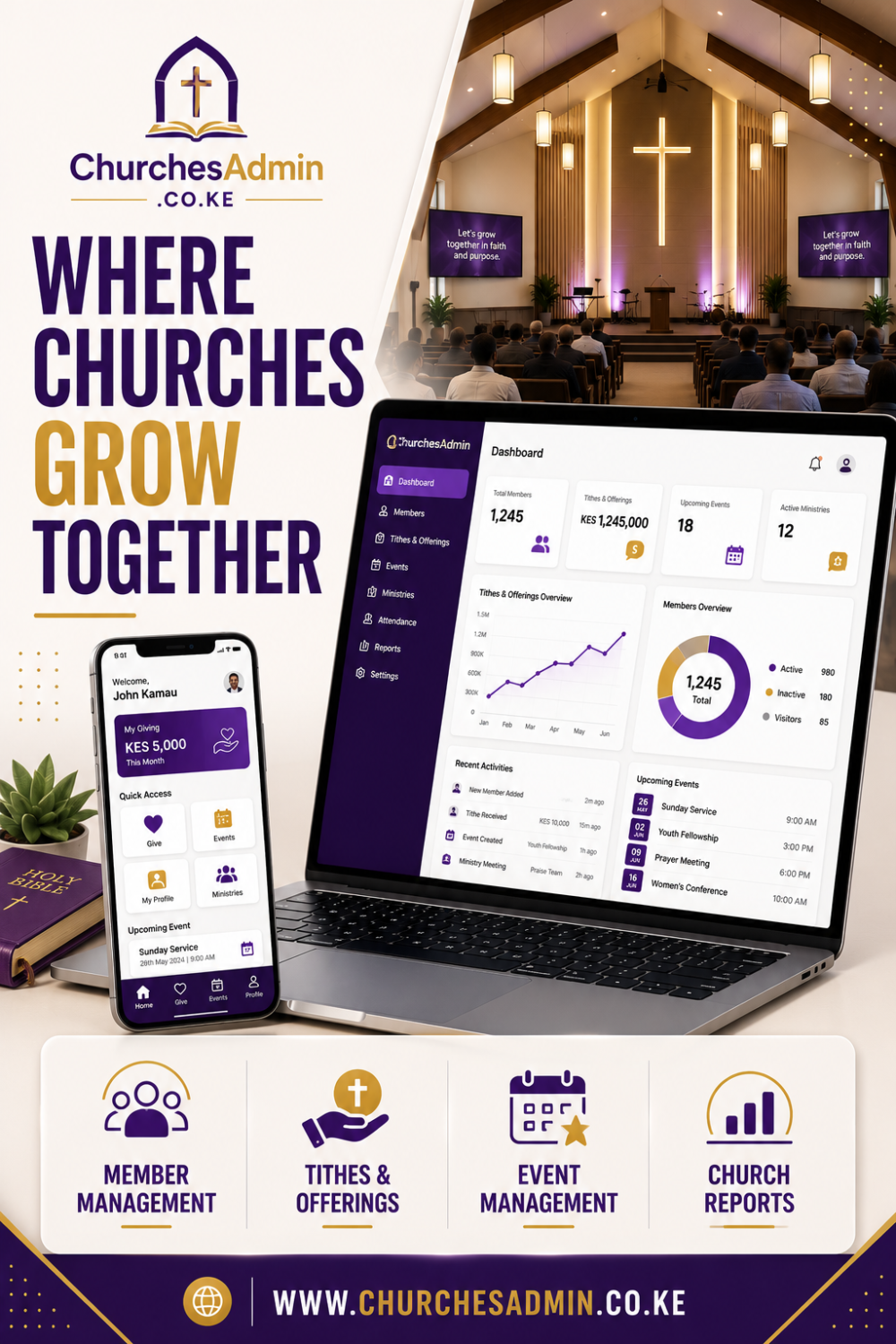
Churches organize numerous events throughout the year to strengthen worship, fellowship, discipleship, leadership development, evangelism, and community outreach. From conferences and crusades to youth camps, leadership seminars, Bible study programs, prayer meetings, retreats, weddings, community outreach events, and fundraising activities, successful church events require careful planning and organized registration processes.
Many churches throughout Kenya still manage event registrations using paper forms, spreadsheets, messaging applications, manual attendance lists, or physical registration desks. While these methods may be sufficient for smaller gatherings, they quickly become inefficient as attendance increases. Church administrators often struggle with duplicate registrations, incomplete attendee records, delayed confirmations, communication challenges, and inaccurate attendance reporting.
A Church Event Registration System provides a centralized digital platform that simplifies every stage of event registration and attendee management. Instead of manually recording participant information, churches can automate registrations, attendee confirmations, communication, volunteer coordination, check-ins, attendance monitoring, reporting, and follow-up activities within one integrated system.
Modern churches require more than printed registration forms.
Online registration.
Event scheduling.
Attendee management.
Volunteer coordination.
Communication.
QR code check-in.
Capacity management.
Department coordination.
Reporting.
Everything becomes more efficient when event administration operates from one centralized platform.
A Church Event Registration System synchronizes every aspect of event management.
Members register online.
Attendance lists update automatically.
Confirmation messages are sent instantly.
Volunteers receive assignments.
Capacity limits remain visible.
Leaders monitor registrations through real-time dashboards.
Historical event information also becomes an invaluable ministry resource.
Churches evaluate event attendance, ministry participation, volunteer involvement, conference growth, outreach effectiveness, leadership development, and member engagement over several years.
These insights support better event planning while strengthening long-term ministry strategies.
Security is equally important.
Attendee information remains protected through encrypted databases, secure authentication, role-based permissions, and automatic backups.
Whether organizing local church services, regional conferences, denominational conventions, youth camps, marriage seminars, leadership retreats, or nationwide crusades, implementing a Church Event Registration System creates a professional event management environment that improves organization, strengthens communication, simplifies administration, and supports sustainable church growth throughout Kenya.
Table of Contents
- Understanding Church Event Registration System
- Why Event Registration Matters
- Core Features of Church Event Registration System
- Event Planning and Registration Management
- Attendee Check-In and Attendance Tracking
- Volunteer and Ministry Coordination
- Communication and Event Notifications
- Reporting and Event Analytics
- Challenges of Manual Event Registration
Understanding Church Event Registration System
Church events provide opportunities for worship, discipleship, fellowship, leadership development, evangelism, and community engagement.
As participation grows, managing registrations manually becomes increasingly difficult.
A Church Event Registration System centralizes every stage of event administration into one intelligent platform.
Attendees register digitally.
Participant profiles remain organized.
Attendance updates automatically.
Volunteer schedules synchronize.
Event communication becomes streamlined.
Church leaders therefore gain complete visibility into every event while reducing administrative complexity.
Historical records also strengthen future planning.
Church leaders evaluate attendance trends, registration growth, ministry participation, event success, volunteer engagement, and resource utilization over multiple years.
These insights support continuous improvement while strengthening ministry impact.
Why Event Registration Matters
Successful church events begin with organized registration.
Without structured registration processes, churches frequently experience long queues, inaccurate attendance lists, communication delays, duplicate registrations, and inefficient event planning.
Manual registration methods often increase administrative workloads.
A Church Event Registration System eliminates these challenges through intelligent automation.
Registration becomes faster.
Communication improves.
Attendance remains accurate.
Church leaders gain measurable insights into event participation.
Ministry teams therefore spend less time managing administration and more time serving attendees.
Core Features of Church Event Registration System
A professional event management platform combines numerous operational capabilities.
Online registration.
Event calendars.
QR code check-in.
Attendance tracking.
Volunteer coordination.
Department management.
Capacity control.
Confirmation notifications.
Reminder messages.
Guest registration.
Visitor management.
Reporting dashboards.
Cloud synchronization.
Role-based security.
Document management.
Mobile accessibility.
These capabilities create an organized environment that supports successful church events.
Event Planning and Registration Management
Every successful church event begins with careful planning.
A Church Event Registration System enables churches to create event pages, define registration requirements, establish attendance limits, assign ministry teams, and monitor registrations through centralized dashboards.
Registration remains organized.
Participant information becomes accurate.
Church leaders coordinate events with greater confidence.
Attendee Check-In and Attendance Tracking
Managing attendance manually often creates delays and confusion.
A Church Event Registration System simplifies attendee check-in through digital attendance tools.
Participants can be verified quickly.
Attendance updates automatically.
Late arrivals remain recorded.
Event participation becomes measurable.
Church leaders gain accurate attendance reports immediately after every event.
Volunteer and Ministry Coordination
Church events depend heavily on volunteers.
Hospitality.
Ushering.
Media.
Security.
Registration.
Prayer teams.
Children’s ministry.
Transport.
A Church Event Registration System enables churches to assign volunteers, monitor responsibilities, coordinate departments, and communicate schedules from one centralized platform.
Volunteer coordination becomes significantly more efficient.
Communication and Event Notifications
Effective communication improves event participation.
A Church Event Registration System automatically sends registration confirmations, reminder messages, schedule updates, venue information, speaker announcements, and follow-up communication.
Church members remain informed throughout the event lifecycle.
Communication consistency strengthens attendee experiences while improving participation.
Reporting and Event Analytics
Every church event generates valuable ministry information.
A Church Event Registration System transforms registration data into meaningful reports.
Church leaders evaluate attendance trends, registration growth, volunteer participation, ministry engagement, event performance, and resource utilization through interactive dashboards.
Historical reporting supports better planning while strengthening future ministry events.
Challenges of Manual Event Registration
Many churches continue managing event registrations through notebooks, spreadsheets, printed forms, messaging groups, and paper attendance sheets.
Although manageable initially, these methods become increasingly inefficient as attendance grows.
Registration becomes slower.
Communication becomes inconsistent.
Attendance records become inaccurate.
Volunteer coordination becomes difficult.
Reporting consumes valuable administrative time.
A Church Event Registration System eliminates these challenges through centralized registration management, digital attendance tracking, volunteer coordination, automated communication, reporting, and scalable event administration.
For churches, ministries, denominations, dioceses, and Christian organizations throughout Kenya, implementing a Church Event Registration System creates a professional event management environment that improves organization, strengthens communication, simplifies administration, enhances attendee experiences, and supports sustainable church growth.
Benefits for Church Leaders and Pastors
Every successful church event reflects careful planning, effective leadership, and excellent coordination. Whether organizing a leadership conference, youth camp, evangelism outreach, prayer conference, discipleship class, marriage seminar, fundraiser, or annual convention, church leaders must ensure that every participant has a smooth and organized experience.
A Church Event Registration System gives pastors, bishops, church administrators, ministry directors, and event coordinators complete visibility into every stage of event management through one centralized platform.
Instead of relying on paper registration forms, spreadsheets, messaging groups, or manual attendance sheets, church leaders can oversee registrations from a single dashboard.
Registered attendees.
Event capacity.
Volunteer assignments.
Department responsibilities.
Attendance.
Check-ins.
Communication.
Reports.
Everything updates automatically.
One of the greatest advantages is improved event planning.
Church leaders know exactly how many people have registered before the event begins.
Venue planning becomes more accurate.
Seating arrangements improve.
Catering requirements become easier to estimate.
Resource allocation becomes more efficient.
Decision-making also improves significantly.
Leadership teams monitor registration trends, attendance projections, volunteer participation, ministry involvement, and event performance using real-time reports.
Historical event analytics allow churches to compare conferences, seminars, retreats, and outreach programs across multiple years.
These insights support better planning while helping churches continuously improve future events.
As churches continue expanding throughout Kenya, a Church Event Registration System provides the organizational structure needed to deliver professional, well-coordinated, and impactful church events.
Benefits for Church Administrators and Event Coordinators
Church administrators often carry the responsibility of managing registrations, communicating with attendees, coordinating volunteers, preparing attendance lists, and ensuring every event runs smoothly.
Manual registration processes consume significant time.
Forms require sorting.
Attendance lists require updating.
Confirmation messages must be sent individually.
Reports take hours to prepare.
A Church Event Registration System automates these responsibilities.
Online registrations update instantly.
Attendee lists synchronize automatically.
Reminder notifications send before every event.
Check-in records update in real time.
Attendance reports generate automatically.
Church administrators spend less time performing repetitive administrative work while gaining more time to focus on organizing successful ministry events.
Event coordinators also benefit from improved visibility.
Every registration remains searchable.
Capacity limits remain visible.
Volunteer schedules stay organized.
Department responsibilities become easier to coordinate.
These improvements strengthen operational efficiency while reducing administrative pressure.
Benefits for Volunteers and Church Members
Volunteers play an essential role during church events.
Registration teams.
Hospitality.
Ushering.
Security.
Media.
Prayer teams.
Children’s ministry.
Transport.
Every department depends on effective coordination.
A Church Event Registration System provides volunteers with clear schedules, assignments, event information, and communication through one organized platform.
Responsibilities become transparent.
Schedules remain current.
Departments collaborate more effectively.
Church members also enjoy a significantly better experience.
Online registration becomes simple.
Confirmation messages arrive immediately.
Event reminders reduce missed attendance.
Digital check-in speeds up event entry.
Members receive timely updates regarding speakers, schedules, venues, accommodation, transportation, and program changes.
These improvements increase participation while creating a more welcoming and organized event experience.
Improving Event Management Through Automation
Traditional event registration often requires repetitive manual work.
Collecting registration forms.
Updating spreadsheets.
Preparing attendance lists.
Sending reminders.
Verifying attendees.
Recording attendance.
Preparing reports.
A Church Event Registration System automates the complete registration process.
Online registrations update immediately.
Attendance records synchronize automatically.
QR code check-ins verify participants instantly.
Volunteer assignments remain organized.
Capacity monitoring updates continuously.
Communication becomes automated.
Reports generate in real time.
Automation significantly reduces administrative workloads while improving operational consistency.
As churches organize larger conferences, conventions, youth camps, leadership summits, and outreach events, automation enables event teams to manage increasing attendance without increasing administrative complexity.
Compliance, Security, and Event Accountability
Church events often involve collecting valuable participant information.
Names.
Contact details.
Church affiliations.
Emergency contacts.
Accommodation preferences.
Volunteer assignments.
Attendance records.
Payment information for ticketed events.
A Church Event Registration System protects this information through encrypted databases, secure authentication, role-based user permissions, automated backups, and comprehensive audit trails.
Every registration.
Every attendance record.
Every volunteer assignment.
Every communication.
Every administrative update.
Everything remains securely documented.
Church leaders maintain complete accountability while protecting participant privacy.
Historical records also simplify event reporting, financial reconciliation, attendance verification, ministry evaluations, leadership reviews, and long-term event planning.
These capabilities strengthen governance while reducing administrative risk.
Why ChurchesAdmin Is the Ideal Solution
ChurchesAdmin is designed specifically to help churches, ministries, dioceses, denominations, Christian organizations, and faith-based institutions manage church events through one integrated digital platform.
A Church Event Registration System becomes significantly more valuable when integrated with member management, attendance tracking, volunteer coordination, communication tools, financial management, ministry administration, reporting, and pastoral oversight.
ChurchesAdmin combines all these capabilities into one centralized cloud-based system.
Church leaders can create events, monitor registrations, coordinate volunteers, track attendance, communicate with participants, generate reports, and evaluate event performance from one dashboard.
Church administrators automate registration workflows while reducing paperwork.
Volunteers receive organized schedules and clear assignments.
Church members enjoy convenient online registration and efficient event experiences.
Whether organizing a local church seminar or a national denominational conference across Kenya, ChurchesAdmin provides the scalability required to manage events of every size.
By centralizing event administration and automating registration processes, ChurchesAdmin helps churches improve organization, strengthen communication, simplify administration, increase participation, and maximize ministry impact.
Future Trends
Church event management continues evolving through artificial intelligence, cloud computing, mobile technology, and predictive analytics.
Future Church Event Registration System solutions will automatically forecast attendance, recommend volunteer allocations, optimize seating arrangements, and personalize attendee communication.
Artificial intelligence may assist churches by predicting registration trends, identifying capacity requirements, recommending follow-up strategies, and automating attendee support.
Cloud-based event platforms will continue improving accessibility, allowing church leaders to manage registrations securely from anywhere.
Mobile applications will enable members to register for events, receive digital tickets, complete QR code check-ins, view schedules, receive announcements, and provide event feedback directly from their smartphones.
As churches throughout Kenya continue embracing digital transformation, intelligent event registration platforms will become essential tools for delivering organized, engaging, and impactful ministry events.
Getting Started
Implementing a Church Event Registration System begins by reviewing how church events are currently planned and managed.
Church leaders should evaluate registration procedures, volunteer coordination, attendance tracking, communication methods, reporting requirements, venue management, and long-term ministry objectives.
The next step involves selecting a platform capable of integrating event registration with member management, attendance tracking, communication, volunteer administration, financial reporting, ministry coordination, and pastoral oversight.
Training church administrators, event coordinators, ministry leaders, volunteers, and registration teams is equally important.
Everyone involved should understand how digital registration improves organization, efficiency, and participant experiences.
ChurchesAdmin provides complete implementation services including event setup, online registration configuration, QR code check-in, volunteer management, reporting dashboards, communication tools, staff training, and ongoing technical support.
By implementing a Church Event Registration System, churches throughout Kenya can improve event organization, automate registrations, strengthen communication, simplify administration, increase attendance, enhance participant experiences, and establish a scalable digital foundation for successful church events.
Benefits for Church Leaders and Pastors
Every successful church event reflects careful planning, effective leadership, and excellent coordination. Whether organizing a leadership conference, youth camp, evangelism outreach, prayer conference, discipleship class, marriage seminar, fundraiser, or annual convention, church leaders must ensure that every participant has a smooth and organized experience.
A Church Event Registration System gives pastors, bishops, church administrators, ministry directors, and event coordinators complete visibility into every stage of event management through one centralized platform.
Instead of relying on paper registration forms, spreadsheets, messaging groups, or manual attendance sheets, church leaders can oversee registrations from a single dashboard.
Registered attendees.
Event capacity.
Volunteer assignments.
Department responsibilities.
Attendance.
Check-ins.
Communication.
Reports.
Everything updates automatically.
One of the greatest advantages is improved event planning.
Church leaders know exactly how many people have registered before the event begins.
Venue planning becomes more accurate.
Seating arrangements improve.
Catering requirements become easier to estimate.
Resource allocation becomes more efficient.
Decision-making also improves significantly.
Leadership teams monitor registration trends, attendance projections, volunteer participation, ministry involvement, and event performance using real-time reports.
Historical event analytics allow churches to compare conferences, seminars, retreats, and outreach programs across multiple years.
These insights support better planning while helping churches continuously improve future events.
As churches continue expanding throughout Kenya, a Church Event Registration System provides the organizational structure needed to deliver professional, well-coordinated, and impactful church events.
Benefits for Church Administrators and Event Coordinators
Church administrators often carry the responsibility of managing registrations, communicating with attendees, coordinating volunteers, preparing attendance lists, and ensuring every event runs smoothly.
Manual registration processes consume significant time.
Forms require sorting.
Attendance lists require updating.
Confirmation messages must be sent individually.
Reports take hours to prepare.
A Church Event Registration System automates these responsibilities.
Online registrations update instantly.
Attendee lists synchronize automatically.
Reminder notifications send before every event.
Check-in records update in real time.
Attendance reports generate automatically.
Church administrators spend less time performing repetitive administrative work while gaining more time to focus on organizing successful ministry events.
Event coordinators also benefit from improved visibility.
Every registration remains searchable.
Capacity limits remain visible.
Volunteer schedules stay organized.
Department responsibilities become easier to coordinate.
These improvements strengthen operational efficiency while reducing administrative pressure.
Benefits for Volunteers and Church Members
Volunteers play an essential role during church events.
Registration teams.
Hospitality.
Ushering.
Security.
Media.
Prayer teams.
Children’s ministry.
Transport.
Every department depends on effective coordination.
A Church Event Registration System provides volunteers with clear schedules, assignments, event information, and communication through one organized platform.
Responsibilities become transparent.
Schedules remain current.
Departments collaborate more effectively.
Church members also enjoy a significantly better experience.
Online registration becomes simple.
Confirmation messages arrive immediately.
Event reminders reduce missed attendance.
Digital check-in speeds up event entry.
Members receive timely updates regarding speakers, schedules, venues, accommodation, transportation, and program changes.
These improvements increase participation while creating a more welcoming and organized event experience.
Improving Event Management Through Automation
Traditional event registration often requires repetitive manual work.
Collecting registration forms.
Updating spreadsheets.
Preparing attendance lists.
Sending reminders.
Verifying attendees.
Recording attendance.
Preparing reports.
A Church Event Registration System automates the complete registration process.
Online registrations update immediately.
Attendance records synchronize automatically.
QR code check-ins verify participants instantly.
Volunteer assignments remain organized.
Capacity monitoring updates continuously.
Communication becomes automated.
Reports generate in real time.
Automation significantly reduces administrative workloads while improving operational consistency.
As churches organize larger conferences, conventions, youth camps, leadership summits, and outreach events, automation enables event teams to manage increasing attendance without increasing administrative complexity.
Compliance, Security, and Event Accountability
Church events often involve collecting valuable participant information.
Names.
Contact details.
Church affiliations.
Emergency contacts.
Accommodation preferences.
Volunteer assignments.
Attendance records.
Payment information for ticketed events.
A Church Event Registration System protects this information through encrypted databases, secure authentication, role-based user permissions, automated backups, and comprehensive audit trails.
Every registration.
Every attendance record.
Every volunteer assignment.
Every communication.
Every administrative update.
Everything remains securely documented.
Church leaders maintain complete accountability while protecting participant privacy.
Historical records also simplify event reporting, financial reconciliation, attendance verification, ministry evaluations, leadership reviews, and long-term event planning.
These capabilities strengthen governance while reducing administrative risk.
Why ChurchesAdmin Is the Ideal Solution
ChurchesAdmin is designed specifically to help churches, ministries, dioceses, denominations, Christian organizations, and faith-based institutions manage church events through one integrated digital platform.
A Church Event Registration System becomes significantly more valuable when integrated with member management, attendance tracking, volunteer coordination, communication tools, financial management, ministry administration, reporting, and pastoral oversight.
ChurchesAdmin combines all these capabilities into one centralized cloud-based system.
Church leaders can create events, monitor registrations, coordinate volunteers, track attendance, communicate with participants, generate reports, and evaluate event performance from one dashboard.
Church administrators automate registration workflows while reducing paperwork.
Volunteers receive organized schedules and clear assignments.
Church members enjoy convenient online registration and efficient event experiences.
Whether organizing a local church seminar or a national denominational conference across Kenya, ChurchesAdmin provides the scalability required to manage events of every size.
By centralizing event administration and automating registration processes, ChurchesAdmin helps churches improve organization, strengthen communication, simplify administration, increase participation, and maximize ministry impact.
Future Trends
Church event management continues evolving through artificial intelligence, cloud computing, mobile technology, and predictive analytics.
Future Church Event Registration System solutions will automatically forecast attendance, recommend volunteer allocations, optimize seating arrangements, and personalize attendee communication.
Artificial intelligence may assist churches by predicting registration trends, identifying capacity requirements, recommending follow-up strategies, and automating attendee support.
Cloud-based event platforms will continue improving accessibility, allowing church leaders to manage registrations securely from anywhere.
Mobile applications will enable members to register for events, receive digital tickets, complete QR code check-ins, view schedules, receive announcements, and provide event feedback directly from their smartphones.
As churches throughout Kenya continue embracing digital transformation, intelligent event registration platforms will become essential tools for delivering organized, engaging, and impactful ministry events.
Getting Started
Implementing a Church Event Registration System begins by reviewing how church events are currently planned and managed.
Church leaders should evaluate registration procedures, volunteer coordination, attendance tracking, communication methods, reporting requirements, venue management, and long-term ministry objectives.
The next step involves selecting a platform capable of integrating event registration with member management, attendance tracking, communication, volunteer administration, financial reporting, ministry coordination, and pastoral oversight.
Training church administrators, event coordinators, ministry leaders, volunteers, and registration teams is equally important.
Everyone involved should understand how digital registration improves organization, efficiency, and participant experiences.
ChurchesAdmin provides complete implementation services including event setup, online registration configuration, QR code check-in, volunteer management, reporting dashboards, communication tools, staff training, and ongoing technical support.
By implementing a Church Event Registration System, churches throughout Kenya can improve event organization, automate registrations, strengthen communication, simplify administration, increase attendance, enhance participant experiences, and establish a scalable digital foundation for successful church events.