Church Anniversary: 7 Practical Steps for a Meaningful Service
A church anniversary can begin with a surprisingly difficult question: which birthday are we celebrating? The first prayer meeting, the first public service and the dedication of the present building may have happened in different years. Decide what the number on the banner means before ordering the banner. That decision gives the occasion a story worth telling.
A meaningful anniversary does not require every former leader to speak or every department to perform. Pick one memory the congregation should carry home and one way a newcomer can join in without knowing the church’s history. The following plan takes a committee from its first conversation to a useful record for the next anniversary.
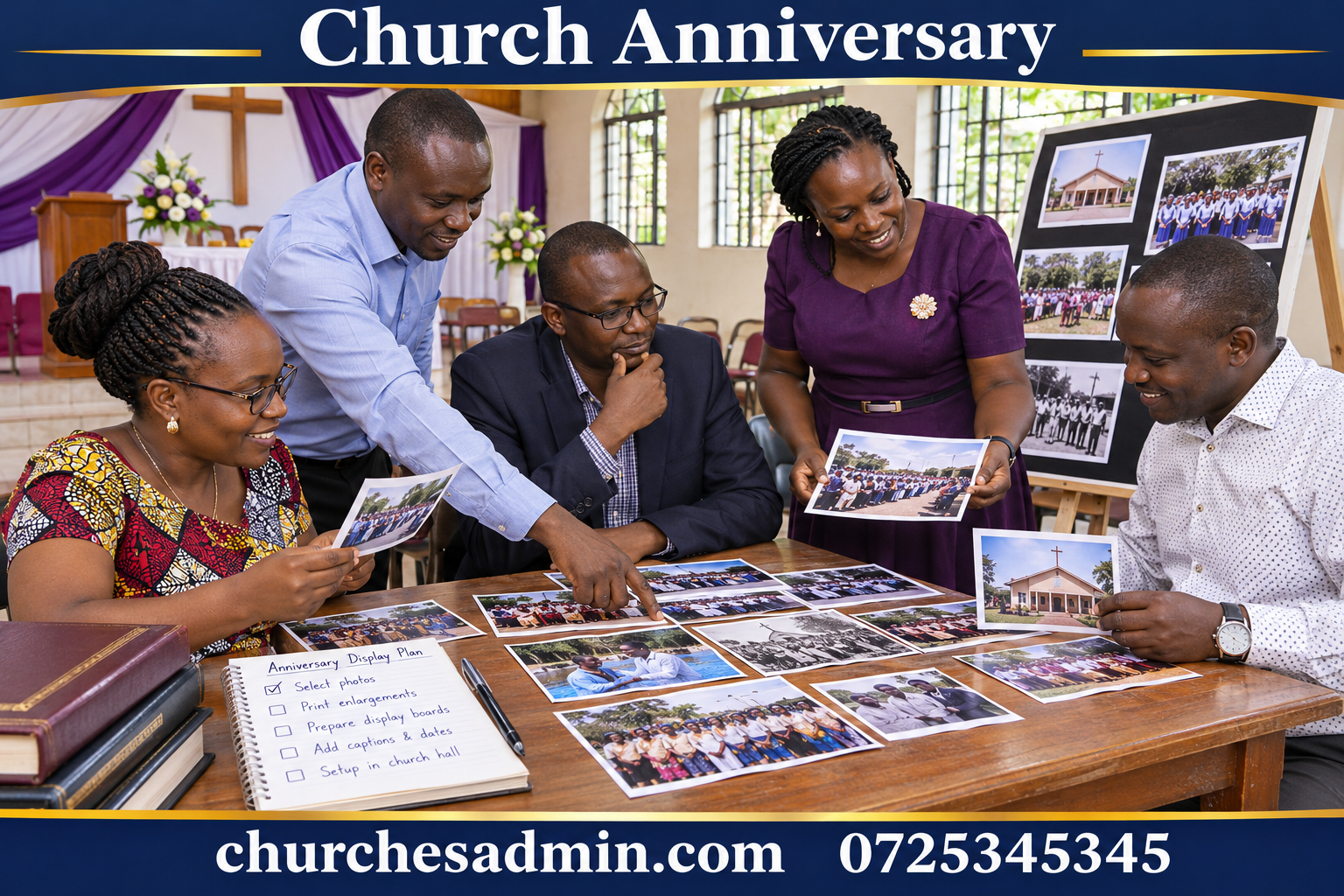
1. Define the church anniversary milestone in one sentence
Write a factual sentence with a subject, an event and a date. For example: “This year marks forty years since the first Sunday service at this location.” That is a different claim from “our congregation is forty years old.” If the congregation met elsewhere for ten years before moving, both parts of the history deserve their own dates.
Check older records and ask long-serving members what they remember. A dated programme, a minute book and a photograph with a known occasion can help distinguish two similar events. When memories disagree, do not settle the matter by choosing the account that makes a neater speech. Use wording the evidence supports, such as “members recall meeting in this area before the hall opened,” and leave the precise year open until it can be verified.
Keep a source note beside each item in the working timeline. The public display need not include an editor’s full notebook, but someone should be able to trace a date or spelling later. Use the church annual report examples for ways of distinguishing documented figures from recollections. A church anniversary is also an opportunity to leave better records for those who come after you.
2. Give the church anniversary a theme people can recognise
A church anniversary theme works when it helps the committee choose what belongs. If the theme is service across generations, a photograph of the first children’s class and a present-day volunteer’s reflection may speak to each other. A long list of building projects may be less useful unless it shows how those rooms changed the church’s work.
Bring three candidate moments to the church anniversary planning meeting. For each, ask: what happened, who can verify it, and why would someone who joined last month care? A memory that nobody outside the original committee can understand may need one sentence of context. For instance, explain that the kitchen was added so volunteers could prepare food on site, rather than merely recording the year it opened.
If a scripture reading will shape the occasion, ask the appropriate church leader to choose the passage in context and confirm the translation and reading arrangements. A popular verse on a search results page is not a substitute for that decision. Once the reading is agreed, use the same reference in the programme, slides and speaker notes. A rehearsal should catch discrepancies before the congregation sees them.
3. Choose the scale of the church anniversary before promising hospitality
List the people who are welcome to attend, the people you plan to invite personally and the people who have been asked to contribute. These groups overlap, but they are not interchangeable. Being invited to a service does not automatically mean someone has agreed to give an address, stay for a meal or appear in a recording.
Create a modest version of the event that you know you can deliver. Start with a service, one historical reflection and a place for conversation afterwards. Price additions separately: a display, a printed booklet, refreshments or transport arrangements. For each proposed addition, name a responsible person and the deadline after which the idea is too late to do well.
Use the church budget guide to separate an estimate from an approved commitment. If the committee is comparing refreshments for eighty or one hundred and twenty people, record both assumptions. Ask suppliers what happens if the confirmed number changes. Avoid promising a meal in the invitation until the venue, provider and approval are in place.
4. Build a church anniversary display from five strong objects
Choose a small set of objects that tell different parts of the story. A handwritten register, an early hymn sheet, a photograph of a meeting place, a volunteer’s badge and a recent programme can make a richer display than fifty images without captions. Use copies where handling or light could damage originals, and agree with the owners how borrowed items will be returned.
Write captions that answer four questions: what is it, approximately when is it from, who supplied it, and why does it matter? Keep uncertain dates visibly approximate. If a photograph includes identifiable people, agree the intended use and whether it may appear online as well as in the hall. A relative lending a photograph for Sunday has not necessarily agreed to permanent public distribution.
Arrange the items so visitors can browse without blocking the entrance. Test captions from the distance people will actually stand. Invite someone unfamiliar with the church to read the display without explanation. Ask which object they remember and what question remains. A simple caption revision can make the collection more welcoming than buying another display board.
5. Invite speakers with a defined contribution
Tell each speaker why you are asking them, the subject, the approximate time available and how their contribution fits the wider service. A former member may be delighted to share one specific recollection and uneasy about being asked to summarise decades of history. A clear request lets them decide comfortably.
Agree whether they will read, speak freely or be interviewed. For an interview, give the questions in advance. Ask one question about a concrete scene: what did you see on your first Sunday in the new room? Follow with one about its meaning. Avoid prompting the speaker to reveal personal information or speak for someone else who is not present.
Name a backup for each essential role. If a guest becomes unavailable, the backup need not imitate their contribution. The leader could read an approved short note or move directly to the next element. Use the church service planning guide to ensure the technical team knows which version is current and who will give the signal on the day.
6. Make a timetable that includes the transitions
Here is an illustrative thirty-minute anniversary segment within a longer service: four minutes to introduce the milestone; six for a short historical account; five for a reading and reflection; five for a guest recollection; four for a present ministry contribution; three for thanks and the next invitation; and three held for transitions. Those minutes total thirty. They are an example, not a prescribed order of worship.
Try speaking the introductions aloud and moving the microphone between contributors. A printed segment that appears to last six minutes can take nine when a guest walks from the back and a photograph needs to appear on screen. If the timetable overruns in rehearsal, decide what can be shortened. Do not expect the last speaker to discover on the day that their whole contribution must disappear.
Tell the welcome team when arrivals are expected and where guests should go after the service. Have someone available to guide a visitor to the display or the next room. The church room booking guide is useful when a reception, children’s activity and another congregation share the building. A smooth transition depends on the second space being ready, not merely appearing in the programme.
7. Decide what remains after the church anniversary
Assign someone to collect the final programme, approved display captions, permissions and any agreed recording. Ask the owners of borrowed objects to confirm their return. Avoid storing personal contact details alongside material intended for public use. A small, clearly labelled archive is easier to maintain than one folder containing originals, drafts and unapproved photographs.
Thank people for specific contributions. A short note recognising the person who traced the date of a photograph can mean more than an identical message sent to every volunteer. If a guest travelled or lent an item, check that the relevant arrangements were completed. These tasks deserve owners even after the event is no longer on the weekly agenda.
At the next committee meeting, ask three questions: What did a new member understand about the church’s history? Which part of the programme took longer than expected? What information would have saved the team a week of searching? Record the answers while people still remember. Keep one copy with the history file so a future committee benefits from the work.
Worked example: a small church with two possible anniversary dates
Imagine a congregation whose earliest available minutes describe a meeting in a home in 1987. The current hall was opened in 1996. In 2026 some people propose a banner announcing forty years of worship in the hall. The dates do not support that claim: 2026 minus 1996 is thirty, and 2026 minus 1987 is thirty-nine. The committee can celebrate the hall’s thirtieth year without erasing the earlier gathering.
Instead of arguing over which event is more important, the committee writes two captions. The first explains how the earliest documented meeting took place in a home. The second explains what changed when the hall opened. They invite a member who remembers the move to describe one practical difference and a newer member to explain how the hall serves the community today.
The result is a more precise celebration and a more interesting story. People can recognise both the beginnings of the fellowship and the milestone of the building. The committee keeps a note that an earlier date may yet be documented, so a future discovery can improve the record without undermining this year’s programme.
The final check before announcing the date
One person should be able to read the public notice and answer: what milestone is being marked, when does the service begin, where should a visitor arrive, what follows, and who can answer a question? Check those answers against the calendar, not against a message written before the venue was confirmed. Confirm the final spelling of guest names independently of the design proof.
If you use ChurchesAdmin to coordinate activities, show the team where the current date, working programme and outstanding responsibilities are recorded. Keep the public invitation shorter than the internal plan. The congregation needs a clear welcome and an honest story. The committee needs enough detail to deliver both, then preserve what it learned for the next generation.
## A decision sheet for the church anniversary committee
Put one row on the sheet for each item still capable of delaying the occasion. A row might read: “Archive photograph; caption confirmed; permission for hall display received; online use not requested; return original to lender on Monday.” Another might read: “Guest reflection; accepted for four minutes; guest requests no recording; service leader informed.” These are fictional examples, but the format makes the important difference visible: an object being available does not mean every proposed use of it has been approved.
Read the rows aloud at the last meeting. If an item has no owner, assign one or remove it. If a promised contribution remains uncertain, tell the person preparing the programme what to print instead. Give the announcement editor a short list of confirmed facts rather than the entire sheet. A working record can contain a provisional option or a private preference that has no place in the public invitation.
Finally, choose the date of the brief post-event review before the team disperses. That small decision protects an easily forgotten part of the project. It gives the archivist time to collect borrowed items and gives the coordinator a natural point at which to finish the work, rather than leaving every loose end to whichever volunteer happens to remember it.
Other websites to explore
Additional websites: prim.co.ke, zama.co.ke, vega.co.ke, awasa.co.ke, saseni.com, jaat.co.ke, tas.co.ke, dereva.co.ke, zes.co.ke.