Church Database Software for Managing Member Data: The Complete Guide to Organizing Church Membership and Ministry Records
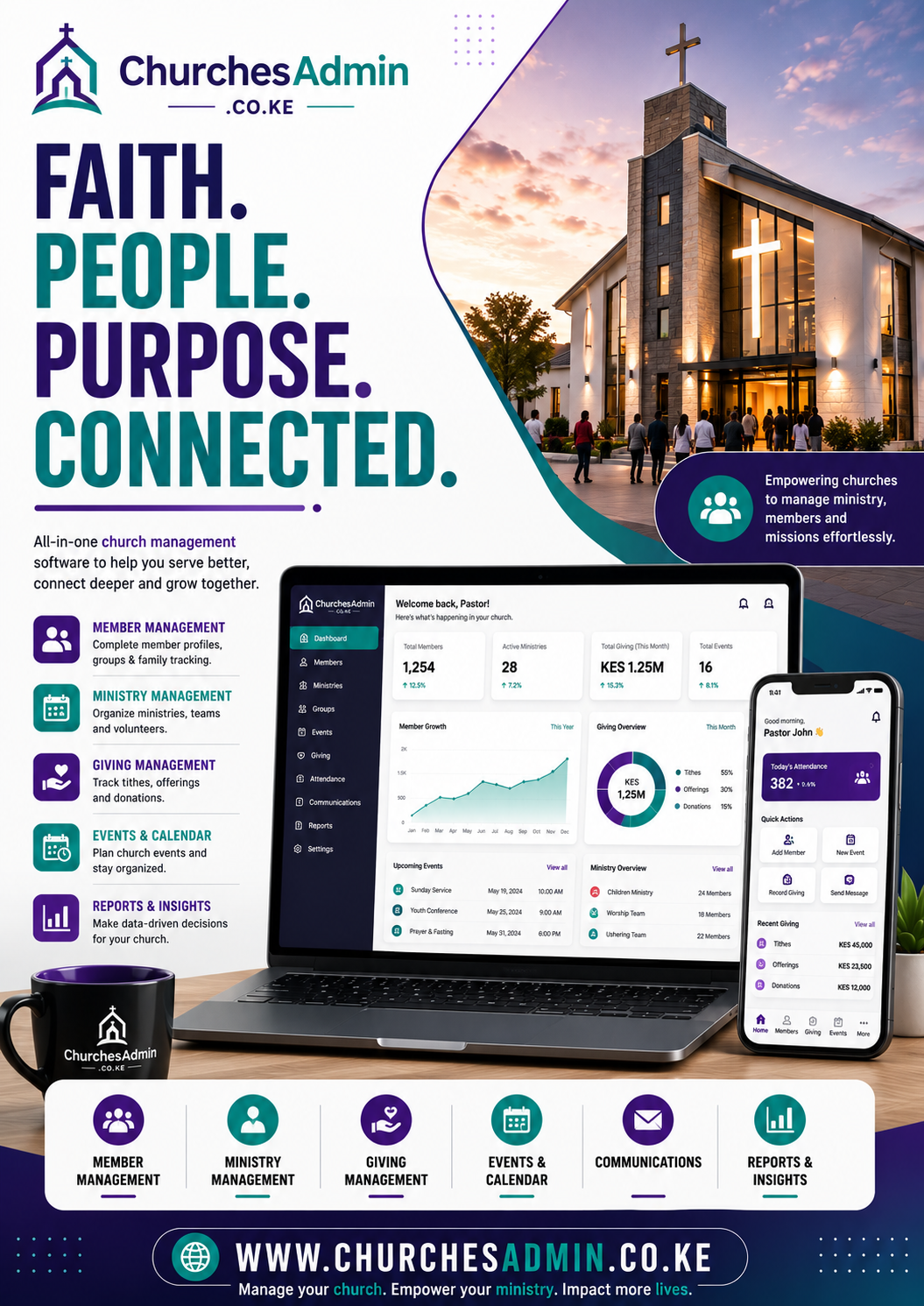
Church Database Software for Managing Data is an essential solution for churches, ministries, pastors, and church administrators seeking an efficient way to organize member information, track attendance, manage ministries, improve communication, and strengthen pastoral care. Modern Church Database Software for Managing Data enables churches to store member profiles, family records, visitor information, volunteer assignments, giving records, event registrations, and ministry participation in one secure cloud-based platform. As churches continue to grow, relying on paper records and spreadsheets becomes inefficient and increases the risk of errors and lost information. Implementing reliable Church Database Software for Managing Data helps churches improve administration, strengthen member engagement, and support long-term ministry growth while allowing leaders to focus more on serving people than managing paperwork.
Table of Contents
- Introduction
- What Is Church Database Software for Managing Data?
- Why Churches Need Church Database Software
- Essential Features of Church Database Software for Managing Data
- Benefits of Using Church Database Software
- How to Choose the Right Church Database Software
- Cloud-Based Church Management
- Church Database Software for Managing Data in Kenya
- Why Churches Admin Is the Ideal Solution
- Future Trends in Church Database Software
Introduction
Church Database Software for Managing Data has become one of the most valuable digital tools for modern churches. Every church manages large amounts of information, including member registrations, family records, attendance, ministry groups, volunteer schedules, visitor follow-up, giving records, and communication. Managing these records manually can be time-consuming and prone to mistakes.
A centralized church database allows leaders to access accurate information quickly, improve communication, monitor church growth, and organize ministry activities more effectively. Whether serving a small congregation or a large denomination, having reliable member data improves decision-making and ministry effectiveness.
Digital church management systems also support remote administration, secure cloud storage, automated communication, and detailed reporting, making them an important investment for growing ministries.
What Is Church Database Software for Managing Data?
Church Database Software for Managing Data is a digital platform designed to securely store and organize church membership information while supporting daily ministry operations.
Typical features include:
- Member registration.
- Family profiles.
- Attendance tracking.
- Visitor management.
- Volunteer coordination.
- Ministry groups.
- Event management.
- Giving records.
- Communication tools.
- Reporting dashboards.
By storing all church information in one location, administrators can manage ministry activities more efficiently.
Why Churches Need Church Database Software
As churches grow, administrative work also increases.
Using Church Database Software for Managing Data helps churches:
- Organize member records.
- Track attendance.
- Improve communication.
- Follow up with visitors.
- Coordinate volunteers.
- Manage church events.
- Reduce paperwork.
- Improve ministry administration.
Digital systems improve efficiency while helping church leaders provide better pastoral care.
Essential Features of Church Database Software for Managing Data
Member Registration
Every church requires organized membership records.
Professional Church Database Software for Managing Data should provide:
- Member profiles.
- Family information.
- Contact details.
- Membership history.
- Ministry participation.
- Digital member directories.
Accurate records improve communication and pastoral support.
Attendance Tracking
Attendance management should include:
- Sunday services.
- Midweek services.
- Bible study groups.
- Youth meetings.
- Children’s ministry.
- Small group attendance.
Attendance reports help church leaders understand participation trends.
Visitor Management
Following up with visitors is important for church growth.
The software should support:
- Visitor registration.
- Contact management.
- Follow-up reminders.
- Visit history.
- Ministry assignments.
- Communication records.
Visitor tracking helps churches welcome and retain new members.
Volunteer Management
Volunteer coordination should include:
- Volunteer registration.
- Ministry assignments.
- Service schedules.
- Availability management.
- Team communication.
- Volunteer history.
Organized volunteer management strengthens ministry operations.
Event Management
Churches regularly organize activities and special programs.
The software should help manage:
- Conferences.
- Revival meetings.
- Seminars.
- Outreach events.
- Youth conferences.
- Training programs.
Event management simplifies planning and participation.
Giving Management
Financial records should include:
- Tithes.
- Offerings.
- Donations.
- Receipt generation.
- Giving history.
- Financial reports.
Accurate giving records improve accountability.
Cloud Accessibility
Modern church management software should provide:
- Secure remote access.
- Automatic backups.
- Mobile compatibility.
- Multi-user support.
- Cloud storage.
- Automatic updates.
Cloud technology allows church leaders to access information from anywhere.
Security Features
Professional Church Database Software for Managing Data should include:
- Role-based permissions.
- Secure authentication.
- Data encryption.
- Audit logs.
- Automatic backups.
- User activity monitoring.
Strong security protects confidential member information.
Benefits of Using Church Database Software
Churches implementing Church Database Software for Managing Data experience many advantages.
Major benefits include:
- Better organization.
- Faster member searches.
- Improved communication.
- Better attendance tracking.
- Simplified administration.
- Reduced paperwork.
- Stronger pastoral care.
- Improved ministry growth.
Digital management allows church leaders to spend more time serving members instead of maintaining manual records.
How to Choose the Right Church Database Software
When selecting Church Database Software for Managing Data, consider:
- Ease of use.
- Member management features.
- Attendance tracking.
- Security.
- Cloud accessibility.
- Reporting capabilities.
- Mobile compatibility.
- Scalability.
- Integration options.
- Technical support.
Choosing software that can grow alongside the church provides long-term value.
Cloud-Based Church Management
Cloud-based church management systems provide numerous benefits.
These include:
- Remote administration.
- Automatic backups.
- Secure cloud storage.
- Easy collaboration.
- Lower IT costs.
- Better scalability.
Cloud technology has become the preferred solution for modern churches.
Church Database Software for Managing Data in Kenya
Demand for Church Database Software for Managing Data continues increasing across Kenya as churches adopt digital ministry tools.
Churches in Nairobi, Mombasa, Kisumu, Nakuru, Eldoret, Thika, Meru, Nyeri, and many other towns are implementing cloud-based systems to improve member management, communication, attendance tracking, and ministry coordination.
Why Churches Admin Is the Ideal Solution
Churches looking for reliable Church Database Software for Managing Data can benefit from Churches Admin, a comprehensive cloud-based church management platform.
Churches Admin provides:
- Member management.
- Attendance tracking.
- Visitor management.
- Volunteer coordination.
- Ministry management.
- Event management.
- Giving management.
- Financial reporting.
- Secure cloud access.
- Automated notifications.
- Role-based user management.
- Technical support.
Churches Admin helps ministries improve administration, strengthen communication, increase member engagement, and support sustainable church growth.
Future Trends in Church Database Software
Technology continues transforming church administration.
The future of Church Database Software for Managing Data includes:
- Artificial intelligence.
- Mobile-first church management.
- Automated member communication.
- Online giving integration.
- Advanced ministry analytics.
- Cloud-native platforms.
- Digital volunteer coordination.
- Enhanced cybersecurity.
These innovations will continue improving church administration and ministry effectiveness.
Benefits of Church Database Software for Managing Member Data for Different Church Users
Church Database Software for Managing Member Data provides valuable benefits for pastors, church administrators, ministry leaders, finance teams, volunteers, church members, and denominational leaders. By centralizing member records, attendance, ministry participation, communication, giving records, and event information, Church Database Software for Managing Member Data helps churches improve administration while strengthening ministry effectiveness.
As congregations continue to grow, manual record keeping becomes increasingly difficult. Modern Church Database Software for Managing Member Data automates administrative processes, improves communication, protects sensitive information, and gives church leaders quick access to accurate member data whenever they need it.
Benefits for Pastors
Pastors rely on accurate member information to provide effective pastoral care.
Using Church Database Software for Managing Member Data, pastors can:
- Access member profiles.
- View family information.
- Monitor attendance.
- Track ministry involvement.
- Follow up with visitors.
- Record pastoral visits.
- Improve communication.
- Strengthen member relationships.
Well-organized member data helps pastors provide more personalized ministry and care.
Benefits for Church Administrators
Church administrators coordinate many daily church activities.
Professional Church Database Software for Managing Member Data enables administrators to:
- Register new members.
- Update member records.
- Organize family profiles.
- Manage ministry departments.
- Schedule church activities.
- Generate administrative reports.
- Reduce paperwork.
- Improve operational efficiency.
Digital administration saves time while improving data accuracy.
Benefits for Ministry Leaders
Every ministry requires organized member information.
Using Church Database Software for Managing Member Data, ministry leaders can:
- Manage ministry groups.
- Track attendance.
- Assign volunteers.
- Schedule meetings.
- Monitor participation.
- Communicate with members.
- Organize ministry activities.
- Improve planning.
Organized data supports stronger ministry leadership.
Benefits for Finance Teams
Church finance departments require organized contribution records.
Church Database Software for Managing Member Data helps finance teams:
- Record tithes.
- Track offerings.
- Monitor donations.
- Generate receipts.
- Prepare giving reports.
- Improve financial accountability.
- Support budgeting.
- Produce financial summaries.
Accurate records improve transparency and stewardship.
Benefits for Volunteers
Church volunteers serve across many departments.
The software enables volunteers to:
- Receive ministry schedules.
- View assignments.
- Register for events.
- Coordinate with leaders.
- Track participation.
- Receive ministry updates.
- Improve communication.
- Stay organized.
Volunteer coordination becomes simpler and more efficient.
Benefits for Church Members
Members benefit from improved communication and organized church administration.
Professional Church Database Software for Managing Member Data enables members to:
- Receive church announcements.
- Register for events.
- Update personal information.
- Join ministry groups.
- Receive ministry updates.
- Stay connected.
- Access church communication.
- Participate more actively.
Strong communication strengthens church relationships and member engagement.
Benefits for Denominations and Church Networks
Church networks and denominations often oversee multiple congregations.
Using Church Database Software for Managing Member Data, denominational leaders can:
- Monitor church membership.
- Review attendance trends.
- Analyze ministry growth.
- Coordinate regional events.
- Improve reporting.
- Standardize administration.
- Strengthen communication.
- Support strategic planning.
Centralized reporting improves decision-making across multiple churches.
Improving Church Administration Through Automation
Automation is one of the greatest strengths of Church Database Software for Managing Member Data.
Modern systems automate:
- Member registration.
- Attendance recording.
- Visitor follow-up.
- Volunteer scheduling.
- Event registration.
- Member communication.
- Giving records.
- Report generation.
- Document management.
- Ministry analytics.
Automation reduces repetitive administrative work while improving accuracy and consistency.
Churches throughout Kenya continue embracing digital church management to improve ministry efficiency and member engagement.
Security, Compliance and Data Protection
Church records contain confidential personal information that must be protected.
Professional Church Database Software for Managing Member Data should provide enterprise-grade security.
Role-Based User Access
Different users require different permissions.
Typical user roles include:
- Senior Pastor.
- Associate Pastor.
- Church Administrator.
- Finance Officer.
- Ministry Leader.
- Volunteer Coordinator.
- Reception Officer.
- System Administrator.
Role-based permissions ensure users access only the information relevant to their responsibilities.
Secure Member Records
Professional software securely stores:
- Member profiles.
- Family records.
- Attendance history.
- Giving records.
- Ministry participation.
- Volunteer information.
- Event registrations.
- User activity logs.
Digital storage improves organization while protecting valuable ministry records.
Audit Trails
Every important system activity should be recorded automatically.
Church administrators can review:
- Member registrations.
- Attendance updates.
- Giving entries.
- User logins.
- Ministry assignments.
- Record modifications.
Audit trails improve accountability and simplify administrative reviews.
Cloud Backup and Disaster Recovery
Automatic cloud backups protect church information against:
- Hardware failure.
- Data loss.
- Cybersecurity incidents.
- Accidental deletion.
- Natural disasters.
Reliable backups ensure church records remain available whenever needed.
Data Security
Modern Church Database Software for Managing Member Data uses encrypted communication, secure authentication, automatic backups, role-based permissions, continuous monitoring, and regular software updates to protect member information and ministry records.
Integrating Church Database Software for Managing Member Data with Other Systems
Professional church management platforms integrate with many other tools.
Common integrations include:
- Accounting software.
- SMS platforms.
- Email services.
- Online giving platforms.
- Church websites.
- Mobile applications.
- Event registration systems.
- Cloud storage.
- Business intelligence tools.
- Communication platforms.
Integration improves efficiency while reducing duplicate data entry.
Why Churches Admin Is the Ideal Solution
Churches looking for professional Church Database Software for Managing Member Data can rely on Churches Admin, a comprehensive cloud-based church management platform designed to simplify church administration.
Churches Admin provides:
- Member management.
- Attendance tracking.
- Visitor management.
- Volunteer coordination.
- Ministry management.
- Event management.
- Giving management.
- Financial reporting.
- Secure cloud access.
- Automated notifications.
- Role-based user management.
- Technical support.
Churches Admin helps churches improve administration, strengthen communication, increase member engagement, and support long-term ministry growth.
Church Database Software for Managing Member Data for the Kenyan Church
Demand for Church Database Software for Managing Member Data continues growing across Kenya as churches modernize their administration.
The software is suitable for:
- Local churches.
- Growing congregations.
- Large ministries.
- Church denominations.
- Youth ministries.
- Campus fellowships.
- Mission organizations.
- Faith-based institutions.
- Regional church networks.
- National church organizations.
Whether serving congregations in Nairobi, Mombasa, Kisumu, Nakuru, Eldoret, Thika, Meru, Nyeri, or other parts of Kenya, professional church database software improves ministry administration, strengthens communication, and supports sustainable church growth.
Future Trends in Church Database Software
Technology continues transforming church management.
Artificial Intelligence
AI will improve:
- Member engagement.
- Attendance analysis.
- Ministry reporting.
- Administrative automation.
- Communication support.
Mobile Church Administration
Church leaders and members will increasingly use smartphones to access member records, register for events, receive announcements, and coordinate ministry activities.
Online Giving Integration
Future church platforms will offer seamless integration with digital payment methods, simplifying tithes, offerings, donations, and financial reporting.
Advanced Ministry Analytics
Interactive dashboards will provide valuable insights into:
- Membership growth.
- Attendance trends.
- Volunteer participation.
- Giving patterns.
- Ministry effectiveness.
Smart Member Communication
Automated SMS, email, and mobile notifications will help churches communicate more effectively with members and ministry teams.
Cloud-Native Church Management
Cloud technology will continue improving scalability, secure backups, automatic updates, remote access, and collaboration across ministry departments.
Getting Started with Church Database Software for Managing Member Data
Successfully implementing Church Database Software for Managing Member Data requires careful preparation.
Church leaders should:
- Review existing member records.
- Gather accurate member information.
- Import church data into the system.
- Configure user roles and permissions.
- Organize ministry groups.
- Train church staff and volunteers.
- Test the system thoroughly.
- Launch the platform.
- Monitor data quality regularly.
- Continuously improve administration using reports and analytics.
A structured implementation process ensures smooth adoption and long-term success.
Conclusion
Church Database Software for Managing Member Data is an essential tool for churches seeking to organize member information, improve communication, simplify administration, and strengthen ministry operations. By centralizing membership records, attendance tracking, volunteer management, giving records, and event coordination into one secure cloud-based platform, churches can reduce administrative workload while improving member engagement and pastoral care.
For churches across Kenya, Churches Admin provides a comprehensive church management solution designed to support growing ministries with secure member management, attendance tracking, financial reporting, ministry coordination, and cloud-based accessibility. As churches continue embracing digital transformation, investing in professional Church Database Software for Managing Member Data helps build stronger ministries, improve organization, and prepare churches for sustainable future growth.
Benefits of Church Database Software for Managing Member Data for Different Church Users
Church Database Software for Managing Member Data provides valuable benefits for pastors, church administrators, ministry leaders, finance teams, volunteers, church members, and denominational leaders. By centralizing member records, attendance, ministry participation, communication, giving records, and event information, Church Database Software for Managing Member Data helps churches improve administration while strengthening ministry effectiveness.
As congregations continue to grow, manual record keeping becomes increasingly difficult. Modern Church Database Software for Managing Member Data automates administrative processes, improves communication, protects sensitive information, and gives church leaders quick access to accurate member data whenever they need it.
Benefits for Pastors
Pastors rely on accurate member information to provide effective pastoral care.
Using Church Database Software for Managing Member Data, pastors can:
- Access member profiles.
- View family information.
- Monitor attendance.
- Track ministry involvement.
- Follow up with visitors.
- Record pastoral visits.
- Improve communication.
- Strengthen member relationships.
Well-organized member data helps pastors provide more personalized ministry and care.
Benefits for Church Administrators
Church administrators coordinate many daily church activities.
Professional Church Database Software for Managing Data enables administrators to:
- Register new members.
- Update member records.
- Organize family profiles.
- Manage ministry departments.
- Schedule church activities.
- Generate administrative reports.
- Reduce paperwork.
- Improve operational efficiency.
Digital administration saves time while improving data accuracy.
Benefits for Ministry Leaders
Every ministry requires organized member information.
Using Church Database Software for Managing Data, ministry leaders can:
- Manage ministry groups.
- Track attendance.
- Assign volunteers.
- Schedule meetings.
- Monitor participation.
- Communicate with members.
- Organize ministry activities.
- Improve planning.
Organized data supports stronger ministry leadership.
Benefits for Finance Teams
Church finance departments require organized contribution records.
Church Database Software for Managing Data helps finance teams:
- Record tithes.
- Track offerings.
- Monitor donations.
- Generate receipts.
- Prepare giving reports.
- Improve financial accountability.
- Support budgeting.
- Produce financial summaries.
Accurate records improve transparency and stewardship.
Benefits for Volunteers
Church volunteers serve across many departments.
The software enables volunteers to:
- Receive ministry schedules.
- View assignments.
- Register for events.
- Coordinate with leaders.
- Track participation.
- Receive ministry updates.
- Improve communication.
- Stay organized.
Volunteer coordination becomes simpler and more efficient.
Benefits for Church Members
Members benefit from improved communication and organized church administration.
Professional Church Database Software for Managing Data enables members to:
- Receive church announcements.
- Register for events.
- Update personal information.
- Join ministry groups.
- Receive ministry updates.
- Stay connected.
- Access church communication.
- Participate more actively.
Strong communication strengthens church relationships and member engagement.
Benefits for Denominations and Church Networks
Church networks and denominations often oversee multiple congregations.
Using Church Database Software for Managing Data, denominational leaders can:
- Monitor church membership.
- Review attendance trends.
- Analyze ministry growth.
- Coordinate regional events.
- Improve reporting.
- Standardize administration.
- Strengthen communication.
- Support strategic planning.
Centralized reporting improves decision-making across multiple churches.
Improving Church Administration Through Automation
Automation is one of the greatest strengths of Church Database Software for Managing Data.
Modern systems automate:
- Member registration.
- Attendance recording.
- Visitor follow-up.
- Volunteer scheduling.
- Event registration.
- Member communication.
- Giving records.
- Report generation.
- Document management.
- Ministry analytics.
Automation reduces repetitive administrative work while improving accuracy and consistency.
Churches throughout Kenya continue embracing digital church management to improve ministry efficiency and member engagement.
Security, Compliance and Data Protection
Church records contain confidential personal information that must be protected.
Professional Church Database Software for Managing Data should provide enterprise-grade security.
Role-Based User Access
Different users require different permissions.
Typical user roles include:
- Senior Pastor.
- Associate Pastor.
- Church Administrator.
- Finance Officer.
- Ministry Leader.
- Volunteer Coordinator.
- Reception Officer.
- System Administrator.
Role-based permissions ensure users access only the information relevant to their responsibilities.
Secure Member Records
Professional software securely stores:
- Member profiles.
- Family records.
- Attendance history.
- Giving records.
- Ministry participation.
- Volunteer information.
- Event registrations.
- User activity logs.
Digital storage improves organization while protecting valuable ministry records.
Audit Trails
Every important system activity should be recorded automatically.
Church administrators can review:
- Member registrations.
- Attendance updates.
- Giving entries.
- User logins.
- Ministry assignments.
- Record modifications.
Audit trails improve accountability and simplify administrative reviews.
Cloud Backup and Disaster Recovery
Automatic cloud backups protect church information against:
- Hardware failure.
- Data loss.
- Cybersecurity incidents.
- Accidental deletion.
- Natural disasters.
Reliable backups ensure church records remain available whenever needed.
Data Security
Modern Church Database Software for Managing Data uses encrypted communication, secure authentication, automatic backups, role-based permissions, continuous monitoring, and regular software updates to protect member information and ministry records.
Integrating Church Database Software for Managing Data with Other Systems
Professional church management platforms integrate with many other tools.
Common integrations include:
- Accounting software.
- SMS platforms.
- Email services.
- Online giving platforms.
- Church websites.
- Mobile applications.
- Event registration systems.
- Cloud storage.
- Business intelligence tools.
- Communication platforms.
Integration improves efficiency while reducing duplicate data entry.
Why Churches Admin Is the Ideal Solution
Churches looking for professional Church Database Software for Managing Data can rely on Churches Admin, a comprehensive cloud-based church management platform designed to simplify church administration.
Churches Admin provides:
- Member management.
- Attendance tracking.
- Visitor management.
- Volunteer coordination.
- Ministry management.
- Event management.
- Giving management.
- Financial reporting.
- Secure cloud access.
- Automated notifications.
- Role-based user management.
- Technical support.
Churches Admin helps churches improve administration, strengthen communication, increase member engagement, and support long-term ministry growth.
Church Database Software for Managing Data for the Kenyan Church
Demand for Church Database Software for Managing Data continues growing across Kenya as churches modernize their administration.
The software is suitable for:
- Local churches.
- Growing congregations.
- Large ministries.
- Church denominations.
- Youth ministries.
- Campus fellowships.
- Mission organizations.
- Faith-based institutions.
- Regional church networks.
- National church organizations.
Whether serving congregations in Nairobi, Mombasa, Kisumu, Nakuru, Eldoret, Thika, Meru, Nyeri, or other parts of Kenya, professional church database software improves ministry administration, strengthens communication, and supports sustainable church growth.
Future Trends in Church Database Software
Technology continues transforming church management.
Artificial Intelligence
AI will improve:
- Member engagement.
- Attendance analysis.
- Ministry reporting.
- Administrative automation.
- Communication support.
Mobile Church Administration
Church leaders and members will increasingly use smartphones to access member records, register for events, receive announcements, and coordinate ministry activities.
Online Giving Integration
Future church platforms will offer seamless integration with digital payment methods, simplifying tithes, offerings, donations, and financial reporting.
Advanced Ministry Analytics
Interactive dashboards will provide valuable insights into:
- Membership growth.
- Attendance trends.
- Volunteer participation.
- Giving patterns.
- Ministry effectiveness.
Smart Member Communication
Automated SMS, email, and mobile notifications will help churches communicate more effectively with members and ministry teams.
Cloud-Native Church Management
Cloud technology will continue improving scalability, secure backups, automatic updates, remote access, and collaboration across ministry departments.
Getting Started with Church Database Software for Managing Data
Successfully implementing Church Database Software for Managing Data requires careful preparation.
Church leaders should:
- Review existing member records.
- Gather accurate member information.
- Import church data into the system.
- Configure user roles and permissions.
- Organize ministry groups.
- Train church staff and volunteers.
- Test the system thoroughly.
- Launch the platform.
- Monitor data quality regularly.
- Continuously improve administration using reports and analytics.
A structured implementation process ensures smooth adoption and long-term success.
Conclusion
Church Database Software for Managing Data is an essential tool for churches seeking to organize member information, improve communication, simplify administration, and strengthen ministry operations. By centralizing membership records, attendance tracking, volunteer management, giving records, and event coordination into one secure cloud-based platform, churches can reduce administrative workload while improving member engagement and pastoral care.
For churches across Kenya, Churches Admin provides a comprehensive church management solution designed to support growing ministries with secure member management, attendance tracking, financial reporting, ministry coordination, and cloud-based accessibility. As churches continue embracing digital transformation, investing in professional Church Database Software for Managing Data helps build stronger ministries, improve organization, and prepare churches for sustainable future growth.