Church Event Management Software – Simplify Planning and Strengthen Church Event Coordination
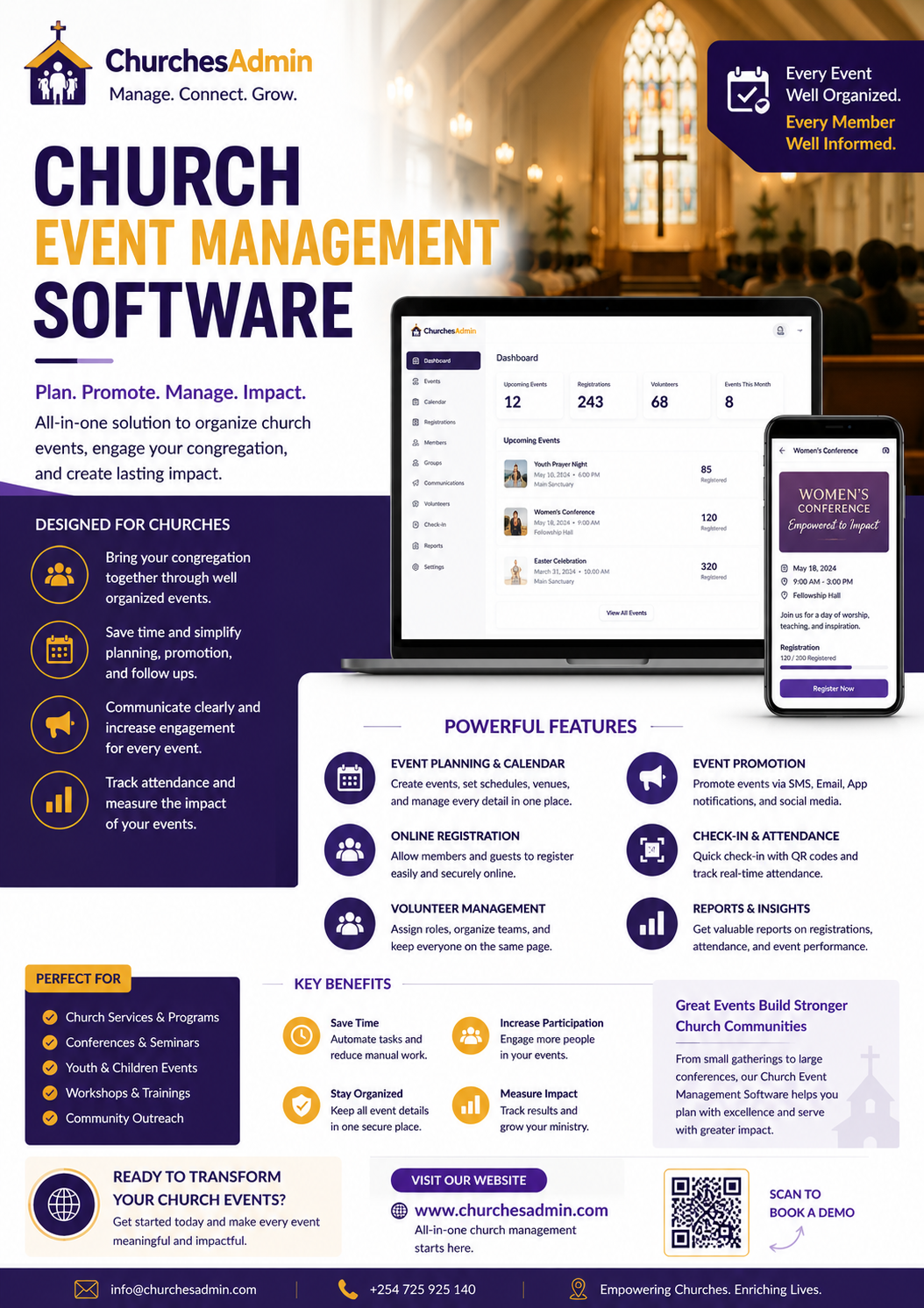
Church Event Management Software helps churches, ministries, worship centers, and religious organizations organize events, coordinate teams, manage attendance, improve communication, streamline registrations, and create better experiences for members and visitors.
Church events play an important role in strengthening engagement, building community, supporting ministry activities, and encouraging participation. Churches regularly organize worship services, conferences, outreach programs, youth gatherings, leadership meetings, training sessions, prayer events, and community initiatives.
As church activities increase, manual coordination becomes difficult. Administrators often rely on spreadsheets, messaging groups, paper lists, emails, and disconnected tools to manage events.
Modern churches require digital systems that improve organization and simplify event execution.
Table of Contents
- Understanding Modern Event Administration
- Why Organized Coordination Matters
- Essential Platform Capabilities
- Registration and Participation Processes
- Communication and Team Coordination
- Attendance and Participation Insights
- Managing Different Types of Church Activities
- Benefits for Ministry Teams
- Selecting the Right Solution
- Future Direction of Digital Ministry Events
- Getting Started
Understanding Modern Event Administration
Church events require planning, communication, scheduling, and execution.
A modern Church Event Management Software platform helps organize event workflows while reducing manual administrative work.
Churches frequently coordinate:
- Worship services
- Conferences
- Community outreach
- Youth gatherings
- Leadership meetings
- Volunteer schedules
- Training programs
- Ministry events
- Seasonal celebrations
- Registration activities
Centralized management creates consistency and improves execution.
Why Organized Coordination Matters
Successful church events depend on effective coordination.
Without structured event systems, churches may experience:
- Communication delays
- Registration challenges
- Attendance uncertainty
- Scheduling conflicts
- Volunteer coordination issues
- Administrative overload
Using Church Event Management Software helps leadership teams improve visibility and deliver better experiences.
Essential Platform Capabilities
A modern platform should support the complete event lifecycle.
Event Planning
Organize:
- Event schedules
- Venues
- Session planning
- Team responsibilities
Registration Management
Manage:
- Participant sign-ups
- Capacity planning
- Attendance lists
- Registration confirmations
Volunteer Coordination
Coordinate:
- Teams
- Roles
- Assignments
- Event schedules
Event Communication
Send:
- Invitations
- Notifications
- Updates
- Event reminders
Administration Dashboard
Track activities from one centralized location.
Registration and Participation Processes
Church registration processes become easier through automation.
Manage:
- Online registrations
- Attendance confirmations
- Guest participation
- Ministry sign-ups
- Event records
Better registration processes improve participation.
Communication and Team Coordination
Event communication keeps everyone aligned.
Coordinate:
- Volunteers
- Ministry leaders
- Members
- Speakers
- Event organizers
Communication improves execution and reduces confusion.
Attendance and Participation Insights
Visibility supports better ministry decisions.
Track:
- Attendance trends
- Event performance
- Participation rates
- Engagement levels
- Ministry involvement
Reporting improves future planning.
Managing Different Types of Church Activities
Different events require different workflows.
Worship Events
Improve planning and attendance.
Conferences
Manage schedules and registrations.
Youth Programs
Improve participation and communication.
Community Outreach
Coordinate teams effectively.
Leadership Meetings
Improve scheduling and organization.
Benefits for Ministry Teams
Using Church Event Management Software helps churches:
Improve Event Planning
Reduce administrative workload.
Increase Participation
Improve member engagement.
Improve Communication
Deliver updates consistently.
Strengthen Coordination
Keep teams aligned.
Improve Reporting
Gain visibility into outcomes.
Selecting the Right Solution
Before selecting software, evaluate:
Ease of Use
Staff and volunteers should adopt it quickly.
Event Coordination Features
Support planning and execution.
Registration Capabilities
Enable simple participant management.
Reporting Tools
Access useful event insights.
Scalability
Support future ministry growth.
Future Direction of Digital Ministry Events
Future event management trends include:
- Workflow automation
- Real-time updates
- Attendance analytics
- Mobile accessibility
- Communication automation
- Improved engagement tools
Churches adopting digital systems today will improve long-term event management.
Getting Started
If your church still relies on spreadsheets, manual registration, scattered communication channels, and paper-based event coordination, now is the right time to modernize.
Church Event Management Software helps churches organize events, improve attendance, streamline communication, strengthen ministry coordination, and support sustainable growth.
Build more organized and engaging church experiences through connected event management.
If your church still relies on spreadsheets, manual registration, scattered communication channels, and paper-based event coordination, now is the right time to modernize.
Church Event Management Software helps churches organize events, improve attendance, streamline communication, strengthen ministry coordination, and support sustainable growth.
Build more organized and engaging church experiences through connected event management.