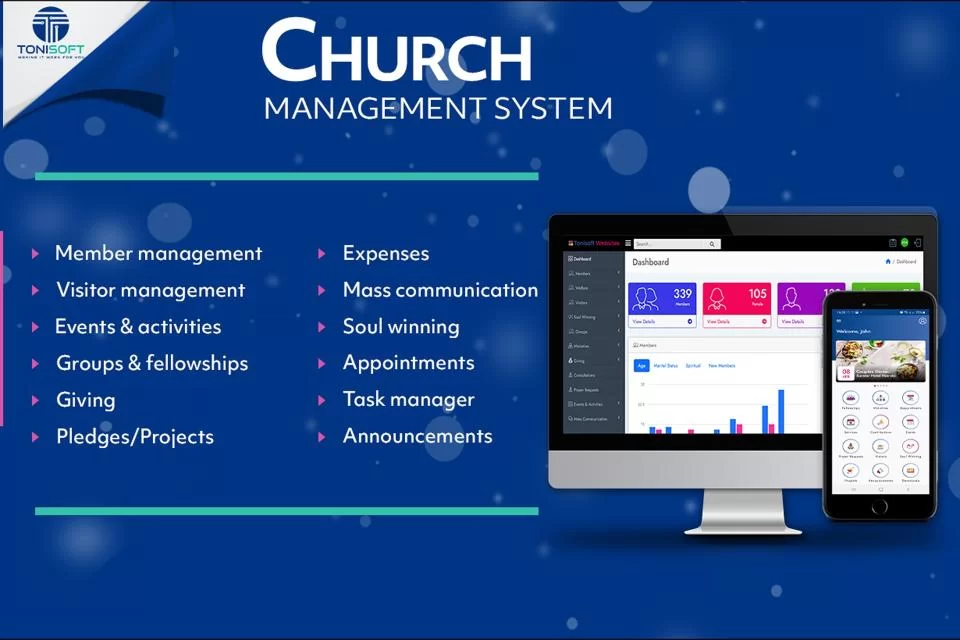
Church Management System – Efficient Church Administration & Membership Tracking
Church management system
Church Management System: Streamline Your Church Operations Efficiently
In today’s digital age, managing a church manually can be time-consuming and prone to errors. A Church management system (CMS) provides an integrated platform to handle membership records, donations, events, communication, and more—all from a single, easy-to-use interface. Whether your church is small or has thousands of members, implementing a robust CMS can transform how your organization operates.
What is a Church Management System?
A Church management system is software designed specifically for churches to automate administrative tasks. From tracking attendance to managing finances, a CMS reduces paperwork and frees up your team to focus on ministry work. Modern CMS platforms often include features like:
-
Membership management – Maintain detailed records of members, families, and groups.
-
Donation tracking – Securely process tithes, offerings, and pledges.
-
Event management – Plan and manage events, services, and community outreach programs.
-
Communication tools – Send newsletters, reminders, and announcements via email or SMS.
-
Reporting and analytics – Generate financial, attendance, and engagement reports effortlessly.
Benefits of Using a Church Management System
Implementing a Church management system offers numerous advantages:
-
Efficiency – Automate repetitive tasks and reduce administrative workload.
-
Improved Communication – Keep members informed and engaged through seamless messaging.
-
Accurate Records – Maintain up-to-date membership, donation, and event data.
-
Enhanced Security – Protect sensitive member information with secure cloud storage.
-
Data-Driven Decisions – Use analytics to plan events, outreach programs, and financial strategies effectively.
Choosing the Right Church Management System
Not all CMS platforms are created equal. When selecting a Church management system, consider the following:
-
Ease of Use: The system should be intuitive for staff and volunteers.
-
Customization: Look for software that adapts to your church’s size and structure.
-
Integration: Ability to connect with accounting software, email platforms, and payment gateways.
-
Support: Reliable customer service and training resources.
-
Mobile Access: Cloud-based systems allow access from anywhere, even on smartphones and tablets.
Top Features to Look for in a Church Management System
A high-quality Church management system should include:
-
Membership database and family tracking
-
Online giving and financial reporting
-
Attendance and check-in systems
-
Event registration and volunteer management
-
Communication tools (email, SMS, push notifications)
-
Mobile app for members and staff
-
Custom reporting and analytics dashboards
How a Church Management System Enhances Ministry
A CMS doesn’t just streamline administration—it strengthens your ministry. By freeing staff from repetitive tasks, a Church management system allows pastors and volunteers to focus on community engagement, spiritual growth, and outreach programs. Members benefit too, enjoying smoother communication, easy donations, and more organized events.
Conclusion
A Church management system is no longer a luxury—it’s a necessity for modern churches seeking to improve efficiency, enhance engagement, and strengthen community impact. Investing in the right CMS empowers your church to focus on what matters most: nurturing faith and building relationships.
Church Management System: The Ultimate Guide to Streamlining Church Operations
Managing a church comes with unique challenges—from tracking memberships and donations to organizing events and ensuring smooth communication. A Church management system (CMS) is designed to simplify all these processes, empowering church leaders to focus more on ministry and community outreach rather than administrative tasks.
In this comprehensive guide, we explore everything you need to know about CMS software, including features, benefits, selection tips, and how it can transform your church operations.
What is a Church Management System?
A Church management system is specialized software that helps churches automate and organize their administrative and operational tasks. Unlike generic management tools, a CMS is built specifically for the unique needs of religious organizations, combining membership tracking, donation management, event planning, and communication into a single platform.
By centralizing all church data, a CMS allows pastors, volunteers, and administrative staff to work more efficiently, reduce errors, and create a better experience for members.
Key Features of a Church Management System
Modern Church management systems come packed with a variety of features designed to cover every aspect of church administration:
1. Membership Management
A robust CMS maintains detailed records of members, families, and groups. Features include:
-
Member profiles with personal information
-
Family grouping and relational tracking
-
Attendance monitoring for services, small groups, and events
2. Donation and Financial Tracking
Handling church finances can be complex. A CMS makes it easy to:
-
Track tithes, offerings, and pledges
-
Process online and mobile donations securely
-
Generate financial reports for transparency and planning
3. Event Planning and Volunteer Management
Organizing church events requires coordination. With a CMS, you can:
-
Schedule events and assign volunteers
-
Track RSVPs and attendance
-
Automate reminders and notifications
4. Communication Tools
Effective communication is vital for engagement. Features include:
-
Email newsletters and SMS alerts
-
Push notifications for members through mobile apps
-
Segmented communication based on groups or ministries
5. Reporting and Analytics
A CMS provides actionable insights to help church leaders make informed decisions:
-
Attendance and engagement reports
-
Donation trends and financial analysis
-
Volunteer participation metrics
Benefits of Implementing a Church Management System
Investing in a Church management system delivers tangible benefits for both staff and members:
Streamlined Administration
Automate repetitive tasks like data entry, donation tracking, and attendance logging, freeing up staff to focus on ministry.
Enhanced Member Engagement
Keep members connected with timely communication, easy event registration, and mobile access to church resources.
Improved Financial Management
Track giving accurately and transparently, with automatic reporting for budgeting and planning.
Data Security and Compliance
Modern CMS platforms provide secure storage of sensitive information, helping your church comply with privacy regulations.
Informed Decision Making
Analytics and reports provide insights that allow church leaders to plan growth strategies, improve outreach, and optimize resources.
How to Choose the Right Church Management System
Choosing the right CMS requires careful consideration of your church’s unique needs:
-
Ease of Use: The software should be intuitive for staff and volunteers, requiring minimal training.
-
Customization: Look for a CMS that can adapt to your church size, structure, and ministries.
-
Integration: Ensure compatibility with accounting software, email platforms, and online payment gateways.
-
Mobile Access: Cloud-based systems with mobile apps allow staff and members to access information anywhere.
-
Support and Training: Reliable customer support and training resources are essential for smooth adoption.
Common Types of Church Management Systems
Churches can choose from different types of CMS solutions depending on their needs:
-
Cloud-Based CMS: Accessible from anywhere, ideal for multi-location churches.
-
On-Premise CMS: Installed locally on church servers; offers more control over data.
-
Mobile-First CMS: Designed primarily for mobile devices, improving member engagement and on-the-go management.
Best Practices for Using a Church Management System
To maximize the benefits of your CMS:
-
Keep member data up-to-date and accurate
-
Encourage online giving and digital engagement
-
Train staff and volunteers regularly
-
Regularly review reports and analytics to improve operations
-
Integrate the CMS with your website, social media, and communication channels
Real-World Impact of a Church Management System
Many churches have reported remarkable improvements after implementing a CMS:
-
Reduced administrative workload by up to 60%
-
Increased online donations and tithes by 40%
-
Improved volunteer participation through automated scheduling and reminders
-
Enhanced member satisfaction and engagement through personalized communication
A CMS not only simplifies church operations but also strengthens your ministry’s ability to serve the community effectively.
Frequently Asked Questions (FAQs)
Q1: Can a small church benefit from a Church management system?
Absolutely! CMS platforms are scalable and can serve both small congregations and large multi-campus churches. Even small churches benefit from streamlined administration and improved communication.
Q2: Is a Church management system secure?
Yes. Reputable CMS providers use encryption, secure cloud storage, and compliance measures to protect sensitive member data.
Q3: Can donations be processed online?
Most modern CMS platforms support online giving, recurring donations, and integration with payment gateways for convenience and transparency.
Q4: How long does it take to implement a CMS?
Implementation varies depending on the size of the church and complexity of features, but many churches can go live within a few weeks with proper training.
Q5: Can volunteers manage events using a CMS?
Yes. CMS platforms allow volunteers to schedule, register, and manage events with minimal administrative support, improving engagement and efficiency.
Conclusion
A Church management system is a vital tool for modern churches looking to improve efficiency, communication, and community engagement. By automating administrative tasks, tracking membership, managing finances, and facilitating events, a CMS allows church leaders to focus on what matters most: nurturing faith and building meaningful relationships.
Investing in the right Church management system ensures your church operates smoothly, engages members effectively, and grows sustainably in today’s digital world.

