Church Workflow Automation – Streamline Church Processes and Improve Ministry Efficiency
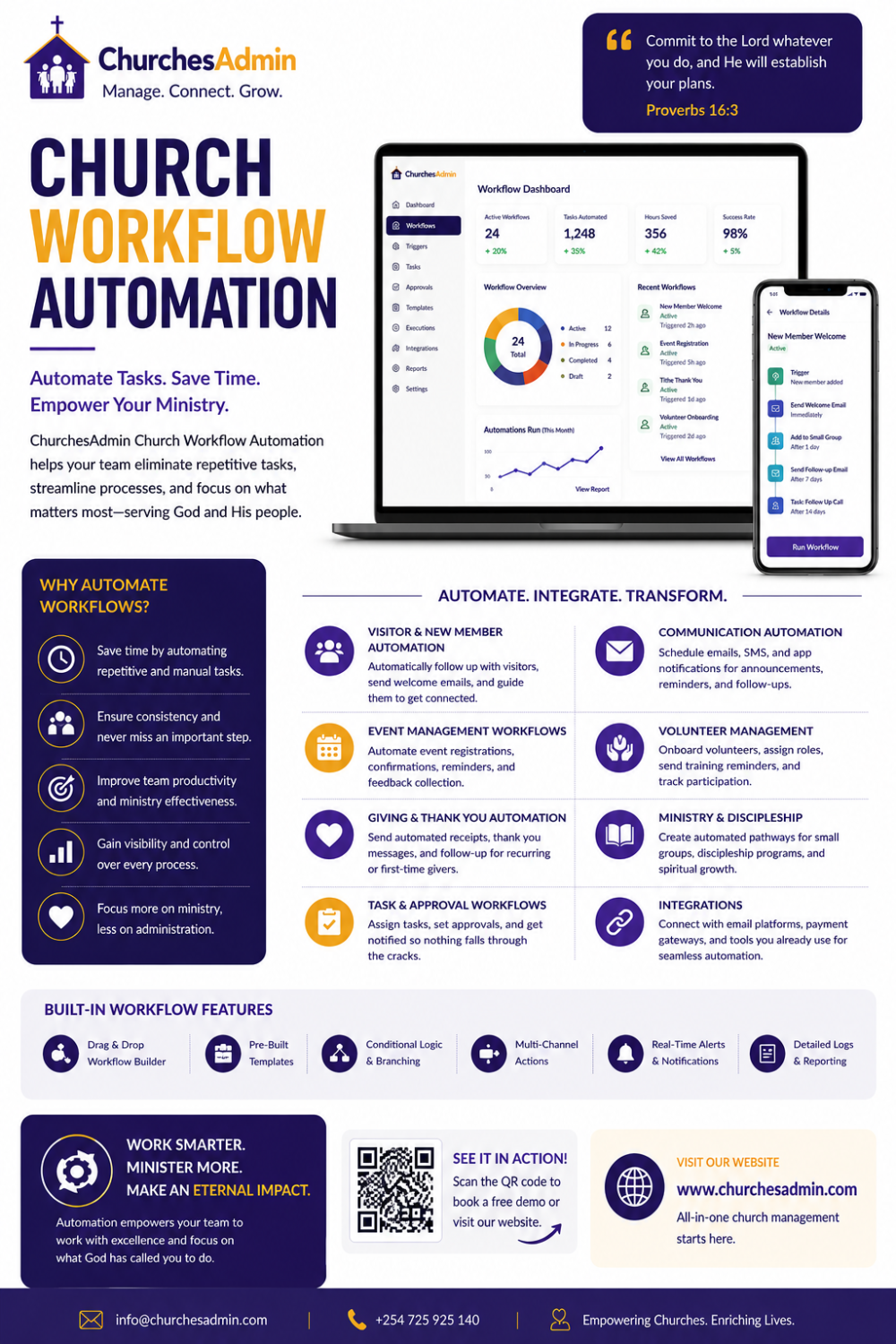
Church Workflow Automation helps churches, ministries, worship centers, and faith-based organizations automate administrative tasks, improve coordination, streamline communication, simplify approvals, organize ministry activities, reduce manual work, and strengthen operational efficiency.
Churches manage a wide range of recurring activities every day. From member registration and attendance tracking to volunteer coordination, ministry scheduling, communication, reporting, event administration, and follow-up activities, operational demands continue increasing as congregations grow.
Many churches still rely on manual processes including spreadsheets, paper forms, messaging groups, email chains, and repetitive administrative tasks. While these methods may work for small operations, they often become difficult to maintain as ministry activities expand.
Modern churches require connected operational systems that automate repetitive work and allow leaders to focus more on ministry and member engagement.
Automation creates consistency, reduces delays, and improves church administration.
Table of Contents
- Understanding Modern Church Process Management
- Why Automation Matters
- Core Automation Capabilities
- Improving Administrative Efficiency
- Participation and Activity Coordination
- Communication and Operational Workflows
- Reporting and Process Visibility
- Supporting Different Ministry Structures
- Benefits of Automated Operations
- Selecting the Right Automation Platform
- Future Direction of Digital Ministry
- Getting Started
Understanding Modern Church Process Management
Church administration consists of multiple connected processes.
A modern Church Workflow Automation approach helps churches reduce repetitive tasks while improving visibility and coordination.
Churches commonly manage:
- Member onboarding
- Attendance administration
- Volunteer scheduling
- Event coordination
- Ministry communication
- Reporting activities
- Approval workflows
- Registration processes
- Leadership coordination
- Administrative tasks
Automation creates consistency and improves execution.
Why Automation Matters
Manual operations become difficult to scale.
Without structured workflows, churches often experience:
- Administrative delays
- Communication gaps
- Duplicate work
- Missed follow-ups
- Reporting challenges
- Volunteer coordination issues
- Limited visibility
- Reduced efficiency
Using Church Workflow Automation helps churches simplify operations and improve ministry execution.
Core Automation Capabilities
A modern automation platform should simplify recurring activities.
Process Automation
Automate:
- Administrative workflows
- Notifications
- Assignments
- Approvals
Member Coordination
Manage:
- Registration workflows
- Follow-ups
- Participation tracking
- Communication schedules
Ministry Scheduling
Coordinate:
- Events
- Volunteer schedules
- Ministry calendars
- Operational timelines
Workflow Monitoring
Track process execution centrally.
Improving Administrative Efficiency
Automation reduces administrative workload.
A centralized Church Workflow Automation solution supports:
Faster Execution
Reduce delays in church operations.
Reduced Manual Work
Minimize repetitive tasks.
Better Coordination
Improve alignment across ministries.
Consistent Processes
Standardize church activities.
Efficient operations support ministry growth.
Participation and Activity Coordination
Church engagement depends on organized workflows.
Track and coordinate:
- Attendance activities
- Ministry participation
- Volunteer assignments
- Event registration
- Community programs
Participation visibility improves church planning.
Engagement Monitoring
Measure:
- Attendance patterns
- Participation activity
- Volunteer involvement
- Ministry outcomes
Insights support operational improvement.
Communication and Operational Workflows
Communication becomes stronger through automation.
A Church Workflow Automation strategy supports:
- Event notifications
- Ministry updates
- Member reminders
- Volunteer coordination
- Leadership communication
- Administrative updates
Benefits include:
Faster Communication
Improve message delivery.
Better Engagement
Increase member responsiveness.
Stronger Coordination
Improve operational execution.
Improved Visibility
Track communication effectiveness.
Reporting and Process Visibility
Leadership teams require operational transparency.
Generate reports for:
- Workflow performance
- Participation activity
- Process completion
- Ministry coordination
- Administrative outcomes
Operational Dashboards
Monitor:
- Efficiency indicators
- Participation trends
- Activity completion
- Ministry performance
Reporting improves decision-making.
Supporting Different Ministry Structures
Different churches operate differently.
Local Churches
Improve administrative efficiency.
Growing Congregations
Support expanding operations.
Ministry Departments
Coordinate activities efficiently.
Outreach Programs
Improve workflow visibility.
Multi-Location Churches
Maintain centralized operations.
Technology supports scalable ministry administration.
Benefits of Automated Operations
Using Church Workflow Automation helps churches:
Improve Efficiency
Reduce repetitive tasks.
Strengthen Coordination
Improve ministry alignment.
Improve Reporting
Increase visibility.
Enhance Communication
Improve engagement.
Support Growth
Scale operations effectively.
Improve Member Experience
Create smoother church interactions.
Selecting the Right Automation Platform
Before selecting software, evaluate:
Ease of Use
Ensure quick adoption.
Automation Features
Support recurring workflows.
Communication Capabilities
Improve coordination.
Reporting Tools
Generate useful insights.
Scalability
Support future expansion.
Selecting the right platform strengthens church administration.
Future Direction of Digital Ministry
Church technology continues evolving.
Future trends include:
- Intelligent automation
- Real-time workflows
- Mobile accessibility
- Digital engagement
- Automated communication
- Centralized administration
Churches adopting automation today improve future readiness.
Getting Started
If your church still relies on spreadsheets, paper forms, repetitive administration, and disconnected operational processes, now is the right time to modernize.
Church Workflow Automation helps churches simplify administration, automate recurring activities, strengthen communication, improve reporting, and support sustainable ministry growth.
Build a more efficient and connected church environment through automation.