Ministry Operations Management System – Complete Guide for Modern Church Administration
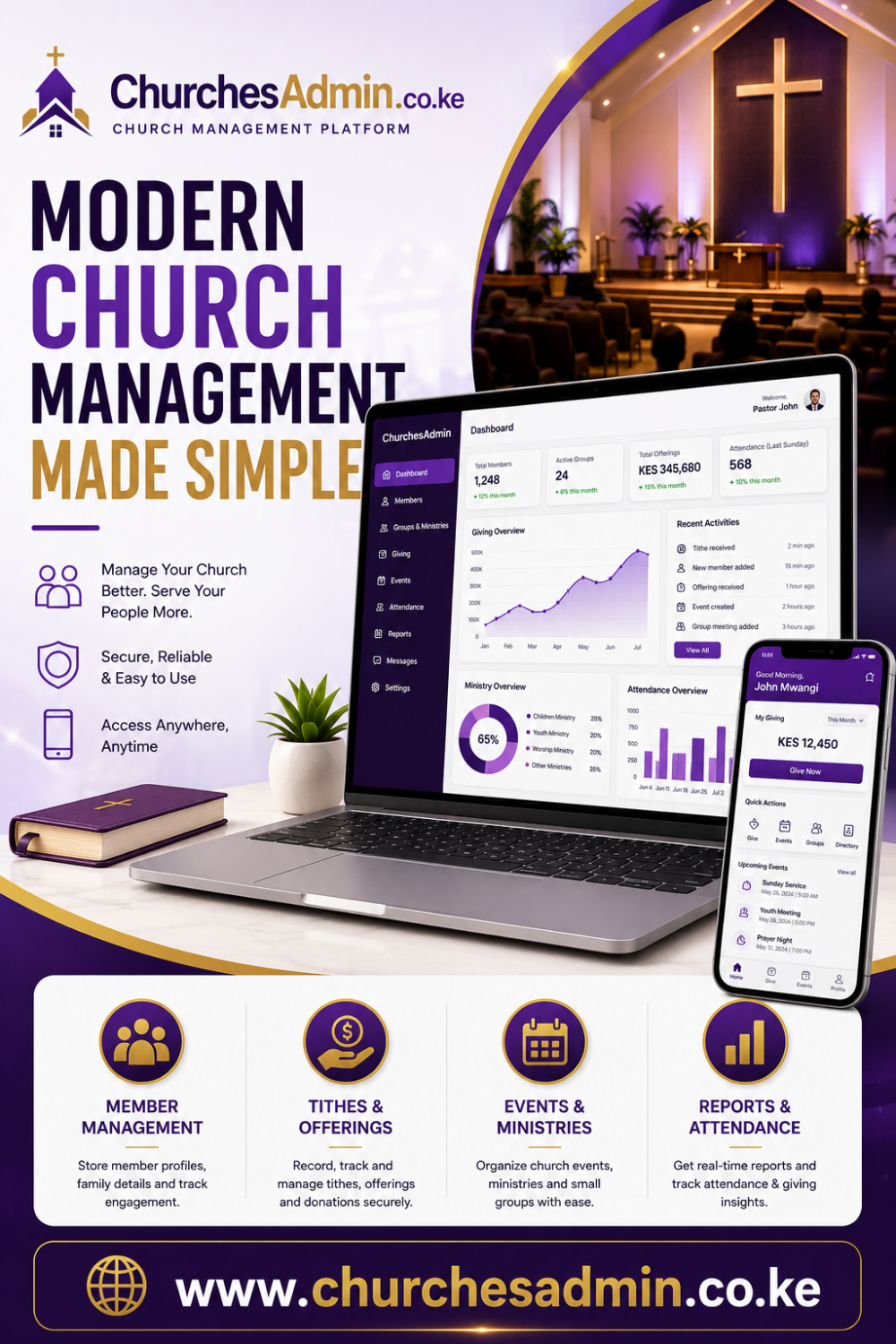
Ministry Operations Management System is an essential solution for churches, ministries, denominations, and faith-based organizations seeking to streamline administration, improve coordination, strengthen member engagement, and enhance operational efficiency.
As ministries grow, managing church operations manually becomes increasingly complex. Church leaders and administrators must coordinate members, volunteers, departments, ministry activities, events, attendance, communication, finances, and reporting while ensuring everything remains organized and accountable.
A modern Ministry Operations Management System centralizes these responsibilities into a single platform. Instead of relying on spreadsheets, paper records, manual processes, and disconnected tools, churches can automate workflows and gain complete visibility into ministry activities.
For churches throughout Kenya, effective ministry operations are critical for supporting spiritual growth, improving administration, and ensuring sustainable ministry development.
Ministry Operations Management System provides the foundation needed to manage ministry activities efficiently while strengthening organizational effectiveness and member engagement.
Table of Contents
- Understanding Ministry Operations Management System
- Why Ministry Operations Management System Matters
- Core Features of Ministry Operations Management System
- Ministry Administration and Department Management
- Member Engagement and Volunteer Coordination
- Communication and Event Management
- Reporting and Leadership Oversight
- Challenges of Traditional Methods
Understanding Ministry Operations Management System
A Ministry Operations Management System is a software platform designed to help churches and ministries manage their daily operations, administrative activities, member engagement, ministry coordination, and organizational processes.
Modern churches often operate multiple ministries, departments, programs, outreach initiatives, events, and volunteer teams. Managing these activities manually can create administrative challenges and limit organizational efficiency.
A Ministry Operations Management System centralizes operational information and provides a structured environment where church leaders can coordinate activities effectively.
The platform helps churches organize ministry departments, maintain member records, coordinate volunteers, manage events, track attendance, facilitate communication, and generate reports.
By consolidating these functions into a single system, churches improve visibility, accountability, and operational control.
For growing churches across Kenya, Ministry Operations Management System provides the infrastructure necessary to support expanding ministry activities and congregation growth.
The system enables leaders to focus more on ministry impact while reducing administrative burdens.
Why Ministry Operations Management System Matters
Effective ministry operations are essential for achieving church goals and fulfilling ministry objectives.
A Ministry Operations Management System helps churches maintain organization, improve communication, and coordinate ministry activities more efficiently.
One of the primary benefits is centralized management. Church leaders can access information related to ministries, departments, volunteers, events, attendance, and members from a single platform.
The software also improves accountability by providing visibility into ministry performance, participation levels, and operational activities.
Communication becomes more effective because churches can coordinate announcements, ministry updates, schedules, and event information efficiently.
A Ministry Operations Management System supports growth by helping churches manage increasing administrative demands without creating operational bottlenecks.
The platform also improves consistency by standardizing workflows across ministries and departments.
As churches throughout Kenya continue expanding their activities and outreach programs, effective operational management becomes increasingly important.
A Ministry Operations Management System provides the tools needed to support sustainable ministry growth and organizational excellence.
Core Features of Ministry Operations Management System
A comprehensive Ministry Operations Management System includes a wide range of features designed to support church administration and ministry coordination.
Member management tools help churches maintain detailed records of individuals, families, volunteers, and ministry participants.
Department management capabilities enable leaders to organize ministries, groups, committees, and operational teams.
Attendance tracking supports monitoring participation in worship services, ministry meetings, training sessions, and events.
Communication tools facilitate SMS, email, and notification management for congregation engagement.
Volunteer coordination features help churches organize service schedules, assignments, and ministry responsibilities.
Event management capabilities support planning, registration, scheduling, and coordination of church activities.
Reporting and analytics provide visibility into membership growth, ministry performance, attendance trends, and operational effectiveness.
Together, these features make Ministry Operations Management System an essential tool for modern church administration.
Ministry Administration and Department Management
Managing multiple ministries and departments requires structured processes and clear visibility.
A Ministry Operations Management System helps churches organize ministries such as youth departments, women’s ministries, men’s fellowships, worship teams, outreach programs, children’s ministries, and leadership groups.
Church leaders can maintain records of ministry activities, schedules, leadership assignments, goals, and participation levels.
The platform supports collaboration by allowing departments to operate within a centralized environment.
Ministry administration becomes more efficient because information remains organized and accessible.
A Ministry Operations Management System also improves accountability by providing leaders with clear visibility into departmental activities and ministry performance.
For churches managing numerous programs and initiatives, centralized administration significantly enhances operational effectiveness.
The software helps ensure ministries remain aligned with the overall mission and objectives of the church.
Member Engagement and Volunteer Coordination
Strong member engagement is essential for healthy church growth and ministry success.
A Ministry Operations Management System helps churches monitor participation and coordinate volunteer activities effectively.
The platform maintains records of member involvement across ministries, events, groups, and service opportunities.
Volunteer management tools help churches schedule assignments, track participation, and coordinate responsibilities.
Church leaders can identify highly engaged members and encourage greater involvement in ministry activities.
A Ministry Operations Management System also supports follow-up processes for visitors, new members, and inactive participants.
By improving engagement visibility, churches can strengthen relationships and increase participation throughout the congregation.
For ministries throughout Kenya, volunteer coordination and member engagement play a critical role in achieving ministry goals.
The software provides the structure needed to support these efforts efficiently.
Communication and Event Management
Effective communication is essential for successful ministry operations.
A Ministry Operations Management System provides tools that help churches communicate with members, volunteers, ministry leaders, and congregation groups consistently.
Churches can distribute announcements, event invitations, schedules, reminders, ministry updates, and important notices through centralized communication channels.
Event management capabilities support the planning and coordination of conferences, seminars, crusades, retreats, leadership meetings, training programs, and church celebrations.
The platform helps maintain organized schedules and improves participation management.
Communication histories provide visibility into member interactions and engagement efforts.
A Ministry Operations Management System strengthens organizational coordination and improves communication effectiveness throughout the church.
For churches with active ministry calendars, centralized communication and event management significantly improve operational efficiency.
Reporting and Leadership Oversight
Church leaders require reliable information to guide ministry planning and decision-making.
A Ministry Operations Management System includes reporting tools that provide visibility into church operations, ministry activities, attendance patterns, volunteer participation, and member engagement.
Membership reports help leaders monitor growth trends and congregation development.
Attendance reports provide insights into participation across services, ministries, and events.
Volunteer reports help evaluate ministry involvement and operational support.
Administrative dashboards offer real-time visibility into church performance and ministry activities.
These insights support strategic planning and improve leadership oversight.
For churches operating multiple ministries, campuses, or branches, centralized reporting provides valuable organizational intelligence.
A Ministry Operations Management System transforms operational data into actionable insights that support ministry effectiveness and long-term growth.
Challenges of Traditional Methods
Many churches continue to rely on paper records, spreadsheets, notebooks, and manual administrative processes to manage ministry operations.
While these methods may work for smaller congregations, they become increasingly difficult to maintain as churches grow.
Manual record keeping often results in fragmented information, inconsistent reporting, and administrative inefficiencies.
Volunteer coordination becomes more challenging when schedules and assignments are managed manually.
Communication may become inconsistent because member information is scattered across multiple systems.
Ministry leaders may struggle to access the information needed to coordinate activities effectively.
Reporting and performance monitoring become more difficult because data is distributed across various sources.
A Ministry Operations Management System addresses these challenges by centralizing operations, improving communication, supporting ministry coordination, enhancing reporting capabilities, and automating administrative processes.
For churches, ministries, denominations, and faith-based organizations throughout Kenya, implementing a Ministry Operations Management System is becoming increasingly essential for maintaining effective administration, strengthening ministry operations, and supporting sustainable organizational growth.
Benefits for Church Leaders
Ministry Operations Management System provides significant advantages for pastors, bishops, ministry directors, church boards, and leadership teams seeking to improve operational oversight and strengthen ministry effectiveness.
One of the primary benefits is centralized visibility into ministry activities. Church leaders can access information about departments, ministries, members, volunteers, attendance, events, and communication activities from a single platform.
The system supports better decision-making by providing accurate and up-to-date information regarding ministry performance and congregation engagement.
Ministry Operations Management System also improves strategic planning by helping leaders monitor participation levels, evaluate ministry outcomes, and identify opportunities for growth.
Church leaders can oversee multiple ministries more effectively while maintaining alignment with the church’s mission and objectives.
The platform reduces administrative burdens and enables leadership teams to dedicate more time to spiritual guidance, discipleship, outreach, and pastoral responsibilities.
As churches continue expanding throughout Kenya, Ministry Operations Management System becomes an increasingly valuable leadership and administration tool.
Organizations that implement modern ministry management systems often experience stronger coordination, improved accountability, and more effective ministry outcomes.
Benefits for Church Administrators
Church administrators are responsible for coordinating daily operations and ensuring ministry activities remain organized and efficient.
Ministry Operations Management System helps administrators streamline workflows while maintaining accurate records and operational visibility.
The platform centralizes information related to members, volunteers, ministries, departments, attendance, events, and communication activities.
Administrators can manage registrations, schedules, ministry assignments, and reporting requirements more efficiently.
Ministry Operations Management System also improves communication between church departments by providing shared access to operational information.
Automated processes reduce repetitive administrative tasks while minimizing errors and inconsistencies.
The system improves organizational efficiency and supports collaboration across ministries and leadership teams.
For churches managing multiple departments, branches, or ministry programs, centralized administration significantly enhances operational effectiveness.
Ministry Operations Management System helps administrators maintain organized and reliable church operations while supporting ministry growth.
Benefits for Church Members
Church members benefit from improved organization, stronger communication, and more effective ministry coordination when churches implement Ministry Operations Management System.
One of the most important advantages is enhanced engagement.
The platform helps churches coordinate ministries, events, volunteer opportunities, and programs more effectively, creating greater opportunities for participation.
Members receive timely communication regarding church activities, ministry schedules, announcements, and special events.
Ministry Operations Management System also supports better pastoral care by helping church leaders maintain visibility into member involvement and engagement.
Churches can respond more effectively to member needs and strengthen relationships throughout the congregation.
Accurate records and organized ministry processes contribute to a smoother and more enjoyable church experience.
For congregations throughout Kenya, these improvements help foster stronger church communities and greater member satisfaction.
The software helps create an environment where members can connect, serve, grow, and participate more effectively.
Improving Ministry Through Automation
Automation is one of the most valuable components of Ministry Operations Management System.
Traditional ministry administration often involves manual record keeping, spreadsheets, paper forms, attendance sheets, and repetitive administrative activities.
These processes consume significant time and increase the risk of operational errors.
Ministry Operations Management System automates ministry coordination, member management, attendance tracking, volunteer scheduling, communication activities, event administration, and reporting workflows.
The platform ensures information remains organized, accessible, and synchronized across departments.
Automated processes improve consistency while reducing administrative workloads.
Church leaders and administrators can focus more on ministry impact and less on routine operational tasks.
As churches continue growing throughout Kenya, automation becomes increasingly important for maintaining efficiency and organizational effectiveness.
Ministry Operations Management System transforms ministry administration into a structured and scalable process that supports long-term church growth.
Compliance, Accountability, and Financial Stewardship
Maintaining organized records and operational transparency is essential for responsible church administration.
Ministry Operations Management System helps churches improve accountability by centralizing ministry information and maintaining detailed operational records.
The platform stores attendance histories, ministry participation records, volunteer activities, communication logs, event records, and administrative information in a secure environment.
These records support leadership oversight, ministry reviews, strategic planning, and governance requirements.
Ministry Operations Management System also improves transparency by providing reliable reporting and operational visibility.
Access controls help protect sensitive member and ministry information while maintaining appropriate accountability.
Centralized information management reduces the risk of lost records, inconsistent reporting, and administrative inefficiencies.
For churches throughout Kenya, maintaining accurate records contributes significantly to effective governance and responsible ministry management.
Ministry Operations Management System provides the foundation needed to support accountability, stewardship, and sustainable church operations.
Why ChurchesAdmin Is the Ideal Solution
ChurchesAdmin is specifically designed to help churches, ministries, denominations, and faith-based organizations manage their operations effectively.
Ministry Operations Management System becomes significantly more powerful when integrated with member management, attendance tracking, communication tools, donation management, volunteer coordination, event administration, and reporting capabilities.
ChurchesAdmin combines all these functions within a single platform.
The system supports ministry management, congregation administration, attendance monitoring, communication, visitor tracking, donation management, event coordination, and leadership reporting.
ChurchesAdmin helps church leaders maintain operational visibility while reducing administrative workloads and improving ministry effectiveness.
Ministry Operations Management System powered by ChurchesAdmin enables churches to strengthen coordination, improve engagement, and support sustainable growth.
For churches throughout Kenya, ChurchesAdmin provides a scalable solution capable of supporting both small congregations and large multi-campus ministries.
By centralizing operations and automating administrative processes, ChurchesAdmin helps organizations improve efficiency, accountability, communication, and ministry performance.
Future Trends
The future of Ministry Operations Management System will be shaped by cloud technology, artificial intelligence, mobile accessibility, advanced analytics, and digital ministry innovation.
Cloud-based platforms will continue gaining popularity because they provide secure and flexible access to ministry information from any location.
Artificial intelligence may assist churches with volunteer planning, engagement analysis, attendance forecasting, ministry performance evaluation, and communication optimization.
Advanced analytics tools will provide deeper insights into ministry effectiveness, member participation, and church growth trends.
Mobile applications will become increasingly important as church leaders, volunteers, and members seek real-time access to church information and ministry activities.
Integration with digital communication tools, online giving platforms, and virtual ministry solutions will continue expanding.
As churches throughout Kenya continue embracing technology, demand for intelligent ministry management solutions will increase.
Ministry Operations Management System will remain a critical component of effective church administration and ministry leadership.
Organizations that adopt modern technologies early will be better positioned to improve efficiency, strengthen engagement, and support sustainable ministry growth.
Getting Started
Implementing Ministry Operations Management System begins with evaluating existing ministry administration processes and identifying opportunities for improvement.
Church leaders should assess how ministries, departments, volunteers, attendance records, communication activities, events, and operational information are currently managed.
The next step involves centralizing operational data within a structured digital platform.
Churches should establish clear procedures for ministry administration, volunteer management, communication workflows, attendance tracking, event coordination, and reporting.
Training church staff, ministry leaders, and administrators is important to ensure successful adoption and effective platform usage.
Ministry Operations Management System delivers the greatest value when integrated with broader church management functions including member management, attendance tracking, visitor administration, communication, donation tracking, event coordination, and leadership reporting.
For churches seeking a complete solution, ChurchesAdmin provides integrated capabilities that support ministry operations, member management, communication, donations, attendance monitoring, reporting, and organizational oversight.
By implementing Ministry Operations Management System, churches can improve administration, strengthen ministry coordination, enhance member engagement, increase accountability, and create a scalable foundation for long-term ministry growth.