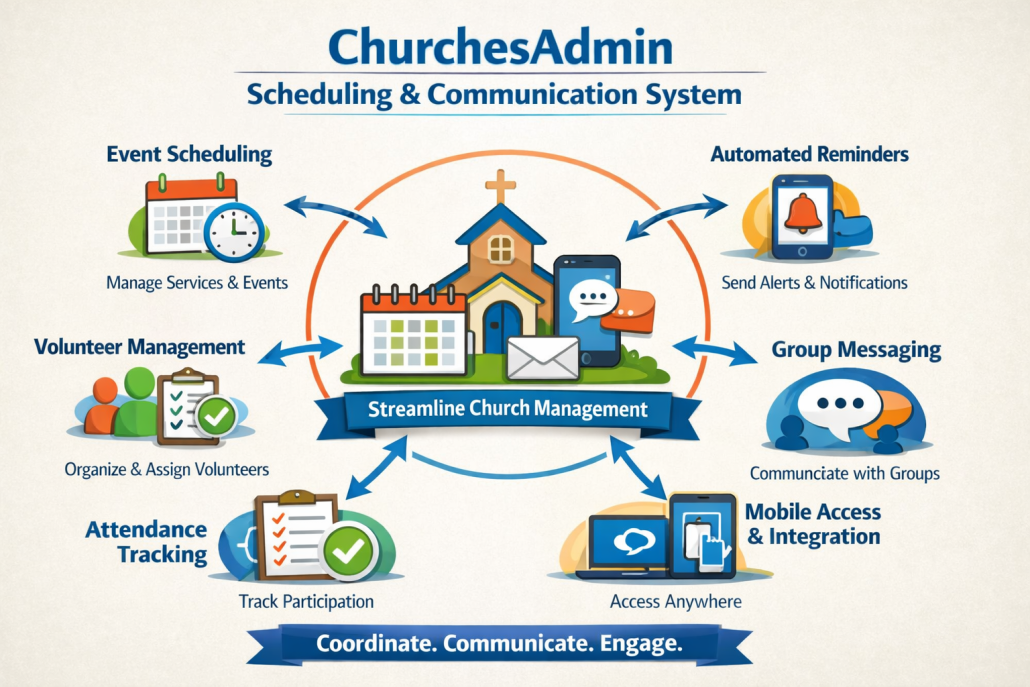
Church Software Solutions – Best Tools for Modern Church Management

Church Software Solutions
Church Software Solutions: Transforming Modern Church Management
In today’s digital age, managing a church efficiently requires more than traditional methods. From tracking donations to organizing events and engaging the congregation, the right church software solutions can streamline operations, save time, and enhance community interaction. This guide explores the best software solutions for churches, their benefits, features, and how to choose the right system for your ministry.
What Are Church Software Solutions?
Church software solutions are specialized tools designed to simplify the management of church activities. They provide churches with technology to handle administrative tasks, communication, financial management, volunteer coordination, and more. These solutions are increasingly becoming vital as churches grow and expand their outreach.
Key Benefits of Using Church Software Solutions
-
Efficient Administration
Managing a church involves multiple administrative tasks such as member registration, event planning, and scheduling. Church software solutions automate these processes, reducing errors and administrative workload. -
Improved Financial Management
Handling donations, tithes, and offerings can be complex. Church software solutions provide secure and transparent financial management features, including online giving, automated receipts, and detailed reports. -
Enhanced Communication
Modern software solutions allow churches to connect with their members via emails, SMS, or mobile apps. This ensures everyone stays informed about events, services, and announcements. -
Volunteer and Staff Coordination
Church software helps in scheduling volunteers, tracking their participation, and managing staff assignments efficiently. This ensures that church programs run smoothly. -
Data Security and Compliance
Churches handle sensitive data such as personal information and donation records. A reliable software solution ensures data security and helps maintain compliance with legal and financial regulations.
Top Features to Look for in Church Software Solutions
When selecting church software solutions, it’s crucial to consider features that match your church’s needs:
-
Membership Management
Keep track of member information, attendance, family connections, and engagement history. -
Online Giving and Donations
Offer online tithing options, recurring donations, and detailed giving reports. -
Event and Calendar Management
Plan, schedule, and manage church events, meetings, and services. -
Communication Tools
Email campaigns, newsletters, SMS alerts, and mobile app notifications. -
Volunteer Management
Track volunteer hours, assign tasks, and manage schedules easily. -
Reporting and Analytics
Generate reports on attendance, donations, event participation, and overall church growth. -
Integration Capabilities
Seamlessly connect with accounting software, email platforms, or social media tools. -
Mobile Access
A mobile-friendly interface ensures accessibility for staff and members on the go.
Types of Church Software Solutions
Churches have unique requirements, and software solutions vary depending on their focus:
-
Church Management Software (ChMS)
This type focuses on administrative management, tracking members, attendance, and engagement. Examples include platforms like Planning Center and Breeze ChMS. -
Donation and Tithing Software
Tools that make giving easy and secure, including online payment processing and automated receipts. -
Event Management Software
Helps plan events, manage RSVPs, track attendance, and coordinate volunteers. -
Communication Platforms
Tools designed to enhance outreach via email newsletters, push notifications, or SMS campaigns. -
Integrated All-in-One Solutions
Some software combines all features, providing a single platform to manage all church activities effectively.
How Church Software Solutions Improve Member Engagement
Engaging with your congregation is essential for church growth. Church software solutions enhance engagement through:
-
Personalized Communication: Send targeted messages based on member interests or involvement.
-
Accessible Online Resources: Share sermons, study materials, and devotionals online.
-
Event Participation: Simplified registration and reminders increase attendance at church programs.
-
Volunteer Opportunities: Easily match members with volunteer roles that suit their skills.
Choosing the Right Church Software Solutions
Selecting the right solution depends on several factors:
-
Church Size
Small churches may need simpler, budget-friendly solutions, while large churches require scalable software with advanced features. -
Budget
Evaluate cost versus benefits. Many providers offer tiered pricing based on features and number of members. -
Ease of Use
Choose software with an intuitive interface that staff and volunteers can easily navigate. -
Customer Support
Reliable support is crucial for troubleshooting and training staff on new systems. -
Integration Needs
Ensure the software integrates with your existing tools, such as accounting or email platforms. -
Security
Prioritize software that ensures data privacy, secure payment processing, and compliance with regulations.
Popular Church Software Solutions in 2026
-
Planning Center
A comprehensive ChMS platform that covers attendance tracking, donations, events, and volunteer management. -
Breeze ChMS
Known for its user-friendly interface and strong customer support, ideal for small to medium-sized churches. -
Tithe.ly
Focuses on donations and mobile giving, offering an easy-to-use platform for online contributions. -
Church Community Builder
Combines ChMS features with volunteer scheduling and communication tools. -
FellowshipOne
Suitable for large churches, with robust reporting and analytics, along with online giving and event management.
Implementing Church Software Solutions Successfully
-
Plan Your Requirements
Identify the features your church needs most and define clear goals for software implementation. -
Train Staff and Volunteers
Ensure everyone knows how to use the system effectively, minimizing resistance and errors. -
Migrate Data Carefully
Transfer existing member information, donation records, and event data securely into the new system. -
Leverage Automation
Use automated reminders, online giving, and reporting tools to reduce manual work. -
Monitor and Evaluate
Regularly assess software performance and user feedback to make adjustments or upgrades as needed.
Future Trends in Church Software Solutions
-
Mobile-First Platforms
More software is now mobile-friendly, allowing staff and members to access tools on smartphones and tablets. -
AI and Automation
Artificial intelligence helps with predictive analytics for member engagement and donation patterns. -
Cloud-Based Solutions
Cloud storage ensures secure data access from anywhere and simplifies updates and maintenance. -
Integrated Multimedia
Integration with streaming services for online sermons and video content is becoming standard. -
Enhanced Security
As churches handle more online donations, data encryption and cyber-security measures are a priority.
Conclusion
Investing in church software solutions is no longer optional—it’s essential for modern church management. From streamlining administrative tasks to enhancing member engagement and ensuring financial transparency, the right software can transform how a church operates.
Whether your church is small or large, adopting these solutions can save time, reduce errors, and create a stronger connection with your congregation. Take the time to assess your needs, explore the options, and implement a system that aligns with your mission and goals.

