Church Member Database – Centralize Membership Information and Strengthen Church Administration
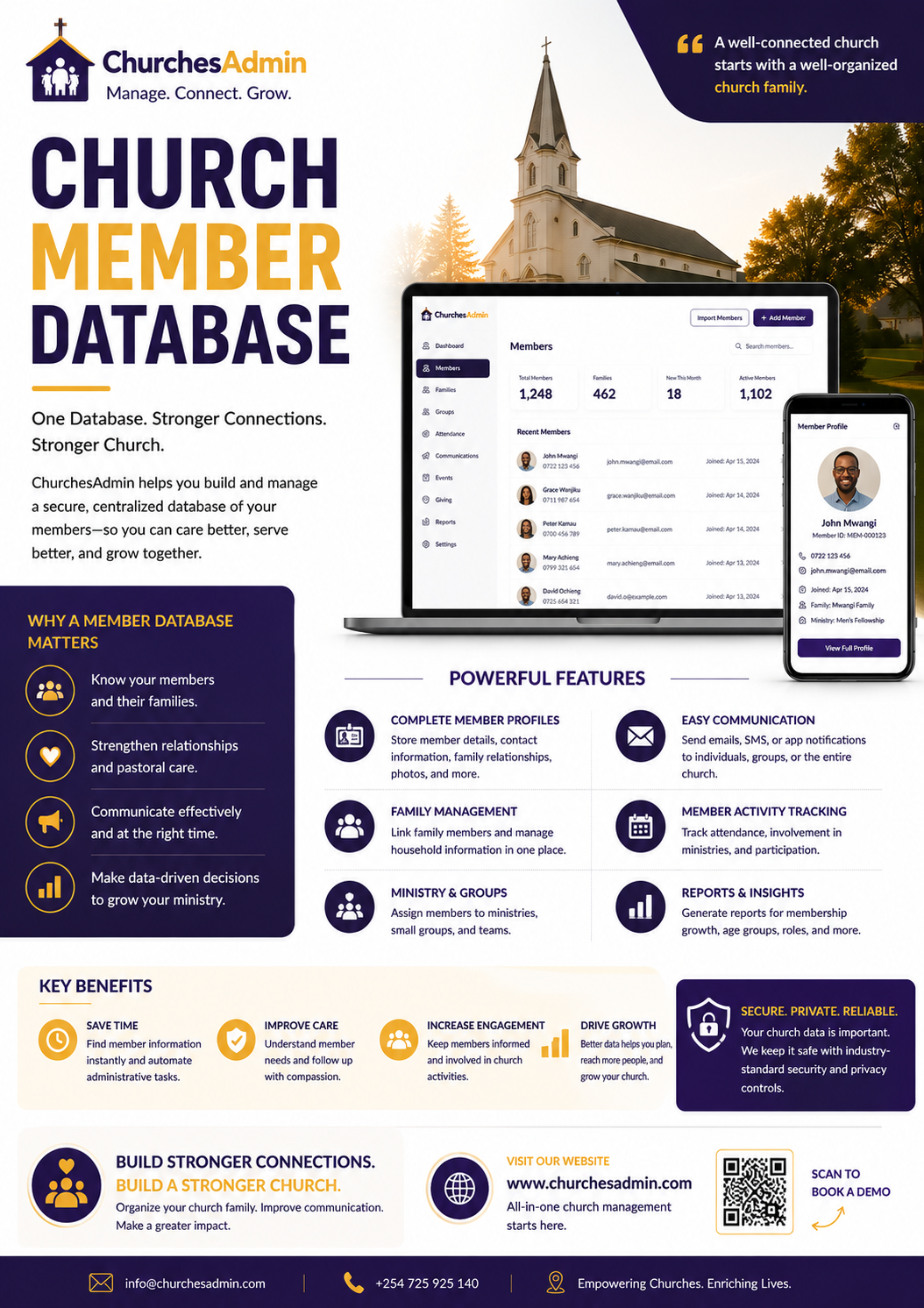
Church Member Database helps churches, ministries, worship centers, and faith-based organizations organize member information, improve communication, strengthen engagement, simplify administration, track participation, and support long-term church growth.
Managing church membership is one of the most important responsibilities within church administration. Every growing church needs reliable access to accurate member information to support ministry activities, improve engagement, coordinate communication, and strengthen community relationships.
As congregations expand, manual methods such as paper records, spreadsheets, notebooks, and disconnected communication systems become difficult to maintain. Churches often struggle with duplicate records, outdated contact information, attendance visibility challenges, and limited reporting capabilities.
A centralized church membership system helps leaders maintain accurate records while improving ministry effectiveness and member experiences.
Modern churches increasingly require digital tools that provide visibility, organization, and scalability.
Table of Contents
- Understanding Modern Membership Administration
- Why Organized Records Matter
- Core Functions and Capabilities
- Managing Membership Information Efficiently
- Attendance and Participation Tracking
- Communication and Engagement Workflows
- Reporting and Administrative Visibility
- Supporting Different Church Structures
- Benefits of Digital Administration
- Choosing the Right Solution
- Future Direction of Church Technology
- Getting Started
Understanding Modern Membership Administration
Church membership management extends beyond storing names and contact information.
A modern Church Member Database provides a structured environment where church leadership teams can manage member profiles, participation history, communication records, ministry involvement, and operational reporting.
Churches regularly manage:
- Member registration
- Family records
- Attendance history
- Ministry participation
- Volunteer involvement
- Communication updates
- Event engagement
- Leadership assignments
- Contribution history
- Membership growth reporting
Centralized administration supports better organization.
Why Organized Records Matter
Accurate records improve ministry operations.
Without structured systems, churches often experience:
- Duplicate information
- Missing records
- Poor communication
- Administrative delays
- Attendance uncertainty
- Reduced member engagement
- Reporting limitations
- Coordination challenges
Using Church Member Database software creates a stronger operational foundation.
Core Functions and Capabilities
A modern membership platform should simplify administration.
Member Registration
Capture and manage:
- Member profiles
- Contact details
- Family information
- Membership categories
Profile Management
Maintain visibility across:
- Ministry participation
- Service history
- Attendance records
- Volunteer involvement
Centralized Records
Store and access information securely.
Administrative Access
Enable authorized leadership teams to manage records efficiently.
Managing Membership Information Efficiently
Managing church information manually becomes difficult as congregations grow.
A centralized Church Member Database supports:
Accurate Records
Maintain updated member profiles.
Family Grouping
Organize households efficiently.
Member Classification
Track:
- New members
- Active members
- Volunteers
- Ministry leaders
Historical Information
Maintain complete participation history.
This improves administration and member support.
Attendance and Participation Tracking
Attendance insights support ministry growth.
Track:
- Worship services
- Prayer meetings
- Conferences
- Bible studies
- Ministry gatherings
- Community events
Attendance visibility improves decision-making.
Participation Insights
Measure:
- Service attendance
- Event engagement
- Volunteer activity
- Ministry involvement
This supports stronger member relationships.
Communication and Engagement Workflows
Communication strengthens church communities.
A Church Member Database supports better engagement through organized communication.
Manage:
- Announcements
- Service reminders
- Ministry updates
- Event invitations
- Community notices
Benefits include:
Faster Communication
Deliver information consistently.
Better Engagement
Members remain informed.
Improved Participation
Increase ministry involvement.
Stronger Relationships
Build deeper church connections.
Reporting and Administrative Visibility
Church leaders require meaningful insights.
Generate reports for:
- Membership growth
- Attendance trends
- Participation levels
- Volunteer engagement
- Operational activity
Reporting improves strategic planning.
Performance Visibility
Track:
- Growth trends
- Member retention
- Ministry activity
- Community engagement
Data supports informed decisions.
Supporting Different Church Structures
Different churches require different administration approaches.
Local Churches
Improve membership visibility.
Multi-Campus Churches
Manage records centrally.
Ministries
Coordinate participation efficiently.
Worship Centers
Improve engagement and communication.
Community Programs
Track involvement effectively.
Digital administration supports growth.
Benefits of Digital Administration
Using Church Member Database technology helps churches:
Improve Organization
Access centralized records.
Reduce Manual Work
Automate repetitive tasks.
Improve Communication
Deliver updates consistently.
Strengthen Engagement
Improve participation visibility.
Increase Reporting Accuracy
Support better decision-making.
Support Church Growth
Scale administration efficiently.
Choosing the Right Solution
Before selecting software, evaluate:
Ease of Use
Teams should adopt the platform quickly.
Membership Features
Support complete member records.
Communication Capabilities
Keep engagement simple.
Reporting Tools
Provide actionable insights.
Scalability
Support future church growth.
Selecting the right platform improves long-term success.
Future Direction of Church Technology
Church administration continues evolving.
Future trends include:
- Automated workflows
- Real-time reporting
- Mobile accessibility
- Digital engagement
- Improved analytics
- Member self-service tools
Churches adopting technology today improve future readiness.
Getting Started
If your church still relies on paper files, spreadsheets, manual registers, and disconnected communication tools, now is the right time to modernize.
Church Member Database helps churches centralize member information, improve communication, strengthen reporting, increase participation, and support sustainable ministry growth.
Build a more organized and connected church community through modern membership management.