Church Member Management System Kenya | Best Church Software Guide 2026

Church Member Management System Kenya | Best Church Software Guide 2026

Church Member Management System Kenya | Best Church Software Guide 2026

Church Member Management System

Church Member Management System Kenya: Complete Guide for Churches in 2026

Introduction

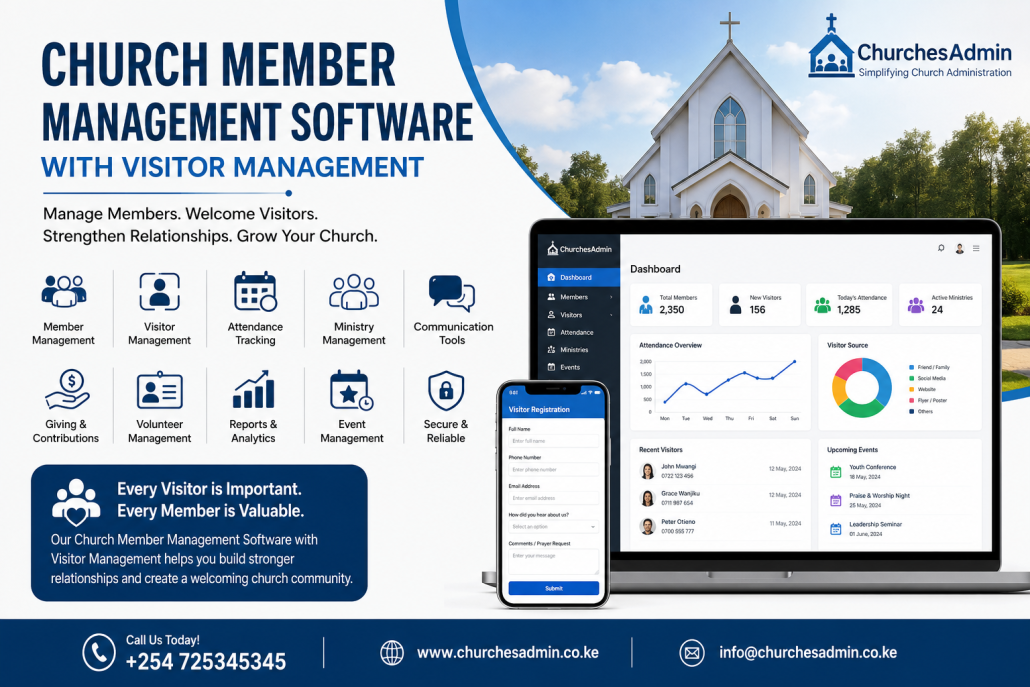
Churches in Kenya are rapidly embracing digital transformation to improve administration, communication, and member engagement. A church member management system Kenya is no longer a luxury—it is a necessity for modern ministries seeking efficiency, growth, and better pastoral care.

Whether you run a small local church or a large multi-branch ministry, a church management system (ChMS) helps you organize member data, track attendance, manage finances, and enhance communication.

In this comprehensive SEO-optimized guide, we explore everything you need to know about choosing and using the best church member management system in Kenya.


What is a Church Member Management System?

A church member management system is a digital platform designed to help churches manage their members, activities, and operations efficiently. It replaces manual record-keeping systems such as notebooks and spreadsheets with a centralized, secure database.

Key Functions:

  • Member registration and database management

  • Attendance tracking

  • Communication (SMS, email, notifications)

  • Financial management (tithes, offerings, donations)

  • Event and service planning

  • Reporting and analytics


Why Churches in Kenya Need a Member Management System

1. Growing Church Membership

Many churches in Kenya are experiencing rapid growth. Managing hundreds or thousands of members manually becomes difficult and error-prone.

2. Improved Communication

With mobile penetration high in Kenya, systems that integrate SMS and WhatsApp help churches communicate instantly with members.

3. Accountability and Transparency

Digital systems provide accurate financial tracking, helping churches maintain trust and transparency.

4. Efficient Record Keeping

A centralized database ensures all member information is secure, organized, and easily accessible.

5. Better Pastoral Care

Track member needs, follow-ups, and spiritual growth more effectively.


Key Features of a Church Member Management System in Kenya

1. Member Database Management

Store detailed member profiles including:

  • Name, contacts, and address

  • Family relationships

  • Ministry involvement

  • Spiritual milestones (baptism, confirmation)

2. Attendance Tracking

Track attendance for:

  • Sunday services

  • Midweek services

  • Small groups and fellowships

This helps identify active and inactive members.

3. SMS and Email Integration

Bulk messaging features allow churches to:

  • Send announcements

  • Share devotionals

  • Remind members about events

4. Financial Management

Track:

  • Tithes

  • Offerings

  • Donations

  • Pledges

Generate financial reports for accountability.

5. Event Management

Plan and manage:

  • Crusades

  • Conferences

  • Youth events

  • Church meetings

6. Reporting and Analytics

Generate insights such as:

  • Membership growth

  • Attendance trends

  • Giving patterns


Benefits of Using a Church Member Management System in Kenya

Increased Efficiency

Automating administrative tasks saves time and reduces workload for church staff.

Better Decision Making

Data-driven insights help church leaders make informed decisions.

Enhanced Member Engagement

Personalized communication improves member participation and retention.

Data Security

Cloud-based systems ensure member data is safe and backed up.

Scalability

As your church grows, the system grows with you.


How to Choose the Best Church Member Management System in Kenya

1. Ease of Use

Choose a system that is simple and user-friendly, even for non-technical staff.

2. Mobile Compatibility

Ensure the system works well on smartphones since many users rely on mobile devices.

3. Local Payment Integration

Look for support for:

  • M-Pesa

  • Airtel Money

  • Bank payments

4. Customization

Your church has unique needs—choose a system that can be tailored.

5. Customer Support

Reliable local support is essential for troubleshooting and training.

6. Affordability

Select a system that fits your church budget without compromising quality.


Popular Use Cases in Kenya

Small Churches

  • Basic member registration

  • Attendance tracking

  • SMS communication

Medium Churches

  • Financial tracking

  • Event management

  • Ministry coordination

Large Churches

  • Multi-branch management

  • Advanced reporting

  • Integration with other systems


Challenges Without a Church Management System

Churches that rely on manual systems often face:

  • Lost or incomplete member records

  • Poor communication with members

  • Financial mismanagement

  • Difficulty tracking attendance

  • Inefficient administration


Future of Church Member Management Systems in Kenya

Technology continues to evolve, and church systems are becoming more advanced. Future trends include:

1. Mobile Apps

Dedicated apps for members to:

  • Check announcements

  • Give offerings

  • Register for events

2. Cloud-Based Solutions

Access your system from anywhere at any time.

3. AI and Automation

Smart systems that:

  • Predict attendance trends

  • Automate communication

  • Provide insights

4. Integration with Social Media

Seamless connection with platforms like Facebook and WhatsApp.


Tips for Successful Implementation

  1. Train your staff and volunteers

  2. Start with essential features

  3. Keep data updated regularly

  4. Encourage members to engage with the system

  5. Monitor performance and improve


Conclusion

A church member management system Kenya is a powerful tool that helps churches grow, stay organized, and serve their members better. From managing member data to improving communication and ensuring financial transparency, the benefits are undeniable.

As churches in Kenya continue to grow and adapt to digital transformation, investing in a reliable church management system will position your ministry for long-term success.

Church Management Software Kenya | Best ChMS Solutions for Churches

Best Church Management System Kenya | Affordable Church Software Solutions

Best Church Management System Kenya | Affordable Church Software Solutions

Church Management System

Church Management System Kenya: The Complete Guide for Modern Churches
Introduction

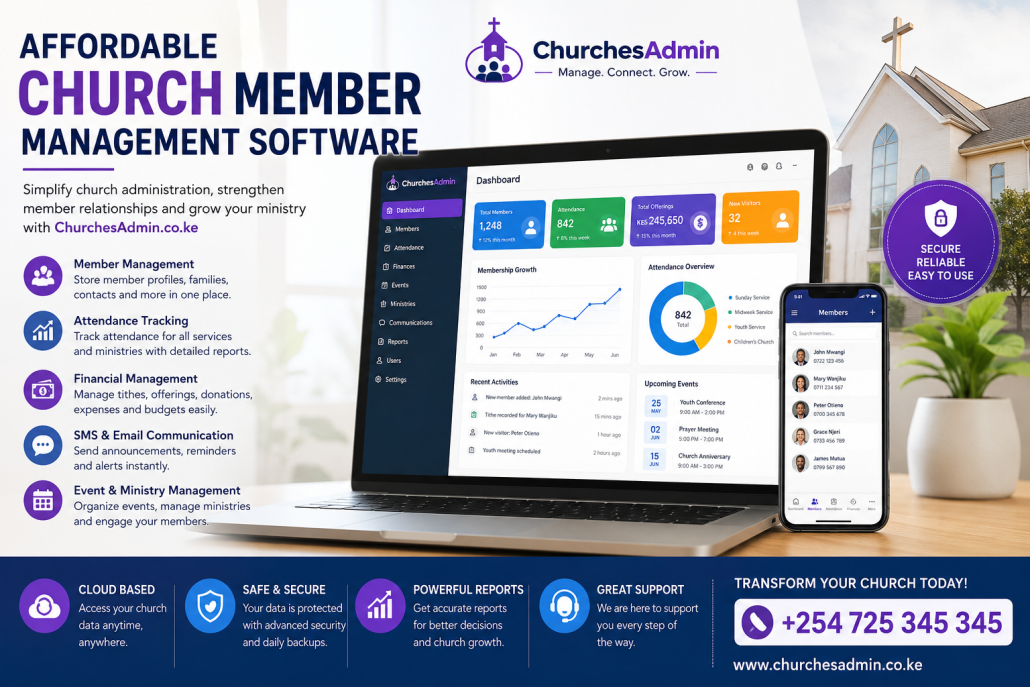
In today’s digital era, churches across Kenya are embracing technology to streamline operations, improve communication, and enhance member engagement. A Church Management System in Kenya is no longer a luxury—it is a necessity for churches seeking efficiency, growth, and transparency.

Whether you are managing a small ministry or a large congregation, adopting a church management system (ChMS) can transform how your church operates. From member records to financial tracking and event coordination, these systems simplify administrative tasks and allow church leaders to focus on ministry.


What is a Church Management System?

A Church Management System (ChMS) is software designed to help churches manage their daily operations effectively. It centralizes information, automates repetitive tasks, and provides tools for communication and reporting.

Key Functions:

  • Membership management

  • Financial tracking and reporting

  • Event scheduling

  • Communication tools (SMS, email)

  • Attendance tracking

  • Volunteer coordination


Why Churches in Kenya Need a Management System

1. Growing Congregations

Many churches in Kenya are experiencing rapid growth. Managing member data manually becomes overwhelming and prone to errors.

2. Financial Transparency

Churches handle offerings, tithes, and donations. A ChMS ensures accurate records and builds trust among members.

3. Efficient Communication

With tools like bulk SMS and email notifications, churches can easily communicate announcements and updates.

4. Data Security

Digital systems provide secure storage compared to physical records, reducing the risk of loss or damage.

5. Better Decision Making

Reports and analytics help church leaders make informed decisions.


Features of a Church Management System in Kenya

1. Membership Management

Keep detailed records of church members, including:

  • Names and contacts

  • Family information

  • Baptism status

  • Ministry involvement

2. Financial Management

Track:

  • Tithes and offerings

  • Donations

  • Expenses

  • Budget reports

3. Attendance Tracking

Monitor attendance for:

  • Sunday services

  • Bible studies

  • Special events

4. Communication Tools

Send:

  • SMS notifications

  • Email newsletters

  • Event reminders

5. Event Management

Plan and manage:

  • Church services

  • Conferences

  • Outreach programs

6. Volunteer Management

Assign roles and track participation in ministries.


Benefits of Using a Church Management System

Improved Efficiency

Automation reduces manual work and saves time.

Enhanced Member Engagement

Personalized communication keeps members connected.

Accurate Record Keeping

Digital systems eliminate errors associated with manual entries.

Financial Accountability

Transparent reporting builds trust within the congregation.

Scalability

Systems grow with your church, accommodating increasing members and activities.


Popular Church Management Systems in Kenya

Several platforms are available for churches in Kenya. When choosing one, consider your church’s size, needs, and budget.

Examples:

  • Cloud-based church software

  • Locally developed Kenyan church systems

  • International ChMS platforms adapted for Kenyan churches


How to Choose the Best Church Management System in Kenya

1. Ease of Use

Choose a system that is user-friendly and easy to learn.

2. Cost

Consider affordability, especially for small churches.

3. Cloud vs On-Premise

Cloud-based systems allow access from anywhere, which is ideal for modern churches.

4. Customization

Ensure the system can be tailored to your church’s needs.

5. Customer Support

Reliable support is crucial for troubleshooting and training.


Challenges Churches Face Without a Management System

  • Loss of member data

  • Poor communication

  • Financial mismanagement

  • Inefficient operations

  • Limited growth tracking


Church Management System for Small Churches in Kenya

Small churches can benefit significantly from affordable and simple systems.

Key Features to Look For:

  • Basic member database

  • Simple financial tracking

  • SMS communication

  • Easy reporting tools


Church Management System for Large Churches

Large churches require advanced features such as:

  • Multi-branch management

  • Advanced analytics

  • Integration with payment systems

  • Role-based access control


Integration with Mobile Money in Kenya

One of the most important features for Kenyan churches is integration with mobile money platforms like M-Pesa.

Benefits:

  • Easy donation tracking

  • Automated receipts

  • Real-time financial updates


Role of Technology in Church Growth

Technology enables churches to:

  • Reach more people online

  • Streamline operations

  • Improve member engagement

  • Enhance transparency

A Church Management System plays a central role in this transformation.


Steps to Implement a Church Management System

Step 1: Assess Your Needs

Identify what your church requires.

Step 2: Choose the Right System

Compare features, pricing, and reviews.

Step 3: Train Your Team

Ensure staff and volunteers understand how to use the system.

Step 4: Migrate Data

Transfer existing records into the system.

Step 5: Monitor and Improve

Continuously evaluate performance and optimize usage.


Future of Church Management Systems in Kenya

The future is promising, with advancements such as:

  • Mobile-first platforms

  • AI-powered analytics

  • Online giving platforms

  • Integration with social media

Churches that adopt technology early will have a competitive advantage.


Conclusion

A Church Management System in Kenya is an essential tool for modern churches aiming to improve efficiency, transparency, and growth. By automating administrative tasks and enhancing communication, churches can focus more on their mission and less on paperwork.

Whether you are a small ministry or a large organization, investing in the right system can transform your church operations and help you serve your congregation better.

Church Accounting Software | Simplify Donations & Fund Management

Church Accounting Software | Simplify Donations & Fund Management

Church Accounting Software | Simplify Donations & Fund Management

Church Accounting Software

Church Accounting Software: The Complete Guide for Your Ministry

In today’s digital age, managing a church’s finances can be overwhelming. From budgeting to reporting and compliance, church leaders need tools that simplify financial tasks so they can focus on ministry. That’s where church accounting software becomes essential.

This guide explores what church accounting software is, why it’s important, key features to look for, top solutions, implementation tips, and answers to commonly asked questions.


What Is Church Accounting Software?

Church accounting software is a specialized financial management system designed to meet the unique needs of religious organizations. Unlike generic accounting platforms, church accounting solutions are tailored to handle:

  • Fund accounting (tracking restricted and unrestricted funds)

  • Donation and pledge management

  • Tithes and offerings

  • Budgeting and forecasting

  • Reporting for boards and auditors

  • Compliance with nonprofit accounting standards

Because churches often receive contributions with specific designations (e.g., missions, building fund), they require software that accurately tracks and reports fund allocation. This makes church accounting software a cornerstone of responsible stewardship.


Why Your Church Needs Accounting Software

Churches operate like nonprofits, with distinct financial challenges. Manual spreadsheets or generic accounting packages often fall short. Here’s why investing in church accounting software is important:

1. Accurate Fund Tracking

Churches handle multiple funds simultaneously. A specialized system ensures contributions are recorded in the right category. This helps with budgeting and transparency.

2. Simplified Donation Recording

With integrated donation management, your team can easily record tithes, offerings, and pledges. Automated receipts also enhance donor relations.

3. Compliance and Reporting

Churches must comply with nonprofit financial standards. Church accounting software enables detailed reports for boards, auditors, and regulatory compliance.

4. Time Savings

Automated processes reduce manual data entry and human error. This frees up staff and volunteers to focus on ministry tasks, not paperwork.

5. Secure Financial Data

Modern accounting systems secure financial data with encryption, role‑based access, and regular backups. This protects your church from loss and unauthorized access.


Top Features to Look for in Church Accounting Software

Choosing the right software depends on your church’s needs, size, and budget. Below are the key features any good church accounting solution should offer:

1. Fund Accounting

Churches must track funds separately (e.g., general fund, missions, building). Fund accounting lets you monitor each category individually.

2. Donation and Contribution Tracking

An integrated donation module that records tithes, offerings, and recurring gifts is essential. It should also support donor statements and acknowledgements.

3. Budgeting Tools

Software with forecasting and budget planning tools helps your church manage expenses effectively.

4. Financial Reporting

Customizable reports for cash flow, balance sheets, and fund statements improve transparency and decision‑making.

5. Multi‑User Access

Role‑based permissions allow different staff or volunteers to access only what they need.

6. Integration with Other Church Systems

Integration with your church management system (ChMS) ensures seamless data flow between attendance, membership, and giving.

7. Security and Backup

Church financial data is sensitive. Look for software with strong security protocols and regular backups.

8. Cloud Access

Cloud‑based solutions allow access from anywhere, making remote bookkeeping easier.


How Church Accounting Software Works

Church accounting software automates financial tasks while maintaining compliance with nonprofit standards. Here’s a typical workflow:

  1. Setup Chart of Accounts
    Define fund accounts such as general, missions, benevolence, and building.

  2. Record Donations and Contributions
    Enter contributions manually or sync with online giving platforms.

  3. Monitor Funds and Budget
    Review fund balances and track expenses against budgets.

  4. Generate Reports
    Produce financial statements for leadership and auditors.

  5. Export Data for Tax and Audit
    Easily export reports to share with tax preparers or auditors.


Comparing the Best Church Accounting Software Options

Here are some popular church accounting tools (note: these are examples; features and pricing should be researched before choosing):

Software Best For Key Strengths
ChurchTrac Small to Mid‑Size Churches User‑friendly, affordable, donation tracking
Aplos Growing Churches & Nonprofits Fund accounting, dashboards, donor management
QuickBooks (Nonprofit Version) Churches with Finance Staff Powerful reporting, reputable brand
PowerChurch Plus Mid‑Size Churches Built‑in ChMS integration, strong fund tracking
Breeze Small Churches Easy to use, cloud‑based, donor statements

Choosing the best solution depends on your church’s size, technical skill level, and budget. Always evaluate free trials and user support when making a decision.


Step‑by‑Step Guide to Implementing Church Accounting Software

Implementing new software can feel overwhelming. Here’s a smooth roadmap:

Step 1: Define Your Needs

Consider:

  • Number of users

  • Funds and programs you manage

  • Reporting requirements

  • Integration with giving platforms

Step 2: Budget and Select Software

Balance cost with features. Avoid overspending on tools you won’t use.

Step 3: Migrate Your Data

Import historical giving and expense data. Test accuracy before going live.

Step 4: Train Your Team

Ensure volunteers and staff understand how to use the software correctly.

Step 5: Establish Best Practices

Set processes for data entry, approvals, and regular reporting.

Step 6: Back Up Regularly

Even with cloud solutions, maintain backups for extra peace of mind.


Common Challenges Churches Face with Accounting—and How Software Helps

Church accounting has unique hurdles. Here’s how software solves them:

Challenge: Fund Misallocation

Solution: Fund accounting modules prevent mixing restricted and unrestricted funds.

Challenge: Manual Donation Tracking

Solution: Automated contribution tracking reduces errors and saves time.

Challenge: Complex Reporting

Solution: Pre‑built financial statements make transparency easier.

Challenge: Limited Financial Expertise

Solution: Intuitive dashboards and support resources help even volunteers manage finances confidently.


Church Accounting Best Practices

To get the most value from your accounting software, follow these best practices:

1. Keep Your Chart of Accounts Simple

Avoid overly complex structures. Use clear fund names that everyone understands.

2. Reconcile Bank Accounts Regularly

Monthly reconciliations catch errors early.

3. Use Recurring Donations

Encourage recurring giving to stabilize cash flow and automate records.

4. Review Reports with Leadership

Monthly financial reports ensure accountability and informed decision‑making.

5. Secure Financial Access

Grant permissions carefully and rotate passwords for security.


Frequently Asked Questions (FAQs)

What is the difference between church accounting software and regular accounting software?

Church accounting tools are built for fund accounting, donation tracking, and nonprofit reporting—features not always found in generic software.

Can small churches benefit from church accounting software?

Yes. Even smaller churches gain transparency, time savings, and accurate fund tracking with affordable systems.

Is cloud‑based software better than desktop software?

Cloud‑based solutions offer remote access, automatic updates, and simpler backups, making them ideal for most churches.

How much does church accounting software cost?

Prices vary widely, from free or low‑cost plans for small churches to higher subscription fees for larger organizations with advanced needs. Always compare features.

Do these solutions integrate with online giving platforms?

Many church accounting systems integrate with popular giving tools, making donation reconciliation faster and more accurate.


Conclusion: Invest in Smart Financial Management for Your Church

Managing a church’s finances doesn’t have to be stressful. Church accounting software empowers your organization with accurate fund tracking, simplified reporting, and secure financial management—all while saving time and reducing errors.

Church Membership Management – Streamline Your Church Operations

Church Membership Management – Streamline Your Church Operations

Church Membership Management – Streamline Your Church Operations

Church Membership Management

Church Membership Management: Simplifying Church Administration

Managing church members can be challenging, especially for growing congregations. Church membership management solutions help streamline operations, maintain accurate records, and enhance member engagement. From small churches to large ministries, implementing an effective membership system can transform the way a church operates.

What is Church Membership Management?

Church membership management refers to the systematic process of tracking, organizing, and maintaining church members’ information. This includes personal details, attendance records, donation history, ministry involvement, and communication preferences. Proper management ensures that church leaders can connect with members effectively, plan events efficiently, and make informed decisions.

Key Features of Church Membership Management Systems

Modern church management software offers a wide range of features that simplify administrative tasks. Some essential features include:

  1. Member Database Management
    Easily store and organize member profiles with contact information, family details, and spiritual journey milestones.

  2. Attendance Tracking
    Track weekly service attendance, event participation, and ministry involvement. Automated reports help identify trends in engagement.

  3. Contribution & Donation Management
    Record tithes, offerings, and special donations. Generate donation reports for transparency and financial planning.

  4. Communication Tools
    Send emails, SMS alerts, or push notifications to keep members informed about events, prayer requests, and updates.

  5. Event & Program Management
    Plan and organize church events, registration, volunteer assignments, and follow-up activities seamlessly.

  6. Reporting & Analytics
    Generate detailed reports on attendance, donations, volunteer participation, and member demographics.

Benefits of Church Membership Management

Implementing an efficient church membership management system offers numerous advantages:

  • Improved Organization: All member information is centralized, making it easier to access and manage.

  • Enhanced Engagement: Personalized communication increases member participation in church activities.

  • Time Savings: Automating administrative tasks reduces manual work for staff and volunteers.

  • Accurate Records: Maintain up-to-date, reliable data for strategic planning and decision-making.

  • Financial Transparency: Detailed donation records improve accountability and trust.

Why Every Church Needs a Membership Management System

Churches often face challenges like manual record-keeping, inconsistent member tracking, and ineffective communication. A church membership management system solves these problems by providing a digital, centralized platform. Whether your church is small or large, this system ensures you can focus on ministry instead of paperwork.

How to Choose the Best Church Membership Management Software

Selecting the right software is crucial. Consider the following when choosing a solution:

  1. Ease of Use
    A user-friendly interface ensures staff and volunteers can navigate the system without extensive training.

  2. Scalability
    Your church management system should grow with your congregation.

  3. Security & Privacy
    Protect member data with encryption and secure access controls.

  4. Integration Capabilities
    Choose software that integrates with accounting systems, email marketing tools, and event platforms.

  5. Support & Training
    Reliable customer support and training resources are vital for smooth implementation.

Best Practices for Effective Church Membership Management

  1. Keep Member Data Updated
    Regularly update contact information, family relationships, and participation history to ensure accurate records.

  2. Segment Members for Targeted Communication
    Group members by ministry, age, or activity to send relevant messages.

  3. Automate Routine Tasks
    Automate attendance tracking, donation receipts, and event reminders to save time.

  4. Encourage Self-Service Portals
    Allow members to update their information, register for events, and track contributions online.

  5. Analyze Data for Growth Opportunities
    Use analytics to understand trends in member engagement and identify areas for improvement.

Case Study: Transforming Church Administration

Consider a mid-sized church struggling with manual record-keeping. Attendance was inconsistent, donation tracking was prone to errors, and communication was fragmented. By implementing a church membership management system, the church experienced:

  • 50% reduction in administrative workload

  • 40% increase in member engagement

  • Accurate and transparent financial reporting

  • Streamlined event planning and volunteer coordination

Integrating Church Membership Management with Digital Tools

A modern approach to church administration involves integration with other digital tools:

  • Email Marketing: Use member data to send newsletters and event updates.

  • Online Giving Platforms: Sync donations directly to member profiles.

  • Mobile Apps: Allow members to check schedules, register for events, and update personal information on-the-go.

Challenges in Church Membership Management

Despite the benefits, churches may face challenges such as:

  • Resistance to Technology: Some members may be hesitant to adopt digital systems.

  • Data Migration: Transferring old records to a new system can be time-consuming.

  • Cost Concerns: Some software solutions may be expensive for smaller congregations.

These challenges can be mitigated with proper training, phased implementation, and choosing a software solution that fits the church’s budget and size.

Future Trends in Church Membership Management

The future of church membership management includes:

  • AI-Powered Insights: Predict member engagement trends and suggest targeted actions.

  • Cloud-Based Systems: Access member data anytime, anywhere, from multiple devices.

  • Enhanced Mobile Experiences: Members interact with church services and resources directly from their smartphones.

  • Automated Outreach: AI-driven communication ensures members stay informed and engaged.

Conclusion

Investing in church membership management is no longer optional—it is essential for modern churches striving to grow and engage their members effectively. By choosing the right system, following best practices, and embracing technology, churches can streamline operations, enhance member experience, and focus more on their mission.


Church Software Solutions – Best Tools for Modern Church Management

Church Software Solutions – Best Tools for Modern Church Management

Church Software Solutions – Best Tools for Modern Church Management

Church Software Solutions

Church Software Solutions: Transforming Modern Church Management

In today’s digital age, managing a church efficiently requires more than traditional methods. From tracking donations to organizing events and engaging the congregation, the right church software solutions can streamline operations, save time, and enhance community interaction. This guide explores the best software solutions for churches, their benefits, features, and how to choose the right system for your ministry.


What Are Church Software Solutions?

Church software solutions are specialized tools designed to simplify the management of church activities. They provide churches with technology to handle administrative tasks, communication, financial management, volunteer coordination, and more. These solutions are increasingly becoming vital as churches grow and expand their outreach.


Key Benefits of Using Church Software Solutions

  1. Efficient Administration
    Managing a church involves multiple administrative tasks such as member registration, event planning, and scheduling. Church software solutions automate these processes, reducing errors and administrative workload.

  2. Improved Financial Management
    Handling donations, tithes, and offerings can be complex. Church software solutions provide secure and transparent financial management features, including online giving, automated receipts, and detailed reports.

  3. Enhanced Communication
    Modern software solutions allow churches to connect with their members via emails, SMS, or mobile apps. This ensures everyone stays informed about events, services, and announcements.

  4. Volunteer and Staff Coordination
    Church software helps in scheduling volunteers, tracking their participation, and managing staff assignments efficiently. This ensures that church programs run smoothly.

  5. Data Security and Compliance
    Churches handle sensitive data such as personal information and donation records. A reliable software solution ensures data security and helps maintain compliance with legal and financial regulations.


Top Features to Look for in Church Software Solutions

When selecting church software solutions, it’s crucial to consider features that match your church’s needs:

  1. Membership Management
    Keep track of member information, attendance, family connections, and engagement history.

  2. Online Giving and Donations
    Offer online tithing options, recurring donations, and detailed giving reports.

  3. Event and Calendar Management
    Plan, schedule, and manage church events, meetings, and services.

  4. Communication Tools
    Email campaigns, newsletters, SMS alerts, and mobile app notifications.

  5. Volunteer Management
    Track volunteer hours, assign tasks, and manage schedules easily.

  6. Reporting and Analytics
    Generate reports on attendance, donations, event participation, and overall church growth.

  7. Integration Capabilities
    Seamlessly connect with accounting software, email platforms, or social media tools.

  8. Mobile Access
    A mobile-friendly interface ensures accessibility for staff and members on the go.


Types of Church Software Solutions

Churches have unique requirements, and software solutions vary depending on their focus:

  1. Church Management Software (ChMS)
    This type focuses on administrative management, tracking members, attendance, and engagement. Examples include platforms like Planning Center and Breeze ChMS.

  2. Donation and Tithing Software
    Tools that make giving easy and secure, including online payment processing and automated receipts.

  3. Event Management Software
    Helps plan events, manage RSVPs, track attendance, and coordinate volunteers.

  4. Communication Platforms
    Tools designed to enhance outreach via email newsletters, push notifications, or SMS campaigns.

  5. Integrated All-in-One Solutions
    Some software combines all features, providing a single platform to manage all church activities effectively.


How Church Software Solutions Improve Member Engagement

Engaging with your congregation is essential for church growth. Church software solutions enhance engagement through:

  • Personalized Communication: Send targeted messages based on member interests or involvement.

  • Accessible Online Resources: Share sermons, study materials, and devotionals online.

  • Event Participation: Simplified registration and reminders increase attendance at church programs.

  • Volunteer Opportunities: Easily match members with volunteer roles that suit their skills.


Choosing the Right Church Software Solutions

Selecting the right solution depends on several factors:

  1. Church Size
    Small churches may need simpler, budget-friendly solutions, while large churches require scalable software with advanced features.

  2. Budget
    Evaluate cost versus benefits. Many providers offer tiered pricing based on features and number of members.

  3. Ease of Use
    Choose software with an intuitive interface that staff and volunteers can easily navigate.

  4. Customer Support
    Reliable support is crucial for troubleshooting and training staff on new systems.

  5. Integration Needs
    Ensure the software integrates with your existing tools, such as accounting or email platforms.

  6. Security
    Prioritize software that ensures data privacy, secure payment processing, and compliance with regulations.


Popular Church Software Solutions in 2026

  1. Planning Center
    A comprehensive ChMS platform that covers attendance tracking, donations, events, and volunteer management.

  2. Breeze ChMS
    Known for its user-friendly interface and strong customer support, ideal for small to medium-sized churches.

  3. Tithe.ly
    Focuses on donations and mobile giving, offering an easy-to-use platform for online contributions.

  4. Church Community Builder
    Combines ChMS features with volunteer scheduling and communication tools.

  5. FellowshipOne
    Suitable for large churches, with robust reporting and analytics, along with online giving and event management.


Implementing Church Software Solutions Successfully

  1. Plan Your Requirements
    Identify the features your church needs most and define clear goals for software implementation.

  2. Train Staff and Volunteers
    Ensure everyone knows how to use the system effectively, minimizing resistance and errors.

  3. Migrate Data Carefully
    Transfer existing member information, donation records, and event data securely into the new system.

  4. Leverage Automation
    Use automated reminders, online giving, and reporting tools to reduce manual work.

  5. Monitor and Evaluate
    Regularly assess software performance and user feedback to make adjustments or upgrades as needed.


Future Trends in Church Software Solutions

  1. Mobile-First Platforms
    More software is now mobile-friendly, allowing staff and members to access tools on smartphones and tablets.

  2. AI and Automation
    Artificial intelligence helps with predictive analytics for member engagement and donation patterns.

  3. Cloud-Based Solutions
    Cloud storage ensures secure data access from anywhere and simplifies updates and maintenance.

  4. Integrated Multimedia
    Integration with streaming services for online sermons and video content is becoming standard.

  5. Enhanced Security
    As churches handle more online donations, data encryption and cyber-security measures are a priority.


Conclusion

Investing in church software solutions is no longer optional—it’s essential for modern church management. From streamlining administrative tasks to enhancing member engagement and ensuring financial transparency, the right software can transform how a church operates.

Whether your church is small or large, adopting these solutions can save time, reduce errors, and create a stronger connection with your congregation. Take the time to assess your needs, explore the options, and implement a system that aligns with your mission and goals.

Church Software for Small Churches | Affordable & Easy Solutions

Best Church Software 2026 – Streamline Church Management & Engagement

Best Church Software 2026 – Streamline Church Management & Engagement

Best Church Software

Best Church Software: Transform Your Ministry with Technology

In today’s digital age, churches face unique challenges in managing their operations, congregations, and outreach programs. Adopting the best church software can streamline these processes, allowing church leaders to focus on their mission rather than administrative burdens. Whether you run a small community church or a large ministry, investing in reliable church management software can be a game-changer.


What is Church Software?

Church software, also known as church management software (ChMS), is a digital solution designed to help churches manage their day-to-day activities efficiently. This includes:

  • Membership management

  • Donation and tithing tracking

  • Event scheduling

  • Volunteer management

  • Communication with congregants

With the best church software, ministries can automate repetitive tasks, maintain accurate records, and improve communication with their congregation.


Why Your Church Needs the Best Church Software

Churches today are more than just places of worship—they are community centers, educational institutions, and social hubs. Using outdated methods like paper records or basic spreadsheets can lead to errors and missed opportunities. Here’s why investing in the best church software is essential:

1. Efficient Membership Management

Keeping track of members manually is time-consuming and prone to errors. The best church software allows you to store all member information in one secure location. You can track attendance, record special events like baptisms and weddings, and monitor engagement levels.

2. Simplified Donations and Tithes

Managing donations is critical for any church. Modern church software includes integrated online giving platforms, automated receipt generation, and detailed financial reports. This not only ensures transparency but also encourages consistent giving from congregants.

3. Streamlined Communication

Effective communication is the backbone of any thriving church. The best church software enables automated email campaigns, SMS notifications, and mobile app messaging to keep members informed about upcoming events, prayer meetings, or community outreach programs.

4. Volunteer and Event Management

Churches rely heavily on volunteers for activities and events. The right software simplifies scheduling, tracks volunteer hours, and manages event registrations seamlessly, reducing administrative headaches.


Key Features of the Best Church Software

When choosing church software, certain features distinguish the best from the rest. Look for the following:

  1. Cloud-Based Access
    Cloud-based solutions allow church staff to access data securely from anywhere, making it easier to collaborate and manage operations remotely.

  2. Integrated Online Giving
    Online donations, recurring tithes, and digital fundraising tools are essential for modern churches.

  3. Robust Reporting Tools
    Detailed reports help leaders make informed decisions, track growth, and maintain transparency with the congregation.

  4. Member Portal
    A user-friendly portal enables members to update their details, register for events, and manage their contributions.

  5. Mobile Compatibility
    Mobile apps provide congregants and staff with access on the go, which is increasingly important in today’s connected world.

  6. Security and Data Privacy
    The best church software ensures that member data, donation records, and financial information are protected with high-level encryption and compliance with data privacy standards.


Top Benefits of Using Church Management Software

Investing in the best church software offers numerous benefits beyond operational efficiency:

  • Time Savings: Automate routine tasks and free up staff for ministry work.

  • Improved Engagement: Personalized communication helps keep members involved.

  • Transparency: Detailed financial and attendance reports build trust with the congregation.

  • Growth Tracking: Monitor membership trends and engagement patterns to plan outreach effectively.

  • Scalability: Software grows with your church, accommodating more members, events, and donations as your ministry expands.


How to Choose the Best Church Software

Selecting the right church software can be overwhelming, given the numerous options available. Consider these factors:

  1. Size of Your Church
    Some software is ideal for small community churches, while others are tailored for large ministries with thousands of members.

  2. Budget Considerations
    Many solutions offer tiered pricing based on features and user numbers. Determine your budget and choose software that provides value without unnecessary extras.

  3. Ease of Use
    A user-friendly interface ensures staff and volunteers can adopt the system quickly without extensive training.

  4. Integration Capabilities
    Your church software should integrate with existing tools like accounting software, email marketing platforms, or your website.

  5. Customer Support
    Reliable customer support is essential to resolve technical issues and ensure smooth operation.


Popular Church Software Options

Several church management software solutions stand out in the market:

  1. Planning Center – Excellent for event scheduling, volunteer management, and online giving.

  2. Breeze ChMS – Known for its simplicity and user-friendly interface.

  3. Realm by ACS Technologies – Offers comprehensive features for larger churches.

  4. Tithe.ly – Strong focus on online giving and mobile engagement.

  5. Church Community Builder – Ideal for membership tracking and communication management.

Choosing the right software depends on your church’s size, budget, and specific needs.


Tips for Implementing Church Software Successfully

Even the best church software will fail if not implemented properly. Follow these steps for a smooth transition:

  1. Train Your Team
    Invest time in training staff and volunteers to use the system effectively.

  2. Migrate Data Carefully
    Ensure accurate migration of member information, donation records, and event data.

  3. Communicate with Members
    Inform your congregation about new tools and encourage them to use member portals or apps.

  4. Regularly Review Usage
    Monitor how staff and members use the software, and adjust processes to maximize efficiency.

  5. Leverage Reporting Tools
    Use analytics to track growth, engagement, and financial contributions to make data-driven decisions.


Conclusion

Investing in the best church software is no longer a luxury; it is a necessity for modern ministries. From managing members and donations to streamlining events and communication, church software allows leaders to focus on what truly matters: serving their congregation and community.

By carefully evaluating your church’s needs and choosing a software solution that offers robust features, security, and ease of use, your ministry can thrive in today’s digital world. Don’t let administrative tasks slow your mission—embrace technology and watch your church grow.

Church Member Management System Kenya | Best Church Software Guide 2026

Church Administration System: Best Software for Church Management & Growth

Church Administration System: Best Software for Church Management & Growth

Church Administration System

Church Administration System: The Complete Guide to Streamlining Ministry Operations

In today’s fast-paced digital world, churches are no longer relying solely on manual processes to manage their operations. A church administration system has become an essential tool for modern ministries seeking efficiency, transparency, and growth. Whether you lead a small congregation or a large multi-campus church, implementing the right system can transform how you manage members, finances, communication, and events.

This comprehensive guide explores everything you need to know about church administration systems, their benefits, features, and how to choose the right one for your ministry.


What is a Church Administration System?

A church administration system is a software solution designed to help churches manage their daily operations effectively. It centralizes administrative tasks such as membership management, financial tracking, communication, scheduling, and reporting into one unified platform.

Instead of juggling spreadsheets, paper records, and disconnected tools, churches can streamline their workflows and focus more on their core mission—serving their community and growing spiritually.


Why Churches Need an Administration System

Managing a church involves much more than Sunday services. Administrative responsibilities can quickly become overwhelming without proper tools. Here’s why adopting a church administration system is crucial:

1. Improved Organization

Manual record-keeping often leads to errors and inefficiencies. A centralized system ensures all data is organized, searchable, and easily accessible.

2. Time Efficiency

Automating repetitive tasks such as attendance tracking, event scheduling, and communication frees up valuable time for ministry work.

3. Better Communication

A church administration system allows leaders to send emails, SMS, and notifications to members instantly, ensuring everyone stays informed.

4. Financial Transparency

Tracking tithes, offerings, and expenses becomes easier and more accurate, promoting accountability and trust within the congregation.

5. Data-Driven Decisions

With built-in analytics and reports, church leaders can make informed decisions based on real data.


Key Features of a Church Administration System

When evaluating a church administration system, it’s important to understand the core features that make it effective.

1. Membership Management

This feature allows churches to store detailed information about members, including:

  • Contact details

  • Family relationships

  • Attendance history

  • Spiritual milestones

Having a comprehensive member database helps leaders provide personalized care and engagement.

2. Attendance Tracking

Tracking attendance for services, events, and small groups helps identify trends and engagement levels within the church.

3. Financial Management

A robust system includes tools for:

  • Recording tithes and offerings

  • Budgeting and expense tracking

  • Generating financial reports

  • Online giving integration

4. Event and Calendar Management

Churches host numerous events, from services to conferences. A centralized calendar helps:

  • Schedule events

  • Assign volunteers

  • Avoid conflicts

5. Communication Tools

Effective communication is vital. Systems often include:

  • Bulk SMS and email messaging

  • Push notifications

  • Group communication features

6. Volunteer Management

Organizing volunteers becomes easier with tools that allow:

  • Role assignment

  • Scheduling

  • Tracking participation

7. Reporting and Analytics

Detailed reports provide insights into:

  • Membership growth

  • Attendance trends

  • Financial performance


Benefits of Using a Church Administration System

Implementing a church administration system offers numerous advantages that go beyond basic organization.

Enhanced Member Engagement

With accurate data and communication tools, churches can connect more effectively with members, increasing participation and involvement.

Reduced Administrative Burden

Automation minimizes manual work, allowing staff and volunteers to focus on ministry rather than paperwork.

Increased Accuracy

Digital systems reduce human errors in record-keeping, ensuring reliable data.

Scalability

As your church grows, the system can scale with your needs, accommodating more members and activities.

Accessibility

Many systems are cloud-based, allowing access from anywhere, whether in the office or on the go.


How to Choose the Right Church Administration System

Selecting the right system is a critical decision. Here are key factors to consider:

1. Ease of Use

The system should be user-friendly, especially for staff and volunteers who may not be tech-savvy.

2. Customization

Every church is unique. Look for software that allows customization to fit your specific needs.

3. Integration Capabilities

Ensure the system can integrate with other tools such as accounting software, email platforms, and payment gateways.

4. Security

Protecting member data is essential. Choose a system with strong security features and data protection measures.

5. Cost

Consider your budget and evaluate whether the system provides value for money. Some platforms offer tiered pricing based on features.

6. Customer Support

Reliable support is crucial, especially during implementation and troubleshooting.


Cloud-Based vs On-Premise Church Administration Systems

When choosing a church administration system, you’ll need to decide between cloud-based and on-premise solutions.

Cloud-Based Systems

Advantages:

  • Accessible from anywhere

  • Automatic updates

  • Lower upfront costs

Disadvantages:

  • Requires internet access

  • Subscription-based pricing

On-Premise Systems

Advantages:

  • Full control over data

  • No recurring subscription fees

Disadvantages:

  • Higher upfront costs

  • Requires maintenance and IT support

For most modern churches, cloud-based solutions are the preferred choice due to their flexibility and ease of use.


Implementation Best Practices

Successfully implementing a church administration system requires careful planning.

1. Define Your Needs

Identify the specific challenges you want the system to solve.

2. Train Your Team

Provide adequate training to ensure staff and volunteers can use the system effectively.

3. Migrate Data Carefully

Ensure existing records are accurately transferred into the new system.

4. Start Small

Begin with core features and gradually expand usage.

5. Monitor and Improve

Continuously evaluate the system’s performance and make adjustments as needed.


Common Challenges and How to Overcome Them

Resistance to Change

Some members or staff may be hesitant to adopt new technology. Address this by:

  • Providing training

  • Demonstrating benefits

  • Offering ongoing support

Data Migration Issues

Transferring data can be complex. Ensure proper backups and verification processes.

Cost Concerns

Start with essential features and scale up as your church grows.


Future Trends in Church Administration Systems

Technology continues to evolve, and church administration systems are no exception.

Mobile Accessibility

More systems are offering mobile apps for on-the-go management.

Automation and AI

Automation tools are improving efficiency, while AI can provide deeper insights into member engagement.

Online Giving Expansion

Digital payment options are becoming more diverse and convenient.

Integration with Social Media

Churches can connect their administration systems with social platforms to enhance outreach.


Conclusion

A church administration system is no longer a luxury—it’s a necessity for churches aiming to operate efficiently and grow sustainably. By centralizing administrative tasks, improving communication, and providing valuable insights, these systems empower church leaders to focus on what truly matters: ministry and community impact.

Choosing the right system requires careful consideration of your church’s needs, budget, and long-term goals. With the right solution in place, your church can streamline operations, enhance member engagement, and position itself for future growth.

Church Management Software Kenya | Best ChMS Solutions for Churches

Church Management Software Kenya | Best ChMS Solutions for Churches

Church Management Software Kenya | Best ChMS Solutions for Churches

Church Management Software

: The Complete Guide for Churches in 2026

Churches across Kenya are rapidly embracing technology to improve administration, communication, and overall ministry effectiveness. One of the most transformative tools available today is church management software (ChMS). Whether you lead a small congregation in a rural area or a large urban ministry in Nairobi, adopting the right system can significantly streamline operations and enhance member engagement.

In this comprehensive guide, we’ll explore everything you need to know about church management software in Kenya, including its benefits, features, pricing, and how to choose the best solution for your ministry.


What is Church Management Software?

Church management software (ChMS) is a digital platform designed to help churches manage their daily operations efficiently. It centralizes data and automates administrative tasks such as:

  • Membership management

  • Tithes and offerings tracking

  • Event planning

  • Communication (SMS, email)

  • Volunteer coordination

  • Financial reporting

In Kenya, where churches play a vital role in communities, ChMS is becoming essential for both accountability and growth.


Why Churches in Kenya Need Church Management Software

1. Improved Member Management

Many churches still rely on manual record-keeping, which can lead to errors and lost data. Church management software allows you to:

  • Store member details securely

  • Track attendance

  • Monitor spiritual growth and participation

This ensures no member is overlooked.


2. Efficient Financial Tracking

Transparency is critical in church finances. A good ChMS helps you:

  • Record tithes and offerings

  • Generate financial reports

  • Track expenses and budgets

This builds trust among members and leadership.


3. Better Communication

With mobile penetration high in Kenya, communication tools are vital. ChMS platforms often include:

  • Bulk SMS notifications

  • Email newsletters

  • Event reminders

This keeps your congregation informed and engaged.


4. Time and Cost Savings

Manual administration consumes time and resources. Automating tasks allows church leaders to focus more on ministry rather than paperwork.


5. Data Security and Backup

Digital systems ensure your church data is safe and backed up, reducing the risk of loss due to physical damage or human error.


Key Features of Church Management Software in Kenya

When selecting a system, it’s important to look for features tailored to the needs of Kenyan churches.

Membership Database

  • Detailed member profiles

  • Family grouping

  • Attendance tracking

Financial Management

  • Tithe and offering recording

  • M-Pesa integration (critical in Kenya)

  • Expense tracking

  • Financial reporting

Communication Tools

  • SMS integration

  • Email campaigns

  • Push notifications

Event and Service Planning

  • Calendar management

  • Event registration

  • Volunteer scheduling

Reporting and Analytics

  • Membership growth trends

  • Financial summaries

  • Attendance reports

Mobile Access

Many Kenyan users rely on smartphones, so mobile-friendly systems are essential.


Benefits of Using Church Management Software in Kenya

Enhanced Accountability

Church leaders can easily track finances and activities, ensuring transparency.

Increased Member Engagement

Automated communication and personalized interaction improve member involvement.

Scalability

As your church grows, the software grows with you.

Better Decision-Making

Data-driven insights help leaders make informed decisions.


Challenges Facing Churches Without ChMS

Churches that do not adopt technology often face:

  • Disorganized records

  • Financial mismanagement

  • Poor communication

  • Limited growth tracking

These challenges can hinder ministry effectiveness and trust.


How to Choose the Best Church Management Software in Kenya

Selecting the right system requires careful consideration. Here are key factors:

1. Local Payment Integration

Ensure the software supports M-Pesa, Airtel Money, or other local payment methods.


2. Ease of Use

Choose a system that is user-friendly, especially for staff who may not be tech-savvy.


3. Cost and Pricing

Look for affordable options that fit your church budget. Many platforms offer:

  • Monthly subscriptions

  • Tiered pricing based on church size


4. Customer Support

Reliable support is crucial, especially for first-time users.


5. Customization

Your church has unique needs. Ensure the system can be tailored accordingly.


6. Cloud-Based vs On-Premise

Cloud-based systems are preferred in Kenya due to:

  • Lower upfront costs

  • Remote access

  • Automatic updates


Popular Use Cases of Church Management Software in Kenya

Small Churches

  • Basic member tracking

  • SMS communication

  • Simple financial records


Medium Churches

  • Event management

  • Volunteer coordination

  • Advanced reporting


Large Churches

  • Multi-branch management

  • Integration with livestreaming platforms

  • Advanced analytics


Role of Mobile Technology in Kenyan Church Software

Kenya is a global leader in mobile money and smartphone usage. Therefore, church management systems must:

  • Be mobile-friendly

  • Integrate with mobile payments

  • Support SMS communication

This ensures accessibility for both leaders and members.


SEO Benefits of Church Management Software for Churches

Interestingly, adopting digital systems can also improve your church’s online presence.

Improved Website Integration

Many ChMS platforms integrate with church websites, allowing:

  • Online giving

  • Event registration

  • Membership sign-ups


Better Engagement Metrics

Tracking engagement helps optimize your digital outreach strategies.


Future Trends in Church Management Software Kenya

The future of church technology in Kenya looks promising. Key trends include:

AI and Automation

Automated communication and data insights will become more advanced.


Mobile-First Solutions

More platforms will focus on mobile apps rather than desktop systems.


Integration with Social Media

Churches will increasingly connect their systems with platforms like Facebook and WhatsApp.


Cloud Adoption

Cloud-based solutions will dominate due to their flexibility and affordability.


Tips for Successful Implementation

Adopting church management software requires proper planning.

Train Your Team

Ensure staff and volunteers understand how to use the system.


Start Small

Begin with basic features, then expand as needed.


Keep Data Updated

Regularly update member information for accuracy.


Engage Members

Encourage members to interact with the system, especially for giving and event registration.


Common Mistakes to Avoid

  • Choosing overly complex software

  • Ignoring local payment integration

  • Lack of training

  • Poor data management

Avoiding these pitfalls ensures a smooth transition.


Conclusion

Church management software in Kenya is no longer a luxury—it’s a necessity. As churches grow and administrative demands increase, digital solutions provide the efficiency, transparency, and scalability needed for modern ministry.

By investing in the right church management system, churches can:

  • Improve operations

  • Enhance communication

  • Strengthen financial accountability

  • Foster deeper member engagement

Whether you are a small rural church or a large urban ministry, adopting church management software is a strategic step toward sustainable growth and impactful service.


Frequently Asked Questions (FAQs)

What is the best church management software in Kenya?

The best software depends on your church size, budget, and specific needs. Look for systems with M-Pesa integration and strong support.


Is church management software expensive?

Costs vary, but many platforms offer affordable plans suitable for Kenyan churches.


Can small churches use church management software?

Yes, many solutions are designed specifically for small and medium-sized churches.


Does church software support mobile money?

Most modern systems in Kenya support M-Pesa and other mobile payment platforms.


How long does implementation take?

It can take anywhere from a few days to a few weeks, depending on complexity.

ThinkPad

Why ThinkPad Laptops Are Perfect for Church Administration and Ministry Work

ThinkPad Laptops 

Technology has transformed the way organizations operate, and churches are no exception. Modern ministries rely on digital tools to manage members, track finances, organize events, and communicate effectively with their congregations. Church administrators today require reliable software and powerful hardware to handle these responsibilities efficiently.

One of the most important tools for church leaders and administrators is a dependable laptop. Whether it’s preparing sermons, managing church databases, or communicating with members, the right device can significantly improve productivity. Among the many laptop brands available today, the thinkpad series has earned a global reputation for durability, performance, and reliability.

For churches using modern management systems like ChurchesAdmin.com, having a powerful laptop ensures smooth operations and better efficiency. This platform helps churches manage administrative tasks such as member registration, attendance tracking, financial records, and communication tools from a centralized digital dashboard.

In this article, we will explore why the thinkpad laptop lineup is an excellent choice for church administration, ministry management, and modern church technology systems.


The Digital Transformation of Churches

Churches across Kenya and around the world are adopting digital systems to simplify operations and improve transparency. Traditional paper records and manual processes often lead to errors, lost information, and inefficient workflows.

Digital church management platforms solve these problems by allowing administrators to store all church data in one secure location. Systems like ChurchesAdmin.com enable churches to track attendance, record tithes and offerings, manage departments, and generate reports for leadership meetings.

However, to use these systems effectively, church administrators need reliable hardware. This is where the thinkpad laptop becomes an excellent choice.


What Makes ThinkPad Laptops Special

For decades, the thinkpad brand has been trusted by professionals, businesses, and organizations around the world. These laptops are designed for performance, durability, and long-term reliability.

Here are some reasons why the thinkpad stands out among other laptop brands.

1. Exceptional Durability

Church administrators often travel between offices, homes, and church locations. The thinkpad laptop series is known for its strong build quality and resistance to everyday wear and tear.

Many models are tested under strict conditions to ensure they can withstand heat, dust, and accidental drops. This durability makes the thinkpad ideal for busy church environments.


2. Powerful Performance for Church Systems

Church management software requires stable performance to handle large databases and reports. A thinkpad laptop typically comes with powerful processors, fast storage drives, and sufficient RAM.

These features ensure that administrators using systems like ChurchesAdmin.com can access member records, financial reports, and attendance logs without delays.


3. Excellent Keyboard for Long Work Sessions

Church administrators often spend hours typing reports, sermons, meeting notes, and communication messages. The thinkpad keyboard is widely recognized as one of the best laptop keyboards available.

Its comfortable design allows users to type for extended periods without fatigue, making it perfect for church office tasks.


Why Churches Need Reliable Technology

Running a modern church involves much more than Sunday services. Churches manage multiple departments such as youth groups, worship teams, outreach programs, and community initiatives.

Administrative tasks include:

  • Member registration and records

  • Attendance tracking

  • Financial management

  • Event planning

  • Communication with members

Without digital tools, managing these tasks can become overwhelming.

Platforms like ChurchesAdmin.com allow church leaders to manage all these responsibilities in one place while improving transparency and organization.

When combined with a reliable thinkpad laptop, church administrators can easily access these tools from anywhere.


Managing Church Finances with Technology

Financial transparency is essential in every church. Leaders must ensure that tithes, offerings, and donations are properly recorded and reported.

Digital systems help churches maintain accurate financial records and generate reports for leadership meetings.

According to information from ChurchesAdmin.com, modern church management software can automatically track donations and provide detailed financial insights, helping churches maintain accountability and trust within their communities.

Using a reliable thinkpad laptop ensures that finance teams can easily access these reports and manage church accounts efficiently.


Communication and Member Engagement

Communication is the backbone of any successful church community. Churches must regularly inform members about events, prayer meetings, and community activities.

Digital platforms enable administrators to send updates through SMS, email, and online announcements. Tools available on ChurchesAdmin.com allow churches to communicate with members instantly and effectively.

With a thinkpad laptop, church administrators can manage these communications efficiently while maintaining organized records of interactions.


The Role of Reliable Hardware in Ministry Work

While software plays a significant role in church administration, hardware is equally important. A slow or unreliable laptop can disrupt workflow and cause unnecessary frustration.

A thinkpad laptop offers several advantages for ministry work:

  • Fast startup and performance

  • Long battery life for mobility

  • Strong security features

  • Reliable operating systems

These benefits ensure that church administrators can focus on ministry work rather than technical problems.


Affordable Places to Buy Quality Laptops

For churches or individuals looking to purchase reliable laptops, finding trusted sellers with affordable prices is essential.

One excellent option is mubaraktech.co.ke, known for offering quality laptops and electronics at competitive prices, making it a great place to find reliable devices for office and ministry use.

Another trusted option is mubaraktechstore.com, a store recognized for selling genuine laptops and technology products at very affordable prices for Kenyan buyers.

If you are looking for a broader online marketplace where various technology products can be found at competitive rates, jaat.co.ke is another platform worth exploring because it offers products from multiple sellers at budget-friendly prices.

These platforms help churches and organizations acquire the tools they need without overspending.


Choosing the Right Laptop for Church Administration

When selecting a laptop for church administration, several factors should be considered:

Performance

Choose a device with a modern processor and sufficient RAM to run church management systems smoothly.

Storage

Solid-state drives (SSD) provide faster performance and improved reliability compared to traditional hard drives.

Battery Life

A laptop with long battery life allows administrators to work during travel, meetings, or church events.

Reliability

A thinkpad laptop is widely recognized for meeting all these requirements.


Supporting Church Growth Through Technology

Technology plays a vital role in helping churches grow and serve their communities more effectively.

With the help of modern management platforms, churches can analyze attendance trends, track donations, and plan outreach programs more efficiently.

Platforms such as ChurchesAdmin.com provide data-driven insights that help leaders make better decisions about ministry programs and community initiatives.

Using reliable hardware like a thinkpad laptop ensures that administrators can fully utilize these tools without interruptions.


The Future of Church Administration

As technology continues to evolve, churches will increasingly rely on digital platforms to manage their operations.

Cloud-based systems allow leaders to access church data from anywhere, making remote management possible.

Modern solutions like ChurchesAdmin.com are already helping churches streamline their administration, improve communication, and strengthen financial accountability.

When paired with a powerful thinkpad laptop, these tools create a complete digital solution for modern ministry management.


ThinkPad

The modern church requires efficient tools to manage administration, communication, and finances. Digital platforms and reliable hardware work together to create a seamless system that supports ministry growth.

A thinkpad laptop provides the performance, durability, and reliability needed for church administration tasks. Combined with advanced church management platforms like ChurchesAdmin.com, it allows church leaders to manage operations efficiently while focusing on what matters most: serving their communities.

For churches looking to invest in reliable technology, choosing a thinkpad laptop and implementing modern digital management tools can transform the way ministries operate in the digital age.

Software for Churches

Adventist Church Management System PDF – Complete Guide for Efficient Church Administration

Adventist Church Management System PDF – Complete Guide for Efficient Church Administration

Adventist Church Management System PDF

Adventist Church Management System PDF: A Complete Guide

Managing a church efficiently requires more than just spiritual leadership; it involves meticulous administrative planning, record keeping, and smooth coordination among church departments. For Seventh-day Adventist churches, adopting a digital solution like an Adventist Church Management System can streamline operations, save time, and enhance community engagement. In this guide, we explore the features, benefits, and accessibility of the Adventist Church Management System PDF.


What is an Adventist Church Management System?

An Adventist Church Management System is specialized software designed to handle the administrative and operational tasks of a Seventh-day Adventist church. This system centralizes member information, attendance records, donations, events, and communications into one accessible platform. By converting these details into digital formats, churches can manage resources efficiently, track growth, and maintain accurate records over time.

For churches seeking documentation, the Adventist Church Management System PDF provides a complete overview of the system’s functionalities, step-by-step guides, and user manuals that make implementation easier for church staff.


Key Features of the Adventist Church Management System

When you download the Adventist Church Management System PDF, you will typically find detailed explanations of features including:

1. Member Management

Church management systems allow administrators to maintain detailed member profiles, including contact details, family information, baptism dates, and ministry involvement. This ensures effective follow-ups and engagement in church activities.

2. Attendance Tracking

With automated attendance tracking, church leaders can monitor service participation, Sabbath School classes, and other events. The PDF guide often includes instructions for generating attendance reports quickly.

3. Tithes and Offering Management

Financial transparency is crucial for church operations. The system provides a module for tracking tithes, offerings, and donations. The Adventist Church Management System PDF outlines how to generate donation receipts and financial statements for church accountability.

4. Event Scheduling

Church events like prayer meetings, conferences, and community outreach programs can be scheduled and managed from a centralized calendar. Members can receive automated reminders, and staff can monitor participation rates.

5. Communication Tools

Effective communication strengthens church engagement. The system may include SMS, email, and notification tools to keep members informed about announcements, events, and ministry updates.

6. Reporting and Analytics

A comprehensive reporting module helps church leaders understand growth patterns, financial trends, and member participation. The PDF guide provides templates for creating monthly, quarterly, and annual reports.


Advantages of Using an Adventist Church Management System PDF

Downloading the Adventist Church Management System PDF offers several advantages for church administrators:

  • Ease of Access: The PDF format allows church staff to review system functionalities offline.

  • Step-by-Step Implementation: Guides in PDF format help staff understand how to set up the system efficiently.

  • Standardized Processes: The PDF ensures that administrative procedures are consistent across departments.

  • Cost-Effective Training: Instead of hiring external trainers, the PDF guide serves as an internal training resource.

  • Enhanced Record Keeping: Proper documentation reduces errors and ensures compliance with denominational reporting requirements.


How to Download the Adventist Church Management System PDF

Many church management systems provide a downloadable PDF version for administrators. Steps typically include:

  1. Visit the official website of the software provider.

  2. Locate the resources section where guides and manuals are hosted.

  3. Select the Adventist Church Management System PDF for download.

  4. Save the PDF to your local drive or cloud storage for easy access.

Downloading a PDF ensures that the church leadership has ready access to system manuals and operational instructions anytime, even without internet connectivity.


Implementation Tips from the Adventist Church Management System PDF

The PDF often contains implementation best practices to help churches maximize the system’s efficiency:

  • Start with Member Data: Input all member information first to create a solid database foundation.

  • Train Key Staff: Identify staff members who will manage the system and provide them with dedicated training using the PDF guide.

  • Automate Routine Tasks: Utilize features like automated reminders and reporting to save time.

  • Monitor Usage: Regularly review system usage reports to ensure all departments are effectively utilizing the software.

  • Update Regularly: Maintain software updates to access the latest features and security improvements.


Why PDF Guides Are Essential for Church Management Systems

While online tutorials and videos are useful, PDF guides provide unique advantages:

  • Offline Access: Church leaders in areas with limited internet can still use the PDF.

  • Printable Version: PDF can be printed and distributed to staff members who prefer physical copies.

  • Structured Learning: The PDF organizes instructions logically, reducing confusion during setup.

  • Reference Material: Staff can refer to the PDF whenever issues arise, ensuring consistency in processes.


Case Study: Adventist Church Using Management System PDF

Many Adventist churches have successfully implemented church management systems using PDF guides:

  • Efficiency: Staff report a 50% reduction in administrative workload.

  • Member Engagement: Improved communication tools increase member participation in events.

  • Financial Transparency: Accurate tithes and offering records enhance donor confidence.

  • Event Coordination: Automated scheduling improves attendance tracking for Sabbath services and conferences.

This demonstrates how a properly implemented system, supported by a comprehensive PDF guide, can transform church operations.


Choosing the Right Adventist Church Management System PDF

When selecting a system, consider the following:

  • Compatibility: Ensure the software runs on existing computers or mobile devices used by the church.

  • Feature Set: Confirm that it includes modules for membership, finance, attendance, and communication.

  • Support and Updates: Look for systems that provide ongoing updates and support, ideally accompanied by a detailed PDF manual.

  • User-Friendly Interface: Staff should be able to navigate the system easily, even if they are not tech-savvy.


SEO Benefits of Using the Keyword “Adventist Church Management System PDF”

Optimizing your website or content around this keyword has several advantages:

  • Targeted Audience: People searching for this exact phrase are usually church administrators seeking a structured guide.

  • High Conversion Potential: Offering a downloadable PDF or tutorial increases the likelihood of sign-ups or software adoption.

  • Authority Building: Comprehensive content featuring this keyword establishes your website as a trusted resource for Adventist church management tools.

  • Long-Tail Keyword Strategy: Using the full phrase “Adventist Church Management System PDF” targets users with clear intent, improving SEO performance.


Frequently Asked Questions (FAQs)

Q1: Is the Adventist Church Management System PDF free?
A1: Some providers offer a free PDF guide, while others include it as part of a subscription or software purchase.

Q2: Can the PDF be used offline?
A2: Yes, one of the major advantages of a PDF guide is offline accessibility for training and reference.

Q3: Does the system support mobile devices?
A3: Most modern church management systems support both desktop and mobile interfaces. The PDF usually includes instructions for both platforms.

Q4: How secure is the member data?
A4: Security depends on the software provider. A reliable system includes encryption and access controls, with the PDF outlining safe usage practices.


Conclusion

The Adventist Church Management System PDF is more than just a document; it’s a roadmap for efficient church administration. From member management and attendance tracking to financial accountability and event scheduling, this system empowers church leaders to focus on spiritual growth while streamlining administrative tasks.

For any Seventh-day Adventist church looking to modernize operations, downloading and implementing the Adventist Church Management System PDF ensures structured guidance, easy reference, and a smoother transition into digital church management.