Church Membership Management: How to Grow and Engage Your Congregation
Church Membership Management
Church Membership Management: A Complete Guide for Growing Ministries
Introduction
Managing church membership is more than keeping names on a list — it’s about nurturing relationships, tracking spiritual growth, and empowering ministry leaders. In today’s digital age, church membership management systems offer powerful tools to help churches stay organized, communicate effectively, and grow their congregations. This guide explores what church membership management is, why it matters, and how to implement it successfully.
What Is Church Membership Management?
Church membership management refers to the process of organizing, tracking, and engaging members within a church community. This includes storing personal details, monitoring attendance, managing involvement in ministries, and facilitating communication.
Key Components
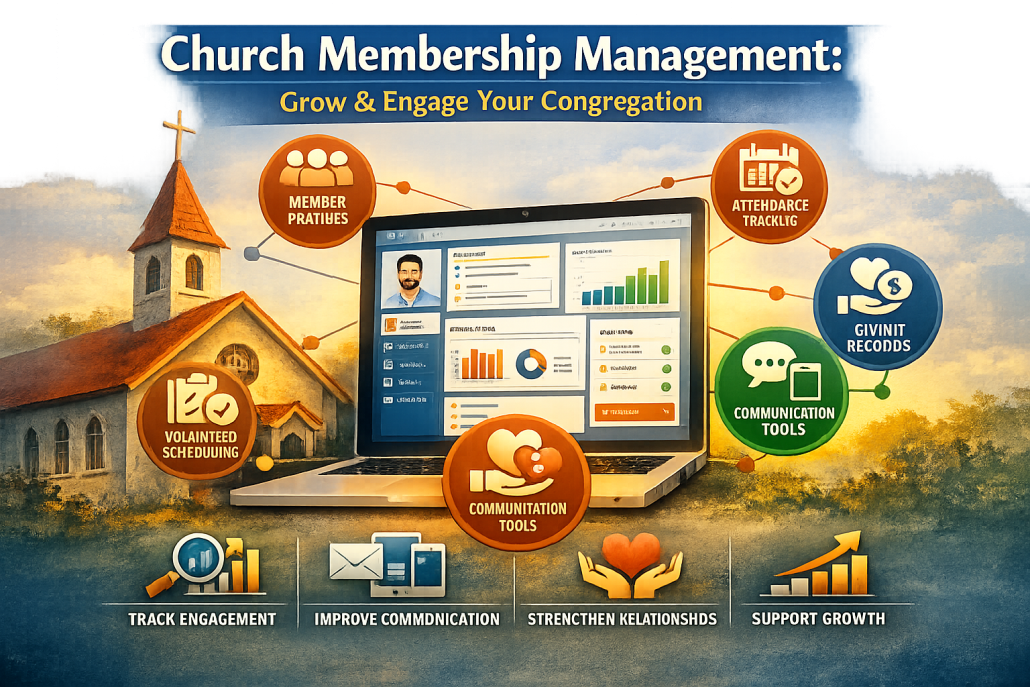
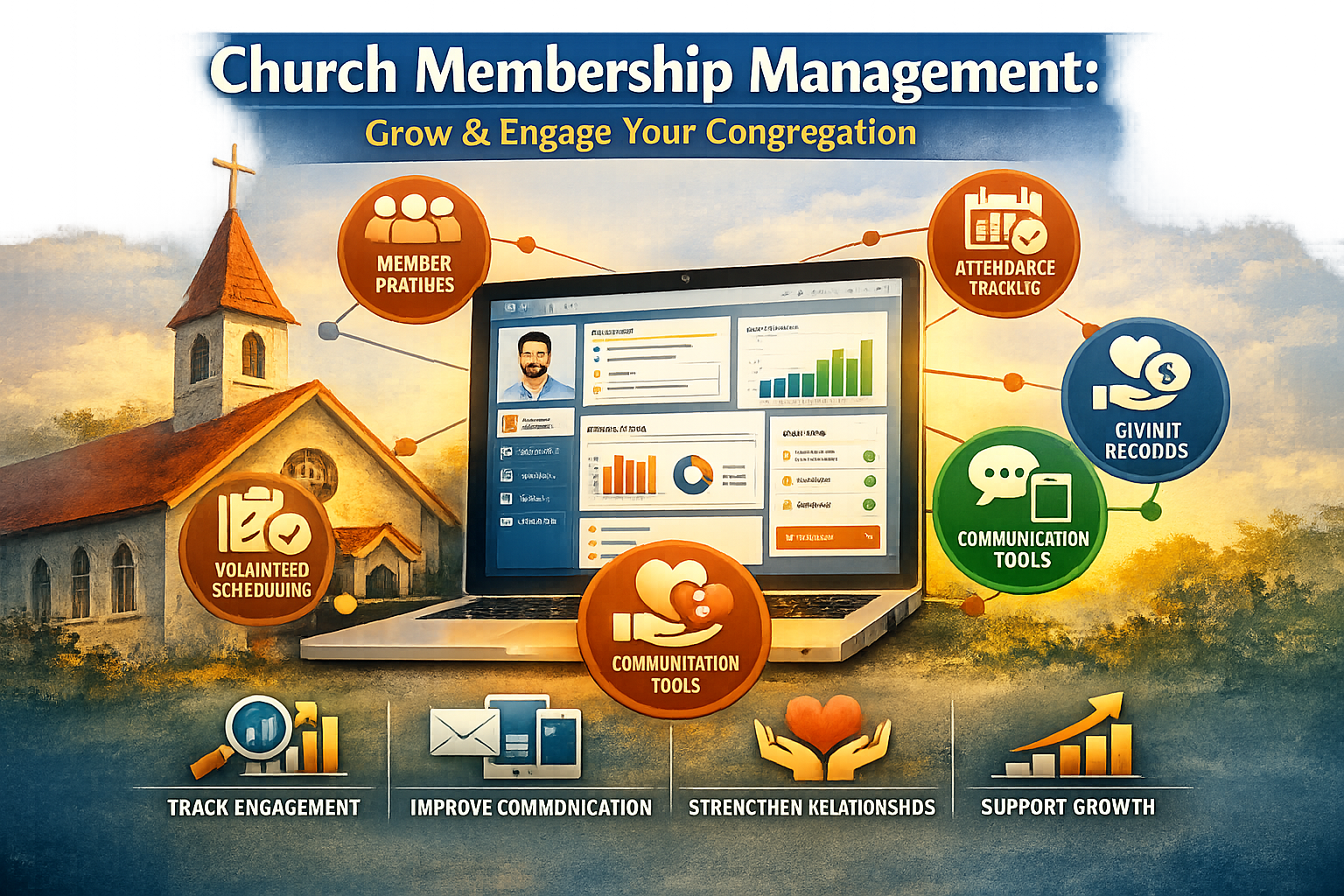
- Member profiles: Names, contact info, family relationships, spiritual milestones.
- Attendance tracking: Worship services, small groups, events.
- Ministry involvement: Volunteer roles, group participation.
- Communication tools: Email, SMS, app notifications.
- Reporting and analytics: Trends in engagement, giving, and growth.
Why Church Membership Management Matters
1. Strengthens Relationships
Knowing your members helps pastors and leaders provide personalized care. A good system allows you to track birthdays, anniversaries, prayer requests, and pastoral visits.
2. Improves Communication
Segmented lists let you send targeted messages — reminders for youth group, updates for volunteers, or devotionals for new members.
3. Enhances Engagement
Tracking attendance and ministry involvement helps identify disengaged members early, allowing for timely outreach.
4. Supports Growth
Data-driven insights help churches understand what’s working and where to improve — from sermon series to outreach events.
Common Challenges Without a System
- Lost or outdated records
- Difficulty tracking attendance trends
- Limited visibility into member engagement
- Manual errors in communication and reporting
Features to Look for in a Church Membership Management System
| Feature | Description |
|---|---|
| Member Database | Centralized profiles with customizable fields |
| Attendance Tracking | Automated check-ins, reports, and alerts |
| Group Management | Organize members into ministries, small groups |
| Communication Tools | Email, SMS, push notifications |
| Volunteer Scheduling | Assign roles, manage availability |
| Online Giving Integration | Track donations, pledges, and receipts |
| Reporting & Analytics | Visual dashboards and exportable reports |
| Mobile Access | Apps for leaders and members on the go |
Top Church Membership Management Platforms (2026)
- Planning Center People: Free member management with powerful integrations.
- Breeze Church Management: User-friendly, ideal for small to mid-sized churches.
- Church Community Builder (Pushpay): Advanced features for large ministries.
- Realm by ACS Technologies: Strong financial and communication tools.
- Faith Teams: Affordable, cloud-based, built for simplicity.
Best Practices for Implementation
1. Clean Your Data
Before migrating, remove duplicates and outdated records. Standardize naming conventions and contact formats.
2. Train Your Team
Offer onboarding sessions for staff and volunteers. Create cheat sheets and video tutorials.
3. Set Clear Permissions
Not everyone needs access to all data. Assign roles based on responsibilities.
4. Encourage Member Updates
Allow members to update their own profiles via mobile or web portals.
5. Review Regularly
Schedule quarterly audits to ensure data accuracy and system usage.
SEO Tips for Church Membership Blogs
To attract readers and rank well on Google:
- Use the keyword “church membership management” in the title, intro, and headings.
- Include semantic variations like “church member tracking,” “ministry database,” and “congregation management.”
- Add internal links to related content (e.g., church database systems, online giving tools).
- Use original images and infographics to improve engagement.
- Optimize for local SEO by mentioning your church’s location and community.
- Encourage comments and shares to boost visibility.
Conclusion
Effective church membership management is essential for building strong relationships, improving communication, and supporting ministry growth. Whether you’re a small congregation or a multi-campus church, investing in the right tools and practices will help you care for your members and fulfill your mission more effectively.

