Church Attendance Tracking Software: 10 Smart Things Buyers Should Compare in 2026

Church Attendance Tracking Software: 10 Smart Things Buyers Should Compare in 2026

Church Attendance Tracking Software is a strong buyer-intent keyword because the visitor is usually comparing providers, prices, features, timelines, and proof before making a decision.

Church Attendance Tracking Software is one of the fresh buyer-focused topics ChurchesAdmin should publish around today because it matches what serious buyers are searching before they request a demo, quote, rollout plan, or implementation support.

For buyers, students, business owners, managers, administrators, founders, and decision makers looking for a practical solution, the real problem is manual work, unclear communication, weak records, missed deadlines, poor visibility, and difficulty comparing trusted providers. A useful article should answer the questions that serious buyers ask before they contact a provider or request a quotation.

Table of Contents

  • Church Attendance Tracking Software
  • Church Attendance Tracking Software service
  • Church Attendance Tracking Software provider
  • Church Attendance Tracking Software company
  • best Church Attendance Tracking Software

Why Church Attendance Tracking Software Matters

This search usually comes from a person who already feels the pain. They may be losing enquiries, wasting time with manual work, struggling with deadlines, missing records, or comparing suppliers before paying.

The right content should make the decision easier. It should explain the problem clearly, show the features that matter, reduce fear, and give the visitor a simple next step.

ChurchesAdmin can use this topic to attract qualified visitors who are closer to buying because they are searching around a real need.

Important Features Buyers Should Expect

  • clear onboarding – helps buyers get a clearer, faster, and more reliable outcome.
  • secure records – helps buyers get a clearer, faster, and more reliable outcome.
  • fast communication – helps buyers get a clearer, faster, and more reliable outcome.
  • mobile access – helps buyers get a clearer, faster, and more reliable outcome.
  • reports and updates – helps buyers get a clearer, faster, and more reliable outcome.
  • support after delivery – helps buyers get a clearer, faster, and more reliable outcome.
  • clear process – buyers should understand what happens before, during, and after delivery.
  • mobile friendly experience – users should be able to access the service or platform comfortably on phones.
  • useful reports or updates – clients should see progress, records, or results without repeated follow-up.
  • reliable support – the provider should support improvements after launch or delivery.

How to Compare Providers

Start with workflow fit. The provider should understand the exact users, tasks, deadlines, records, communication channels, payments, and reports involved.

Next, compare trust. Look for clear service pages, examples, practical explanations, realistic promises, visible contacts, and content that answers real questions.

Then compare long-term value. The best option is not always the lowest quote. The right provider should save time, reduce confusion, improve experience, and make future growth easier.

Mistakes to Avoid

Choosing Only by Price

Cheap work can become expensive if it creates weak design, unclear communication, poor support, missing features, or repeated revisions.

Ignoring the Real User

A solution must work for the people who use it daily. If users find it confusing, the project loses value quickly.

Publishing Thin Content

SEO pages should not only repeat keywords. They should answer buyer questions and explain the next step clearly.

How to Get Started

Write down the exact result you want. Include the users, current problem, documents, deadlines, records, payments, reports, and the main action you want visitors or customers to take.

Then contact a provider with a clear request. Share the pain points and ask for a practical plan, timeline, and support process.

Why Choose ChurchesAdmin?

ChurchesAdmin helps churches manage members, giving, attendance, events, groups, communication, and reports with less manual work.

Frequently Asked Questions

Who needs Church Attendance Tracking Software?

Church Attendance Tracking Software is useful for buyers, students, business owners, managers, administrators, founders, and decision makers looking for a practical solution, especially when the current process is manual, unclear, slow, or hard to scale.

What should buyers compare first?

Compare workflow fit, support, examples, communication, features, timelines, and whether the provider understands the real problem.

Can the solution be customized?

Yes. A serious provider should shape the solution around users, records, reports, content, communication, and growth plans.

Conclusion

Church Attendance Tracking Software is worth targeting because it connects to real buying intent. The best content should educate the visitor, build confidence, and make the next enquiry easy.

Deep Buyer Guide for Church Attendance Tracking Software

Before making a decision, buyers should separate must-have requirements from nice-to-have extras. The must-have items are the features that protect revenue, save time, improve communication, or prevent operational confusion. A buyer searching for Church Attendance Tracking Software is rarely looking for a vague overview. They normally want a practical answer that helps them choose a provider, compare options, understand implementation, and avoid a poor purchase.

The first useful step is to define the current workflow. Write down who starts the request, who approves it, where records are stored, how payments or submissions are confirmed, and which reports management needs at the end of the week or month. This exercise exposes gaps quickly. If the current process depends on scattered spreadsheets, WhatsApp screenshots, email attachments, or one person who remembers everything, the buyer should prioritize a solution that brings those records into one controlled workflow.

The second step is to compare accountability. Good providers explain how the work will be planned, who owns each stage, what information is needed before kickoff, and how progress will be reviewed. Weak providers often jump straight to price without clarifying the operating problem. For ChurchesAdmin, the strongest content should help the reader think like a serious buyer: define the result, protect the user experience, check the support model, and make sure the final solution can keep improving after launch.

The third step is to check reporting and visibility. Many organizations do not only need a service; they need evidence that the service is working. Reports, dashboards, status updates, audit trails, and clear records reduce conflict because teams can see what happened, when it happened, and what still needs attention. This is especially important when the topic affects money, customers, students, members, tenants, voters, staff, stock, or compliance.

Future growth also matters. A good solution should allow more users, more records, more requests, more services, and better reports without forcing the organization to start again from zero. Buyers should ask whether the solution can handle new branches, new counties, new departments, new roles, new payment methods, or new reporting needs. The cheapest first option can become expensive if it blocks growth six months later.

Strong SEO content supports both trust and rankings. A long article should not fill space with repeated claims. It should answer real questions, explain trade-offs, use the focus keyword naturally, link to useful pages, and give the reader a clear next step. When visitors feel that the article understands their problem, they are more likely to enquire, request a quote, book a demo, or compare the provider seriously.

Implementation Checklist

  • Problem definition: describe the current bottleneck and the measurable result the buyer wants.
  • User roles: list administrators, managers, customers, students, members, tenants, staff, or external users who will interact with the process.
  • Data records: define the records, documents, payments, messages, reports, and approvals that must be captured.
  • Security: decide who can view, edit, approve, export, or delete sensitive records.
  • Support: confirm how training, bug fixes, updates, and improvements will be handled after launch.

These details make the buying conversation more productive. Instead of asking only for a general quote, the buyer can explain the workflow and ask for a practical rollout plan. That gives the provider enough context to recommend a sensible scope, timeline, and support path. It also helps the buyer avoid vague proposals that look cheap but leave critical work undefined.

Questions Buyers Should Ask

Buyers should ask how long implementation will take, what content or data must be prepared, how user training will work, and what happens after publishing or launch. They should also ask for examples of similar work, a clear contact path, and an explanation of what is included in the first delivery versus future improvements. These questions protect both sides because they make expectations clear before money changes hands.

Another useful question is how success will be measured. For some buyers, success means more enquiries. For others, it means faster reconciliation, fewer missing records, lower admin workload, better tenant communication, smoother elections, stronger academic support workflows, better farm records, more reliable connectivity, or clearer executive reporting. The right metric depends on the business problem, so the article should connect the keyword to outcomes that matter.

Finally, buyers should check whether the provider understands the local context. In Kenya and surrounding markets, details like M-Pesa, county operations, mobile-first users, WhatsApp communication, school and SACCO structures, landlord workflows, rural connectivity, and small-team administration can shape the success of a project. A generic solution may look good but fail in daily use if it ignores these realities.

Deep Buyer Guide for Church Attendance Tracking Software

Before making a decision, buyers should separate must-have requirements from nice-to-have extras. The must-have items are the features that protect revenue, save time, improve communication, or prevent operational confusion. A buyer searching for Church Attendance Tracking Software is rarely looking for a vague overview. They normally want a practical answer that helps them choose a provider, compare options, understand implementation, and avoid a poor purchase.

The first useful step is to define the current workflow. Write down who starts the request, who approves it, where records are stored, how payments or submissions are confirmed, and which reports management needs at the end of the week or month. This exercise exposes gaps quickly. If the current process depends on scattered spreadsheets, WhatsApp screenshots, email attachments, or one person who remembers everything, the buyer should prioritize a solution that brings those records into one controlled workflow.

The second step is to compare accountability. Good providers explain how the work will be planned, who owns each stage, what information is needed before kickoff, and how progress will be reviewed. Weak providers often jump straight to price without clarifying the operating problem. For ChurchesAdmin, the strongest content should help the reader think like a serious buyer: define the result, protect the user experience, check the support model, and make sure the final solution can keep improving after launch.

The third step is to check reporting and visibility. Many organizations do not only need a service; they need evidence that the service is working. Reports, dashboards, status updates, audit trails, and clear records reduce conflict because teams can see what happened, when it happened, and what still needs attention. This is especially important when the topic affects money, customers, students, members, tenants, voters, staff, stock, or compliance.

Future growth also matters. A good solution should allow more users, more records, more requests, more services, and better reports without forcing the organization to start again from zero. Buyers should ask whether the solution can handle new branches, new counties, new departments, new roles, new payment methods, or new reporting needs. The cheapest first option can become expensive if it blocks growth six months later.

Strong SEO content supports both trust and rankings. A long article should not fill space with repeated claims. It should answer real questions, explain trade-offs, use the focus keyword naturally, link to useful pages, and give the reader a clear next step. When visitors feel that the article understands their problem, they are more likely to enquire, request a quote, book a demo, or compare the provider seriously.

Implementation Checklist

  • Problem definition: describe the current bottleneck and the measurable result the buyer wants.
  • User roles: list administrators, managers, customers, students, members, tenants, staff, or external users who will interact with the process.
  • Data records: define the records, documents, payments, messages, reports, and approvals that must be captured.
  • Security: decide who can view, edit, approve, export, or delete sensitive records.
  • Support: confirm how training, bug fixes, updates, and improvements will be handled after launch.

These details make the buying conversation more productive. Instead of asking only for a general quote, the buyer can explain the workflow and ask for a practical rollout plan. That gives the provider enough context to recommend a sensible scope, timeline, and support path. It also helps the buyer avoid vague proposals that look cheap but leave critical work undefined.

Questions Buyers Should Ask

Buyers should ask how long implementation will take, what content or data must be prepared, how user training will work, and what happens after publishing or launch. They should also ask for examples of similar work, a clear contact path, and an explanation of what is included in the first delivery versus future improvements. These questions protect both sides because they make expectations clear before money changes hands.

Another useful question is how success will be measured. For some buyers, success means more enquiries. For others, it means faster reconciliation, fewer missing records, lower admin workload, better tenant communication, smoother elections, stronger academic support workflows, better farm records, more reliable connectivity, or clearer executive reporting. The right metric depends on the business problem, so the article should connect the keyword to outcomes that matter.

Finally, buyers should check whether the provider understands the local context. In Kenya and surrounding markets, details like M-Pesa, county operations, mobile-first users, WhatsApp communication, school and SACCO structures, landlord workflows, rural connectivity, and small-team administration can shape the success of a project. A generic solution may look good but fail in daily use if it ignores these realities.

Deep Buyer Guide for Church Attendance Tracking Software

Before making a decision, buyers should separate must-have requirements from nice-to-have extras. The must-have items are the features that protect revenue, save time, improve communication, or prevent operational confusion. A buyer searching for Church Attendance Tracking Software is rarely looking for a vague overview. They normally want a practical answer that helps them choose a provider, compare options, understand implementation, and avoid a poor purchase.

The first useful step is to define the current workflow. Write down who starts the request, who approves it, where records are stored, how payments or submissions are confirmed, and which reports management needs at the end of the week or month. This exercise exposes gaps quickly. If the current process depends on scattered spreadsheets, WhatsApp screenshots, email attachments, or one person who remembers everything, the buyer should prioritize a solution that brings those records into one controlled workflow.

The second step is to compare accountability. Good providers explain how the work will be planned, who owns each stage, what information is needed before kickoff, and how progress will be reviewed. Weak providers often jump straight to price without clarifying the operating problem. For ChurchesAdmin, the strongest content should help the reader think like a serious buyer: define the result, protect the user experience, check the support model, and make sure the final solution can keep improving after launch.

The third step is to check reporting and visibility. Many organizations do not only need a service; they need evidence that the service is working. Reports, dashboards, status updates, audit trails, and clear records reduce conflict because teams can see what happened, when it happened, and what still needs attention. This is especially important when the topic affects money, customers, students, members, tenants, voters, staff, stock, or compliance.

Future growth also matters. A good solution should allow more users, more records, more requests, more services, and better reports without forcing the organization to start again from zero. Buyers should ask whether the solution can handle new branches, new counties, new departments, new roles, new payment methods, or new reporting needs. The cheapest first option can become expensive if it blocks growth six months later.

Strong SEO content supports both trust and rankings. A long article should not fill space with repeated claims. It should answer real questions, explain trade-offs, use the focus keyword naturally, link to useful pages, and give the reader a clear next step. When visitors feel that the article understands their problem, they are more likely to enquire, request a quote, book a demo, or compare the provider seriously.

Implementation Checklist

  • Problem definition: describe the current bottleneck and the measurable result the buyer wants.
  • User roles: list administrators, managers, customers, students, members, tenants, staff, or external users who will interact with the process.
  • Data records: define the records, documents, payments, messages, reports, and approvals that must be captured.
  • Security: decide who can view, edit, approve, export, or delete sensitive records.
  • Support: confirm how training, bug fixes, updates, and improvements will be handled after launch.

These details make the buying conversation more productive. Instead of asking only for a general quote, the buyer can explain the workflow and ask for a practical rollout plan. That gives the provider enough context to recommend a sensible scope, timeline, and support path. It also helps the buyer avoid vague proposals that look cheap but leave critical work undefined.

Questions Buyers Should Ask

Buyers should ask how long implementation will take, what content or data must be prepared, how user training will work, and what happens after publishing or launch. They should also ask for examples of similar work, a clear contact path, and an explanation of what is included in the first delivery versus future improvements. These questions protect both sides because they make expectations clear before money changes hands.

Another useful question is how success will be measured. For some buyers, success means more enquiries. For others, it means faster reconciliation, fewer missing records, lower admin workload, better tenant communication, smoother elections, stronger academic support workflows, better farm records, more reliable connectivity, or clearer executive reporting. The right metric depends on the business problem, so the article should connect the keyword to outcomes that matter.

Finally, buyers should check whether the provider understands the local context. In Kenya and surrounding markets, details like M-Pesa, county operations, mobile-first users, WhatsApp communication, school and SACCO structures, landlord workflows, rural connectivity, and small-team administration can shape the success of a project. A generic solution may look good but fail in daily use if it ignores these realities.

Deep Buyer Guide for Church Attendance Tracking Software

Before making a decision, buyers should separate must-have requirements from nice-to-have extras. The must-have items are the features that protect revenue, save time, improve communication, or prevent operational confusion. A buyer searching for Church Attendance Tracking Software is rarely looking for a vague overview. They normally want a practical answer that helps them choose a provider, compare options, understand implementation, and avoid a poor purchase.

The first useful step is to define the current workflow. Write down who starts the request, who approves it, where records are stored, how payments or submissions are confirmed, and which reports management needs at the end of the week or month. This exercise exposes gaps quickly. If the current process depends on scattered spreadsheets, WhatsApp screenshots, email attachments, or one person who remembers everything, the buyer should prioritize a solution that brings those records into one controlled workflow.

The second step is to compare accountability. Good providers explain how the work will be planned, who owns each stage, what information is needed before kickoff, and how progress will be reviewed. Weak providers often jump straight to price without clarifying the operating problem. For ChurchesAdmin, the strongest content should help the reader think like a serious buyer: define the result, protect the user experience, check the support model, and make sure the final solution can keep improving after launch.

The third step is to check reporting and visibility. Many organizations do not only need a service; they need evidence that the service is working. Reports, dashboards, status updates, audit trails, and clear records reduce conflict because teams can see what happened, when it happened, and what still needs attention. This is especially important when the topic affects money, customers, students, members, tenants, voters, staff, stock, or compliance.

Future growth also matters. A good solution should allow more users, more records, more requests, more services, and better reports without forcing the organization to start again from zero. Buyers should ask whether the solution can handle new branches, new counties, new departments, new roles, new payment methods, or new reporting needs. The cheapest first option can become expensive if it blocks growth six months later.

Strong SEO content supports both trust and rankings. A long article should not fill space with repeated claims. It should answer real questions, explain trade-offs, use the focus keyword naturally, link to useful pages, and give the reader a clear next step. When visitors feel that the article understands their problem, they are more likely to enquire, request a quote, book a demo, or compare the provider seriously.

Implementation Checklist

  • Problem definition: describe the current bottleneck and the measurable result the buyer wants.
  • User roles: list administrators, managers, customers, students, members, tenants, staff, or external users who will interact with the process.
  • Data records: define the records, documents, payments, messages, reports, and approvals that must be captured.
  • Security: decide who can view, edit, approve, export, or delete sensitive records.
  • Support: confirm how training, bug fixes, updates, and improvements will be handled after launch.

These details make the buying conversation more productive. Instead of asking only for a general quote, the buyer can explain the workflow and ask for a practical rollout plan. That gives the provider enough context to recommend a sensible scope, timeline, and support path. It also helps the buyer avoid vague proposals that look cheap but leave critical work undefined.

Questions Buyers Should Ask

Buyers should ask how long implementation will take, what content or data must be prepared, how user training will work, and what happens after publishing or launch. They should also ask for examples of similar work, a clear contact path, and an explanation of what is included in the first delivery versus future improvements. These questions protect both sides because they make expectations clear before money changes hands.

Another useful question is how success will be measured. For some buyers, success means more enquiries. For others, it means faster reconciliation, fewer missing records, lower admin workload, better tenant communication, smoother elections, stronger academic support workflows, better farm records, more reliable connectivity, or clearer executive reporting. The right metric depends on the business problem, so the article should connect the keyword to outcomes that matter.

Finally, buyers should check whether the provider understands the local context. In Kenya and surrounding markets, details like M-Pesa, county operations, mobile-first users, WhatsApp communication, school and SACCO structures, landlord workflows, rural connectivity, and small-team administration can shape the success of a project. A generic solution may look good but fail in daily use if it ignores these realities.

Deep Buyer Guide for Church Attendance Tracking Software

Before making a decision, buyers should separate must-have requirements from nice-to-have extras. The must-have items are the features that protect revenue, save time, improve communication, or prevent operational confusion. A buyer searching for Church Attendance Tracking Software is rarely looking for a vague overview. They normally want a practical answer that helps them choose a provider, compare options, understand implementation, and avoid a poor purchase.

The first useful step is to define the current workflow. Write down who starts the request, who approves it, where records are stored, how payments or submissions are confirmed, and which reports management needs at the end of the week or month. This exercise exposes gaps quickly. If the current process depends on scattered spreadsheets, WhatsApp screenshots, email attachments, or one person who remembers everything, the buyer should prioritize a solution that brings those records into one controlled workflow.

The second step is to compare accountability. Good providers explain how the work will be planned, who owns each stage, what information is needed before kickoff, and how progress will be reviewed. Weak providers often jump straight to price without clarifying the operating problem. For ChurchesAdmin, the strongest content should help the reader think like a serious buyer: define the result, protect the user experience, check the support model, and make sure the final solution can keep improving after launch.

The third step is to check reporting and visibility. Many organizations do not only need a service; they need evidence that the service is working. Reports, dashboards, status updates, audit trails, and clear records reduce conflict because teams can see what happened, when it happened, and what still needs attention. This is especially important when the topic affects money, customers, students, members, tenants, voters, staff, stock, or compliance.

Future growth also matters. A good solution should allow more users, more records, more requests, more services, and better reports without forcing the organization to start again from zero. Buyers should ask whether the solution can handle new branches, new counties, new departments, new roles, new payment methods, or new reporting needs. The cheapest first option can become expensive if it blocks growth six months later.

Strong SEO content supports both trust and rankings. A long article should not fill space with repeated claims. It should answer real questions, explain trade-offs, use the focus keyword naturally, link to useful pages, and give the reader a clear next step. When visitors feel that the article understands their problem, they are more likely to enquire, request a quote, book a demo, or compare the provider seriously.

Implementation Checklist

  • Problem definition: describe the current bottleneck and the measurable result the buyer wants.
  • User roles: list administrators, managers, customers, students, members, tenants, staff, or external users who will interact with the process.
  • Data records: define the records, documents, payments, messages, reports, and approvals that must be captured.
  • Security: decide who can view, edit, approve, export, or delete sensitive records.
  • Support: confirm how training, bug fixes, updates, and improvements will be handled after launch.

These details make the buying conversation more productive. Instead of asking only for a general quote, the buyer can explain the workflow and ask for a practical rollout plan. That gives the provider enough context to recommend a sensible scope, timeline, and support path. It also helps the buyer avoid vague proposals that look cheap but leave critical work undefined.

Questions Buyers Should Ask

Buyers should ask how long implementation will take, what content or data must be prepared, how user training will work, and what happens after publishing or launch. They should also ask for examples of similar work, a clear contact path, and an explanation of what is included in the first delivery versus future improvements. These questions protect both sides because they make expectations clear before money changes hands.

Another useful question is how success will be measured. For some buyers, success means more enquiries. For others, it means faster reconciliation, fewer missing records, lower admin workload, better tenant communication, smoother elections, stronger academic support workflows, better farm records, more reliable connectivity, or clearer executive reporting. The right metric depends on the business problem, so the article should connect the keyword to outcomes that matter.

Finally, buyers should check whether the provider understands the local context. In Kenya and surrounding markets, details like M-Pesa, county operations, mobile-first users, WhatsApp communication, school and SACCO structures, landlord workflows, rural connectivity, and small-team administration can shape the success of a project. A generic solution may look good but fail in daily use if it ignores these realities.

Church SMS Communication System: 10 Smart Things Buyers Should Compare in 2026

Church SMS Communication System: 10 Smart Things Buyers Should Compare in 2026

Church SMS Communication System is a strong buyer-intent keyword because the visitor is usually comparing providers, prices, features, timelines, and proof before making a decision.

Church SMS Communication System is one of the fresh buyer-focused topics ChurchesAdmin should publish around today because it matches what serious buyers are searching before they request a demo, quote, rollout plan, or implementation support.

For buyers, students, business owners, managers, administrators, founders, and decision makers looking for a practical solution, the real problem is manual work, unclear communication, weak records, missed deadlines, poor visibility, and difficulty comparing trusted providers. A useful article should answer the questions that serious buyers ask before they contact a provider or request a quotation.

Table of Contents

  • Church SMS Communication System
  • Church SMS Communication System service
  • Church SMS Communication System provider
  • Church SMS Communication System company
  • best Church SMS Communication System

Why Church SMS Communication System Matters

This search usually comes from a person who already feels the pain. They may be losing enquiries, wasting time with manual work, struggling with deadlines, missing records, or comparing suppliers before paying.

The right content should make the decision easier. It should explain the problem clearly, show the features that matter, reduce fear, and give the visitor a simple next step.

ChurchesAdmin can use this topic to attract qualified visitors who are closer to buying because they are searching around a real need.

Important Features Buyers Should Expect

  • clear onboarding – helps buyers get a clearer, faster, and more reliable outcome.
  • secure records – helps buyers get a clearer, faster, and more reliable outcome.
  • fast communication – helps buyers get a clearer, faster, and more reliable outcome.
  • mobile access – helps buyers get a clearer, faster, and more reliable outcome.
  • reports and updates – helps buyers get a clearer, faster, and more reliable outcome.
  • support after delivery – helps buyers get a clearer, faster, and more reliable outcome.
  • clear process – buyers should understand what happens before, during, and after delivery.
  • mobile friendly experience – users should be able to access the service or platform comfortably on phones.
  • useful reports or updates – clients should see progress, records, or results without repeated follow-up.
  • reliable support – the provider should support improvements after launch or delivery.

How to Compare Providers

Start with workflow fit. The provider should understand the exact users, tasks, deadlines, records, communication channels, payments, and reports involved.

Next, compare trust. Look for clear service pages, examples, practical explanations, realistic promises, visible contacts, and content that answers real questions.

Then compare long-term value. The best option is not always the lowest quote. The right provider should save time, reduce confusion, improve experience, and make future growth easier.

Mistakes to Avoid

Choosing Only by Price

Cheap work can become expensive if it creates weak design, unclear communication, poor support, missing features, or repeated revisions.

Ignoring the Real User

A solution must work for the people who use it daily. If users find it confusing, the project loses value quickly.

Publishing Thin Content

SEO pages should not only repeat keywords. They should answer buyer questions and explain the next step clearly.

How to Get Started

Write down the exact result you want. Include the users, current problem, documents, deadlines, records, payments, reports, and the main action you want visitors or customers to take.

Then contact a provider with a clear request. Share the pain points and ask for a practical plan, timeline, and support process.

Why Choose ChurchesAdmin?

ChurchesAdmin helps churches manage members, giving, attendance, events, groups, communication, and reports with less manual work.

Frequently Asked Questions

Who needs Church SMS Communication System?

Church SMS Communication System is useful for buyers, students, business owners, managers, administrators, founders, and decision makers looking for a practical solution, especially when the current process is manual, unclear, slow, or hard to scale.

What should buyers compare first?

Compare workflow fit, support, examples, communication, features, timelines, and whether the provider understands the real problem.

Can the solution be customized?

Yes. A serious provider should shape the solution around users, records, reports, content, communication, and growth plans.

Conclusion

Church SMS Communication System is worth targeting because it connects to real buying intent. The best content should educate the visitor, build confidence, and make the next enquiry easy.

Deep Buyer Guide for Church SMS Communication System

Before making a decision, buyers should separate must-have requirements from nice-to-have extras. The must-have items are the features that protect revenue, save time, improve communication, or prevent operational confusion. A buyer searching for Church SMS Communication System is rarely looking for a vague overview. They normally want a practical answer that helps them choose a provider, compare options, understand implementation, and avoid a poor purchase.

The first useful step is to define the current workflow. Write down who starts the request, who approves it, where records are stored, how payments or submissions are confirmed, and which reports management needs at the end of the week or month. This exercise exposes gaps quickly. If the current process depends on scattered spreadsheets, WhatsApp screenshots, email attachments, or one person who remembers everything, the buyer should prioritize a solution that brings those records into one controlled workflow.

The second step is to compare accountability. Good providers explain how the work will be planned, who owns each stage, what information is needed before kickoff, and how progress will be reviewed. Weak providers often jump straight to price without clarifying the operating problem. For ChurchesAdmin, the strongest content should help the reader think like a serious buyer: define the result, protect the user experience, check the support model, and make sure the final solution can keep improving after launch.

The third step is to check reporting and visibility. Many organizations do not only need a service; they need evidence that the service is working. Reports, dashboards, status updates, audit trails, and clear records reduce conflict because teams can see what happened, when it happened, and what still needs attention. This is especially important when the topic affects money, customers, students, members, tenants, voters, staff, stock, or compliance.

Future growth also matters. A good solution should allow more users, more records, more requests, more services, and better reports without forcing the organization to start again from zero. Buyers should ask whether the solution can handle new branches, new counties, new departments, new roles, new payment methods, or new reporting needs. The cheapest first option can become expensive if it blocks growth six months later.

Strong SEO content supports both trust and rankings. A long article should not fill space with repeated claims. It should answer real questions, explain trade-offs, use the focus keyword naturally, link to useful pages, and give the reader a clear next step. When visitors feel that the article understands their problem, they are more likely to enquire, request a quote, book a demo, or compare the provider seriously.

Implementation Checklist

  • Problem definition: describe the current bottleneck and the measurable result the buyer wants.
  • User roles: list administrators, managers, customers, students, members, tenants, staff, or external users who will interact with the process.
  • Data records: define the records, documents, payments, messages, reports, and approvals that must be captured.
  • Security: decide who can view, edit, approve, export, or delete sensitive records.
  • Support: confirm how training, bug fixes, updates, and improvements will be handled after launch.

These details make the buying conversation more productive. Instead of asking only for a general quote, the buyer can explain the workflow and ask for a practical rollout plan. That gives the provider enough context to recommend a sensible scope, timeline, and support path. It also helps the buyer avoid vague proposals that look cheap but leave critical work undefined.

Questions Buyers Should Ask

Buyers should ask how long implementation will take, what content or data must be prepared, how user training will work, and what happens after publishing or launch. They should also ask for examples of similar work, a clear contact path, and an explanation of what is included in the first delivery versus future improvements. These questions protect both sides because they make expectations clear before money changes hands.

Another useful question is how success will be measured. For some buyers, success means more enquiries. For others, it means faster reconciliation, fewer missing records, lower admin workload, better tenant communication, smoother elections, stronger academic support workflows, better farm records, more reliable connectivity, or clearer executive reporting. The right metric depends on the business problem, so the article should connect the keyword to outcomes that matter.

Finally, buyers should check whether the provider understands the local context. In Kenya and surrounding markets, details like M-Pesa, county operations, mobile-first users, WhatsApp communication, school and SACCO structures, landlord workflows, rural connectivity, and small-team administration can shape the success of a project. A generic solution may look good but fail in daily use if it ignores these realities.

Deep Buyer Guide for Church SMS Communication System

Before making a decision, buyers should separate must-have requirements from nice-to-have extras. The must-have items are the features that protect revenue, save time, improve communication, or prevent operational confusion. A buyer searching for Church SMS Communication System is rarely looking for a vague overview. They normally want a practical answer that helps them choose a provider, compare options, understand implementation, and avoid a poor purchase.

The first useful step is to define the current workflow. Write down who starts the request, who approves it, where records are stored, how payments or submissions are confirmed, and which reports management needs at the end of the week or month. This exercise exposes gaps quickly. If the current process depends on scattered spreadsheets, WhatsApp screenshots, email attachments, or one person who remembers everything, the buyer should prioritize a solution that brings those records into one controlled workflow.

The second step is to compare accountability. Good providers explain how the work will be planned, who owns each stage, what information is needed before kickoff, and how progress will be reviewed. Weak providers often jump straight to price without clarifying the operating problem. For ChurchesAdmin, the strongest content should help the reader think like a serious buyer: define the result, protect the user experience, check the support model, and make sure the final solution can keep improving after launch.

The third step is to check reporting and visibility. Many organizations do not only need a service; they need evidence that the service is working. Reports, dashboards, status updates, audit trails, and clear records reduce conflict because teams can see what happened, when it happened, and what still needs attention. This is especially important when the topic affects money, customers, students, members, tenants, voters, staff, stock, or compliance.

Future growth also matters. A good solution should allow more users, more records, more requests, more services, and better reports without forcing the organization to start again from zero. Buyers should ask whether the solution can handle new branches, new counties, new departments, new roles, new payment methods, or new reporting needs. The cheapest first option can become expensive if it blocks growth six months later.

Strong SEO content supports both trust and rankings. A long article should not fill space with repeated claims. It should answer real questions, explain trade-offs, use the focus keyword naturally, link to useful pages, and give the reader a clear next step. When visitors feel that the article understands their problem, they are more likely to enquire, request a quote, book a demo, or compare the provider seriously.

Implementation Checklist

  • Problem definition: describe the current bottleneck and the measurable result the buyer wants.
  • User roles: list administrators, managers, customers, students, members, tenants, staff, or external users who will interact with the process.
  • Data records: define the records, documents, payments, messages, reports, and approvals that must be captured.
  • Security: decide who can view, edit, approve, export, or delete sensitive records.
  • Support: confirm how training, bug fixes, updates, and improvements will be handled after launch.

These details make the buying conversation more productive. Instead of asking only for a general quote, the buyer can explain the workflow and ask for a practical rollout plan. That gives the provider enough context to recommend a sensible scope, timeline, and support path. It also helps the buyer avoid vague proposals that look cheap but leave critical work undefined.

Questions Buyers Should Ask

Buyers should ask how long implementation will take, what content or data must be prepared, how user training will work, and what happens after publishing or launch. They should also ask for examples of similar work, a clear contact path, and an explanation of what is included in the first delivery versus future improvements. These questions protect both sides because they make expectations clear before money changes hands.

Another useful question is how success will be measured. For some buyers, success means more enquiries. For others, it means faster reconciliation, fewer missing records, lower admin workload, better tenant communication, smoother elections, stronger academic support workflows, better farm records, more reliable connectivity, or clearer executive reporting. The right metric depends on the business problem, so the article should connect the keyword to outcomes that matter.

Finally, buyers should check whether the provider understands the local context. In Kenya and surrounding markets, details like M-Pesa, county operations, mobile-first users, WhatsApp communication, school and SACCO structures, landlord workflows, rural connectivity, and small-team administration can shape the success of a project. A generic solution may look good but fail in daily use if it ignores these realities.

Deep Buyer Guide for Church SMS Communication System

Before making a decision, buyers should separate must-have requirements from nice-to-have extras. The must-have items are the features that protect revenue, save time, improve communication, or prevent operational confusion. A buyer searching for Church SMS Communication System is rarely looking for a vague overview. They normally want a practical answer that helps them choose a provider, compare options, understand implementation, and avoid a poor purchase.

The first useful step is to define the current workflow. Write down who starts the request, who approves it, where records are stored, how payments or submissions are confirmed, and which reports management needs at the end of the week or month. This exercise exposes gaps quickly. If the current process depends on scattered spreadsheets, WhatsApp screenshots, email attachments, or one person who remembers everything, the buyer should prioritize a solution that brings those records into one controlled workflow.

The second step is to compare accountability. Good providers explain how the work will be planned, who owns each stage, what information is needed before kickoff, and how progress will be reviewed. Weak providers often jump straight to price without clarifying the operating problem. For ChurchesAdmin, the strongest content should help the reader think like a serious buyer: define the result, protect the user experience, check the support model, and make sure the final solution can keep improving after launch.

The third step is to check reporting and visibility. Many organizations do not only need a service; they need evidence that the service is working. Reports, dashboards, status updates, audit trails, and clear records reduce conflict because teams can see what happened, when it happened, and what still needs attention. This is especially important when the topic affects money, customers, students, members, tenants, voters, staff, stock, or compliance.

Future growth also matters. A good solution should allow more users, more records, more requests, more services, and better reports without forcing the organization to start again from zero. Buyers should ask whether the solution can handle new branches, new counties, new departments, new roles, new payment methods, or new reporting needs. The cheapest first option can become expensive if it blocks growth six months later.

Strong SEO content supports both trust and rankings. A long article should not fill space with repeated claims. It should answer real questions, explain trade-offs, use the focus keyword naturally, link to useful pages, and give the reader a clear next step. When visitors feel that the article understands their problem, they are more likely to enquire, request a quote, book a demo, or compare the provider seriously.

Implementation Checklist

  • Problem definition: describe the current bottleneck and the measurable result the buyer wants.
  • User roles: list administrators, managers, customers, students, members, tenants, staff, or external users who will interact with the process.
  • Data records: define the records, documents, payments, messages, reports, and approvals that must be captured.
  • Security: decide who can view, edit, approve, export, or delete sensitive records.
  • Support: confirm how training, bug fixes, updates, and improvements will be handled after launch.

These details make the buying conversation more productive. Instead of asking only for a general quote, the buyer can explain the workflow and ask for a practical rollout plan. That gives the provider enough context to recommend a sensible scope, timeline, and support path. It also helps the buyer avoid vague proposals that look cheap but leave critical work undefined.

Questions Buyers Should Ask

Buyers should ask how long implementation will take, what content or data must be prepared, how user training will work, and what happens after publishing or launch. They should also ask for examples of similar work, a clear contact path, and an explanation of what is included in the first delivery versus future improvements. These questions protect both sides because they make expectations clear before money changes hands.

Another useful question is how success will be measured. For some buyers, success means more enquiries. For others, it means faster reconciliation, fewer missing records, lower admin workload, better tenant communication, smoother elections, stronger academic support workflows, better farm records, more reliable connectivity, or clearer executive reporting. The right metric depends on the business problem, so the article should connect the keyword to outcomes that matter.

Finally, buyers should check whether the provider understands the local context. In Kenya and surrounding markets, details like M-Pesa, county operations, mobile-first users, WhatsApp communication, school and SACCO structures, landlord workflows, rural connectivity, and small-team administration can shape the success of a project. A generic solution may look good but fail in daily use if it ignores these realities.

Deep Buyer Guide for Church SMS Communication System

Before making a decision, buyers should separate must-have requirements from nice-to-have extras. The must-have items are the features that protect revenue, save time, improve communication, or prevent operational confusion. A buyer searching for Church SMS Communication System is rarely looking for a vague overview. They normally want a practical answer that helps them choose a provider, compare options, understand implementation, and avoid a poor purchase.

The first useful step is to define the current workflow. Write down who starts the request, who approves it, where records are stored, how payments or submissions are confirmed, and which reports management needs at the end of the week or month. This exercise exposes gaps quickly. If the current process depends on scattered spreadsheets, WhatsApp screenshots, email attachments, or one person who remembers everything, the buyer should prioritize a solution that brings those records into one controlled workflow.

The second step is to compare accountability. Good providers explain how the work will be planned, who owns each stage, what information is needed before kickoff, and how progress will be reviewed. Weak providers often jump straight to price without clarifying the operating problem. For ChurchesAdmin, the strongest content should help the reader think like a serious buyer: define the result, protect the user experience, check the support model, and make sure the final solution can keep improving after launch.

The third step is to check reporting and visibility. Many organizations do not only need a service; they need evidence that the service is working. Reports, dashboards, status updates, audit trails, and clear records reduce conflict because teams can see what happened, when it happened, and what still needs attention. This is especially important when the topic affects money, customers, students, members, tenants, voters, staff, stock, or compliance.

Future growth also matters. A good solution should allow more users, more records, more requests, more services, and better reports without forcing the organization to start again from zero. Buyers should ask whether the solution can handle new branches, new counties, new departments, new roles, new payment methods, or new reporting needs. The cheapest first option can become expensive if it blocks growth six months later.

Strong SEO content supports both trust and rankings. A long article should not fill space with repeated claims. It should answer real questions, explain trade-offs, use the focus keyword naturally, link to useful pages, and give the reader a clear next step. When visitors feel that the article understands their problem, they are more likely to enquire, request a quote, book a demo, or compare the provider seriously.

Implementation Checklist

  • Problem definition: describe the current bottleneck and the measurable result the buyer wants.
  • User roles: list administrators, managers, customers, students, members, tenants, staff, or external users who will interact with the process.
  • Data records: define the records, documents, payments, messages, reports, and approvals that must be captured.
  • Security: decide who can view, edit, approve, export, or delete sensitive records.
  • Support: confirm how training, bug fixes, updates, and improvements will be handled after launch.

These details make the buying conversation more productive. Instead of asking only for a general quote, the buyer can explain the workflow and ask for a practical rollout plan. That gives the provider enough context to recommend a sensible scope, timeline, and support path. It also helps the buyer avoid vague proposals that look cheap but leave critical work undefined.

Questions Buyers Should Ask

Buyers should ask how long implementation will take, what content or data must be prepared, how user training will work, and what happens after publishing or launch. They should also ask for examples of similar work, a clear contact path, and an explanation of what is included in the first delivery versus future improvements. These questions protect both sides because they make expectations clear before money changes hands.

Another useful question is how success will be measured. For some buyers, success means more enquiries. For others, it means faster reconciliation, fewer missing records, lower admin workload, better tenant communication, smoother elections, stronger academic support workflows, better farm records, more reliable connectivity, or clearer executive reporting. The right metric depends on the business problem, so the article should connect the keyword to outcomes that matter.

Finally, buyers should check whether the provider understands the local context. In Kenya and surrounding markets, details like M-Pesa, county operations, mobile-first users, WhatsApp communication, school and SACCO structures, landlord workflows, rural connectivity, and small-team administration can shape the success of a project. A generic solution may look good but fail in daily use if it ignores these realities.

Deep Buyer Guide for Church SMS Communication System

Before making a decision, buyers should separate must-have requirements from nice-to-have extras. The must-have items are the features that protect revenue, save time, improve communication, or prevent operational confusion. A buyer searching for Church SMS Communication System is rarely looking for a vague overview. They normally want a practical answer that helps them choose a provider, compare options, understand implementation, and avoid a poor purchase.

The first useful step is to define the current workflow. Write down who starts the request, who approves it, where records are stored, how payments or submissions are confirmed, and which reports management needs at the end of the week or month. This exercise exposes gaps quickly. If the current process depends on scattered spreadsheets, WhatsApp screenshots, email attachments, or one person who remembers everything, the buyer should prioritize a solution that brings those records into one controlled workflow.

The second step is to compare accountability. Good providers explain how the work will be planned, who owns each stage, what information is needed before kickoff, and how progress will be reviewed. Weak providers often jump straight to price without clarifying the operating problem. For ChurchesAdmin, the strongest content should help the reader think like a serious buyer: define the result, protect the user experience, check the support model, and make sure the final solution can keep improving after launch.

The third step is to check reporting and visibility. Many organizations do not only need a service; they need evidence that the service is working. Reports, dashboards, status updates, audit trails, and clear records reduce conflict because teams can see what happened, when it happened, and what still needs attention. This is especially important when the topic affects money, customers, students, members, tenants, voters, staff, stock, or compliance.

Future growth also matters. A good solution should allow more users, more records, more requests, more services, and better reports without forcing the organization to start again from zero. Buyers should ask whether the solution can handle new branches, new counties, new departments, new roles, new payment methods, or new reporting needs. The cheapest first option can become expensive if it blocks growth six months later.

Strong SEO content supports both trust and rankings. A long article should not fill space with repeated claims. It should answer real questions, explain trade-offs, use the focus keyword naturally, link to useful pages, and give the reader a clear next step. When visitors feel that the article understands their problem, they are more likely to enquire, request a quote, book a demo, or compare the provider seriously.

Implementation Checklist

  • Problem definition: describe the current bottleneck and the measurable result the buyer wants.
  • User roles: list administrators, managers, customers, students, members, tenants, staff, or external users who will interact with the process.
  • Data records: define the records, documents, payments, messages, reports, and approvals that must be captured.
  • Security: decide who can view, edit, approve, export, or delete sensitive records.
  • Support: confirm how training, bug fixes, updates, and improvements will be handled after launch.

These details make the buying conversation more productive. Instead of asking only for a general quote, the buyer can explain the workflow and ask for a practical rollout plan. That gives the provider enough context to recommend a sensible scope, timeline, and support path. It also helps the buyer avoid vague proposals that look cheap but leave critical work undefined.

Questions Buyers Should Ask

Buyers should ask how long implementation will take, what content or data must be prepared, how user training will work, and what happens after publishing or launch. They should also ask for examples of similar work, a clear contact path, and an explanation of what is included in the first delivery versus future improvements. These questions protect both sides because they make expectations clear before money changes hands.

Another useful question is how success will be measured. For some buyers, success means more enquiries. For others, it means faster reconciliation, fewer missing records, lower admin workload, better tenant communication, smoother elections, stronger academic support workflows, better farm records, more reliable connectivity, or clearer executive reporting. The right metric depends on the business problem, so the article should connect the keyword to outcomes that matter.

Finally, buyers should check whether the provider understands the local context. In Kenya and surrounding markets, details like M-Pesa, county operations, mobile-first users, WhatsApp communication, school and SACCO structures, landlord workflows, rural connectivity, and small-team administration can shape the success of a project. A generic solution may look good but fail in daily use if it ignores these realities.

Church Member Portal Kenya: 10 Smart Things Buyers Should Compare in 2026

Church Member Portal Kenya: 10 Smart Things Buyers Should Compare in 2026

Church Member Portal Kenya is a strong buyer-intent keyword because the visitor is usually comparing providers, prices, features, timelines, and proof before making a decision.

Church Member Portal Kenya is one of the fresh buyer-focused topics ChurchesAdmin should publish around today because it matches what serious buyers are searching before they request a demo, quote, rollout plan, or implementation support.

For buyers, students, business owners, managers, administrators, founders, and decision makers looking for a practical solution, the real problem is manual work, unclear communication, weak records, missed deadlines, poor visibility, and difficulty comparing trusted providers. A useful article should answer the questions that serious buyers ask before they contact a provider or request a quotation.

Table of Contents

  • Church Member Portal Kenya
  • Church Member Portal Kenya service
  • Church Member Portal Kenya provider
  • Church Member Portal Kenya company
  • best Church Member Portal Kenya

Why Church Member Portal Kenya Matters

This search usually comes from a person who already feels the pain. They may be losing enquiries, wasting time with manual work, struggling with deadlines, missing records, or comparing suppliers before paying.

The right content should make the decision easier. It should explain the problem clearly, show the features that matter, reduce fear, and give the visitor a simple next step.

ChurchesAdmin can use this topic to attract qualified visitors who are closer to buying because they are searching around a real need.

Important Features Buyers Should Expect

  • clear onboarding – helps buyers get a clearer, faster, and more reliable outcome.
  • secure records – helps buyers get a clearer, faster, and more reliable outcome.
  • fast communication – helps buyers get a clearer, faster, and more reliable outcome.
  • mobile access – helps buyers get a clearer, faster, and more reliable outcome.
  • reports and updates – helps buyers get a clearer, faster, and more reliable outcome.
  • support after delivery – helps buyers get a clearer, faster, and more reliable outcome.
  • clear process – buyers should understand what happens before, during, and after delivery.
  • mobile friendly experience – users should be able to access the service or platform comfortably on phones.
  • useful reports or updates – clients should see progress, records, or results without repeated follow-up.
  • reliable support – the provider should support improvements after launch or delivery.

How to Compare Providers

Start with workflow fit. The provider should understand the exact users, tasks, deadlines, records, communication channels, payments, and reports involved.

Next, compare trust. Look for clear service pages, examples, practical explanations, realistic promises, visible contacts, and content that answers real questions.

Then compare long-term value. The best option is not always the lowest quote. The right provider should save time, reduce confusion, improve experience, and make future growth easier.

Mistakes to Avoid

Choosing Only by Price

Cheap work can become expensive if it creates weak design, unclear communication, poor support, missing features, or repeated revisions.

Ignoring the Real User

A solution must work for the people who use it daily. If users find it confusing, the project loses value quickly.

Publishing Thin Content

SEO pages should not only repeat keywords. They should answer buyer questions and explain the next step clearly.

How to Get Started

Write down the exact result you want. Include the users, current problem, documents, deadlines, records, payments, reports, and the main action you want visitors or customers to take.

Then contact a provider with a clear request. Share the pain points and ask for a practical plan, timeline, and support process.

Why Choose ChurchesAdmin?

ChurchesAdmin helps churches manage members, giving, attendance, events, groups, communication, and reports with less manual work.

Frequently Asked Questions

Who needs Church Member Portal Kenya?

Church Member Portal Kenya is useful for buyers, students, business owners, managers, administrators, founders, and decision makers looking for a practical solution, especially when the current process is manual, unclear, slow, or hard to scale.

What should buyers compare first?

Compare workflow fit, support, examples, communication, features, timelines, and whether the provider understands the real problem.

Can the solution be customized?

Yes. A serious provider should shape the solution around users, records, reports, content, communication, and growth plans.

Conclusion

Church Member Portal Kenya is worth targeting because it connects to real buying intent. The best content should educate the visitor, build confidence, and make the next enquiry easy.

Deep Buyer Guide for Church Member Portal Kenya

Before making a decision, buyers should separate must-have requirements from nice-to-have extras. The must-have items are the features that protect revenue, save time, improve communication, or prevent operational confusion. A buyer searching for Church Member Portal Kenya is rarely looking for a vague overview. They normally want a practical answer that helps them choose a provider, compare options, understand implementation, and avoid a poor purchase.

The first useful step is to define the current workflow. Write down who starts the request, who approves it, where records are stored, how payments or submissions are confirmed, and which reports management needs at the end of the week or month. This exercise exposes gaps quickly. If the current process depends on scattered spreadsheets, WhatsApp screenshots, email attachments, or one person who remembers everything, the buyer should prioritize a solution that brings those records into one controlled workflow.

The second step is to compare accountability. Good providers explain how the work will be planned, who owns each stage, what information is needed before kickoff, and how progress will be reviewed. Weak providers often jump straight to price without clarifying the operating problem. For ChurchesAdmin, the strongest content should help the reader think like a serious buyer: define the result, protect the user experience, check the support model, and make sure the final solution can keep improving after launch.

The third step is to check reporting and visibility. Many organizations do not only need a service; they need evidence that the service is working. Reports, dashboards, status updates, audit trails, and clear records reduce conflict because teams can see what happened, when it happened, and what still needs attention. This is especially important when the topic affects money, customers, students, members, tenants, voters, staff, stock, or compliance.

Future growth also matters. A good solution should allow more users, more records, more requests, more services, and better reports without forcing the organization to start again from zero. Buyers should ask whether the solution can handle new branches, new counties, new departments, new roles, new payment methods, or new reporting needs. The cheapest first option can become expensive if it blocks growth six months later.

Strong SEO content supports both trust and rankings. A long article should not fill space with repeated claims. It should answer real questions, explain trade-offs, use the focus keyword naturally, link to useful pages, and give the reader a clear next step. When visitors feel that the article understands their problem, they are more likely to enquire, request a quote, book a demo, or compare the provider seriously.

Implementation Checklist

  • Problem definition: describe the current bottleneck and the measurable result the buyer wants.
  • User roles: list administrators, managers, customers, students, members, tenants, staff, or external users who will interact with the process.
  • Data records: define the records, documents, payments, messages, reports, and approvals that must be captured.
  • Security: decide who can view, edit, approve, export, or delete sensitive records.
  • Support: confirm how training, bug fixes, updates, and improvements will be handled after launch.

These details make the buying conversation more productive. Instead of asking only for a general quote, the buyer can explain the workflow and ask for a practical rollout plan. That gives the provider enough context to recommend a sensible scope, timeline, and support path. It also helps the buyer avoid vague proposals that look cheap but leave critical work undefined.

Questions Buyers Should Ask

Buyers should ask how long implementation will take, what content or data must be prepared, how user training will work, and what happens after publishing or launch. They should also ask for examples of similar work, a clear contact path, and an explanation of what is included in the first delivery versus future improvements. These questions protect both sides because they make expectations clear before money changes hands.

Another useful question is how success will be measured. For some buyers, success means more enquiries. For others, it means faster reconciliation, fewer missing records, lower admin workload, better tenant communication, smoother elections, stronger academic support workflows, better farm records, more reliable connectivity, or clearer executive reporting. The right metric depends on the business problem, so the article should connect the keyword to outcomes that matter.

Finally, buyers should check whether the provider understands the local context. In Kenya and surrounding markets, details like M-Pesa, county operations, mobile-first users, WhatsApp communication, school and SACCO structures, landlord workflows, rural connectivity, and small-team administration can shape the success of a project. A generic solution may look good but fail in daily use if it ignores these realities.

Deep Buyer Guide for Church Member Portal Kenya

Before making a decision, buyers should separate must-have requirements from nice-to-have extras. The must-have items are the features that protect revenue, save time, improve communication, or prevent operational confusion. A buyer searching for Church Member Portal Kenya is rarely looking for a vague overview. They normally want a practical answer that helps them choose a provider, compare options, understand implementation, and avoid a poor purchase.

The first useful step is to define the current workflow. Write down who starts the request, who approves it, where records are stored, how payments or submissions are confirmed, and which reports management needs at the end of the week or month. This exercise exposes gaps quickly. If the current process depends on scattered spreadsheets, WhatsApp screenshots, email attachments, or one person who remembers everything, the buyer should prioritize a solution that brings those records into one controlled workflow.

The second step is to compare accountability. Good providers explain how the work will be planned, who owns each stage, what information is needed before kickoff, and how progress will be reviewed. Weak providers often jump straight to price without clarifying the operating problem. For ChurchesAdmin, the strongest content should help the reader think like a serious buyer: define the result, protect the user experience, check the support model, and make sure the final solution can keep improving after launch.

The third step is to check reporting and visibility. Many organizations do not only need a service; they need evidence that the service is working. Reports, dashboards, status updates, audit trails, and clear records reduce conflict because teams can see what happened, when it happened, and what still needs attention. This is especially important when the topic affects money, customers, students, members, tenants, voters, staff, stock, or compliance.

Future growth also matters. A good solution should allow more users, more records, more requests, more services, and better reports without forcing the organization to start again from zero. Buyers should ask whether the solution can handle new branches, new counties, new departments, new roles, new payment methods, or new reporting needs. The cheapest first option can become expensive if it blocks growth six months later.

Strong SEO content supports both trust and rankings. A long article should not fill space with repeated claims. It should answer real questions, explain trade-offs, use the focus keyword naturally, link to useful pages, and give the reader a clear next step. When visitors feel that the article understands their problem, they are more likely to enquire, request a quote, book a demo, or compare the provider seriously.

Implementation Checklist

  • Problem definition: describe the current bottleneck and the measurable result the buyer wants.
  • User roles: list administrators, managers, customers, students, members, tenants, staff, or external users who will interact with the process.
  • Data records: define the records, documents, payments, messages, reports, and approvals that must be captured.
  • Security: decide who can view, edit, approve, export, or delete sensitive records.
  • Support: confirm how training, bug fixes, updates, and improvements will be handled after launch.

These details make the buying conversation more productive. Instead of asking only for a general quote, the buyer can explain the workflow and ask for a practical rollout plan. That gives the provider enough context to recommend a sensible scope, timeline, and support path. It also helps the buyer avoid vague proposals that look cheap but leave critical work undefined.

Questions Buyers Should Ask

Buyers should ask how long implementation will take, what content or data must be prepared, how user training will work, and what happens after publishing or launch. They should also ask for examples of similar work, a clear contact path, and an explanation of what is included in the first delivery versus future improvements. These questions protect both sides because they make expectations clear before money changes hands.

Another useful question is how success will be measured. For some buyers, success means more enquiries. For others, it means faster reconciliation, fewer missing records, lower admin workload, better tenant communication, smoother elections, stronger academic support workflows, better farm records, more reliable connectivity, or clearer executive reporting. The right metric depends on the business problem, so the article should connect the keyword to outcomes that matter.

Finally, buyers should check whether the provider understands the local context. In Kenya and surrounding markets, details like M-Pesa, county operations, mobile-first users, WhatsApp communication, school and SACCO structures, landlord workflows, rural connectivity, and small-team administration can shape the success of a project. A generic solution may look good but fail in daily use if it ignores these realities.

Deep Buyer Guide for Church Member Portal Kenya

Before making a decision, buyers should separate must-have requirements from nice-to-have extras. The must-have items are the features that protect revenue, save time, improve communication, or prevent operational confusion. A buyer searching for Church Member Portal Kenya is rarely looking for a vague overview. They normally want a practical answer that helps them choose a provider, compare options, understand implementation, and avoid a poor purchase.

The first useful step is to define the current workflow. Write down who starts the request, who approves it, where records are stored, how payments or submissions are confirmed, and which reports management needs at the end of the week or month. This exercise exposes gaps quickly. If the current process depends on scattered spreadsheets, WhatsApp screenshots, email attachments, or one person who remembers everything, the buyer should prioritize a solution that brings those records into one controlled workflow.

The second step is to compare accountability. Good providers explain how the work will be planned, who owns each stage, what information is needed before kickoff, and how progress will be reviewed. Weak providers often jump straight to price without clarifying the operating problem. For ChurchesAdmin, the strongest content should help the reader think like a serious buyer: define the result, protect the user experience, check the support model, and make sure the final solution can keep improving after launch.

The third step is to check reporting and visibility. Many organizations do not only need a service; they need evidence that the service is working. Reports, dashboards, status updates, audit trails, and clear records reduce conflict because teams can see what happened, when it happened, and what still needs attention. This is especially important when the topic affects money, customers, students, members, tenants, voters, staff, stock, or compliance.

Future growth also matters. A good solution should allow more users, more records, more requests, more services, and better reports without forcing the organization to start again from zero. Buyers should ask whether the solution can handle new branches, new counties, new departments, new roles, new payment methods, or new reporting needs. The cheapest first option can become expensive if it blocks growth six months later.

Strong SEO content supports both trust and rankings. A long article should not fill space with repeated claims. It should answer real questions, explain trade-offs, use the focus keyword naturally, link to useful pages, and give the reader a clear next step. When visitors feel that the article understands their problem, they are more likely to enquire, request a quote, book a demo, or compare the provider seriously.

Implementation Checklist

  • Problem definition: describe the current bottleneck and the measurable result the buyer wants.
  • User roles: list administrators, managers, customers, students, members, tenants, staff, or external users who will interact with the process.
  • Data records: define the records, documents, payments, messages, reports, and approvals that must be captured.
  • Security: decide who can view, edit, approve, export, or delete sensitive records.
  • Support: confirm how training, bug fixes, updates, and improvements will be handled after launch.

These details make the buying conversation more productive. Instead of asking only for a general quote, the buyer can explain the workflow and ask for a practical rollout plan. That gives the provider enough context to recommend a sensible scope, timeline, and support path. It also helps the buyer avoid vague proposals that look cheap but leave critical work undefined.

Questions Buyers Should Ask

Buyers should ask how long implementation will take, what content or data must be prepared, how user training will work, and what happens after publishing or launch. They should also ask for examples of similar work, a clear contact path, and an explanation of what is included in the first delivery versus future improvements. These questions protect both sides because they make expectations clear before money changes hands.

Another useful question is how success will be measured. For some buyers, success means more enquiries. For others, it means faster reconciliation, fewer missing records, lower admin workload, better tenant communication, smoother elections, stronger academic support workflows, better farm records, more reliable connectivity, or clearer executive reporting. The right metric depends on the business problem, so the article should connect the keyword to outcomes that matter.

Finally, buyers should check whether the provider understands the local context. In Kenya and surrounding markets, details like M-Pesa, county operations, mobile-first users, WhatsApp communication, school and SACCO structures, landlord workflows, rural connectivity, and small-team administration can shape the success of a project. A generic solution may look good but fail in daily use if it ignores these realities.

Deep Buyer Guide for Church Member Portal Kenya

Before making a decision, buyers should separate must-have requirements from nice-to-have extras. The must-have items are the features that protect revenue, save time, improve communication, or prevent operational confusion. A buyer searching for Church Member Portal Kenya is rarely looking for a vague overview. They normally want a practical answer that helps them choose a provider, compare options, understand implementation, and avoid a poor purchase.

The first useful step is to define the current workflow. Write down who starts the request, who approves it, where records are stored, how payments or submissions are confirmed, and which reports management needs at the end of the week or month. This exercise exposes gaps quickly. If the current process depends on scattered spreadsheets, WhatsApp screenshots, email attachments, or one person who remembers everything, the buyer should prioritize a solution that brings those records into one controlled workflow.

The second step is to compare accountability. Good providers explain how the work will be planned, who owns each stage, what information is needed before kickoff, and how progress will be reviewed. Weak providers often jump straight to price without clarifying the operating problem. For ChurchesAdmin, the strongest content should help the reader think like a serious buyer: define the result, protect the user experience, check the support model, and make sure the final solution can keep improving after launch.

The third step is to check reporting and visibility. Many organizations do not only need a service; they need evidence that the service is working. Reports, dashboards, status updates, audit trails, and clear records reduce conflict because teams can see what happened, when it happened, and what still needs attention. This is especially important when the topic affects money, customers, students, members, tenants, voters, staff, stock, or compliance.

Future growth also matters. A good solution should allow more users, more records, more requests, more services, and better reports without forcing the organization to start again from zero. Buyers should ask whether the solution can handle new branches, new counties, new departments, new roles, new payment methods, or new reporting needs. The cheapest first option can become expensive if it blocks growth six months later.

Strong SEO content supports both trust and rankings. A long article should not fill space with repeated claims. It should answer real questions, explain trade-offs, use the focus keyword naturally, link to useful pages, and give the reader a clear next step. When visitors feel that the article understands their problem, they are more likely to enquire, request a quote, book a demo, or compare the provider seriously.

Implementation Checklist

  • Problem definition: describe the current bottleneck and the measurable result the buyer wants.
  • User roles: list administrators, managers, customers, students, members, tenants, staff, or external users who will interact with the process.
  • Data records: define the records, documents, payments, messages, reports, and approvals that must be captured.
  • Security: decide who can view, edit, approve, export, or delete sensitive records.
  • Support: confirm how training, bug fixes, updates, and improvements will be handled after launch.

These details make the buying conversation more productive. Instead of asking only for a general quote, the buyer can explain the workflow and ask for a practical rollout plan. That gives the provider enough context to recommend a sensible scope, timeline, and support path. It also helps the buyer avoid vague proposals that look cheap but leave critical work undefined.

Questions Buyers Should Ask

Buyers should ask how long implementation will take, what content or data must be prepared, how user training will work, and what happens after publishing or launch. They should also ask for examples of similar work, a clear contact path, and an explanation of what is included in the first delivery versus future improvements. These questions protect both sides because they make expectations clear before money changes hands.

Another useful question is how success will be measured. For some buyers, success means more enquiries. For others, it means faster reconciliation, fewer missing records, lower admin workload, better tenant communication, smoother elections, stronger academic support workflows, better farm records, more reliable connectivity, or clearer executive reporting. The right metric depends on the business problem, so the article should connect the keyword to outcomes that matter.

Finally, buyers should check whether the provider understands the local context. In Kenya and surrounding markets, details like M-Pesa, county operations, mobile-first users, WhatsApp communication, school and SACCO structures, landlord workflows, rural connectivity, and small-team administration can shape the success of a project. A generic solution may look good but fail in daily use if it ignores these realities.

Deep Buyer Guide for Church Member Portal Kenya

Before making a decision, buyers should separate must-have requirements from nice-to-have extras. The must-have items are the features that protect revenue, save time, improve communication, or prevent operational confusion. A buyer searching for Church Member Portal Kenya is rarely looking for a vague overview. They normally want a practical answer that helps them choose a provider, compare options, understand implementation, and avoid a poor purchase.

The first useful step is to define the current workflow. Write down who starts the request, who approves it, where records are stored, how payments or submissions are confirmed, and which reports management needs at the end of the week or month. This exercise exposes gaps quickly. If the current process depends on scattered spreadsheets, WhatsApp screenshots, email attachments, or one person who remembers everything, the buyer should prioritize a solution that brings those records into one controlled workflow.

The second step is to compare accountability. Good providers explain how the work will be planned, who owns each stage, what information is needed before kickoff, and how progress will be reviewed. Weak providers often jump straight to price without clarifying the operating problem. For ChurchesAdmin, the strongest content should help the reader think like a serious buyer: define the result, protect the user experience, check the support model, and make sure the final solution can keep improving after launch.

The third step is to check reporting and visibility. Many organizations do not only need a service; they need evidence that the service is working. Reports, dashboards, status updates, audit trails, and clear records reduce conflict because teams can see what happened, when it happened, and what still needs attention. This is especially important when the topic affects money, customers, students, members, tenants, voters, staff, stock, or compliance.

Future growth also matters. A good solution should allow more users, more records, more requests, more services, and better reports without forcing the organization to start again from zero. Buyers should ask whether the solution can handle new branches, new counties, new departments, new roles, new payment methods, or new reporting needs. The cheapest first option can become expensive if it blocks growth six months later.

Strong SEO content supports both trust and rankings. A long article should not fill space with repeated claims. It should answer real questions, explain trade-offs, use the focus keyword naturally, link to useful pages, and give the reader a clear next step. When visitors feel that the article understands their problem, they are more likely to enquire, request a quote, book a demo, or compare the provider seriously.

Implementation Checklist

  • Problem definition: describe the current bottleneck and the measurable result the buyer wants.
  • User roles: list administrators, managers, customers, students, members, tenants, staff, or external users who will interact with the process.
  • Data records: define the records, documents, payments, messages, reports, and approvals that must be captured.
  • Security: decide who can view, edit, approve, export, or delete sensitive records.
  • Support: confirm how training, bug fixes, updates, and improvements will be handled after launch.

These details make the buying conversation more productive. Instead of asking only for a general quote, the buyer can explain the workflow and ask for a practical rollout plan. That gives the provider enough context to recommend a sensible scope, timeline, and support path. It also helps the buyer avoid vague proposals that look cheap but leave critical work undefined.

Questions Buyers Should Ask

Buyers should ask how long implementation will take, what content or data must be prepared, how user training will work, and what happens after publishing or launch. They should also ask for examples of similar work, a clear contact path, and an explanation of what is included in the first delivery versus future improvements. These questions protect both sides because they make expectations clear before money changes hands.

Another useful question is how success will be measured. For some buyers, success means more enquiries. For others, it means faster reconciliation, fewer missing records, lower admin workload, better tenant communication, smoother elections, stronger academic support workflows, better farm records, more reliable connectivity, or clearer executive reporting. The right metric depends on the business problem, so the article should connect the keyword to outcomes that matter.

Finally, buyers should check whether the provider understands the local context. In Kenya and surrounding markets, details like M-Pesa, county operations, mobile-first users, WhatsApp communication, school and SACCO structures, landlord workflows, rural connectivity, and small-team administration can shape the success of a project. A generic solution may look good but fail in daily use if it ignores these realities.

Church Tithe Management Software: 10 Smart Things Buyers Should Compare in 2026

Church Tithe Management Software: 10 Smart Things Buyers Should Compare in 2026

Church Tithe Management Software is a strong buyer-intent keyword because the visitor is usually comparing providers, prices, features, timelines, and proof before making a decision.

Church Tithe Management Software is one of the fresh buyer-focused topics ChurchesAdmin should publish around today because it matches what serious buyers are searching before they request a demo, quote, rollout plan, or implementation support.

For buyers, students, business owners, managers, administrators, founders, and decision makers looking for a practical solution, the real problem is manual work, unclear communication, weak records, missed deadlines, poor visibility, and difficulty comparing trusted providers. A useful article should answer the questions that serious buyers ask before they contact a provider or request a quotation.

Table of Contents

  • Church Tithe Management Software
  • Church Tithe Management Software service
  • Church Tithe Management Software provider
  • Church Tithe Management Software company
  • best Church Tithe Management Software

Why Church Tithe Management Software Matters

This search usually comes from a person who already feels the pain. They may be losing enquiries, wasting time with manual work, struggling with deadlines, missing records, or comparing suppliers before paying.

The right content should make the decision easier. It should explain the problem clearly, show the features that matter, reduce fear, and give the visitor a simple next step.

ChurchesAdmin can use this topic to attract qualified visitors who are closer to buying because they are searching around a real need.

Important Features Buyers Should Expect

  • clear onboarding – helps buyers get a clearer, faster, and more reliable outcome.
  • secure records – helps buyers get a clearer, faster, and more reliable outcome.
  • fast communication – helps buyers get a clearer, faster, and more reliable outcome.
  • mobile access – helps buyers get a clearer, faster, and more reliable outcome.
  • reports and updates – helps buyers get a clearer, faster, and more reliable outcome.
  • support after delivery – helps buyers get a clearer, faster, and more reliable outcome.
  • clear process – buyers should understand what happens before, during, and after delivery.
  • mobile friendly experience – users should be able to access the service or platform comfortably on phones.
  • useful reports or updates – clients should see progress, records, or results without repeated follow-up.
  • reliable support – the provider should support improvements after launch or delivery.

How to Compare Providers

Start with workflow fit. The provider should understand the exact users, tasks, deadlines, records, communication channels, payments, and reports involved.

Next, compare trust. Look for clear service pages, examples, practical explanations, realistic promises, visible contacts, and content that answers real questions.

Then compare long-term value. The best option is not always the lowest quote. The right provider should save time, reduce confusion, improve experience, and make future growth easier.

Mistakes to Avoid

Choosing Only by Price

Cheap work can become expensive if it creates weak design, unclear communication, poor support, missing features, or repeated revisions.

Ignoring the Real User

A solution must work for the people who use it daily. If users find it confusing, the project loses value quickly.

Publishing Thin Content

SEO pages should not only repeat keywords. They should answer buyer questions and explain the next step clearly.

How to Get Started

Write down the exact result you want. Include the users, current problem, documents, deadlines, records, payments, reports, and the main action you want visitors or customers to take.

Then contact a provider with a clear request. Share the pain points and ask for a practical plan, timeline, and support process.

Why Choose ChurchesAdmin?

ChurchesAdmin helps churches manage members, giving, attendance, events, groups, communication, and reports with less manual work.

Frequently Asked Questions

Who needs Church Tithe Management Software?

Church Tithe Management Software is useful for buyers, students, business owners, managers, administrators, founders, and decision makers looking for a practical solution, especially when the current process is manual, unclear, slow, or hard to scale.

What should buyers compare first?

Compare workflow fit, support, examples, communication, features, timelines, and whether the provider understands the real problem.

Can the solution be customized?

Yes. A serious provider should shape the solution around users, records, reports, content, communication, and growth plans.

Conclusion

Church Tithe Management Software is worth targeting because it connects to real buying intent. The best content should educate the visitor, build confidence, and make the next enquiry easy.

Deep Buyer Guide for Church Tithe Management Software

Before making a decision, buyers should separate must-have requirements from nice-to-have extras. The must-have items are the features that protect revenue, save time, improve communication, or prevent operational confusion. A buyer searching for Church Tithe Management Software is rarely looking for a vague overview. They normally want a practical answer that helps them choose a provider, compare options, understand implementation, and avoid a poor purchase.

The first useful step is to define the current workflow. Write down who starts the request, who approves it, where records are stored, how payments or submissions are confirmed, and which reports management needs at the end of the week or month. This exercise exposes gaps quickly. If the current process depends on scattered spreadsheets, WhatsApp screenshots, email attachments, or one person who remembers everything, the buyer should prioritize a solution that brings those records into one controlled workflow.

The second step is to compare accountability. Good providers explain how the work will be planned, who owns each stage, what information is needed before kickoff, and how progress will be reviewed. Weak providers often jump straight to price without clarifying the operating problem. For ChurchesAdmin, the strongest content should help the reader think like a serious buyer: define the result, protect the user experience, check the support model, and make sure the final solution can keep improving after launch.

The third step is to check reporting and visibility. Many organizations do not only need a service; they need evidence that the service is working. Reports, dashboards, status updates, audit trails, and clear records reduce conflict because teams can see what happened, when it happened, and what still needs attention. This is especially important when the topic affects money, customers, students, members, tenants, voters, staff, stock, or compliance.

Future growth also matters. A good solution should allow more users, more records, more requests, more services, and better reports without forcing the organization to start again from zero. Buyers should ask whether the solution can handle new branches, new counties, new departments, new roles, new payment methods, or new reporting needs. The cheapest first option can become expensive if it blocks growth six months later.

Strong SEO content supports both trust and rankings. A long article should not fill space with repeated claims. It should answer real questions, explain trade-offs, use the focus keyword naturally, link to useful pages, and give the reader a clear next step. When visitors feel that the article understands their problem, they are more likely to enquire, request a quote, book a demo, or compare the provider seriously.

Implementation Checklist

  • Problem definition: describe the current bottleneck and the measurable result the buyer wants.
  • User roles: list administrators, managers, customers, students, members, tenants, staff, or external users who will interact with the process.
  • Data records: define the records, documents, payments, messages, reports, and approvals that must be captured.
  • Security: decide who can view, edit, approve, export, or delete sensitive records.
  • Support: confirm how training, bug fixes, updates, and improvements will be handled after launch.

These details make the buying conversation more productive. Instead of asking only for a general quote, the buyer can explain the workflow and ask for a practical rollout plan. That gives the provider enough context to recommend a sensible scope, timeline, and support path. It also helps the buyer avoid vague proposals that look cheap but leave critical work undefined.

Questions Buyers Should Ask

Buyers should ask how long implementation will take, what content or data must be prepared, how user training will work, and what happens after publishing or launch. They should also ask for examples of similar work, a clear contact path, and an explanation of what is included in the first delivery versus future improvements. These questions protect both sides because they make expectations clear before money changes hands.

Another useful question is how success will be measured. For some buyers, success means more enquiries. For others, it means faster reconciliation, fewer missing records, lower admin workload, better tenant communication, smoother elections, stronger academic support workflows, better farm records, more reliable connectivity, or clearer executive reporting. The right metric depends on the business problem, so the article should connect the keyword to outcomes that matter.

Finally, buyers should check whether the provider understands the local context. In Kenya and surrounding markets, details like M-Pesa, county operations, mobile-first users, WhatsApp communication, school and SACCO structures, landlord workflows, rural connectivity, and small-team administration can shape the success of a project. A generic solution may look good but fail in daily use if it ignores these realities.

Deep Buyer Guide for Church Tithe Management Software

Before making a decision, buyers should separate must-have requirements from nice-to-have extras. The must-have items are the features that protect revenue, save time, improve communication, or prevent operational confusion. A buyer searching for Church Tithe Management Software is rarely looking for a vague overview. They normally want a practical answer that helps them choose a provider, compare options, understand implementation, and avoid a poor purchase.

The first useful step is to define the current workflow. Write down who starts the request, who approves it, where records are stored, how payments or submissions are confirmed, and which reports management needs at the end of the week or month. This exercise exposes gaps quickly. If the current process depends on scattered spreadsheets, WhatsApp screenshots, email attachments, or one person who remembers everything, the buyer should prioritize a solution that brings those records into one controlled workflow.

The second step is to compare accountability. Good providers explain how the work will be planned, who owns each stage, what information is needed before kickoff, and how progress will be reviewed. Weak providers often jump straight to price without clarifying the operating problem. For ChurchesAdmin, the strongest content should help the reader think like a serious buyer: define the result, protect the user experience, check the support model, and make sure the final solution can keep improving after launch.

The third step is to check reporting and visibility. Many organizations do not only need a service; they need evidence that the service is working. Reports, dashboards, status updates, audit trails, and clear records reduce conflict because teams can see what happened, when it happened, and what still needs attention. This is especially important when the topic affects money, customers, students, members, tenants, voters, staff, stock, or compliance.

Future growth also matters. A good solution should allow more users, more records, more requests, more services, and better reports without forcing the organization to start again from zero. Buyers should ask whether the solution can handle new branches, new counties, new departments, new roles, new payment methods, or new reporting needs. The cheapest first option can become expensive if it blocks growth six months later.

Strong SEO content supports both trust and rankings. A long article should not fill space with repeated claims. It should answer real questions, explain trade-offs, use the focus keyword naturally, link to useful pages, and give the reader a clear next step. When visitors feel that the article understands their problem, they are more likely to enquire, request a quote, book a demo, or compare the provider seriously.

Implementation Checklist

  • Problem definition: describe the current bottleneck and the measurable result the buyer wants.
  • User roles: list administrators, managers, customers, students, members, tenants, staff, or external users who will interact with the process.
  • Data records: define the records, documents, payments, messages, reports, and approvals that must be captured.
  • Security: decide who can view, edit, approve, export, or delete sensitive records.
  • Support: confirm how training, bug fixes, updates, and improvements will be handled after launch.

These details make the buying conversation more productive. Instead of asking only for a general quote, the buyer can explain the workflow and ask for a practical rollout plan. That gives the provider enough context to recommend a sensible scope, timeline, and support path. It also helps the buyer avoid vague proposals that look cheap but leave critical work undefined.

Questions Buyers Should Ask

Buyers should ask how long implementation will take, what content or data must be prepared, how user training will work, and what happens after publishing or launch. They should also ask for examples of similar work, a clear contact path, and an explanation of what is included in the first delivery versus future improvements. These questions protect both sides because they make expectations clear before money changes hands.

Another useful question is how success will be measured. For some buyers, success means more enquiries. For others, it means faster reconciliation, fewer missing records, lower admin workload, better tenant communication, smoother elections, stronger academic support workflows, better farm records, more reliable connectivity, or clearer executive reporting. The right metric depends on the business problem, so the article should connect the keyword to outcomes that matter.

Finally, buyers should check whether the provider understands the local context. In Kenya and surrounding markets, details like M-Pesa, county operations, mobile-first users, WhatsApp communication, school and SACCO structures, landlord workflows, rural connectivity, and small-team administration can shape the success of a project. A generic solution may look good but fail in daily use if it ignores these realities.

Deep Buyer Guide for Church Tithe Management Software

Before making a decision, buyers should separate must-have requirements from nice-to-have extras. The must-have items are the features that protect revenue, save time, improve communication, or prevent operational confusion. A buyer searching for Church Tithe Management Software is rarely looking for a vague overview. They normally want a practical answer that helps them choose a provider, compare options, understand implementation, and avoid a poor purchase.

The first useful step is to define the current workflow. Write down who starts the request, who approves it, where records are stored, how payments or submissions are confirmed, and which reports management needs at the end of the week or month. This exercise exposes gaps quickly. If the current process depends on scattered spreadsheets, WhatsApp screenshots, email attachments, or one person who remembers everything, the buyer should prioritize a solution that brings those records into one controlled workflow.

The second step is to compare accountability. Good providers explain how the work will be planned, who owns each stage, what information is needed before kickoff, and how progress will be reviewed. Weak providers often jump straight to price without clarifying the operating problem. For ChurchesAdmin, the strongest content should help the reader think like a serious buyer: define the result, protect the user experience, check the support model, and make sure the final solution can keep improving after launch.

The third step is to check reporting and visibility. Many organizations do not only need a service; they need evidence that the service is working. Reports, dashboards, status updates, audit trails, and clear records reduce conflict because teams can see what happened, when it happened, and what still needs attention. This is especially important when the topic affects money, customers, students, members, tenants, voters, staff, stock, or compliance.

Future growth also matters. A good solution should allow more users, more records, more requests, more services, and better reports without forcing the organization to start again from zero. Buyers should ask whether the solution can handle new branches, new counties, new departments, new roles, new payment methods, or new reporting needs. The cheapest first option can become expensive if it blocks growth six months later.

Strong SEO content supports both trust and rankings. A long article should not fill space with repeated claims. It should answer real questions, explain trade-offs, use the focus keyword naturally, link to useful pages, and give the reader a clear next step. When visitors feel that the article understands their problem, they are more likely to enquire, request a quote, book a demo, or compare the provider seriously.

Implementation Checklist

  • Problem definition: describe the current bottleneck and the measurable result the buyer wants.
  • User roles: list administrators, managers, customers, students, members, tenants, staff, or external users who will interact with the process.
  • Data records: define the records, documents, payments, messages, reports, and approvals that must be captured.
  • Security: decide who can view, edit, approve, export, or delete sensitive records.
  • Support: confirm how training, bug fixes, updates, and improvements will be handled after launch.

These details make the buying conversation more productive. Instead of asking only for a general quote, the buyer can explain the workflow and ask for a practical rollout plan. That gives the provider enough context to recommend a sensible scope, timeline, and support path. It also helps the buyer avoid vague proposals that look cheap but leave critical work undefined.

Questions Buyers Should Ask

Buyers should ask how long implementation will take, what content or data must be prepared, how user training will work, and what happens after publishing or launch. They should also ask for examples of similar work, a clear contact path, and an explanation of what is included in the first delivery versus future improvements. These questions protect both sides because they make expectations clear before money changes hands.

Another useful question is how success will be measured. For some buyers, success means more enquiries. For others, it means faster reconciliation, fewer missing records, lower admin workload, better tenant communication, smoother elections, stronger academic support workflows, better farm records, more reliable connectivity, or clearer executive reporting. The right metric depends on the business problem, so the article should connect the keyword to outcomes that matter.

Finally, buyers should check whether the provider understands the local context. In Kenya and surrounding markets, details like M-Pesa, county operations, mobile-first users, WhatsApp communication, school and SACCO structures, landlord workflows, rural connectivity, and small-team administration can shape the success of a project. A generic solution may look good but fail in daily use if it ignores these realities.

Deep Buyer Guide for Church Tithe Management Software

Before making a decision, buyers should separate must-have requirements from nice-to-have extras. The must-have items are the features that protect revenue, save time, improve communication, or prevent operational confusion. A buyer searching for Church Tithe Management Software is rarely looking for a vague overview. They normally want a practical answer that helps them choose a provider, compare options, understand implementation, and avoid a poor purchase.

The first useful step is to define the current workflow. Write down who starts the request, who approves it, where records are stored, how payments or submissions are confirmed, and which reports management needs at the end of the week or month. This exercise exposes gaps quickly. If the current process depends on scattered spreadsheets, WhatsApp screenshots, email attachments, or one person who remembers everything, the buyer should prioritize a solution that brings those records into one controlled workflow.

The second step is to compare accountability. Good providers explain how the work will be planned, who owns each stage, what information is needed before kickoff, and how progress will be reviewed. Weak providers often jump straight to price without clarifying the operating problem. For ChurchesAdmin, the strongest content should help the reader think like a serious buyer: define the result, protect the user experience, check the support model, and make sure the final solution can keep improving after launch.

The third step is to check reporting and visibility. Many organizations do not only need a service; they need evidence that the service is working. Reports, dashboards, status updates, audit trails, and clear records reduce conflict because teams can see what happened, when it happened, and what still needs attention. This is especially important when the topic affects money, customers, students, members, tenants, voters, staff, stock, or compliance.

Future growth also matters. A good solution should allow more users, more records, more requests, more services, and better reports without forcing the organization to start again from zero. Buyers should ask whether the solution can handle new branches, new counties, new departments, new roles, new payment methods, or new reporting needs. The cheapest first option can become expensive if it blocks growth six months later.

Strong SEO content supports both trust and rankings. A long article should not fill space with repeated claims. It should answer real questions, explain trade-offs, use the focus keyword naturally, link to useful pages, and give the reader a clear next step. When visitors feel that the article understands their problem, they are more likely to enquire, request a quote, book a demo, or compare the provider seriously.

Implementation Checklist

  • Problem definition: describe the current bottleneck and the measurable result the buyer wants.
  • User roles: list administrators, managers, customers, students, members, tenants, staff, or external users who will interact with the process.
  • Data records: define the records, documents, payments, messages, reports, and approvals that must be captured.
  • Security: decide who can view, edit, approve, export, or delete sensitive records.
  • Support: confirm how training, bug fixes, updates, and improvements will be handled after launch.

These details make the buying conversation more productive. Instead of asking only for a general quote, the buyer can explain the workflow and ask for a practical rollout plan. That gives the provider enough context to recommend a sensible scope, timeline, and support path. It also helps the buyer avoid vague proposals that look cheap but leave critical work undefined.

Questions Buyers Should Ask

Buyers should ask how long implementation will take, what content or data must be prepared, how user training will work, and what happens after publishing or launch. They should also ask for examples of similar work, a clear contact path, and an explanation of what is included in the first delivery versus future improvements. These questions protect both sides because they make expectations clear before money changes hands.

Another useful question is how success will be measured. For some buyers, success means more enquiries. For others, it means faster reconciliation, fewer missing records, lower admin workload, better tenant communication, smoother elections, stronger academic support workflows, better farm records, more reliable connectivity, or clearer executive reporting. The right metric depends on the business problem, so the article should connect the keyword to outcomes that matter.

Finally, buyers should check whether the provider understands the local context. In Kenya and surrounding markets, details like M-Pesa, county operations, mobile-first users, WhatsApp communication, school and SACCO structures, landlord workflows, rural connectivity, and small-team administration can shape the success of a project. A generic solution may look good but fail in daily use if it ignores these realities.

Deep Buyer Guide for Church Tithe Management Software

Before making a decision, buyers should separate must-have requirements from nice-to-have extras. The must-have items are the features that protect revenue, save time, improve communication, or prevent operational confusion. A buyer searching for Church Tithe Management Software is rarely looking for a vague overview. They normally want a practical answer that helps them choose a provider, compare options, understand implementation, and avoid a poor purchase.

The first useful step is to define the current workflow. Write down who starts the request, who approves it, where records are stored, how payments or submissions are confirmed, and which reports management needs at the end of the week or month. This exercise exposes gaps quickly. If the current process depends on scattered spreadsheets, WhatsApp screenshots, email attachments, or one person who remembers everything, the buyer should prioritize a solution that brings those records into one controlled workflow.

The second step is to compare accountability. Good providers explain how the work will be planned, who owns each stage, what information is needed before kickoff, and how progress will be reviewed. Weak providers often jump straight to price without clarifying the operating problem. For ChurchesAdmin, the strongest content should help the reader think like a serious buyer: define the result, protect the user experience, check the support model, and make sure the final solution can keep improving after launch.

The third step is to check reporting and visibility. Many organizations do not only need a service; they need evidence that the service is working. Reports, dashboards, status updates, audit trails, and clear records reduce conflict because teams can see what happened, when it happened, and what still needs attention. This is especially important when the topic affects money, customers, students, members, tenants, voters, staff, stock, or compliance.

Future growth also matters. A good solution should allow more users, more records, more requests, more services, and better reports without forcing the organization to start again from zero. Buyers should ask whether the solution can handle new branches, new counties, new departments, new roles, new payment methods, or new reporting needs. The cheapest first option can become expensive if it blocks growth six months later.

Strong SEO content supports both trust and rankings. A long article should not fill space with repeated claims. It should answer real questions, explain trade-offs, use the focus keyword naturally, link to useful pages, and give the reader a clear next step. When visitors feel that the article understands their problem, they are more likely to enquire, request a quote, book a demo, or compare the provider seriously.

Implementation Checklist

  • Problem definition: describe the current bottleneck and the measurable result the buyer wants.
  • User roles: list administrators, managers, customers, students, members, tenants, staff, or external users who will interact with the process.
  • Data records: define the records, documents, payments, messages, reports, and approvals that must be captured.
  • Security: decide who can view, edit, approve, export, or delete sensitive records.
  • Support: confirm how training, bug fixes, updates, and improvements will be handled after launch.

These details make the buying conversation more productive. Instead of asking only for a general quote, the buyer can explain the workflow and ask for a practical rollout plan. That gives the provider enough context to recommend a sensible scope, timeline, and support path. It also helps the buyer avoid vague proposals that look cheap but leave critical work undefined.

Questions Buyers Should Ask

Buyers should ask how long implementation will take, what content or data must be prepared, how user training will work, and what happens after publishing or launch. They should also ask for examples of similar work, a clear contact path, and an explanation of what is included in the first delivery versus future improvements. These questions protect both sides because they make expectations clear before money changes hands.

Another useful question is how success will be measured. For some buyers, success means more enquiries. For others, it means faster reconciliation, fewer missing records, lower admin workload, better tenant communication, smoother elections, stronger academic support workflows, better farm records, more reliable connectivity, or clearer executive reporting. The right metric depends on the business problem, so the article should connect the keyword to outcomes that matter.

Finally, buyers should check whether the provider understands the local context. In Kenya and surrounding markets, details like M-Pesa, county operations, mobile-first users, WhatsApp communication, school and SACCO structures, landlord workflows, rural connectivity, and small-team administration can shape the success of a project. A generic solution may look good but fail in daily use if it ignores these realities.

Church Accounting Software Kenya: 10 Smart Things Buyers Should Compare in 2026

Church Accounting Software Kenya: 10 Smart Things Buyers Should Compare in 2026

Church Accounting Software Kenya is a strong buyer-intent keyword because the visitor is usually comparing providers, prices, features, timelines, and proof before making a decision.

Church Accounting Software Kenya is one of the fresh buyer-focused topics ChurchesAdmin should publish around today because it matches what serious buyers are searching before they request a demo, quote, rollout plan, or implementation support.

For buyers, students, business owners, managers, administrators, founders, and decision makers looking for a practical solution, the real problem is manual work, unclear communication, weak records, missed deadlines, poor visibility, and difficulty comparing trusted providers. A useful article should answer the questions that serious buyers ask before they contact a provider or request a quotation.

Table of Contents

  • Church Accounting Software Kenya
  • Church Accounting Software Kenya service
  • Church Accounting Software Kenya provider
  • Church Accounting Software Kenya company
  • best Church Accounting Software Kenya

Why Church Accounting Software Kenya Matters

This search usually comes from a person who already feels the pain. They may be losing enquiries, wasting time with manual work, struggling with deadlines, missing records, or comparing suppliers before paying.

The right content should make the decision easier. It should explain the problem clearly, show the features that matter, reduce fear, and give the visitor a simple next step.

ChurchesAdmin can use this topic to attract qualified visitors who are closer to buying because they are searching around a real need.

Important Features Buyers Should Expect

  • clear onboarding – helps buyers get a clearer, faster, and more reliable outcome.
  • secure records – helps buyers get a clearer, faster, and more reliable outcome.
  • fast communication – helps buyers get a clearer, faster, and more reliable outcome.
  • mobile access – helps buyers get a clearer, faster, and more reliable outcome.
  • reports and updates – helps buyers get a clearer, faster, and more reliable outcome.
  • support after delivery – helps buyers get a clearer, faster, and more reliable outcome.
  • clear process – buyers should understand what happens before, during, and after delivery.
  • mobile friendly experience – users should be able to access the service or platform comfortably on phones.
  • useful reports or updates – clients should see progress, records, or results without repeated follow-up.
  • reliable support – the provider should support improvements after launch or delivery.

How to Compare Providers

Start with workflow fit. The provider should understand the exact users, tasks, deadlines, records, communication channels, payments, and reports involved.

Next, compare trust. Look for clear service pages, examples, practical explanations, realistic promises, visible contacts, and content that answers real questions.

Then compare long-term value. The best option is not always the lowest quote. The right provider should save time, reduce confusion, improve experience, and make future growth easier.

Mistakes to Avoid

Choosing Only by Price

Cheap work can become expensive if it creates weak design, unclear communication, poor support, missing features, or repeated revisions.

Ignoring the Real User

A solution must work for the people who use it daily. If users find it confusing, the project loses value quickly.

Publishing Thin Content

SEO pages should not only repeat keywords. They should answer buyer questions and explain the next step clearly.

How to Get Started

Write down the exact result you want. Include the users, current problem, documents, deadlines, records, payments, reports, and the main action you want visitors or customers to take.

Then contact a provider with a clear request. Share the pain points and ask for a practical plan, timeline, and support process.

Why Choose ChurchesAdmin?

ChurchesAdmin helps churches manage members, giving, attendance, events, groups, communication, and reports with less manual work.

Frequently Asked Questions

Who needs Church Accounting Software Kenya?

Church Accounting Software Kenya is useful for buyers, students, business owners, managers, administrators, founders, and decision makers looking for a practical solution, especially when the current process is manual, unclear, slow, or hard to scale.

What should buyers compare first?

Compare workflow fit, support, examples, communication, features, timelines, and whether the provider understands the real problem.

Can the solution be customized?

Yes. A serious provider should shape the solution around users, records, reports, content, communication, and growth plans.

Conclusion

Church Accounting Software Kenya is worth targeting because it connects to real buying intent. The best content should educate the visitor, build confidence, and make the next enquiry easy.

Deep Buyer Guide for Church Accounting Software Kenya

Before making a decision, buyers should separate must-have requirements from nice-to-have extras. The must-have items are the features that protect revenue, save time, improve communication, or prevent operational confusion. A buyer searching for Church Accounting Software Kenya is rarely looking for a vague overview. They normally want a practical answer that helps them choose a provider, compare options, understand implementation, and avoid a poor purchase.

The first useful step is to define the current workflow. Write down who starts the request, who approves it, where records are stored, how payments or submissions are confirmed, and which reports management needs at the end of the week or month. This exercise exposes gaps quickly. If the current process depends on scattered spreadsheets, WhatsApp screenshots, email attachments, or one person who remembers everything, the buyer should prioritize a solution that brings those records into one controlled workflow.

The second step is to compare accountability. Good providers explain how the work will be planned, who owns each stage, what information is needed before kickoff, and how progress will be reviewed. Weak providers often jump straight to price without clarifying the operating problem. For ChurchesAdmin, the strongest content should help the reader think like a serious buyer: define the result, protect the user experience, check the support model, and make sure the final solution can keep improving after launch.

The third step is to check reporting and visibility. Many organizations do not only need a service; they need evidence that the service is working. Reports, dashboards, status updates, audit trails, and clear records reduce conflict because teams can see what happened, when it happened, and what still needs attention. This is especially important when the topic affects money, customers, students, members, tenants, voters, staff, stock, or compliance.

Future growth also matters. A good solution should allow more users, more records, more requests, more services, and better reports without forcing the organization to start again from zero. Buyers should ask whether the solution can handle new branches, new counties, new departments, new roles, new payment methods, or new reporting needs. The cheapest first option can become expensive if it blocks growth six months later.

Strong SEO content supports both trust and rankings. A long article should not fill space with repeated claims. It should answer real questions, explain trade-offs, use the focus keyword naturally, link to useful pages, and give the reader a clear next step. When visitors feel that the article understands their problem, they are more likely to enquire, request a quote, book a demo, or compare the provider seriously.

Implementation Checklist

  • Problem definition: describe the current bottleneck and the measurable result the buyer wants.
  • User roles: list administrators, managers, customers, students, members, tenants, staff, or external users who will interact with the process.
  • Data records: define the records, documents, payments, messages, reports, and approvals that must be captured.
  • Security: decide who can view, edit, approve, export, or delete sensitive records.
  • Support: confirm how training, bug fixes, updates, and improvements will be handled after launch.

These details make the buying conversation more productive. Instead of asking only for a general quote, the buyer can explain the workflow and ask for a practical rollout plan. That gives the provider enough context to recommend a sensible scope, timeline, and support path. It also helps the buyer avoid vague proposals that look cheap but leave critical work undefined.

Questions Buyers Should Ask

Buyers should ask how long implementation will take, what content or data must be prepared, how user training will work, and what happens after publishing or launch. They should also ask for examples of similar work, a clear contact path, and an explanation of what is included in the first delivery versus future improvements. These questions protect both sides because they make expectations clear before money changes hands.

Another useful question is how success will be measured. For some buyers, success means more enquiries. For others, it means faster reconciliation, fewer missing records, lower admin workload, better tenant communication, smoother elections, stronger academic support workflows, better farm records, more reliable connectivity, or clearer executive reporting. The right metric depends on the business problem, so the article should connect the keyword to outcomes that matter.

Finally, buyers should check whether the provider understands the local context. In Kenya and surrounding markets, details like M-Pesa, county operations, mobile-first users, WhatsApp communication, school and SACCO structures, landlord workflows, rural connectivity, and small-team administration can shape the success of a project. A generic solution may look good but fail in daily use if it ignores these realities.

Deep Buyer Guide for Church Accounting Software Kenya

Before making a decision, buyers should separate must-have requirements from nice-to-have extras. The must-have items are the features that protect revenue, save time, improve communication, or prevent operational confusion. A buyer searching for Church Accounting Software Kenya is rarely looking for a vague overview. They normally want a practical answer that helps them choose a provider, compare options, understand implementation, and avoid a poor purchase.

The first useful step is to define the current workflow. Write down who starts the request, who approves it, where records are stored, how payments or submissions are confirmed, and which reports management needs at the end of the week or month. This exercise exposes gaps quickly. If the current process depends on scattered spreadsheets, WhatsApp screenshots, email attachments, or one person who remembers everything, the buyer should prioritize a solution that brings those records into one controlled workflow.

The second step is to compare accountability. Good providers explain how the work will be planned, who owns each stage, what information is needed before kickoff, and how progress will be reviewed. Weak providers often jump straight to price without clarifying the operating problem. For ChurchesAdmin, the strongest content should help the reader think like a serious buyer: define the result, protect the user experience, check the support model, and make sure the final solution can keep improving after launch.

The third step is to check reporting and visibility. Many organizations do not only need a service; they need evidence that the service is working. Reports, dashboards, status updates, audit trails, and clear records reduce conflict because teams can see what happened, when it happened, and what still needs attention. This is especially important when the topic affects money, customers, students, members, tenants, voters, staff, stock, or compliance.

Future growth also matters. A good solution should allow more users, more records, more requests, more services, and better reports without forcing the organization to start again from zero. Buyers should ask whether the solution can handle new branches, new counties, new departments, new roles, new payment methods, or new reporting needs. The cheapest first option can become expensive if it blocks growth six months later.

Strong SEO content supports both trust and rankings. A long article should not fill space with repeated claims. It should answer real questions, explain trade-offs, use the focus keyword naturally, link to useful pages, and give the reader a clear next step. When visitors feel that the article understands their problem, they are more likely to enquire, request a quote, book a demo, or compare the provider seriously.

Implementation Checklist

  • Problem definition: describe the current bottleneck and the measurable result the buyer wants.
  • User roles: list administrators, managers, customers, students, members, tenants, staff, or external users who will interact with the process.
  • Data records: define the records, documents, payments, messages, reports, and approvals that must be captured.
  • Security: decide who can view, edit, approve, export, or delete sensitive records.
  • Support: confirm how training, bug fixes, updates, and improvements will be handled after launch.

These details make the buying conversation more productive. Instead of asking only for a general quote, the buyer can explain the workflow and ask for a practical rollout plan. That gives the provider enough context to recommend a sensible scope, timeline, and support path. It also helps the buyer avoid vague proposals that look cheap but leave critical work undefined.

Questions Buyers Should Ask

Buyers should ask how long implementation will take, what content or data must be prepared, how user training will work, and what happens after publishing or launch. They should also ask for examples of similar work, a clear contact path, and an explanation of what is included in the first delivery versus future improvements. These questions protect both sides because they make expectations clear before money changes hands.

Another useful question is how success will be measured. For some buyers, success means more enquiries. For others, it means faster reconciliation, fewer missing records, lower admin workload, better tenant communication, smoother elections, stronger academic support workflows, better farm records, more reliable connectivity, or clearer executive reporting. The right metric depends on the business problem, so the article should connect the keyword to outcomes that matter.

Finally, buyers should check whether the provider understands the local context. In Kenya and surrounding markets, details like M-Pesa, county operations, mobile-first users, WhatsApp communication, school and SACCO structures, landlord workflows, rural connectivity, and small-team administration can shape the success of a project. A generic solution may look good but fail in daily use if it ignores these realities.

Deep Buyer Guide for Church Accounting Software Kenya

Before making a decision, buyers should separate must-have requirements from nice-to-have extras. The must-have items are the features that protect revenue, save time, improve communication, or prevent operational confusion. A buyer searching for Church Accounting Software Kenya is rarely looking for a vague overview. They normally want a practical answer that helps them choose a provider, compare options, understand implementation, and avoid a poor purchase.

The first useful step is to define the current workflow. Write down who starts the request, who approves it, where records are stored, how payments or submissions are confirmed, and which reports management needs at the end of the week or month. This exercise exposes gaps quickly. If the current process depends on scattered spreadsheets, WhatsApp screenshots, email attachments, or one person who remembers everything, the buyer should prioritize a solution that brings those records into one controlled workflow.

The second step is to compare accountability. Good providers explain how the work will be planned, who owns each stage, what information is needed before kickoff, and how progress will be reviewed. Weak providers often jump straight to price without clarifying the operating problem. For ChurchesAdmin, the strongest content should help the reader think like a serious buyer: define the result, protect the user experience, check the support model, and make sure the final solution can keep improving after launch.

The third step is to check reporting and visibility. Many organizations do not only need a service; they need evidence that the service is working. Reports, dashboards, status updates, audit trails, and clear records reduce conflict because teams can see what happened, when it happened, and what still needs attention. This is especially important when the topic affects money, customers, students, members, tenants, voters, staff, stock, or compliance.

Future growth also matters. A good solution should allow more users, more records, more requests, more services, and better reports without forcing the organization to start again from zero. Buyers should ask whether the solution can handle new branches, new counties, new departments, new roles, new payment methods, or new reporting needs. The cheapest first option can become expensive if it blocks growth six months later.

Strong SEO content supports both trust and rankings. A long article should not fill space with repeated claims. It should answer real questions, explain trade-offs, use the focus keyword naturally, link to useful pages, and give the reader a clear next step. When visitors feel that the article understands their problem, they are more likely to enquire, request a quote, book a demo, or compare the provider seriously.

Implementation Checklist

  • Problem definition: describe the current bottleneck and the measurable result the buyer wants.
  • User roles: list administrators, managers, customers, students, members, tenants, staff, or external users who will interact with the process.
  • Data records: define the records, documents, payments, messages, reports, and approvals that must be captured.
  • Security: decide who can view, edit, approve, export, or delete sensitive records.
  • Support: confirm how training, bug fixes, updates, and improvements will be handled after launch.

These details make the buying conversation more productive. Instead of asking only for a general quote, the buyer can explain the workflow and ask for a practical rollout plan. That gives the provider enough context to recommend a sensible scope, timeline, and support path. It also helps the buyer avoid vague proposals that look cheap but leave critical work undefined.

Questions Buyers Should Ask

Buyers should ask how long implementation will take, what content or data must be prepared, how user training will work, and what happens after publishing or launch. They should also ask for examples of similar work, a clear contact path, and an explanation of what is included in the first delivery versus future improvements. These questions protect both sides because they make expectations clear before money changes hands.

Another useful question is how success will be measured. For some buyers, success means more enquiries. For others, it means faster reconciliation, fewer missing records, lower admin workload, better tenant communication, smoother elections, stronger academic support workflows, better farm records, more reliable connectivity, or clearer executive reporting. The right metric depends on the business problem, so the article should connect the keyword to outcomes that matter.

Finally, buyers should check whether the provider understands the local context. In Kenya and surrounding markets, details like M-Pesa, county operations, mobile-first users, WhatsApp communication, school and SACCO structures, landlord workflows, rural connectivity, and small-team administration can shape the success of a project. A generic solution may look good but fail in daily use if it ignores these realities.

Deep Buyer Guide for Church Accounting Software Kenya

Before making a decision, buyers should separate must-have requirements from nice-to-have extras. The must-have items are the features that protect revenue, save time, improve communication, or prevent operational confusion. A buyer searching for Church Accounting Software Kenya is rarely looking for a vague overview. They normally want a practical answer that helps them choose a provider, compare options, understand implementation, and avoid a poor purchase.

The first useful step is to define the current workflow. Write down who starts the request, who approves it, where records are stored, how payments or submissions are confirmed, and which reports management needs at the end of the week or month. This exercise exposes gaps quickly. If the current process depends on scattered spreadsheets, WhatsApp screenshots, email attachments, or one person who remembers everything, the buyer should prioritize a solution that brings those records into one controlled workflow.

The second step is to compare accountability. Good providers explain how the work will be planned, who owns each stage, what information is needed before kickoff, and how progress will be reviewed. Weak providers often jump straight to price without clarifying the operating problem. For ChurchesAdmin, the strongest content should help the reader think like a serious buyer: define the result, protect the user experience, check the support model, and make sure the final solution can keep improving after launch.

The third step is to check reporting and visibility. Many organizations do not only need a service; they need evidence that the service is working. Reports, dashboards, status updates, audit trails, and clear records reduce conflict because teams can see what happened, when it happened, and what still needs attention. This is especially important when the topic affects money, customers, students, members, tenants, voters, staff, stock, or compliance.

Future growth also matters. A good solution should allow more users, more records, more requests, more services, and better reports without forcing the organization to start again from zero. Buyers should ask whether the solution can handle new branches, new counties, new departments, new roles, new payment methods, or new reporting needs. The cheapest first option can become expensive if it blocks growth six months later.

Strong SEO content supports both trust and rankings. A long article should not fill space with repeated claims. It should answer real questions, explain trade-offs, use the focus keyword naturally, link to useful pages, and give the reader a clear next step. When visitors feel that the article understands their problem, they are more likely to enquire, request a quote, book a demo, or compare the provider seriously.

Implementation Checklist

  • Problem definition: describe the current bottleneck and the measurable result the buyer wants.
  • User roles: list administrators, managers, customers, students, members, tenants, staff, or external users who will interact with the process.
  • Data records: define the records, documents, payments, messages, reports, and approvals that must be captured.
  • Security: decide who can view, edit, approve, export, or delete sensitive records.
  • Support: confirm how training, bug fixes, updates, and improvements will be handled after launch.

These details make the buying conversation more productive. Instead of asking only for a general quote, the buyer can explain the workflow and ask for a practical rollout plan. That gives the provider enough context to recommend a sensible scope, timeline, and support path. It also helps the buyer avoid vague proposals that look cheap but leave critical work undefined.

Questions Buyers Should Ask

Buyers should ask how long implementation will take, what content or data must be prepared, how user training will work, and what happens after publishing or launch. They should also ask for examples of similar work, a clear contact path, and an explanation of what is included in the first delivery versus future improvements. These questions protect both sides because they make expectations clear before money changes hands.

Another useful question is how success will be measured. For some buyers, success means more enquiries. For others, it means faster reconciliation, fewer missing records, lower admin workload, better tenant communication, smoother elections, stronger academic support workflows, better farm records, more reliable connectivity, or clearer executive reporting. The right metric depends on the business problem, so the article should connect the keyword to outcomes that matter.

Finally, buyers should check whether the provider understands the local context. In Kenya and surrounding markets, details like M-Pesa, county operations, mobile-first users, WhatsApp communication, school and SACCO structures, landlord workflows, rural connectivity, and small-team administration can shape the success of a project. A generic solution may look good but fail in daily use if it ignores these realities.

Deep Buyer Guide for Church Accounting Software Kenya

Before making a decision, buyers should separate must-have requirements from nice-to-have extras. The must-have items are the features that protect revenue, save time, improve communication, or prevent operational confusion. A buyer searching for Church Accounting Software Kenya is rarely looking for a vague overview. They normally want a practical answer that helps them choose a provider, compare options, understand implementation, and avoid a poor purchase.

The first useful step is to define the current workflow. Write down who starts the request, who approves it, where records are stored, how payments or submissions are confirmed, and which reports management needs at the end of the week or month. This exercise exposes gaps quickly. If the current process depends on scattered spreadsheets, WhatsApp screenshots, email attachments, or one person who remembers everything, the buyer should prioritize a solution that brings those records into one controlled workflow.

The second step is to compare accountability. Good providers explain how the work will be planned, who owns each stage, what information is needed before kickoff, and how progress will be reviewed. Weak providers often jump straight to price without clarifying the operating problem. For ChurchesAdmin, the strongest content should help the reader think like a serious buyer: define the result, protect the user experience, check the support model, and make sure the final solution can keep improving after launch.

The third step is to check reporting and visibility. Many organizations do not only need a service; they need evidence that the service is working. Reports, dashboards, status updates, audit trails, and clear records reduce conflict because teams can see what happened, when it happened, and what still needs attention. This is especially important when the topic affects money, customers, students, members, tenants, voters, staff, stock, or compliance.

Future growth also matters. A good solution should allow more users, more records, more requests, more services, and better reports without forcing the organization to start again from zero. Buyers should ask whether the solution can handle new branches, new counties, new departments, new roles, new payment methods, or new reporting needs. The cheapest first option can become expensive if it blocks growth six months later.

Strong SEO content supports both trust and rankings. A long article should not fill space with repeated claims. It should answer real questions, explain trade-offs, use the focus keyword naturally, link to useful pages, and give the reader a clear next step. When visitors feel that the article understands their problem, they are more likely to enquire, request a quote, book a demo, or compare the provider seriously.

Implementation Checklist

  • Problem definition: describe the current bottleneck and the measurable result the buyer wants.
  • User roles: list administrators, managers, customers, students, members, tenants, staff, or external users who will interact with the process.
  • Data records: define the records, documents, payments, messages, reports, and approvals that must be captured.
  • Security: decide who can view, edit, approve, export, or delete sensitive records.
  • Support: confirm how training, bug fixes, updates, and improvements will be handled after launch.

These details make the buying conversation more productive. Instead of asking only for a general quote, the buyer can explain the workflow and ask for a practical rollout plan. That gives the provider enough context to recommend a sensible scope, timeline, and support path. It also helps the buyer avoid vague proposals that look cheap but leave critical work undefined.

Questions Buyers Should Ask

Buyers should ask how long implementation will take, what content or data must be prepared, how user training will work, and what happens after publishing or launch. They should also ask for examples of similar work, a clear contact path, and an explanation of what is included in the first delivery versus future improvements. These questions protect both sides because they make expectations clear before money changes hands.

Another useful question is how success will be measured. For some buyers, success means more enquiries. For others, it means faster reconciliation, fewer missing records, lower admin workload, better tenant communication, smoother elections, stronger academic support workflows, better farm records, more reliable connectivity, or clearer executive reporting. The right metric depends on the business problem, so the article should connect the keyword to outcomes that matter.

Finally, buyers should check whether the provider understands the local context. In Kenya and surrounding markets, details like M-Pesa, county operations, mobile-first users, WhatsApp communication, school and SACCO structures, landlord workflows, rural connectivity, and small-team administration can shape the success of a project. A generic solution may look good but fail in daily use if it ignores these realities.

Church Membership Engagement Software: A Complete Guide to Building Connected, Growing, and Thriving Churches in Kenya

Church Membership Engagement Software

Church Membership Engagement Software is transforming how churches connect with members, strengthen relationships, and build active faith communities. Modern churches are no longer focused solely on keeping membership records—they are committed to creating meaningful engagement that encourages participation, discipleship, volunteering, and long-term spiritual growth. Whether serving a small congregation or a large multi-campus ministry, churches need reliable digital tools to ensure every member feels valued and connected.

Across Kenya, churches are embracing technology to improve communication, organize ministries, manage events, coordinate volunteers, and follow up with new visitors. Instead of relying on spreadsheets, paper records, or disconnected communication channels, church leaders are implementing centralized platforms that provide a complete view of every member’s journey within the church.

A well-designed Church Membership Engagement Software solution empowers pastors, administrators, ministry leaders, and volunteers to work together efficiently while creating better experiences for members. By automating repetitive administrative tasks and providing valuable insights, churches can dedicate more time to ministry and less time to paperwork.


Table of Contents


Why Member Engagement Matters

A healthy church is built on meaningful relationships rather than attendance alone. Every church desires members who actively participate in worship services, Bible studies, prayer meetings, outreach programs, and ministry activities. However, maintaining these relationships becomes increasingly difficult as congregations grow.

Church Membership Engagement Software provides churches with the tools needed to understand member involvement and ensure no one feels overlooked. Instead of reacting when members stop attending, church leaders can identify trends early and provide timely pastoral care.

Engaged members are more likely to volunteer, invite others to church, contribute financially, participate in discipleship programs, and become future ministry leaders. This makes engagement one of the most important indicators of a thriving church community.

Rather than viewing engagement as a single event, churches should see it as an ongoing journey that begins with welcoming visitors and continues through spiritual development, leadership training, and lifelong service.


Challenges Churches Face

Many churches continue to experience challenges that limit their ability to effectively engage members. These challenges often increase as ministries expand.

Common challenges include:

  • Incomplete member records
  • Difficulty following up with visitors
  • Poor communication across ministries
  • Limited volunteer coordination
  • Manual attendance tracking
  • Disconnected ministry databases
  • Lack of engagement reporting
  • Missed birthdays and anniversaries
  • Difficulty identifying inactive members
  • Time-consuming administrative work

Without Church Membership Engagement Software, leaders often spend valuable ministry time searching for information, updating spreadsheets, or contacting members individually. This reduces efficiency and makes consistent follow-up difficult.

Churches also struggle when information is scattered across notebooks, messaging groups, emails, and individual computers. A centralized platform eliminates these problems by keeping everything organized in one secure location.


Key Features to Look For

Choosing the right Church Membership Engagement Software requires understanding the needs of both church leaders and congregation members.

An effective solution should include comprehensive member profiles containing contact information, family relationships, ministry involvement, attendance history, giving records where appropriate, communication history, and pastoral notes.

Additional features may include:

Member Directory

A searchable database allows authorized leaders to quickly locate members and access relevant information whenever needed.

Attendance Tracking

Monitoring attendance trends helps pastors identify members who may require encouragement or follow-up.

Communication Tools

Integrated SMS, email, and notifications enable churches to share announcements, devotionals, prayer requests, and event reminders efficiently.

Small Group Management

Life groups, Bible study groups, youth fellowships, and ministry teams can all be managed within one centralized platform.

Volunteer Scheduling

Churches can organize ushers, choir members, media teams, children’s ministry volunteers, security teams, and hospitality teams using automated schedules.

Event Registration

Special conferences, retreats, seminars, fundraising activities, and outreach events become easier to organize through online registration.

Reporting Dashboard

Leaders benefit from real-time insights into attendance, engagement, volunteer participation, and ministry growth.

Together, these features make Church Membership Engagement Software an essential operational platform for modern churches.


Improving Communication Across the Church

Communication is one of the strongest foundations of member engagement. Churches regularly need to inform members about service schedules, prayer meetings, conferences, youth activities, leadership meetings, and community outreach programs.

Unfortunately, relying solely on announcements during Sunday services often leaves many members uninformed.

With Church Membership Engagement Software, churches can deliver personalized communication through multiple channels while maintaining consistent messaging.

Examples include:

  • Weekly devotionals
  • Prayer updates
  • Event reminders
  • Ministry announcements
  • Volunteer schedules
  • Children’s ministry notices
  • Youth fellowship updates
  • Leadership communications

Instead of sending messages manually to multiple groups, leaders can communicate with specific ministries, age groups, volunteer teams, or the entire congregation from one platform.

Improved communication strengthens relationships and encourages greater participation throughout church life.


Supporting Ministry Growth

Growing churches require systems that can scale alongside expanding ministries.

As congregations increase, leaders need visibility into how members are engaging across different ministries. Church Membership Engagement Software helps churches understand which ministries are growing, where additional volunteers are needed, and which programs generate the highest participation.

Ministry leaders can evaluate attendance trends, identify opportunities for improvement, and allocate resources more effectively.

Youth ministries can monitor student involvement.

Women’s ministries can organize fellowship activities.

Men’s ministries can coordinate mentorship programs.

Children’s ministries can improve parent communication.

Mission departments can organize outreach projects.

The software becomes a central hub connecting every ministry while maintaining consistent member information.


Managing Volunteers and Service Teams

Volunteers play an essential role in church operations. From worship teams to media departments, hospitality teams, ushers, security personnel, and community outreach groups, volunteers contribute countless hours of service.

Managing these teams manually often results in scheduling conflicts, communication gaps, and volunteer burnout.

Church Membership Engagement Software simplifies volunteer management by allowing ministry leaders to:

  • Assign service schedules
  • Track availability
  • Send reminders
  • Record participation
  • Manage team rosters
  • Coordinate training sessions
  • Monitor volunteer engagement

Volunteers appreciate receiving timely schedules and clear communication, while leaders gain confidence that every service is properly staffed.


Visitor Follow-Up and Member Retention

Every first-time visitor represents an opportunity to grow God’s kingdom. However, effective follow-up requires organization and consistency.

Many churches lose contact with visitors because information is misplaced or follow-up responsibilities are unclear.

A quality Church Membership Engagement Software platform enables churches to capture visitor information immediately and assign follow-up activities to pastors, ministry leaders, or welcome teams.

Automated reminders ensure that no visitor is forgotten.

Follow-up activities may include:

  • Welcome messages
  • Phone calls
  • Home visits
  • Invitation to membership classes
  • Small group recommendations
  • Prayer support
  • Event invitations

Consistent follow-up significantly improves member retention while creating a welcoming church culture.


Using Data to Strengthen Ministry

Church leadership decisions are most effective when supported by reliable information.

Modern Church Membership Engagement Software provides dashboards and reports that help leaders understand how the congregation is growing.

Useful insights include:

  • Membership growth
  • Attendance patterns
  • Volunteer participation
  • Ministry engagement
  • Visitor conversion
  • Event participation
  • Small group involvement
  • Communication effectiveness

These reports help pastors identify strengths, address challenges, and plan future ministry initiatives with confidence.

Rather than relying on assumptions, church leaders can make informed decisions that support sustainable growth.


Church Membership Engagement in Kenya

Churches throughout Kenya are experiencing significant growth, creating both opportunities and administrative challenges. Urban congregations in Nairobi, Mombasa, Kisumu, Nakuru, Eldoret, and other towns often manage thousands of members across multiple ministries and service schedules.

Digital transformation is enabling Kenyan churches to improve member engagement without losing the personal relationships that define ministry. By combining pastoral care with modern technology, churches can strengthen communication, improve accountability, and support discipleship more effectively.

Solutions such as Churches Admin are designed to help churches centralize member information, coordinate ministries, improve volunteer management, streamline communication, and provide church leaders with valuable reporting tools. Rather than replacing ministry, these platforms support pastors and administrators by reducing administrative workloads and enabling more intentional member engagement.

As churches continue embracing digital solutions, Church Membership Engagement Software will remain an essential foundation for building stronger, healthier, and more connected faith communities throughout Kenya.

Benefits for Different Stakeholders

A successful church thrives when every stakeholder is equipped with the right tools to fulfill their responsibilities effectively. Church Membership Engagement Software benefits everyone involved in ministry, from senior pastors to first-time visitors.

Benefits for Pastors

Pastors carry the spiritual responsibility of shepherding the congregation. As membership grows, maintaining personal connections with every individual becomes increasingly challenging.

With Church Membership Engagement Software, pastors can:

View complete member profiles in one place.
Monitor attendance and identify members who may need pastoral care.
Track prayer requests and follow-up activities.
Access ministry participation records.
Receive reports on church growth and engagement.
Coordinate pastoral visits more effectively.

These capabilities help pastors spend more time ministering to people instead of managing paperwork.

Benefits for Church Administrators

Church administrators often oversee daily operations that keep the ministry running smoothly.

A centralized platform simplifies responsibilities such as:

Managing member records.
Registering new members.
Coordinating church events.
Organizing ministry departments.
Preparing reports for church leadership.
Maintaining accurate communication lists.

Instead of updating multiple spreadsheets, administrators work from a single secure database.

Benefits for Ministry Leaders

Youth leaders, worship leaders, children’s ministry coordinators, women’s fellowship leaders, men’s ministry coordinators, and other departmental heads all require accurate information.

Church Membership Engagement Software enables ministry leaders to:

Communicate with ministry members.
Track attendance.
Schedule meetings.
Assign volunteers.
Measure participation.
Follow up with inactive members.

This creates stronger ministry teams and improves accountability.

Benefits for Volunteers

Volunteers are the backbone of many church activities.

With an organized engagement platform they receive:

Service schedules.
Automated reminders.
Ministry announcements.
Training notifications.
Event assignments.
Volunteer history.

Clear communication reduces confusion while improving reliability.

Benefits for Church Members

Members experience a more connected church community through:

Faster communication.
Easier event registration.
Better ministry involvement.
Consistent follow-up.
Stronger pastoral support.
Opportunities to serve.

Every member feels seen, valued, and connected.

Benefits for Visitors

The first few interactions often determine whether visitors return.

Using Church Membership Engagement Software, churches can ensure visitors receive:

Welcome messages.
Follow-up calls.
Invitations to newcomer classes.
Information about ministries.
Prayer support.
Event invitations.

A structured follow-up process leaves a lasting positive impression.

Improving Efficiency Through Automation

Church administration involves many repetitive tasks that consume valuable time.

Automation enables leaders to focus on ministry while the system handles routine processes.

Examples include:

Automated Member Registration

New members can be added quickly with standardized information, reducing manual data entry errors.

Attendance Automation

Attendance can be recorded digitally during services, Bible studies, conferences, and small group meetings.

Historical attendance records become instantly available.

Communication Automation

Churches can automatically send:

Service reminders.
Birthday wishes.
Anniversary greetings.
Event notifications.
Volunteer reminders.
Prayer meeting invitations.

Automation ensures members receive timely communication without requiring repetitive manual work.

Event Registration

Members can register online for:

Conferences.
Retreats.
Seminars.
Youth camps.
Leadership training.
Community outreach programs.

Administrators can monitor registrations in real time.

Volunteer Scheduling

Instead of creating schedules manually each week, ministry leaders can assign volunteers digitally while avoiding scheduling conflicts.

Follow-Up Workflows

Visitor follow-up can include automated reminders that notify pastors or ministry leaders when action is required.

This reduces the likelihood of visitors being overlooked.

Compliance, Security and Risk Management

Churches manage sensitive personal information that requires responsible handling.

Church Membership Engagement Software should provide strong security measures that protect both members and church leadership.

Important considerations include:

Secure Member Records

Personal information should only be accessible to authorized users.

Role-based permissions help ensure ministry leaders view only information relevant to their responsibilities.

Data Backup

Regular backups reduce the risk of losing valuable membership records due to hardware failure or accidental deletion.

Cloud-based storage also improves disaster recovery.

Audit Trails

Activity logs help administrators understand:

Who updated records.
When changes occurred.
What information was modified.

This improves accountability throughout the organization.

Privacy Protection

Churches should respect member privacy by handling personal information responsibly and communicating clearly about how member data is used.

Financial Accountability

Where engagement systems integrate with church giving modules, accurate reporting improves transparency and accountability.

This strengthens trust within the congregation.

Why Churches Admin Is an Ideal Solution

As churches continue growing across Kenya, they need technology that supports ministry rather than complicating it.

Churches Admin is designed to simplify church administration while strengthening member engagement.

The platform helps churches centralize member information, improve communication, coordinate ministries, and enhance pastoral care without replacing the personal relationships that define ministry.

Key capabilities include:

Comprehensive member management.
Ministry organization.
Volunteer coordination.
Attendance tracking.
Event management.
Visitor follow-up.
Reporting dashboards.
Secure member database.
Communication tools.
Multi-user access.

Rather than using multiple disconnected systems, churches can manage daily operations from one integrated platform.

The result is better organization, improved collaboration, and stronger engagement across the entire congregation.

Future Trends

Technology continues to reshape church administration while supporting more effective ministry.

The future of Church Membership Engagement Software is likely to include:

Artificial Intelligence

AI-powered assistants may help churches identify engagement trends, recommend follow-up actions, and summarize ministry reports.

Predictive Analytics

Church leaders will increasingly use data to identify members who may require encouragement before they disengage.

Mobile-First Ministry

Members increasingly expect mobile access to:

Event registration.
Prayer requests.
Ministry updates.
Church directories.
Volunteer schedules.

Mobile experiences will continue becoming a standard expectation.

Integrated Digital Giving

Future engagement platforms will connect member participation with secure digital giving systems, improving reporting and convenience.

Smarter Communication

Communication tools will become increasingly personalized, ensuring members receive information relevant to their ministries and interests.

Stronger Community Building

Technology will continue supporting—not replacing—personal relationships by helping churches connect members more intentionally.

Getting Started

Selecting the right Church Membership Engagement Software begins with understanding your church’s current needs and future goals.

Consider questions such as:

How many members do we manage?
Which ministries require better coordination?
How do we currently communicate?
How do we follow up with visitors?
How do we monitor engagement?
Which administrative tasks consume the most time?

Once these needs are identified, church leaders can evaluate software that supports both operational efficiency and long-term ministry growth.

Implementation is most successful when churches:

Organize existing member records.
Train pastors and administrators.
Introduce ministry leaders to the platform.
Import member information carefully.
Encourage consistent use across departments.
Review reports regularly.
Continuously improve engagement strategies.

A thoughtful implementation process allows churches to maximize the benefits of digital administration while maintaining their focus on serving people.

Conclusion

Healthy churches are built on meaningful relationships, effective communication, and intentional discipleship. As congregations grow, maintaining these connections becomes increasingly complex without the right systems in place.

Church Membership Engagement Software provides the structure needed to strengthen member relationships, improve ministry coordination, enhance volunteer management, and support informed leadership decisions. By centralizing member information, automating routine administrative tasks, and delivering valuable insights, churches can devote more time to spiritual care and community impact.

For churches across Kenya seeking to build stronger, more connected congregations, platforms such as Churches Admin provide a practical and scalable solution that supports both present-day ministry needs and future growth. Investing in the right technology today creates a stronger foundation for discipleship, engagement, and sustainable ministry for years to come.
Church Membership Engagement Software

Church Membership Engagement Software

Church Membership Engagement Software

Church Membership Engagement Software

Church Membership Engagement Software

Church Administration Reporting Platform – Complete Guide to Church Reporting, Analytics, and Ministry Performance

Church Administration Reporting Platform – Complete Guide to Church Reporting, Analytics, and Ministry Performance

Church Administration Reporting Platform

Church administration generates enormous amounts of information every day. Attendance records, membership growth, financial reports, event participation, volunteer activities, cell group performance, prayer ministry, pastoral care, discipleship programs, giving trends, and ministry operations all produce valuable data that church leaders need to make informed decisions. Without an organized reporting system, this information becomes difficult to analyze and use effectively.

Many churches throughout Kenya still rely on spreadsheets, printed reports, handwritten summaries, and manual presentations during leadership meetings. While these methods may provide basic insights, they often require significant administrative effort and rarely offer real-time visibility. Reports may be delayed, inconsistent, incomplete, or difficult to compare over time, making strategic planning more challenging.

A Church Administration Reporting Platform provides a centralized digital solution that transforms operational church data into meaningful reports, dashboards, and performance analytics. Instead of gathering information manually from multiple ministries and departments, church leaders can access comprehensive reports instantly through one integrated platform.

Modern churches require more than monthly summaries.

Membership reports.

Attendance analytics.

Financial reporting.

Volunteer statistics.

Event performance.

Ministry dashboards.

Pastoral care reports.

Giving trends.

Leadership analytics.

Everything becomes more valuable when reporting operates from one centralized platform.

A Church Administration Reporting Platform consolidates information across every ministry.

Attendance updates automatically.

Financial summaries remain synchronized.

Membership records stay current.

Volunteer statistics update continuously.

Leadership dashboards display real-time insights.

Historical reporting becomes immediately accessible.

Church leaders gain complete visibility into every aspect of church administration.

Historical reporting also provides valuable long-term intelligence.

Leadership teams evaluate attendance growth, membership trends, ministry expansion, volunteer participation, financial stewardship, event success, discipleship progress, outreach effectiveness, and operational performance across multiple years.

These insights support strategic decision-making while strengthening long-term ministry planning.

Security remains equally important.

Reports, financial information, member records, leadership dashboards, and ministry analytics remain protected through encrypted databases, secure authentication, role-based permissions, and automated backups.

Whether serving a local congregation, regional ministry, cathedral, denomination, or multi-campus church, implementing a Church Administration Reporting Platform creates a professional reporting environment that strengthens leadership, improves accountability, simplifies administration, and supports sustainable church growth throughout Kenya.


Table of Contents

  • Understanding Church Administration Reporting Platform
  • Why Church Reporting Matters
  • Core Features of Church Administration Reporting Platform
  • Membership and Attendance Reporting
  • Ministry Performance Analytics
  • Financial and Giving Reports
  • Leadership Dashboards and Decision Support
  • Challenges of Manual Church Reporting

Understanding Church Administration Reporting Platform

Every church department generates valuable operational information.

Membership registrations.

Attendance records.

Financial transactions.

Volunteer participation.

Prayer ministry.

Cell groups.

Discipleship.

Events.

Pastoral care.

Managing these reports manually becomes increasingly difficult as churches grow.

A Church Administration Reporting Platform centralizes reporting into one intelligent system.

Reports update automatically.

Leadership dashboards remain current.

Department statistics synchronize continuously.

Church executives access reliable information without waiting for manual report preparation.

Historical reporting also strengthens ministry planning.

Church leaders evaluate ministry performance, attendance growth, financial stewardship, member engagement, volunteer participation, outreach effectiveness, and church expansion through meaningful visual analytics.

These insights improve decision-making while strengthening organizational leadership.


Why Church Reporting Matters

Effective leadership depends upon reliable information.

Without organized reporting, churches frequently struggle to monitor ministry growth, evaluate financial stewardship, measure attendance trends, identify leadership opportunities, and allocate resources effectively.

Manual reporting often delays leadership decisions.

A Church Administration Reporting Platform eliminates these challenges through centralized analytics.

Leadership gains immediate visibility.

Departments become measurable.

Performance indicators remain current.

Strategic planning improves significantly.

The church therefore strengthens accountability while supporting sustainable ministry growth.

Core Features of Church Administration Reporting Platform

A professional reporting platform combines numerous analytical capabilities.

Real-time dashboards.

Membership reporting.

Attendance analytics.

Financial reporting.

Giving summaries.

Volunteer statistics.

Event reports.

Cell group analytics.

Pastoral care reporting.

Prayer ministry statistics.

Leadership dashboards.

Interactive charts.

Cloud synchronization.

Role-based permissions.

Mobile accessibility.

Historical reporting.

These capabilities provide church leaders with comprehensive operational intelligence.


Membership and Attendance Reporting

Membership growth remains one of the strongest indicators of church health.

A Church Administration Reporting Platform enables churches to monitor new member registrations, baptisms, transfers, attendance trends, visitor follow-up, and retention through detailed analytical reports.

Leadership identifies growth opportunities while strengthening pastoral care.


Ministry Performance Analytics

Every ministry contributes differently to church growth.

A Church Administration Reporting Platform enables leadership teams to compare ministry participation, volunteer engagement, discipleship progress, outreach effectiveness, leadership development, and departmental performance using interactive dashboards.

Ministry leaders therefore receive meaningful performance insights that support continuous improvement.


Financial and Giving Reports

Financial stewardship supports effective ministry.

A Church Administration Reporting Platform consolidates offering reports, tithes, donations, campaign giving, departmental budgets, expenditure summaries, reconciliation reports, and financial trends into one secure reporting environment.

Church leaders evaluate stewardship alongside ministry performance through integrated dashboards.


Leadership Dashboards and Decision Support

Church leadership requires accurate information.

A Church Administration Reporting Platform transforms operational data into strategic business intelligence.

Pastors and executive teams monitor church performance, compare ministry growth, evaluate leadership objectives, identify operational challenges, and make informed ministry decisions using real-time reports.

Leadership therefore becomes proactive, informed, and data-driven.


Challenges of Manual Church Reporting

Many churches continue preparing reports through notebooks, spreadsheets, printed summaries, and departmental presentations.

Although manageable initially, these methods become increasingly inefficient as church operations expand.

Reports become delayed.

Information becomes inconsistent.

Historical comparisons become difficult.

Leadership meetings consume valuable administrative time.

Strategic planning becomes more challenging.

A Church Administration Reporting Platform eliminates these challenges through centralized reporting, automated analytics, leadership dashboards, ministry comparisons, historical reporting, and scalable church administration.

For churches, ministries, denominations, dioceses, and Christian organizations throughout Kenya, implementing a Church Administration Reporting Platform creates a professional reporting environment that strengthens leadership, improves accountability, simplifies administration, enhances ministry oversight, and supports sustainable church growth.

Benefits for Church Leaders and Senior Pastors

Church leaders are responsible for making decisions that influence the spiritual growth, operational effectiveness, financial stewardship, and long-term vision of the church. Every ministry generates valuable information, but without organized reporting, leadership often depends on delayed summaries, spreadsheets, or verbal updates that provide only a partial picture of church performance.

A Church Administration Reporting Platform gives pastors, bishops, elders, executive pastors, church secretaries, and church administrators complete visibility into every aspect of church operations through one centralized dashboard.

Instead of waiting for ministry leaders to prepare monthly reports manually, church executives can access real-time information whenever they need it.

Membership growth.

Attendance trends.

Giving reports.

Volunteer participation.

Prayer ministry.

Cell groups.

Discipleship.

Events.

Pastoral care.

Financial performance.

Everything updates automatically.

One of the greatest advantages is improved strategic leadership.

Church leaders can immediately identify ministries experiencing growth, departments requiring additional support, attendance fluctuations, volunteer shortages, giving trends, and opportunities for expansion.

Leadership decisions become data-driven rather than assumption-based.

Historical reporting also provides valuable long-term insights.

Church executives compare annual attendance, ministry performance, outreach effectiveness, financial stewardship, volunteer engagement, member retention, and leadership development across multiple years.

These insights support better planning while strengthening the church’s long-term vision.

As churches continue growing throughout Kenya, a Church Administration Reporting Platform provides the leadership intelligence required to guide sustainable ministry growth.


Benefits for Church Administrators and Ministry Leaders

Church administrators coordinate numerous operational activities every week.

Preparing reports.

Collecting attendance.

Compiling financial information.

Monitoring ministry activities.

Supporting leadership meetings.

Coordinating departments.

Managing these responsibilities manually often requires many hours of administrative work.

A Church Administration Reporting Platform automates report generation across every ministry.

Attendance reports update instantly.

Membership statistics remain synchronized.

Financial summaries become available automatically.

Volunteer reports generate continuously.

Department performance dashboards remain current.

Church administrators therefore spend less time preparing reports and more time supporting ministry activities.

Ministry leaders also benefit from greater visibility.

Children’s ministry.

Youth ministry.

Women’s ministry.

Men’s fellowship.

Prayer ministry.

Evangelism.

Choir.

Media.

Hospitality.

Each department can monitor its own performance through dedicated dashboards.

Leaders evaluate attendance, participation, volunteer involvement, outreach activities, and ministry objectives using accurate information.

These capabilities strengthen accountability while encouraging continuous ministry improvement.


Benefits for Finance Committees and Church Boards

Church finance committees and governing boards depend upon accurate information when evaluating church performance.

Budget planning.

Financial stewardship.

Project funding.

Operational expenses.

Giving trends.

Capital development.

A Church Administration Reporting Platform integrates financial reporting with ministry analytics, allowing leadership committees to evaluate financial health alongside ministry growth.

Board members receive reliable reports before meetings.

Historical comparisons become available instantly.

Budget planning improves.

Decision-making becomes faster and more informed.

The platform also improves transparency by ensuring financial and operational reports remain standardized across every reporting period.

These improvements strengthen governance while increasing confidence in church administration.


Benefits for Church Members

Church members may not directly interact with leadership dashboards, but they experience the results of informed leadership decisions.

A Church Administration Reporting Platform helps church leaders identify ministries that require additional support, improve pastoral care, strengthen discipleship, expand outreach, and allocate resources more effectively.

Members therefore experience better organized services.

More responsive pastoral care.

Improved ministry coordination.

Better communication.

Healthier church growth.

Well-supported volunteer teams.

More effective discipleship programs.

As leadership becomes more informed, the entire congregation benefits from stronger ministry delivery and improved church operations.


Improving Church Administration Through Automation

Traditional reporting often depends on spreadsheets, printed summaries, handwritten reports, and manual calculations.

Preparing reports may consume several days every month.

Collecting ministry updates.

Verifying attendance.

Reconciling financial information.

Preparing leadership presentations.

Updating historical records.

A Church Administration Reporting Platform automates these processes.

Reports generate automatically.

Dashboards update continuously.

Attendance synchronizes instantly.

Financial summaries remain current.

Performance indicators calculate automatically.

Historical comparisons become immediately available.

Automation significantly reduces administrative workloads while improving reporting accuracy across the entire church.

As churches continue expanding into multiple campuses and ministries, automation enables leadership teams to manage increasingly complex operations without increasing reporting effort.


Compliance, Security, and Leadership Accountability

Church administration includes highly sensitive information.

Financial records.

Member information.

Attendance histories.

Giving reports.

Leadership reports.

Volunteer statistics.

Pastoral care records.

Strategic planning documents.

A Church Administration Reporting Platform protects this information through encrypted databases, secure authentication, role-based access controls, automated backups, and comprehensive audit trails.

Every report.

Every dashboard.

Every financial summary.

Every ministry update.

Every leadership review.

Everything remains securely documented.

Only authorized users receive access according to their responsibilities.

Historical reporting also supports annual general meetings, denominational reporting, board meetings, financial audits, strategic planning, leadership transitions, and ministry evaluations.

These capabilities strengthen accountability while protecting confidential church information.


Why ChurchesAdmin Is the Ideal Solution

ChurchesAdmin is designed specifically to help churches, ministries, dioceses, denominations, and Christian organizations manage administration through one integrated church management platform.

A Church Administration Reporting Platform becomes significantly more valuable when integrated with member management, attendance tracking, financial management, event administration, volunteer coordination, ministry management, pastoral care, communication tools, prayer ministry, and leadership dashboards.

ChurchesAdmin combines all these capabilities into one centralized cloud-based solution.

Senior pastors monitor church performance through real-time dashboards.

Church administrators generate reports automatically.

Finance committees evaluate stewardship effectively.

Ministry leaders monitor departmental performance continuously.

Executive leadership gains meaningful operational intelligence that supports informed decision-making.

Whether serving a local congregation or a denomination with multiple churches throughout Kenya, ChurchesAdmin provides the scalability required to support growing church operations.

By centralizing reporting and automating administrative workflows, ChurchesAdmin helps churches improve leadership effectiveness, strengthen accountability, simplify administration, enhance ministry oversight, and support sustainable church growth.


Future Trends

Church administration continues evolving through artificial intelligence, cloud computing, predictive analytics, and advanced business intelligence.

Future Church Administration Reporting Platform solutions will automatically identify ministry trends, forecast attendance growth, predict giving patterns, recommend leadership actions, and highlight departments requiring additional support.

Artificial intelligence may help church leaders identify declining engagement, evaluate ministry effectiveness, forecast budget requirements, and recommend strategic priorities.

Cloud-based reporting platforms will continue improving accessibility, allowing church executives to monitor church performance securely from anywhere.

Mobile applications will provide pastors and ministry leaders with instant access to dashboards, financial summaries, attendance analytics, ministry reports, and operational statistics directly from their smartphones.

As churches throughout Kenya continue embracing digital transformation, intelligent reporting platforms will become essential tools for strategic leadership and sustainable ministry growth.


Getting Started

Implementing a Church Administration Reporting Platform begins by evaluating how reports are currently collected, prepared, and presented.

Church leaders should review attendance reporting, financial reporting, ministry performance measurement, volunteer management, communication workflows, leadership meetings, and long-term strategic objectives.

The next step involves selecting a platform capable of integrating reporting with member management, attendance tracking, financial administration, volunteer coordination, ministry management, pastoral care, communication tools, and event management.

Training senior pastors, ministry leaders, church administrators, finance committees, executive boards, and department heads is equally important.

Every leadership team should understand how centralized reporting improves visibility, accountability, and decision-making.

ChurchesAdmin provides complete implementation services including dashboard configuration, ministry reporting setup, financial integration, leadership analytics, staff training, and ongoing technical support.

By implementing a Church Administration Reporting Platform, churches throughout Kenya can strengthen leadership, improve accountability, automate reporting, enhance strategic planning, simplify administration, support informed decision-making, and establish a scalable digital foundation for long-term church growth.

Benefits for Church Leaders and Senior Pastors

Church leaders are responsible for making decisions that influence the spiritual growth, operational effectiveness, financial stewardship, and long-term vision of the church. Every ministry generates valuable information, but without organized reporting, leadership often depends on delayed summaries, spreadsheets, or verbal updates that provide only a partial picture of church performance.

A Church Administration Reporting Platform gives pastors, bishops, elders, executive pastors, church secretaries, and church administrators complete visibility into every aspect of church operations through one centralized dashboard.

Instead of waiting for ministry leaders to prepare monthly reports manually, church executives can access real-time information whenever they need it.

Membership growth.

Attendance trends.

Giving reports.

Volunteer participation.

Prayer ministry.

Cell groups.

Discipleship.

Events.

Pastoral care.

Financial performance.

Everything updates automatically.

One of the greatest advantages is improved strategic leadership.

Church leaders can immediately identify ministries experiencing growth, departments requiring additional support, attendance fluctuations, volunteer shortages, giving trends, and opportunities for expansion.

Leadership decisions become data-driven rather than assumption-based.

Historical reporting also provides valuable long-term insights.

Church executives compare annual attendance, ministry performance, outreach effectiveness, financial stewardship, volunteer engagement, member retention, and leadership development across multiple years.

These insights support better planning while strengthening the church’s long-term vision.

As churches continue growing throughout Kenya, a Church Administration Reporting Platform provides the leadership intelligence required to guide sustainable ministry growth.


Benefits for Church Administrators and Ministry Leaders

Church administrators coordinate numerous operational activities every week.

Preparing reports.

Collecting attendance.

Compiling financial information.

Monitoring ministry activities.

Supporting leadership meetings.

Coordinating departments.

Managing these responsibilities manually often requires many hours of administrative work.

A Church Administration Reporting Platform automates report generation across every ministry.

Attendance reports update instantly.

Membership statistics remain synchronized.

Financial summaries become available automatically.

Volunteer reports generate continuously.

Department performance dashboards remain current.

Church administrators therefore spend less time preparing reports and more time supporting ministry activities.

Ministry leaders also benefit from greater visibility.

Children’s ministry.

Youth ministry.

Women’s ministry.

Men’s fellowship.

Prayer ministry.

Evangelism.

Choir.

Media.

Hospitality.

Each department can monitor its own performance through dedicated dashboards.

Leaders evaluate attendance, participation, volunteer involvement, outreach activities, and ministry objectives using accurate information.

These capabilities strengthen accountability while encouraging continuous ministry improvement.


Benefits for Finance Committees and Church Boards

Church finance committees and governing boards depend upon accurate information when evaluating church performance.

Budget planning.

Financial stewardship.

Project funding.

Operational expenses.

Giving trends.

Capital development.

A Church Administration Reporting Platform integrates financial reporting with ministry analytics, allowing leadership committees to evaluate financial health alongside ministry growth.

Board members receive reliable reports before meetings.

Historical comparisons become available instantly.

Budget planning improves.

Decision-making becomes faster and more informed.

The platform also improves transparency by ensuring financial and operational reports remain standardized across every reporting period.

These improvements strengthen governance while increasing confidence in church administration.


Benefits for Church Members

Church members may not directly interact with leadership dashboards, but they experience the results of informed leadership decisions.

A Church Administration Reporting Platform helps church leaders identify ministries that require additional support, improve pastoral care, strengthen discipleship, expand outreach, and allocate resources more effectively.

Members therefore experience better organized services.

More responsive pastoral care.

Improved ministry coordination.

Better communication.

Healthier church growth.

Well-supported volunteer teams.

More effective discipleship programs.

As leadership becomes more informed, the entire congregation benefits from stronger ministry delivery and improved church operations.


Improving Church Administration Through Automation

Traditional reporting often depends on spreadsheets, printed summaries, handwritten reports, and manual calculations.

Preparing reports may consume several days every month.

Collecting ministry updates.

Verifying attendance.

Reconciling financial information.

Preparing leadership presentations.

Updating historical records.

A Church Administration Reporting Platform automates these processes.

Reports generate automatically.

Dashboards update continuously.

Attendance synchronizes instantly.

Financial summaries remain current.

Performance indicators calculate automatically.

Historical comparisons become immediately available.

Automation significantly reduces administrative workloads while improving reporting accuracy across the entire church.

As churches continue expanding into multiple campuses and ministries, automation enables leadership teams to manage increasingly complex operations without increasing reporting effort.


Compliance, Security, and Leadership Accountability

Church administration includes highly sensitive information.

Financial records.

Member information.

Attendance histories.

Giving reports.

Leadership reports.

Volunteer statistics.

Pastoral care records.

Strategic planning documents.

A Church Administration Reporting Platform protects this information through encrypted databases, secure authentication, role-based access controls, automated backups, and comprehensive audit trails.

Every report.

Every dashboard.

Every financial summary.

Every ministry update.

Every leadership review.

Everything remains securely documented.

Only authorized users receive access according to their responsibilities.

Historical reporting also supports annual general meetings, denominational reporting, board meetings, financial audits, strategic planning, leadership transitions, and ministry evaluations.

These capabilities strengthen accountability while protecting confidential church information.


Why ChurchesAdmin Is the Ideal Solution

ChurchesAdmin is designed specifically to help churches, ministries, dioceses, denominations, and Christian organizations manage administration through one integrated church management platform.

A Church Administration Reporting Platform becomes significantly more valuable when integrated with member management, attendance tracking, financial management, event administration, volunteer coordination, ministry management, pastoral care, communication tools, prayer ministry, and leadership dashboards.

ChurchesAdmin combines all these capabilities into one centralized cloud-based solution.

Senior pastors monitor church performance through real-time dashboards.

Church administrators generate reports automatically.

Finance committees evaluate stewardship effectively.

Ministry leaders monitor departmental performance continuously.

Executive leadership gains meaningful operational intelligence that supports informed decision-making.

Whether serving a local congregation or a denomination with multiple churches throughout Kenya, ChurchesAdmin provides the scalability required to support growing church operations.

By centralizing reporting and automating administrative workflows, ChurchesAdmin helps churches improve leadership effectiveness, strengthen accountability, simplify administration, enhance ministry oversight, and support sustainable church growth.


Future Trends

Church administration continues evolving through artificial intelligence, cloud computing, predictive analytics, and advanced business intelligence.

Future Church Administration Reporting Platform solutions will automatically identify ministry trends, forecast attendance growth, predict giving patterns, recommend leadership actions, and highlight departments requiring additional support.

Artificial intelligence may help church leaders identify declining engagement, evaluate ministry effectiveness, forecast budget requirements, and recommend strategic priorities.

Cloud-based reporting platforms will continue improving accessibility, allowing church executives to monitor church performance securely from anywhere.

Mobile applications will provide pastors and ministry leaders with instant access to dashboards, financial summaries, attendance analytics, ministry reports, and operational statistics directly from their smartphones.

As churches throughout Kenya continue embracing digital transformation, intelligent reporting platforms will become essential tools for strategic leadership and sustainable ministry growth.


Getting Started

Implementing a Church Administration Reporting Platform begins by evaluating how reports are currently collected, prepared, and presented.

Church leaders should review attendance reporting, financial reporting, ministry performance measurement, volunteer management, communication workflows, leadership meetings, and long-term strategic objectives.

The next step involves selecting a platform capable of integrating reporting with member management, attendance tracking, financial administration, volunteer coordination, ministry management, pastoral care, communication tools, and event management.

Training senior pastors, ministry leaders, church administrators, finance committees, executive boards, and department heads is equally important.

Every leadership team should understand how centralized reporting improves visibility, accountability, and decision-making.

ChurchesAdmin provides complete implementation services including dashboard configuration, ministry reporting setup, financial integration, leadership analytics, staff training, and ongoing technical support.

By implementing a Church Administration Reporting Platform, churches throughout Kenya can strengthen leadership, improve accountability, automate reporting, enhance strategic planning, simplify administration, support informed decision-making, and establish a scalable digital foundation for long-term church growth.

Church Resource Scheduling Software – Complete Guide to Managing Church Facilities, Equipment, and Ministry Resources

Church Resource Scheduling Software – Complete Guide to Managing Church Facilities, Equipment, and Ministry Resources

Church Resource Scheduling Software

Churches manage numerous resources every day to support worship services, ministry activities, conferences, Bible studies, weddings, funerals, youth meetings, prayer gatherings, leadership seminars, and community outreach programs. Meeting halls, sanctuaries, classrooms, vehicles, musical instruments, projectors, sound systems, chairs, tents, generators, buses, and other ministry resources must be scheduled carefully to avoid conflicts and ensure every event runs successfully.

Many churches throughout Kenya still manage resource bookings using paper calendars, notebooks, spreadsheets, phone calls, WhatsApp messages, or verbal communication. While these methods may be manageable for smaller congregations, they quickly become inefficient as churches grow. Double bookings, scheduling conflicts, unavailable equipment, poor communication, and administrative delays often affect ministry operations.

A Church Resource Scheduling Software provides a centralized digital platform that enables churches to schedule, allocate, monitor, and manage facilities, equipment, volunteers, and ministry resources from one secure system. Instead of relying on disconnected booking processes, churches can automate reservations, approvals, notifications, availability tracking, reporting, and resource utilization through one integrated platform.

Modern churches require more than paper booking registers.

Facility reservations.

Equipment scheduling.

Volunteer allocation.

Vehicle bookings.

Meeting room management.

Calendar coordination.

Approval workflows.

Communication.

Reporting.

Everything becomes more effective when resource scheduling operates from one centralized platform.

A Church Resource Scheduling Software synchronizes every aspect of resource management.

Facilities remain available.

Equipment reservations update automatically.

Volunteers receive assignments.

Departments coordinate bookings.

Church leaders monitor utilization through real-time dashboards.

Scheduling conflicts are prevented before they occur.

Historical scheduling information also becomes valuable.

Church leaders evaluate facility utilization, equipment demand, ministry activities, volunteer allocation, event frequency, operational efficiency, and future resource requirements through detailed reporting.

These insights support better planning while maximizing the value of church assets.

Security is equally important.

Booking records, facility schedules, equipment inventories, and ministry calendars remain protected through encrypted databases, secure authentication, role-based permissions, and automated backups.

Whether serving a local congregation, cathedral, regional ministry, denomination, or multi-campus church, implementing a Church Resource Scheduling Software creates a professional resource management environment that improves coordination, strengthens communication, simplifies administration, and supports sustainable church growth throughout Kenya.


Table of Contents

  • Understanding Church Resource Scheduling Software
  • Why Resource Scheduling Matters
  • Core Features of Church Resource Scheduling Software
  • Facility and Venue Scheduling
  • Equipment and Asset Management
  • Volunteer and Ministry Coordination
  • Calendar Management and Notifications
  • Reporting and Resource Utilization Analytics
  • Challenges of Manual Resource Scheduling

Understanding Church Resource Scheduling Software

Church ministries depend on numerous shared resources.

Sanctuaries.

Conference halls.

Classrooms.

Musical instruments.

Projectors.

Sound systems.

Vehicles.

Computers.

Office spaces.

Meeting rooms.

Managing these resources manually becomes increasingly difficult as church activities expand.

A Church Resource Scheduling Software centralizes every aspect of scheduling into one intelligent platform.

Bookings remain organized.

Availability updates automatically.

Departments coordinate efficiently.

Approvals become streamlined.

Church leaders monitor resource utilization through real-time dashboards.

Historical scheduling information also strengthens long-term planning.

Church executives evaluate facility usage, equipment demand, ministry scheduling, volunteer allocation, event frequency, and operational efficiency through detailed analytics.

These insights support informed decisions while maximizing ministry resources.


Why Resource Scheduling Matters

Well-organized scheduling ensures that ministry activities run smoothly.

Without structured scheduling systems, churches frequently experience double bookings, equipment shortages, scheduling conflicts, communication breakdowns, and inefficient resource utilization.

Manual administration often increases unnecessary workloads.

A Church Resource Scheduling Software eliminates these challenges through centralized scheduling.

Resources remain visible.

Availability stays current.

Approvals become faster.

Departments coordinate effectively.

Church leadership gains confidence that every ministry activity has the resources required for success.


Core Features of Church Resource Scheduling Software

A professional scheduling platform combines numerous operational capabilities.

Facility reservations.

Equipment scheduling.

Vehicle booking.

Volunteer coordination.

Meeting calendars.

Approval workflows.

Availability monitoring.

Conflict prevention.

Notification management.

Department scheduling.

Resource utilization reporting.

Cloud synchronization.

Role-based permissions.

Mobile accessibility.

Historical scheduling.

Interactive dashboards.

These capabilities provide churches with complete visibility into ministry resources.


Facility and Venue Scheduling

Every church event requires suitable facilities.

A Church Resource Scheduling Software enables churches to reserve sanctuaries, fellowship halls, classrooms, conference rooms, prayer rooms, sports grounds, and other venues through centralized booking calendars.

Availability updates instantly.

Double bookings are prevented.

Leaders coordinate ministry activities with greater confidence.


Equipment and Asset Management

Church ministries depend on numerous shared assets.

Microphones.

Speakers.

Projectors.

Musical instruments.

Generators.

Vehicles.

Computers.

Recording equipment.

A Church Resource Scheduling Software enables churches to reserve equipment alongside facility bookings while tracking availability, maintenance schedules, and utilization.

Equipment management therefore becomes significantly more organized.


Volunteer and Ministry Coordination

Successful church events require coordinated volunteer support.

A Church Resource Scheduling Software enables churches to assign ushers, media teams, worship teams, security personnel, hospitality volunteers, drivers, and technical support alongside event schedules.

Responsibilities remain visible.

Communication improves.

Ministry coordination becomes significantly more efficient.


Calendar Management and Notifications

Church activities often involve multiple departments.

A Church Resource Scheduling Software centralizes calendars while automatically sending booking confirmations, reminders, schedule updates, approval notifications, and resource availability alerts.

Church leaders remain informed while reducing communication delays.


Reporting and Resource Utilization Analytics

Every booking generates valuable operational information.

A Church Resource Scheduling Software transforms scheduling data into meaningful reports.

Church leaders evaluate facility utilization, equipment demand, volunteer allocation, ministry activity, event frequency, and scheduling efficiency through interactive dashboards.

Historical reporting supports better budgeting and future expansion planning.


Challenges of Manual Resource Scheduling

Many churches continue managing facilities and equipment through notebooks, spreadsheets, printed calendars, and messaging groups.

Although manageable initially, these methods become increasingly inefficient as ministry activities expand.

Double bookings become common.

Communication becomes inconsistent.

Resource conflicts increase.

Administrative workloads grow.

Reporting becomes difficult.

A Church Resource Scheduling Software eliminates these challenges through centralized scheduling, automated notifications, conflict prevention, resource tracking, reporting, and scalable ministry coordination.

For churches, ministries, denominations, dioceses, and Christian organizations throughout Kenya, implementing a Church Resource Scheduling Software creates a professional resource management environment that improves organization, strengthens communication, simplifies administration, maximizes asset utilization, and supports sustainable church growth.

Benefits for Church Leaders and Senior Pastors

Every ministry depends on well-managed resources to serve the congregation effectively. Worship services require sound equipment and musical instruments. Bible study classes need classrooms. Conferences require halls, projectors, chairs, and registration areas. Community outreach programs often require church vehicles, tents, public address systems, and volunteers. As churches continue expanding, coordinating these shared resources becomes increasingly challenging without a structured scheduling system.

A Church Resource Scheduling Software gives pastors, bishops, elders, executive pastors, church administrators, and ministry directors complete visibility into every church resource through one centralized dashboard.

Instead of relying on notebooks, spreadsheets, WhatsApp messages, phone calls, or printed calendars, church leaders can manage every booking from a single platform.

Church halls.

Sanctuaries.

Meeting rooms.

Vehicles.

Sound systems.

Projectors.

Musical instruments.

Volunteers.

Equipment.

Everything remains synchronized automatically.

One of the greatest advantages is improved ministry coordination.

Church leaders immediately know which facilities are available, which equipment has already been reserved, and which ministry activities require additional resources.

Double bookings become virtually eliminated.

Scheduling conflicts are detected automatically before they affect ministry activities.

Leadership teams also gain valuable operational insights.

Facility usage.

Equipment demand.

Volunteer allocation.

Department scheduling.

Event frequency.

Resource availability.

Historical reports allow churches to identify which resources are used most frequently and where future investments may be necessary.

As churches throughout Kenya continue growing, a Church Resource Scheduling Software provides the operational structure required to maximize ministry effectiveness while protecting valuable church resources.


Benefits for Church Administrators and Ministry Coordinators

Church administrators often coordinate dozens of ministry activities every week.

Sunday services.

Prayer meetings.

Youth fellowships.

Choir rehearsals.

Leadership meetings.

Marriage seminars.

Children’s ministry.

Community outreach.

Managing these events manually requires considerable administrative effort.

A Church Resource Scheduling Software automates the scheduling process.

Booking requests update instantly.

Approvals become digital.

Calendar conflicts disappear.

Notifications reach ministry leaders automatically.

Every booking remains searchable.

Historical schedules remain accessible.

Administrators no longer spend hours confirming venue availability or resolving scheduling conflicts.

Ministry coordinators also benefit from improved communication.

Every department can view approved bookings according to assigned permissions.

Meeting preparations become easier because required facilities and equipment remain clearly documented.

These improvements significantly reduce administrative workloads while strengthening ministry collaboration.


Benefits for Ministry Leaders and Volunteers

Every ministry leader depends on reliable access to church resources.

Worship teams require rehearsal rooms and musical equipment.

Children’s ministry requires classrooms and teaching materials.

Media teams need cameras, projectors, and sound equipment.

Outreach teams may require vehicles and public address systems.

A Church Resource Scheduling Software enables ministry leaders to reserve resources well in advance while receiving immediate confirmation of availability.

Volunteer coordination also improves.

Media teams.

Hospitality.

Security.

Transport.

Technical support.

Cleaning teams.

Every volunteer receives organized schedules and assignment notifications.

Responsibilities become clearer.

Preparation improves.

Last-minute confusion decreases significantly.

Volunteers spend more time serving ministry rather than searching for unavailable equipment or venues.


Benefits for Church Members

Church members also benefit from organized resource scheduling.

Services begin on time.

Meeting venues remain prepared.

Equipment functions properly.

Community events become well coordinated.

Wedding ceremonies.

Funerals.

Prayer meetings.

Bible study groups.

Leadership training.

Everything runs more smoothly because church resources have been reserved and organized in advance.

Members also experience better communication.

Room changes.

Event updates.

Schedule adjustments.

Venue information.

Everything can be communicated promptly through centralized scheduling tools.

These improvements create a more organized worship environment while strengthening confidence in church leadership.


Improving Church Operations Through Automation

Traditional scheduling often depends upon handwritten calendars, spreadsheets, printed booking sheets, emails, and phone calls.

Administrators spend many hours every week confirming reservations, updating schedules, coordinating departments, and resolving conflicts.

A Church Resource Scheduling Software automates the complete scheduling process.

Booking requests update immediately.

Availability synchronizes automatically.

Notifications are delivered instantly.

Approvals become digital.

Conflict detection occurs automatically.

Utilization reports generate continuously.

Automation significantly reduces administrative effort while improving scheduling accuracy across the entire church.

As churches continue adding ministries, facilities, campuses, and community programs, automation enables leadership teams to manage increasing operational complexity without increasing administrative workloads.


Compliance, Security, and Resource Accountability

Church facilities and equipment represent valuable ministry assets.

Vehicles.

Sound equipment.

Projectors.

Musical instruments.

Furniture.

Buildings.

Computers.

Recording equipment.

Meeting spaces.

A Church Resource Scheduling Software protects scheduling information through encrypted databases, secure authentication, role-based permissions, automated backups, and comprehensive audit trails.

Every booking.

Every approval.

Every schedule update.

Every equipment reservation.

Every facility allocation.

Everything remains securely documented.

Historical scheduling records also support maintenance planning, budgeting, insurance documentation, leadership accountability, facility management, and long-term operational planning.

These capabilities strengthen stewardship while maximizing the lifespan and utilization of church resources.


Why ChurchesAdmin Is the Ideal Solution

ChurchesAdmin is designed specifically to help churches, ministries, dioceses, denominations, and Christian organizations manage ministry resources through one integrated church management platform.

A Church Resource Scheduling Software becomes significantly more valuable when integrated with event management, member administration, volunteer coordination, facility management, communication tools, attendance tracking, ministry calendars, financial reporting, and leadership dashboards.

ChurchesAdmin combines all these capabilities into one centralized cloud-based solution.

Church leaders monitor facility usage in real time.

Administrators coordinate bookings efficiently.

Ministry leaders reserve resources with confidence.

Volunteers receive organized schedules.

Executive leadership gains valuable operational insights through interactive dashboards.

Whether serving a local congregation or a denomination managing multiple churches throughout Kenya, ChurchesAdmin provides the scalability required to support growing ministry operations.

By centralizing resource scheduling and automating booking workflows, ChurchesAdmin helps churches improve organization, strengthen communication, simplify administration, maximize asset utilization, and support sustainable church growth.


Future Trends

Church resource management continues evolving through artificial intelligence, cloud computing, predictive analytics, and mobile technology.

Future Church Resource Scheduling Software solutions will automatically recommend available facilities, predict resource demand, optimize scheduling patterns, and suggest maintenance schedules based on utilization history.

Artificial intelligence may help churches identify underutilized resources, forecast future facility requirements, recommend volunteer allocations, and optimize ministry calendars.

Cloud-based scheduling platforms will continue improving accessibility, allowing authorized church leaders to manage bookings securely from anywhere.

Mobile applications will enable ministry leaders to reserve facilities, receive approvals, view calendars, monitor equipment availability, and manage volunteer schedules directly from their smartphones.

As churches throughout Kenya continue embracing digital transformation, intelligent resource scheduling systems will become essential tools for improving operational efficiency and maximizing ministry effectiveness.


Getting Started

Implementing a Church Resource Scheduling Software begins by evaluating how church facilities, equipment, volunteers, and ministry resources are currently managed.

Church leaders should review booking procedures, approval workflows, communication methods, maintenance schedules, calendar management, resource inventories, and long-term operational goals.

The next step involves selecting a platform capable of integrating resource scheduling with event management, member records, volunteer coordination, attendance tracking, communication tools, financial reporting, and ministry administration.

Training church administrators, ministry coordinators, facility managers, pastors, department leaders, and volunteers is equally important.

Every ministry team should understand how centralized scheduling improves coordination, accountability, and operational efficiency.

ChurchesAdmin provides complete implementation services including facility setup, equipment inventories, booking workflows, calendar configuration, reporting dashboards, communication tools, staff training, and ongoing technical support.

By implementing a Church Resource Scheduling Software, churches throughout Kenya can improve resource utilization, automate scheduling, strengthen communication, simplify administration, eliminate booking conflicts, enhance ministry coordination, and establish a scalable digital foundation for long-term church growth.

Benefits for Church Leaders and Senior Pastors

Every ministry depends on well-managed resources to serve the congregation effectively. Worship services require sound equipment and musical instruments. Bible study classes need classrooms. Conferences require halls, projectors, chairs, and registration areas. Community outreach programs often require church vehicles, tents, public address systems, and volunteers. As churches continue expanding, coordinating these shared resources becomes increasingly challenging without a structured scheduling system.

A Church Resource Scheduling Software gives pastors, bishops, elders, executive pastors, church administrators, and ministry directors complete visibility into every church resource through one centralized dashboard.

Instead of relying on notebooks, spreadsheets, WhatsApp messages, phone calls, or printed calendars, church leaders can manage every booking from a single platform.

Church halls.

Sanctuaries.

Meeting rooms.

Vehicles.

Sound systems.

Projectors.

Musical instruments.

Volunteers.

Equipment.

Everything remains synchronized automatically.

One of the greatest advantages is improved ministry coordination.

Church leaders immediately know which facilities are available, which equipment has already been reserved, and which ministry activities require additional resources.

Double bookings become virtually eliminated.

Scheduling conflicts are detected automatically before they affect ministry activities.

Leadership teams also gain valuable operational insights.

Facility usage.

Equipment demand.

Volunteer allocation.

Department scheduling.

Event frequency.

Resource availability.

Historical reports allow churches to identify which resources are used most frequently and where future investments may be necessary.

As churches throughout Kenya continue growing, a Church Resource Scheduling Software provides the operational structure required to maximize ministry effectiveness while protecting valuable church resources.


Benefits for Church Administrators and Ministry Coordinators

Church administrators often coordinate dozens of ministry activities every week.

Sunday services.

Prayer meetings.

Youth fellowships.

Choir rehearsals.

Leadership meetings.

Marriage seminars.

Children’s ministry.

Community outreach.

Managing these events manually requires considerable administrative effort.

A Church Resource Scheduling Software automates the scheduling process.

Booking requests update instantly.

Approvals become digital.

Calendar conflicts disappear.

Notifications reach ministry leaders automatically.

Every booking remains searchable.

Historical schedules remain accessible.

Administrators no longer spend hours confirming venue availability or resolving scheduling conflicts.

Ministry coordinators also benefit from improved communication.

Every department can view approved bookings according to assigned permissions.

Meeting preparations become easier because required facilities and equipment remain clearly documented.

These improvements significantly reduce administrative workloads while strengthening ministry collaboration.


Benefits for Ministry Leaders and Volunteers

Every ministry leader depends on reliable access to church resources.

Worship teams require rehearsal rooms and musical equipment.

Children’s ministry requires classrooms and teaching materials.

Media teams need cameras, projectors, and sound equipment.

Outreach teams may require vehicles and public address systems.

A Church Resource Scheduling Software enables ministry leaders to reserve resources well in advance while receiving immediate confirmation of availability.

Volunteer coordination also improves.

Media teams.

Hospitality.

Security.

Transport.

Technical support.

Cleaning teams.

Every volunteer receives organized schedules and assignment notifications.

Responsibilities become clearer.

Preparation improves.

Last-minute confusion decreases significantly.

Volunteers spend more time serving ministry rather than searching for unavailable equipment or venues.


Benefits for Church Members

Church members also benefit from organized resource scheduling.

Services begin on time.

Meeting venues remain prepared.

Equipment functions properly.

Community events become well coordinated.

Wedding ceremonies.

Funerals.

Prayer meetings.

Bible study groups.

Leadership training.

Everything runs more smoothly because church resources have been reserved and organized in advance.

Members also experience better communication.

Room changes.

Event updates.

Schedule adjustments.

Venue information.

Everything can be communicated promptly through centralized scheduling tools.

These improvements create a more organized worship environment while strengthening confidence in church leadership.


Improving Church Operations Through Automation

Traditional scheduling often depends upon handwritten calendars, spreadsheets, printed booking sheets, emails, and phone calls.

Administrators spend many hours every week confirming reservations, updating schedules, coordinating departments, and resolving conflicts.

A Church Resource Scheduling Software automates the complete scheduling process.

Booking requests update immediately.

Availability synchronizes automatically.

Notifications are delivered instantly.

Approvals become digital.

Conflict detection occurs automatically.

Utilization reports generate continuously.

Automation significantly reduces administrative effort while improving scheduling accuracy across the entire church.

As churches continue adding ministries, facilities, campuses, and community programs, automation enables leadership teams to manage increasing operational complexity without increasing administrative workloads.


Compliance, Security, and Resource Accountability

Church facilities and equipment represent valuable ministry assets.

Vehicles.

Sound equipment.

Projectors.

Musical instruments.

Furniture.

Buildings.

Computers.

Recording equipment.

Meeting spaces.

A Church Resource Scheduling Software protects scheduling information through encrypted databases, secure authentication, role-based permissions, automated backups, and comprehensive audit trails.

Every booking.

Every approval.

Every schedule update.

Every equipment reservation.

Every facility allocation.

Everything remains securely documented.

Historical scheduling records also support maintenance planning, budgeting, insurance documentation, leadership accountability, facility management, and long-term operational planning.

These capabilities strengthen stewardship while maximizing the lifespan and utilization of church resources.


Why ChurchesAdmin Is the Ideal Solution

ChurchesAdmin is designed specifically to help churches, ministries, dioceses, denominations, and Christian organizations manage ministry resources through one integrated church management platform.

A Church Resource Scheduling Software becomes significantly more valuable when integrated with event management, member administration, volunteer coordination, facility management, communication tools, attendance tracking, ministry calendars, financial reporting, and leadership dashboards.

ChurchesAdmin combines all these capabilities into one centralized cloud-based solution.

Church leaders monitor facility usage in real time.

Administrators coordinate bookings efficiently.

Ministry leaders reserve resources with confidence.

Volunteers receive organized schedules.

Executive leadership gains valuable operational insights through interactive dashboards.

Whether serving a local congregation or a denomination managing multiple churches throughout Kenya, ChurchesAdmin provides the scalability required to support growing ministry operations.

By centralizing resource scheduling and automating booking workflows, ChurchesAdmin helps churches improve organization, strengthen communication, simplify administration, maximize asset utilization, and support sustainable church growth.


Future Trends

Church resource management continues evolving through artificial intelligence, cloud computing, predictive analytics, and mobile technology.

Future Church Resource Scheduling Software solutions will automatically recommend available facilities, predict resource demand, optimize scheduling patterns, and suggest maintenance schedules based on utilization history.

Artificial intelligence may help churches identify underutilized resources, forecast future facility requirements, recommend volunteer allocations, and optimize ministry calendars.

Cloud-based scheduling platforms will continue improving accessibility, allowing authorized church leaders to manage bookings securely from anywhere.

Mobile applications will enable ministry leaders to reserve facilities, receive approvals, view calendars, monitor equipment availability, and manage volunteer schedules directly from their smartphones.

As churches throughout Kenya continue embracing digital transformation, intelligent resource scheduling systems will become essential tools for improving operational efficiency and maximizing ministry effectiveness.


Getting Started

Implementing a Church Resource Scheduling Software begins by evaluating how church facilities, equipment, volunteers, and ministry resources are currently managed.

Church leaders should review booking procedures, approval workflows, communication methods, maintenance schedules, calendar management, resource inventories, and long-term operational goals.

The next step involves selecting a platform capable of integrating resource scheduling with event management, member records, volunteer coordination, attendance tracking, communication tools, financial reporting, and ministry administration.

Training church administrators, ministry coordinators, facility managers, pastors, department leaders, and volunteers is equally important.

Every ministry team should understand how centralized scheduling improves coordination, accountability, and operational efficiency.

ChurchesAdmin provides complete implementation services including facility setup, equipment inventories, booking workflows, calendar configuration, reporting dashboards, communication tools, staff training, and ongoing technical support.

By implementing a Church Resource Scheduling Software, churches throughout Kenya can improve resource utilization, automate scheduling, strengthen communication, simplify administration, eliminate booking conflicts, enhance ministry coordination, and establish a scalable digital foundation for long-term church growth.

Church Ministry Performance Dashboard – Complete Guide to Measuring Ministry Growth and Church Performance

Church Ministry Performance Dashboard – Complete Guide to Measuring Ministry Growth and Church Performance

Church Ministry Performance Dashboard

Churches operate multiple ministries that work together to fulfill the Great Commission and serve their congregations. Children’s ministry, youth ministry, men’s fellowship, women’s fellowship, worship teams, evangelism, missions, discipleship, media, hospitality, prayer ministry, finance, and community outreach all contribute to the overall health and growth of the church. As ministries expand, church leaders require accurate information to evaluate progress, allocate resources effectively, and make informed decisions.

Many churches throughout Kenya still monitor ministry performance using paper reports, spreadsheets, handwritten summaries, and manual presentations during leadership meetings. While these approaches may provide basic information, they often lack real-time visibility, consistency, and comprehensive reporting. Leaders may struggle to measure attendance trends, volunteer engagement, ministry growth, financial performance, outreach effectiveness, and discipleship progress across multiple departments.

A Church Ministry Performance Dashboard provides a centralized digital platform that transforms church data into real-time visual insights. Instead of collecting reports from multiple ministries manually, pastors and church leaders can monitor the health and performance of every department through interactive dashboards that update automatically.

Modern churches require more than monthly reports.

Real-time ministry analytics.

Attendance monitoring.

Volunteer performance.

Department reporting.

Financial summaries.

Member engagement.

Outreach statistics.

Leadership insights.

Everything becomes more effective when ministry information is centralized within one integrated dashboard.

A Church Ministry Performance Dashboard consolidates information from every ministry.

Attendance records synchronize automatically.

Financial reports update continuously.

Volunteer participation becomes measurable.

Event performance remains visible.

Pastoral care statistics become accessible.

Church executives gain immediate visibility into ministry activities through one secure platform.

Historical information also becomes invaluable.

Church leaders evaluate ministry growth, attendance trends, volunteer development, giving patterns, outreach impact, discipleship progress, leadership effectiveness, and church expansion over several years.

These insights support strategic planning while strengthening long-term ministry development.

Security remains equally important.

Leadership reports, financial summaries, member information, and ministry analytics remain protected through encrypted databases, secure authentication, role-based permissions, and automated backups.

Whether serving a local congregation, regional ministry, denomination, cathedral, or multi-campus church, implementing a Church Ministry Performance Dashboard creates a professional leadership environment that strengthens decision-making, improves accountability, simplifies reporting, and supports sustainable church growth throughout Kenya.


Table of Contents

  • Understanding Church Ministry Performance Dashboard
  • Why Ministry Performance Monitoring Matters
  • Core Features of Church Ministry Performance Dashboard
  • Ministry Analytics and Reporting
  • Attendance and Member Engagement Monitoring
  • Leadership Decision Support
  • Financial and Ministry Performance Insights
  • Challenges of Manual Ministry Reporting

Understanding Church Ministry Performance Dashboard

Every church ministry generates valuable operational information.

Attendance.

Volunteer participation.

Financial contributions.

Prayer requests.

Event registrations.

Cell group activity.

Discipleship programs.

Community outreach.

Leadership development.

Managing this information manually becomes increasingly difficult as churches grow.

A Church Ministry Performance Dashboard centralizes ministry reporting into one intelligent platform.

Department information remains synchronized.

Performance indicators update automatically.

Leadership dashboards remain current.

Church executives access accurate reports without waiting for manual submissions.

Historical ministry information also strengthens leadership.

Church executives review attendance growth, ministry participation, volunteer engagement, giving trends, outreach activities, and organizational performance through meaningful visual reports.

These insights support informed leadership while improving ministry planning.


Why Ministry Performance Monitoring Matters

Healthy churches consistently evaluate ministry effectiveness.

Without organized reporting, church leaders frequently struggle to identify ministry strengths, declining participation, volunteer shortages, attendance patterns, financial trends, and opportunities for improvement.

Manual reporting often delays important decisions.

A Church Ministry Performance Dashboard eliminates these challenges through centralized analytics.

Leadership receives accurate information.

Departments become measurable.

Church objectives remain visible.

Strategic planning improves.

The church therefore strengthens accountability while supporting sustainable ministry growth.
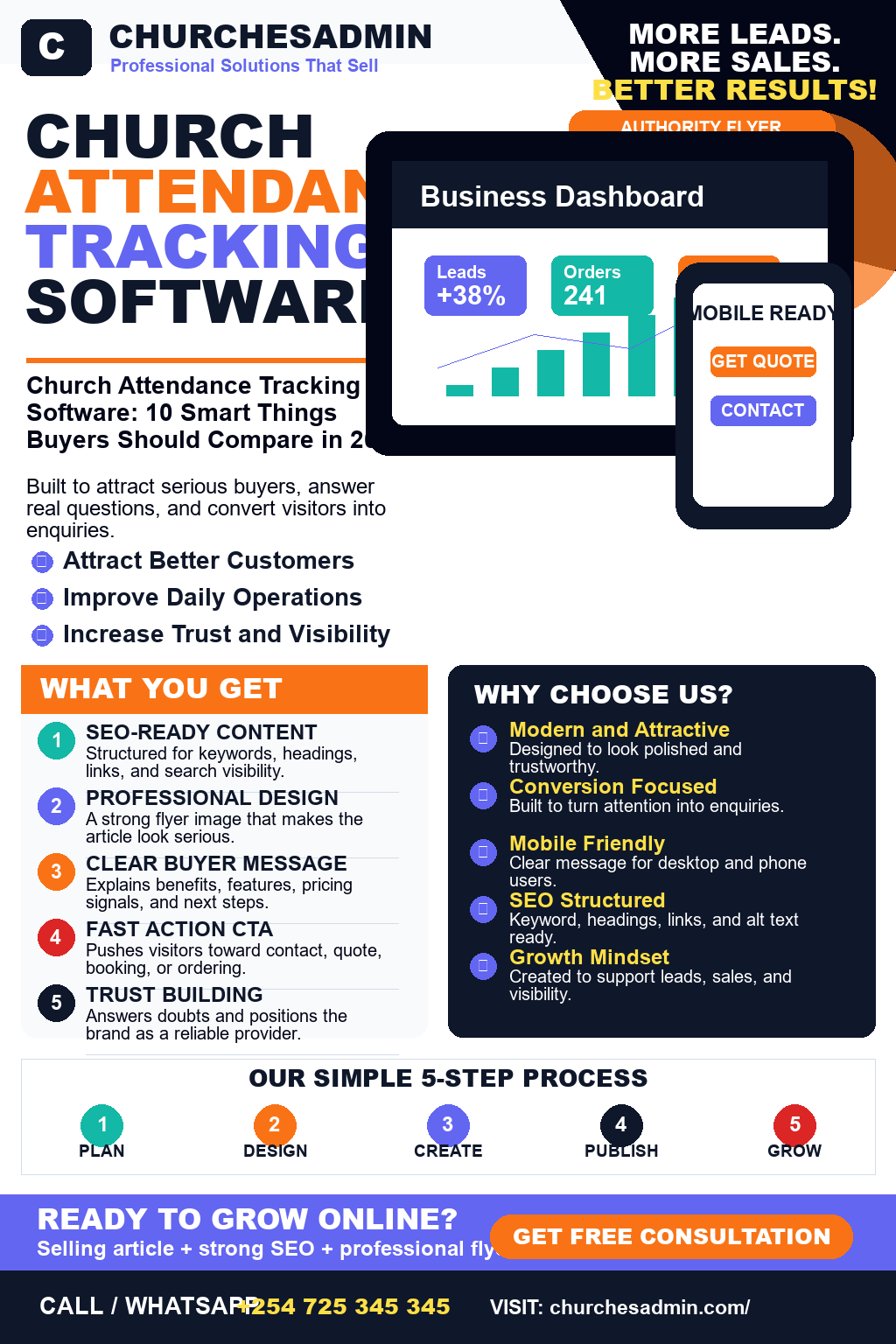

Core Features of Church Ministry Performance Dashboard

A professional ministry dashboard combines numerous reporting capabilities.

Real-time dashboards.

Attendance analytics.

Financial summaries.

Volunteer reporting.

Department performance.

Event analytics.

Cell group reporting.

Member engagement.

Giving trends.

Pastoral care metrics.

Leadership reports.

Cloud synchronization.

Role-based permissions.

Mobile accessibility.

Historical analytics.

Interactive charts.

These capabilities provide church leaders with complete operational visibility.


Ministry Analytics and Reporting

Every ministry contributes differently to church growth.

A Church Ministry Performance Dashboard enables church leaders to compare ministry activities using meaningful performance indicators.

Attendance growth.

Volunteer participation.

Program effectiveness.

Leadership engagement.

Discipleship progress.

Community outreach.

Everything becomes measurable through centralized reporting.

Leaders identify successful ministries while supporting departments requiring additional attention.


Attendance and Member Engagement Monitoring

Attendance remains one of the strongest indicators of ministry health.

A Church Ministry Performance Dashboard consolidates attendance information from worship services, cell groups, Bible studies, conferences, youth meetings, children’s ministry, leadership meetings, and special events.

Church leaders identify attendance trends immediately while improving pastoral follow-up and member engagement.


Leadership Decision Support

Church leadership requires accurate information.

A Church Ministry Performance Dashboard transforms operational data into strategic insights.

Church executives evaluate organizational performance, compare ministry growth, monitor leadership objectives, allocate resources effectively, and make informed ministry decisions using real-time analytics.

Leadership therefore becomes proactive rather than reactive.


Financial and Ministry Performance Insights

Financial stewardship supports ministry effectiveness.

A Church Ministry Performance Dashboard integrates giving trends, budget performance, offering summaries, campaign progress, and ministry expenditure alongside operational metrics.

Church leaders therefore evaluate financial health while monitoring ministry performance from one centralized dashboard.


Challenges of Manual Ministry Reporting

Many churches continue preparing ministry reports through spreadsheets, notebooks, paper summaries, and individual departmental presentations.

Although manageable initially, these methods become increasingly inefficient as churches expand.

Reports become delayed.

Information becomes inconsistent.

Historical comparisons become difficult.

Leadership meetings consume unnecessary time.

Decision-making slows.

A Church Ministry Performance Dashboard eliminates these challenges through centralized reporting, real-time analytics, automated dashboards, leadership insights, ministry comparisons, and scalable church performance monitoring.

For churches, ministries, denominations, dioceses, and Christian organizations throughout Kenya, implementing a Church Ministry Performance Dashboard creates a professional reporting environment that strengthens leadership, improves accountability, simplifies administration, enhances strategic planning, and supports sustainable church growth.

Benefits for Church Leaders and Senior Pastors

Church leaders are responsible for ensuring that every ministry contributes effectively to the overall mission and vision of the church. Children’s ministry, youth ministry, worship teams, evangelism, men’s and women’s fellowships, prayer ministry, discipleship programs, media teams, hospitality, and outreach initiatives all require continuous monitoring to ensure they remain healthy and productive.

A Church Ministry Performance Dashboard gives pastors, bishops, elders, executive pastors, church administrators, and ministry directors complete visibility into the performance of every ministry through one centralized platform.

Instead of collecting handwritten reports, spreadsheets, PowerPoint presentations, or verbal updates during leadership meetings, church executives can access real-time ministry insights from a single dashboard.

Attendance.

Member engagement.

Volunteer participation.

Giving trends.

Outreach activities.

Department performance.

Leadership development.

Event participation.

Everything updates automatically.

One of the greatest advantages is improved strategic decision-making.

Church leaders can immediately identify ministries experiencing growth, departments requiring additional support, attendance changes, volunteer shortages, or new opportunities for expansion.

Rather than relying on assumptions, every leadership decision is supported by accurate and current information.

Historical reporting also strengthens long-term planning.

Church leaders compare annual ministry growth, outreach effectiveness, volunteer engagement, discipleship progress, leadership development, and church expansion over several years.

These insights enable churches to allocate resources wisely while strengthening overall ministry effectiveness.

As churches continue growing throughout Kenya, a Church Ministry Performance Dashboard provides the leadership intelligence needed to support informed decisions and sustainable ministry growth.


Benefits for Ministry Leaders and Department Heads

Every ministry leader wants to understand how their department is performing.

Attendance.

Volunteer commitment.

Program participation.

Event success.

Budget utilization.

Member engagement.

These indicators help leaders continually improve their ministries.

A Church Ministry Performance Dashboard enables department heads to monitor performance through interactive dashboards that update automatically.

Children’s ministry leaders monitor class attendance.

Youth leaders evaluate participation.

Evangelism teams review outreach activities.

Prayer coordinators monitor ministry engagement.

Worship leaders evaluate volunteer scheduling.

Every ministry receives meaningful performance information.

Department leaders also spend less time preparing manual reports.

Performance data becomes available instantly.

Leadership meetings become more productive because reports remain accurate, standardized, and consistently updated.

These improvements strengthen accountability while encouraging continuous ministry improvement.


Benefits for Church Administrators and Finance Teams

Church administrators coordinate numerous operational activities every day.

Collecting reports.

Preparing leadership summaries.

Monitoring attendance.

Compiling financial information.

Supporting ministry departments.

Preparing board meetings.

Managing these responsibilities manually consumes considerable administrative time.

A Church Ministry Performance Dashboard automates much of this reporting process.

Attendance information synchronizes automatically.

Financial summaries remain updated.

Volunteer participation becomes measurable.

Department statistics remain available.

Leadership reports generate instantly.

Church administrators therefore spend less time collecting information and more time supporting ministry operations.

Finance teams also benefit because financial information integrates with ministry reporting.

Church leaders can evaluate ministry performance alongside financial stewardship, enabling more informed budgeting and resource allocation.


Benefits for Church Members

Although church members may not access leadership dashboards directly, they benefit greatly from data-driven ministry leadership.

A Church Ministry Performance Dashboard helps church leaders identify ministries that require additional support, improve member engagement, strengthen pastoral care, and allocate resources where they create the greatest impact.

Members experience better organized ministries.

Improved communication.

More effective discipleship.

Better volunteer coordination.

Stronger outreach.

Improved event planning.

Healthier church growth.

As ministry performance improves, the entire congregation benefits from stronger leadership and more effective service delivery.


Improving Ministry Management Through Automation

Traditional ministry reporting often depends upon spreadsheets, handwritten reports, emails, printed summaries, and manual calculations.

Preparing leadership reports frequently consumes many hours every month.

A Church Ministry Performance Dashboard automates these responsibilities.

Attendance statistics update automatically.

Financial summaries synchronize continuously.

Volunteer activity remains measurable.

Ministry reports generate instantly.

Leadership dashboards remain current.

Performance indicators calculate automatically.

Automation significantly reduces administrative effort while improving reporting consistency across every ministry.

As churches expand into multiple campuses or establish additional ministries, automation enables leadership teams to monitor increasing organizational complexity without increasing reporting workloads.


Compliance, Security, and Leadership Accountability

Leadership information often includes confidential organizational data.

Financial reports.

Attendance records.

Volunteer statistics.

Department performance.

Strategic objectives.

Leadership evaluations.

Member engagement.

A Church Ministry Performance Dashboard protects this information through encrypted databases, secure authentication, role-based user permissions, automated backups, and comprehensive audit trails.

Every report.

Every dashboard update.

Every ministry record.

Every financial summary.

Every leadership review.

Everything remains securely documented.

Only authorized leaders receive access according to their responsibilities.

Historical information also supports board meetings, annual reporting, ministry evaluations, strategic planning, leadership transitions, and organizational accountability.

These capabilities strengthen governance while protecting sensitive church information.


Why ChurchesAdmin Is the Ideal Solution

ChurchesAdmin is designed specifically to help churches, ministries, dioceses, denominations, and Christian organizations manage ministry performance through one integrated church management platform.

A Church Ministry Performance Dashboard becomes significantly more valuable when integrated with member management, attendance tracking, financial reporting, volunteer management, event administration, communication tools, pastoral care, cell groups, prayer ministry, and leadership reporting.

ChurchesAdmin combines all these capabilities into one centralized cloud-based solution.

Senior pastors receive real-time ministry insights.

Department leaders monitor performance continuously.

Church administrators generate reports automatically.

Finance committees evaluate stewardship alongside ministry growth.

Church executives make informed strategic decisions using reliable operational data.

Whether serving a local congregation or a denomination with multiple churches throughout Kenya, ChurchesAdmin provides the scalability required to support growing ministry operations.

By centralizing ministry reporting and automating performance monitoring, ChurchesAdmin helps churches improve leadership effectiveness, strengthen accountability, simplify administration, enhance ministry planning, and support sustainable church growth.


Future Trends

Church leadership will increasingly rely on artificial intelligence, predictive analytics, cloud computing, and business intelligence technologies.

Future Church Ministry Performance Dashboard solutions will automatically identify ministry trends, forecast attendance growth, recommend leadership actions, and highlight departments requiring additional support.

Artificial intelligence may help church leaders predict volunteer shortages, identify disengaged members, evaluate ministry effectiveness, and recommend resource allocation strategies.

Cloud-based dashboards will continue improving accessibility, allowing church executives to monitor ministry performance securely from anywhere.

Mobile applications will provide pastors and ministry leaders with instant access to reports, dashboards, attendance analytics, financial summaries, and ministry statistics directly from their smartphones.

As churches throughout Kenya continue embracing digital transformation, intelligent ministry dashboards will become essential tools for strategic leadership and organizational growth.


Getting Started

Implementing a Church Ministry Performance Dashboard begins by evaluating how ministry performance is currently measured.

Church leaders should review attendance reporting, volunteer management, financial monitoring, ministry objectives, leadership reporting, communication workflows, and long-term strategic goals.

The next step involves selecting a platform capable of integrating ministry reporting with member management, attendance tracking, financial management, volunteer coordination, event administration, communication tools, and pastoral care.

Training senior pastors, ministry directors, department leaders, administrators, finance teams, and executive committees is equally important.

Every leadership team should understand how centralized dashboards improve visibility, accountability, and decision-making.

ChurchesAdmin provides complete implementation services including dashboard configuration, ministry integration, reporting setup, leadership analytics, staff training, and ongoing technical support.

By implementing a Church Ministry Performance Dashboard, churches throughout Kenya can strengthen leadership, improve accountability, automate reporting, enhance ministry oversight, support data-driven decision-making, and establish a scalable digital foundation for sustainable church growth.

Benefits for Church Leaders and Senior Pastors

Church leaders are responsible for ensuring that every ministry contributes effectively to the overall mission and vision of the church. Children’s ministry, youth ministry, worship teams, evangelism, men’s and women’s fellowships, prayer ministry, discipleship programs, media teams, hospitality, and outreach initiatives all require continuous monitoring to ensure they remain healthy and productive.

A Church Ministry Performance Dashboard gives pastors, bishops, elders, executive pastors, church administrators, and ministry directors complete visibility into the performance of every ministry through one centralized platform.

Instead of collecting handwritten reports, spreadsheets, PowerPoint presentations, or verbal updates during leadership meetings, church executives can access real-time ministry insights from a single dashboard.

Attendance.

Member engagement.

Volunteer participation.

Giving trends.

Outreach activities.

Department performance.

Leadership development.

Event participation.

Everything updates automatically.

One of the greatest advantages is improved strategic decision-making.

Church leaders can immediately identify ministries experiencing growth, departments requiring additional support, attendance changes, volunteer shortages, or new opportunities for expansion.

Rather than relying on assumptions, every leadership decision is supported by accurate and current information.

Historical reporting also strengthens long-term planning.

Church leaders compare annual ministry growth, outreach effectiveness, volunteer engagement, discipleship progress, leadership development, and church expansion over several years.

These insights enable churches to allocate resources wisely while strengthening overall ministry effectiveness.

As churches continue growing throughout Kenya, a Church Ministry Performance Dashboard provides the leadership intelligence needed to support informed decisions and sustainable ministry growth.


Benefits for Ministry Leaders and Department Heads

Every ministry leader wants to understand how their department is performing.

Attendance.

Volunteer commitment.

Program participation.

Event success.

Budget utilization.

Member engagement.

These indicators help leaders continually improve their ministries.

A Church Ministry Performance Dashboard enables department heads to monitor performance through interactive dashboards that update automatically.

Children’s ministry leaders monitor class attendance.

Youth leaders evaluate participation.

Evangelism teams review outreach activities.

Prayer coordinators monitor ministry engagement.

Worship leaders evaluate volunteer scheduling.

Every ministry receives meaningful performance information.

Department leaders also spend less time preparing manual reports.

Performance data becomes available instantly.

Leadership meetings become more productive because reports remain accurate, standardized, and consistently updated.

These improvements strengthen accountability while encouraging continuous ministry improvement.


Benefits for Church Administrators and Finance Teams

Church administrators coordinate numerous operational activities every day.

Collecting reports.

Preparing leadership summaries.

Monitoring attendance.

Compiling financial information.

Supporting ministry departments.

Preparing board meetings.

Managing these responsibilities manually consumes considerable administrative time.

A Church Ministry Performance Dashboard automates much of this reporting process.

Attendance information synchronizes automatically.

Financial summaries remain updated.

Volunteer participation becomes measurable.

Department statistics remain available.

Leadership reports generate instantly.

Church administrators therefore spend less time collecting information and more time supporting ministry operations.

Finance teams also benefit because financial information integrates with ministry reporting.

Church leaders can evaluate ministry performance alongside financial stewardship, enabling more informed budgeting and resource allocation.


Benefits for Church Members

Although church members may not access leadership dashboards directly, they benefit greatly from data-driven ministry leadership.

A Church Ministry Performance Dashboard helps church leaders identify ministries that require additional support, improve member engagement, strengthen pastoral care, and allocate resources where they create the greatest impact.

Members experience better organized ministries.

Improved communication.

More effective discipleship.

Better volunteer coordination.

Stronger outreach.

Improved event planning.

Healthier church growth.

As ministry performance improves, the entire congregation benefits from stronger leadership and more effective service delivery.


Improving Ministry Management Through Automation

Traditional ministry reporting often depends upon spreadsheets, handwritten reports, emails, printed summaries, and manual calculations.

Preparing leadership reports frequently consumes many hours every month.

A Church Ministry Performance Dashboard automates these responsibilities.

Attendance statistics update automatically.

Financial summaries synchronize continuously.

Volunteer activity remains measurable.

Ministry reports generate instantly.

Leadership dashboards remain current.

Performance indicators calculate automatically.

Automation significantly reduces administrative effort while improving reporting consistency across every ministry.

As churches expand into multiple campuses or establish additional ministries, automation enables leadership teams to monitor increasing organizational complexity without increasing reporting workloads.


Compliance, Security, and Leadership Accountability

Leadership information often includes confidential organizational data.

Financial reports.

Attendance records.

Volunteer statistics.

Department performance.

Strategic objectives.

Leadership evaluations.

Member engagement.

A Church Ministry Performance Dashboard protects this information through encrypted databases, secure authentication, role-based user permissions, automated backups, and comprehensive audit trails.

Every report.

Every dashboard update.

Every ministry record.

Every financial summary.

Every leadership review.

Everything remains securely documented.

Only authorized leaders receive access according to their responsibilities.

Historical information also supports board meetings, annual reporting, ministry evaluations, strategic planning, leadership transitions, and organizational accountability.

These capabilities strengthen governance while protecting sensitive church information.


Why ChurchesAdmin Is the Ideal Solution

ChurchesAdmin is designed specifically to help churches, ministries, dioceses, denominations, and Christian organizations manage ministry performance through one integrated church management platform.

A Church Ministry Performance Dashboard becomes significantly more valuable when integrated with member management, attendance tracking, financial reporting, volunteer management, event administration, communication tools, pastoral care, cell groups, prayer ministry, and leadership reporting.

ChurchesAdmin combines all these capabilities into one centralized cloud-based solution.

Senior pastors receive real-time ministry insights.

Department leaders monitor performance continuously.

Church administrators generate reports automatically.

Finance committees evaluate stewardship alongside ministry growth.

Church executives make informed strategic decisions using reliable operational data.

Whether serving a local congregation or a denomination with multiple churches throughout Kenya, ChurchesAdmin provides the scalability required to support growing ministry operations.

By centralizing ministry reporting and automating performance monitoring, ChurchesAdmin helps churches improve leadership effectiveness, strengthen accountability, simplify administration, enhance ministry planning, and support sustainable church growth.


Future Trends

Church leadership will increasingly rely on artificial intelligence, predictive analytics, cloud computing, and business intelligence technologies.

Future Church Ministry Performance Dashboard solutions will automatically identify ministry trends, forecast attendance growth, recommend leadership actions, and highlight departments requiring additional support.

Artificial intelligence may help church leaders predict volunteer shortages, identify disengaged members, evaluate ministry effectiveness, and recommend resource allocation strategies.

Cloud-based dashboards will continue improving accessibility, allowing church executives to monitor ministry performance securely from anywhere.

Mobile applications will provide pastors and ministry leaders with instant access to reports, dashboards, attendance analytics, financial summaries, and ministry statistics directly from their smartphones.

As churches throughout Kenya continue embracing digital transformation, intelligent ministry dashboards will become essential tools for strategic leadership and organizational growth.


Getting Started

Implementing a Church Ministry Performance Dashboard begins by evaluating how ministry performance is currently measured.

Church leaders should review attendance reporting, volunteer management, financial monitoring, ministry objectives, leadership reporting, communication workflows, and long-term strategic goals.

The next step involves selecting a platform capable of integrating ministry reporting with member management, attendance tracking, financial management, volunteer coordination, event administration, communication tools, and pastoral care.

Training senior pastors, ministry directors, department leaders, administrators, finance teams, and executive committees is equally important.

Every leadership team should understand how centralized dashboards improve visibility, accountability, and decision-making.

ChurchesAdmin provides complete implementation services including dashboard configuration, ministry integration, reporting setup, leadership analytics, staff training, and ongoing technical support.

By implementing a Church Ministry Performance Dashboard, churches throughout Kenya can strengthen leadership, improve accountability, automate reporting, enhance ministry oversight, support data-driven decision-making, and establish a scalable digital foundation for sustainable church growth.

Church Cell Group Management System – Complete Guide to Managing Small Groups and Church Fellowship

Church Cell Group Management System – Complete Guide to Managing Small Groups and Church Fellowship

Church Cell Group Management System

Healthy churches are built through meaningful relationships, discipleship, and consistent fellowship. While Sunday services bring the congregation together for worship, church cell groups create smaller communities where members grow spiritually, build friendships, study the Bible, pray together, and receive personal pastoral care. As churches continue expanding, managing numerous cell groups manually becomes increasingly challenging.

Many churches throughout Kenya still organize cell groups using notebooks, spreadsheets, WhatsApp groups, paper attendance registers, or informal communication. Although these methods may work for a few groups, they become difficult to manage as membership grows. Leaders may struggle to track attendance, monitor group growth, communicate effectively, assign new members, organize meetings, and evaluate ministry performance.

A Church Cell Group Management System provides a centralized digital platform that enables churches to organize, coordinate, monitor, and grow their small group ministry from one secure location. Instead of relying on disconnected administrative processes, churches can manage cell leaders, members, attendance, communication, meeting schedules, pastoral follow-up, reporting, and discipleship activities through one integrated system.

Modern churches require more than simple attendance registers.

Cell group organization.

Member assignment.

Leadership management.

Attendance tracking.

Bible study planning.

Prayer coordination.

Communication.

Pastoral oversight.

Reporting.

Everything becomes more effective when cell ministry operates from one centralized platform.

A Church Cell Group Management System synchronizes every aspect of small group administration.

Members join cell groups digitally.

Attendance updates automatically.

Cell leaders receive notifications.

Pastors monitor group health.

Meeting schedules remain organized.

Leadership dashboards provide real-time ministry insights.

Historical information also becomes valuable.

Church leaders evaluate cell group growth, attendance trends, discipleship participation, leadership development, member retention, outreach activities, and ministry effectiveness over several years.

These insights support strategic planning while strengthening long-term discipleship.

Security remains equally important.

Member information, pastoral notes, and leadership records remain protected through encrypted databases, secure authentication, role-based permissions, and automated backups.

Whether serving a local congregation, regional ministry, cathedral, denomination, or multi-campus church, implementing a Church Cell Group Management System creates a professional small group management environment that strengthens discipleship, improves communication, simplifies administration, and supports sustainable church growth throughout Kenya.

Table of Contents
Understanding Church Cell Group Management System
Why Cell Group Management Matters
Core Features of Church Cell Group Management System
Cell Group Organization and Member Management
Attendance and Discipleship Tracking
Cell Leader Coordination
Communication and Member Engagement
Reporting and Cell Group Analytics
Challenges of Manual Cell Group Administration
Understanding Church Cell Group Management System

Cell groups provide one of the strongest foundations for church growth.

They create opportunities for Bible study.

Prayer.

Fellowship.

Mentorship.

Evangelism.

Community outreach.

Pastoral care.

Managing numerous groups manually becomes increasingly difficult as churches expand.

A Church Cell Group Management System centralizes every aspect of small group administration into one intelligent platform.

Cell groups remain organized.

Members stay connected.

Attendance becomes measurable.

Leaders receive assignments.

Pastors monitor ministry progress.

Communication improves significantly.

Church leaders therefore gain complete visibility into the health of every cell group while reducing administrative complexity.

Historical information also strengthens ministry planning.

Church leaders evaluate attendance growth, leadership development, member engagement, outreach participation, multiplication of new groups, and discipleship effectiveness through detailed reporting.

These insights support continuous ministry improvement while strengthening the overall mission of the church.

Why Cell Group Management Matters

Small groups help churches build stronger relationships and provide personalized spiritual care.

Without organized management, churches frequently experience inconsistent attendance tracking, communication challenges, member isolation, leadership overload, and limited visibility into group health.

Manual administration often slows ministry growth.

A Church Cell Group Management System eliminates these challenges through centralized coordination.

Cell leaders remain informed.

Members stay connected.

Attendance remains accurate.

Pastoral care improves.

Church leadership gains measurable insights into discipleship progress.

The church therefore strengthens community while supporting sustainable spiritual growth.

Core Features of Church Cell Group Management System

A professional cell group management platform combines numerous ministry capabilities.

Cell group organization.

Member registration.

Leader management.

Attendance tracking.

Bible study scheduling.

Prayer requests.

Communication tools.

Meeting calendars.

Visitor tracking.

Pastoral follow-up.

Reporting dashboards.

Cloud synchronization.

Role-based security.

Mobile accessibility.

Discipleship records.

Growth analytics.

These capabilities provide everything needed to strengthen church small group ministry.

Cell Group Organization and Member Management

Every successful cell ministry begins with organized member management.

A Church Cell Group Management System enables churches to assign members to appropriate cell groups based on location, demographics, language, ministry interests, or leadership structures.

Member profiles remain organized.

Family relationships remain connected.

Transfers between groups become simple.

Church leaders maintain accurate records while supporting balanced group growth.

Attendance and Discipleship Tracking

Attendance provides valuable insights into spiritual engagement.

A Church Cell Group Management System enables leaders to record attendance digitally during every meeting.

Church leaders identify active members, visitors, inactive members, and follow-up opportunities through real-time attendance reports.

Discipleship progress also becomes measurable through structured reporting.

Cell Leader Coordination

Cell leaders require ongoing communication and support.

A Church Cell Group Management System helps churches coordinate leader meetings, assign responsibilities, distribute Bible study materials, monitor leadership performance, and strengthen ministry collaboration.

Leadership communication improves while reducing administrative burdens.

Communication and Member Engagement

Strong communication keeps members connected.

A Church Cell Group Management System enables churches to notify members regarding upcoming meetings, prayer gatherings, Bible studies, outreach programs, leadership training, and fellowship activities.

Communication remains organized.

Members stay informed.

Participation increases significantly.

Reporting and Cell Group Analytics

Every cell group generates valuable ministry information.

A Church Cell Group Management System transforms attendance records, membership growth, leadership activity, outreach participation, and discipleship information into meaningful reports.

Interactive dashboards help church leaders evaluate ministry performance while supporting strategic planning.

Challenges of Manual Cell Group Administration

Many churches continue managing cell groups through notebooks, spreadsheets, messaging groups, and paper attendance registers.

Although manageable initially, these methods become increasingly inefficient as churches grow.

Attendance becomes difficult to monitor.

Communication becomes inconsistent.

Leadership coordination becomes challenging.

Reporting consumes valuable administrative time.

Pastoral follow-up becomes less effective.

A Church Cell Group Management System eliminates these challenges through centralized member management, attendance tracking, communication, reporting, leadership coordination, and scalable discipleship administration.

For churches, ministries, denominations, dioceses, and Christian organizations throughout Kenya, implementing a Church Cell Group Management System creates a professional small group management environment that improves discipleship, strengthens fellowship, simplifies administration, enhances pastoral care, and supports sustainable church growth.

Benefits for Church Leaders and Senior Pastors

Healthy cell groups are one of the strongest indicators of a growing and spiritually mature church. They provide opportunities for discipleship, pastoral care, evangelism, leadership development, and meaningful relationships that cannot always be achieved during large worship services. As churches expand across multiple communities, coordinating dozens or even hundreds of cell groups becomes increasingly complex.

A Church Cell Group Management System gives pastors, bishops, elders, church administrators, and ministry directors complete visibility into the health and performance of every cell group through one centralized platform.

Instead of relying on notebooks, spreadsheets, WhatsApp groups, or manual attendance records, church leaders can oversee their entire cell ministry from one dashboard.

Cell groups.

Group leaders.

Members.

Attendance.

Bible studies.

Prayer meetings.

Outreach activities.

Leadership reports.

Everything remains synchronized automatically.

One of the greatest advantages is improved discipleship oversight.

Church leaders can immediately identify growing cell groups, declining attendance, inactive members, leadership vacancies, and opportunities to establish new groups.

Decision-making also becomes significantly stronger.

Leadership teams monitor attendance trends, member participation, leadership development, outreach performance, visitor integration, and group multiplication using real-time dashboards.

Historical reporting enables churches to compare ministry growth across months and years while identifying strategies that strengthen discipleship.

As churches throughout Kenya continue expanding, a Church Cell Group Management System provides the organizational structure necessary to strengthen pastoral oversight while supporting sustainable church growth.


Benefits for Cell Leaders and Ministry Coordinators

Cell leaders serve as the frontline shepherds of the congregation.

They organize meetings.

Lead Bible studies.

Pray for members.

Visit families.

Follow up on absentees.

Welcome visitors.

Coordinate outreach.

Managing these responsibilities manually often becomes overwhelming.

A Church Cell Group Management System simplifies daily ministry administration.

Meeting schedules remain organized.

Attendance updates instantly.

Prayer requests remain documented.

Visitor follow-up becomes easier.

Member communication improves.

Leadership reports become available automatically.

Ministry coordinators also gain better oversight.

Every cell group’s activity remains visible.

Leadership meetings become easier to organize.

Training schedules remain coordinated.

Responsibilities stay clearly assigned.

These improvements reduce administrative workloads while allowing leaders to focus more on spiritual mentorship and discipleship.


Benefits for Church Members

Church members benefit significantly from belonging to well-organized cell groups.

A Church Cell Group Management System helps members connect with groups based on location, language, family status, age group, ministry interests, or other church-defined criteria.

Members receive meeting reminders automatically.

Bible study schedules remain accessible.

Prayer requests can be submitted easily.

Communication with leaders becomes more consistent.

Visitors are welcomed more effectively.

New believers integrate into church life more quickly because follow-up activities remain organized.

Members also experience stronger pastoral care because leaders can monitor attendance, identify prolonged absences, and provide timely encouragement when needed.

These improvements strengthen fellowship while creating a greater sense of belonging throughout the congregation.


Improving Cell Ministry Through Automation

Traditional cell group administration often requires repetitive manual work.

Updating attendance registers.

Preparing meeting schedules.

Assigning members.

Sending reminders.

Preparing reports.

Following up on visitors.

Tracking leadership activities.

A Church Cell Group Management System automates these responsibilities.

Attendance synchronizes automatically.

Meeting reminders are sent digitally.

Member assignments remain updated.

Leader reports generate instantly.

Prayer requests become organized.

Follow-up activities remain visible.

Automation significantly reduces administrative effort while improving consistency throughout the entire discipleship process.

As churches continue growing, automation enables leadership teams to coordinate hundreds of cell groups without increasing administrative complexity.


Compliance, Security, and Pastoral Accountability

Cell group records often contain confidential information.

Member profiles.

Family information.

Prayer requests.

Counselling notes.

Attendance histories.

Pastoral follow-up.

Leadership evaluations.

A Church Cell Group Management System protects this information using encrypted databases, secure authentication, role-based access controls, automated backups, and comprehensive audit trails.

Every attendance record.

Every member transfer.

Every prayer request.

Every leadership assignment.

Every pastoral update.

Everything remains securely documented.

Only authorized church leaders receive access according to their ministry responsibilities.

Historical records also support leadership transitions, ministry evaluations, annual planning, discipleship reporting, and long-term pastoral care.

These capabilities strengthen governance while protecting member confidentiality.


Why ChurchesAdmin Is the Ideal Solution

ChurchesAdmin is designed specifically to help churches, ministries, dioceses, denominations, and Christian organizations strengthen discipleship through one integrated church management platform.

A Church Cell Group Management System becomes significantly more valuable when integrated with member management, attendance tracking, pastoral care, communication tools, ministry administration, event management, volunteer coordination, financial management, and reporting.

ChurchesAdmin combines all these capabilities into one centralized cloud-based solution.

Church leaders monitor the health of every cell group through real-time dashboards.

Cell leaders organize meetings and manage attendance efficiently.

Church administrators coordinate member assignments and leadership structures.

Pastors receive meaningful reports that support better pastoral care and discipleship planning.

Whether serving a local congregation or a denomination with multiple churches across Kenya, ChurchesAdmin provides the scalability required to support growing cell group ministries.

By centralizing cell group administration and automating discipleship workflows, ChurchesAdmin helps churches improve organization, strengthen fellowship, simplify administration, increase member engagement, and support sustainable spiritual growth.


Future Trends

Small group ministry continues evolving alongside digital technology.

Future Church Cell Group Management System solutions will incorporate artificial intelligence, predictive analytics, cloud computing, and mobile ministry applications.

Artificial intelligence may recommend suitable cell groups for new members, identify members requiring pastoral follow-up, predict attendance patterns, and recommend leadership development opportunities.

Cloud-based platforms will continue improving accessibility, allowing pastors and cell leaders to manage ministry securely from anywhere.

Mobile applications will enable members to register for cell groups, record attendance, submit prayer requests, access Bible study materials, communicate with leaders, and receive ministry updates directly from their smartphones.

Advanced analytics will provide deeper insights into discipleship growth, leadership effectiveness, outreach performance, and member retention.

As churches throughout Kenya continue embracing digital transformation, intelligent cell group management platforms will become essential tools for strengthening discipleship and expanding church communities.


Getting Started

Implementing a Church Cell Group Management System begins by evaluating how cell groups are currently organized, monitored, and supported.

Church leaders should review member assignments, attendance processes, leadership structures, communication methods, pastoral follow-up procedures, reporting requirements, and long-term discipleship objectives.

The next step involves selecting a platform capable of integrating cell group management with member records, attendance tracking, communication, pastoral care, ministry administration, reporting, and leadership development.

Training pastors, cell leaders, administrators, ministry coordinators, and volunteers is equally important.

Every ministry leader should understand how centralized cell group management strengthens discipleship while improving operational efficiency.

ChurchesAdmin provides complete implementation services including member migration, cell group configuration, attendance tracking, leadership management, reporting dashboards, communication tools, staff training, and ongoing technical support.

By implementing a Church Cell Group Management System, churches throughout Kenya can strengthen discipleship, improve pastoral care, simplify administration, increase member engagement, enhance leadership coordination, and establish a scalable digital foundation for sustainable church growth.

Benefits for Church Leaders and Senior Pastors

Healthy cell groups are one of the strongest indicators of a growing and spiritually mature church. They provide opportunities for discipleship, pastoral care, evangelism, leadership development, and meaningful relationships that cannot always be achieved during large worship services. As churches expand across multiple communities, coordinating dozens or even hundreds of cell groups becomes increasingly complex.

A Church Cell Group Management System gives pastors, bishops, elders, church administrators, and ministry directors complete visibility into the health and performance of every cell group through one centralized platform.

Instead of relying on notebooks, spreadsheets, WhatsApp groups, or manual attendance records, church leaders can oversee their entire cell ministry from one dashboard.

Cell groups.

Group leaders.

Members.

Attendance.

Bible studies.

Prayer meetings.

Outreach activities.

Leadership reports.

Everything remains synchronized automatically.

One of the greatest advantages is improved discipleship oversight.

Church leaders can immediately identify growing cell groups, declining attendance, inactive members, leadership vacancies, and opportunities to establish new groups.

Decision-making also becomes significantly stronger.

Leadership teams monitor attendance trends, member participation, leadership development, outreach performance, visitor integration, and group multiplication using real-time dashboards.

Historical reporting enables churches to compare ministry growth across months and years while identifying strategies that strengthen discipleship.

As churches throughout Kenya continue expanding, a Church Cell Group Management System provides the organizational structure necessary to strengthen pastoral oversight while supporting sustainable church growth.


Benefits for Cell Leaders and Ministry Coordinators

Cell leaders serve as the frontline shepherds of the congregation.

They organize meetings.

Lead Bible studies.

Pray for members.

Visit families.

Follow up on absentees.

Welcome visitors.

Coordinate outreach.

Managing these responsibilities manually often becomes overwhelming.

A Church Cell Group Management System simplifies daily ministry administration.

Meeting schedules remain organized.

Attendance updates instantly.

Prayer requests remain documented.

Visitor follow-up becomes easier.

Member communication improves.

Leadership reports become available automatically.

Ministry coordinators also gain better oversight.

Every cell group’s activity remains visible.

Leadership meetings become easier to organize.

Training schedules remain coordinated.

Responsibilities stay clearly assigned.

These improvements reduce administrative workloads while allowing leaders to focus more on spiritual mentorship and discipleship.


Benefits for Church Members

Church members benefit significantly from belonging to well-organized cell groups.

A Church Cell Group Management System helps members connect with groups based on location, language, family status, age group, ministry interests, or other church-defined criteria.

Members receive meeting reminders automatically.

Bible study schedules remain accessible.

Prayer requests can be submitted easily.

Communication with leaders becomes more consistent.

Visitors are welcomed more effectively.

New believers integrate into church life more quickly because follow-up activities remain organized.

Members also experience stronger pastoral care because leaders can monitor attendance, identify prolonged absences, and provide timely encouragement when needed.

These improvements strengthen fellowship while creating a greater sense of belonging throughout the congregation.


Improving Cell Ministry Through Automation

Traditional cell group administration often requires repetitive manual work.

Updating attendance registers.

Preparing meeting schedules.

Assigning members.

Sending reminders.

Preparing reports.

Following up on visitors.

Tracking leadership activities.

A Church Cell Group Management System automates these responsibilities.

Attendance synchronizes automatically.

Meeting reminders are sent digitally.

Member assignments remain updated.

Leader reports generate instantly.

Prayer requests become organized.

Follow-up activities remain visible.

Automation significantly reduces administrative effort while improving consistency throughout the entire discipleship process.

As churches continue growing, automation enables leadership teams to coordinate hundreds of cell groups without increasing administrative complexity.


Compliance, Security, and Pastoral Accountability

Cell group records often contain confidential information.

Member profiles.

Family information.

Prayer requests.

Counselling notes.

Attendance histories.

Pastoral follow-up.

Leadership evaluations.

A Church Cell Group Management System protects this information using encrypted databases, secure authentication, role-based access controls, automated backups, and comprehensive audit trails.

Every attendance record.

Every member transfer.

Every prayer request.

Every leadership assignment.

Every pastoral update.

Everything remains securely documented.

Only authorized church leaders receive access according to their ministry responsibilities.

Historical records also support leadership transitions, ministry evaluations, annual planning, discipleship reporting, and long-term pastoral care.

These capabilities strengthen governance while protecting member confidentiality.


Why ChurchesAdmin Is the Ideal Solution

ChurchesAdmin is designed specifically to help churches, ministries, dioceses, denominations, and Christian organizations strengthen discipleship through one integrated church management platform.

A Church Cell Group Management System becomes significantly more valuable when integrated with member management, attendance tracking, pastoral care, communication tools, ministry administration, event management, volunteer coordination, financial management, and reporting.

ChurchesAdmin combines all these capabilities into one centralized cloud-based solution.

Church leaders monitor the health of every cell group through real-time dashboards.

Cell leaders organize meetings and manage attendance efficiently.

Church administrators coordinate member assignments and leadership structures.

Pastors receive meaningful reports that support better pastoral care and discipleship planning.

Whether serving a local congregation or a denomination with multiple churches across Kenya, ChurchesAdmin provides the scalability required to support growing cell group ministries.

By centralizing cell group administration and automating discipleship workflows, ChurchesAdmin helps churches improve organization, strengthen fellowship, simplify administration, increase member engagement, and support sustainable spiritual growth.


Future Trends

Small group ministry continues evolving alongside digital technology.

Future Church Cell Group Management System solutions will incorporate artificial intelligence, predictive analytics, cloud computing, and mobile ministry applications.

Artificial intelligence may recommend suitable cell groups for new members, identify members requiring pastoral follow-up, predict attendance patterns, and recommend leadership development opportunities.

Cloud-based platforms will continue improving accessibility, allowing pastors and cell leaders to manage ministry securely from anywhere.

Mobile applications will enable members to register for cell groups, record attendance, submit prayer requests, access Bible study materials, communicate with leaders, and receive ministry updates directly from their smartphones.

Advanced analytics will provide deeper insights into discipleship growth, leadership effectiveness, outreach performance, and member retention.

As churches throughout Kenya continue embracing digital transformation, intelligent cell group management platforms will become essential tools for strengthening discipleship and expanding church communities.


Getting Started

Implementing a Church Cell Group Management System begins by evaluating how cell groups are currently organized, monitored, and supported.

Church leaders should review member assignments, attendance processes, leadership structures, communication methods, pastoral follow-up procedures, reporting requirements, and long-term discipleship objectives.

The next step involves selecting a platform capable of integrating cell group management with member records, attendance tracking, communication, pastoral care, ministry administration, reporting, and leadership development.

Training pastors, cell leaders, administrators, ministry coordinators, and volunteers is equally important.

Every ministry leader should understand how centralized cell group management strengthens discipleship while improving operational efficiency.

ChurchesAdmin provides complete implementation services including member migration, cell group configuration, attendance tracking, leadership management, reporting dashboards, communication tools, staff training, and ongoing technical support.

By implementing a Church Cell Group Management System, churches throughout Kenya can strengthen discipleship, improve pastoral care, simplify administration, increase member engagement, enhance leadership coordination, and establish a scalable digital foundation for sustainable church growth.