Worship Service Management System: The Complete Guide to Planning and Managing Church Worship Services in Kenya

Worship Service Management System

Worship Service Management System

Worship Service Management System is transforming how churches plan, organize, and deliver meaningful worship experiences. Every successful worship service involves careful coordination between pastors, worship leaders, musicians, media teams, ushers, children’s ministry leaders, security personnel, hospitality teams, and volunteers. As churches continue to grow, managing these activities manually becomes increasingly challenging. A modern Worship Service Management System enables churches to coordinate every aspect of a worship service from one centralized platform, improving efficiency while allowing ministry leaders to focus on creating an inspiring worship experience.

Planning a worship service involves much more than selecting songs and preparing a sermon. Churches must coordinate volunteer schedules, assign ministry responsibilities, reserve facilities, prepare equipment, organize announcements, manage attendance, communicate with ministry teams, and ensure every participant understands their role. A comprehensive Worship Service Management System streamlines these processes, reducing administrative workloads while improving collaboration among ministry teams.

Churches across Kenya are embracing digital solutions to strengthen worship planning and improve church administration. Whether managing a single weekly service or multiple services across different campuses, Worship Service Management System provides pastors, worship leaders, administrators, and volunteers with the tools they need to organize worship services efficiently and consistently.

Whether your church serves a small local congregation or thousands of worshippers every week, implementing a Worship Service Management System supports better planning, stronger teamwork, improved communication, and a more organized worship experience for everyone involved.


Table of Contents


Why Worship Service Planning Matters

Every worship service reflects the church’s commitment to excellence, organization, and spiritual growth. Careful planning ensures that every ministry works together harmoniously, allowing the congregation to focus on worship without distractions caused by administrative challenges.

A Worship Service Management System enables church leaders to coordinate worship schedules, volunteer assignments, music teams, sermon planning, announcements, technical support, and facility preparation from one centralized platform. Rather than relying on multiple spreadsheets, paper schedules, or messaging groups, leaders gain complete visibility into every aspect of service planning.

Effective planning also improves accountability. Every volunteer knows their responsibilities, ministry leaders understand their schedules, and administrators can monitor progress before each service. As churches continue expanding, a Worship Service Management System becomes essential for maintaining consistency across every worship experience.


Challenges of Manual Service Management

Many churches continue using paper schedules, phone calls, spreadsheets, and separate messaging groups to coordinate worship services.

Common challenges include:

  • Volunteer scheduling conflicts.
  • Last-minute cancellations.
  • Poor communication.
  • Equipment booking conflicts.
  • Missed responsibilities.
  • Duplicate assignments.
  • Inconsistent service planning.
  • Manual attendance tracking.
  • Difficulty coordinating multiple ministries.
  • Limited reporting.

A Worship Service Management System eliminates these problems by bringing all worship planning activities into one secure and organized platform.

Church leaders spend less time coordinating logistics and more time preparing meaningful worship experiences.


Essential Features

Selecting the right Worship Service Management System requires understanding the features that support effective worship planning.

Worship Service Calendar

Plan weekly services, special celebrations, conferences, prayer meetings, and seasonal events using one centralized calendar.

Volunteer Scheduling

Assign worship leaders, musicians, ushers, media teams, security personnel, hospitality teams, and other volunteers efficiently.

Team Communication

Keep ministry teams informed through announcements, reminders, schedule updates, and event notifications.

Resource Management

Reserve church halls, musical instruments, projectors, microphones, sound systems, lighting equipment, and meeting rooms.

Service Planning

Organize sermon topics, worship songs, scripture readings, announcements, communion services, and special presentations.

Reporting Dashboard

Generate reports covering volunteer participation, attendance, ministry schedules, service planning, and resource utilization.

A comprehensive Worship Service Management System combines these capabilities into one platform that supports smooth and organized worship services.


Coordinating Worship Teams

Every worship service depends on multiple ministry teams working together.

A Worship Service Management System helps coordinate:

  • Worship leaders.
  • Choir members.
  • Musicians.
  • Media teams.
  • Sound technicians.
  • Ushers.
  • Hospitality teams.
  • Children’s ministry.
  • Security teams.
  • Prayer teams.

Each ministry receives clear schedules, assignments, and updates while leadership maintains oversight of the entire worship service.

Improved coordination reduces confusion while strengthening teamwork.


Volunteer and Resource Scheduling

Volunteers and church resources must be managed carefully to ensure every service runs smoothly.

A Worship Service Management System enables churches to coordinate:

  • Volunteer availability.
  • Ministry assignments.
  • Worship rehearsals.
  • Equipment reservations.
  • Hall bookings.
  • Training sessions.
  • Technical support.
  • Special event preparation.

Organized scheduling prevents conflicts while improving volunteer engagement and accountability.


Improving Worship Service Communication

Effective communication ensures every worship team member understands their responsibilities.

A Worship Service Management System allows church leaders to communicate:

  • Service schedules.
  • Rehearsal reminders.
  • Ministry updates.
  • Volunteer assignments.
  • Equipment preparation.
  • Event announcements.
  • Last-minute changes.
  • Prayer requests.

Timely communication strengthens preparation while reducing misunderstandings before worship services.


Reporting and Service Insights

Reliable information helps churches continually improve worship services.

A Worship Service Management System generates reports covering:

  • Volunteer participation.
  • Worship attendance.
  • Ministry involvement.
  • Resource utilization.
  • Service schedules.
  • Planning completion.
  • Team performance.
  • Event participation.

These insights help pastors and ministry leaders evaluate worship planning while identifying opportunities for improvement.


Supporting Church Growth

As churches grow, worship planning becomes increasingly complex.

A Worship Service Management System enables churches to coordinate additional services, larger volunteer teams, multiple worship venues, and expanding ministries without increasing administrative burdens.

Organized planning supports consistent worship experiences while creating opportunities for continued church growth.

Strong worship administration allows ministry leaders to focus on spiritual leadership rather than logistical challenges.


Worship Service Management System in Kenya

Churches across Kenya continue expanding their worship ministries as congregations grow in both urban and rural communities. Churches in Nairobi, Mombasa, Kisumu, Nakuru, Eldoret, Thika, and other regions regularly coordinate multiple worship teams, volunteers, conferences, youth programs, and community events.

A Worship Service Management System enables churches to centralize worship planning, improve volunteer coordination, manage church resources, and strengthen communication across every ministry involved in worship services.

Solutions such as Churches Admin provide integrated Worship Service Management System capabilities alongside membership management, volunteer management, attendance tracking, pastoral care, communication tools, event management, financial administration, and ministry reporting. This unified platform helps churches organize every aspect of worship planning while reducing administrative complexity.

As churches continue embracing digital transformation, Worship Service Management System will remain an essential tool for improving worship planning, strengthening ministry collaboration, and supporting sustainable church growth throughout Kenya.

Benefits for Different Stakeholders

A Worship Service Management System benefits everyone involved in planning, leading, and participating in church worship services. From pastors and worship leaders to musicians, volunteers, media teams, administrators, and church members, an organized system improves communication, scheduling, accountability, and collaboration. As churches across Kenya continue to expand, a Worship Service Management System ensures every worship service is well-coordinated and spiritually enriching.

Benefits for Pastors

Pastors oversee worship services while balancing many other ministry responsibilities. Planning multiple services, coordinating ministry leaders, approving schedules, and ensuring every service aligns with the church’s vision can be demanding.

A Worship Service Management System helps pastors to:

  • View complete worship schedules.
  • Approve service plans.
  • Monitor ministry coordination.
  • Track volunteer participation.
  • Review sermon schedules.
  • Receive ministry updates.
  • Monitor attendance reports.
  • Improve service planning.

Instead of managing numerous spreadsheets and communication groups, pastors can oversee every worship service from one centralized dashboard.


Benefits for Worship Leaders

Worship leaders coordinate musicians, vocalists, choirs, rehearsals, and service flow.

A Worship Service Management System enables worship leaders to:

  • Schedule rehearsals.
  • Organize worship sets.
  • Assign musicians.
  • Share song lists.
  • Coordinate vocal teams.
  • Manage rehearsal attendance.
  • Communicate with team members.
  • Prepare services efficiently.

This improves preparation while reducing last-minute confusion.


Benefits for Church Administrators

Church administrators support worship planning by coordinating facilities, volunteers, communication, and logistics.

Using a Worship Service Management System, administrators can:

  • Schedule church facilities.
  • Coordinate ministry calendars.
  • Manage volunteer assignments.
  • Reserve equipment.
  • Generate reports.
  • Track service preparation.
  • Organize church events.
  • Improve operational efficiency.

Automation reduces administrative work while improving organization.


Benefits for Volunteers

Volunteers are essential to successful worship services.

A Worship Service Management System provides volunteers with:

  • Service schedules.
  • Ministry assignments.
  • Rehearsal reminders.
  • Event notifications.
  • Equipment instructions.
  • Team communication.
  • Training schedules.
  • Volunteer updates.

Clear communication allows volunteers to serve confidently and effectively.


Benefits for Technical Teams

Media operators, sound engineers, lighting technicians, livestream teams, and presentation operators rely on organized planning.

A Worship Service Management System helps technical teams by providing:

  • Equipment schedules.
  • Service run sheets.
  • Presentation requirements.
  • Audio preparation.
  • Livestream planning.
  • Technical checklists.
  • Event coordination.
  • Maintenance schedules.

This ensures every technical aspect of the worship service is properly prepared.


Benefits for Church Members

Members benefit from better-organized worship services that begin on time, run smoothly, and provide meaningful worship experiences.

Benefits include:

  • Well-organized services.
  • Better worship experiences.
  • Improved communication.
  • Consistent announcements.
  • Organized special events.
  • Better ministry coordination.
  • Enhanced participation.
  • Stronger church engagement.

A Worship Service Management System contributes to a welcoming and well-prepared worship environment.


Improving Efficiency Through Automation

Churches perform many repetitive planning activities before every worship service.

A Worship Service Management System automates these processes while improving consistency.

Automated Volunteer Scheduling

The system can schedule:

  • Worship leaders.
  • Choir members.
  • Musicians.
  • Ushers.
  • Hospitality teams.
  • Children’s ministry volunteers.
  • Security personnel.
  • Technical teams.

Scheduling conflicts are minimized while volunteer participation improves.


Service Planning Workflows

Church leaders can organize:

  • Sermon topics.
  • Worship songs.
  • Scripture readings.
  • Communion services.
  • Offering segments.
  • Special presentations.
  • Announcements.
  • Prayer sessions.

Planning workflows ensure every service follows a well-prepared structure.


Resource Reservations

A Worship Service Management System manages bookings for:

  • Worship halls.
  • Projectors.
  • Sound systems.
  • Musical instruments.
  • Meeting rooms.
  • Livestream equipment.
  • Lighting systems.
  • Church vehicles.

Centralized scheduling prevents double bookings and improves resource utilization.


Automated Communication

The platform automatically sends:

  • Volunteer reminders.
  • Rehearsal schedules.
  • Service updates.
  • Team announcements.
  • Prayer requests.
  • Event invitations.
  • Technical notifications.
  • Last-minute schedule changes.

Automation reduces manual communication while improving reliability.


Instant Reporting

Leadership can generate reports covering:

  • Worship attendance.
  • Volunteer participation.
  • Ministry schedules.
  • Equipment utilization.
  • Rehearsal attendance.
  • Event preparation.
  • Service planning.
  • Team performance.

Reliable reporting supports continuous improvement.


Compliance, Security and Risk Management

Church planning systems contain valuable organizational information that should be protected carefully.

A Worship Service Management System should include strong security measures.

Role-Based User Access

Different ministry teams require different access permissions.

Pastors, worship leaders, administrators, technical teams, and volunteers should only access information relevant to their responsibilities.

This strengthens accountability while protecting sensitive information.


Secure Cloud Storage

Cloud-based storage protects worship planning information from:

  • Hardware failures.
  • Fire.
  • Theft.
  • Flood damage.
  • Accidental deletion.

Automatic backups ensure ministry information remains secure.


Audit Logs

Every update made within the Worship Service Management System is recorded automatically.

Audit logs monitor:

  • Schedule updates.
  • Volunteer assignments.
  • Resource bookings.
  • User activity.
  • Service planning changes.
  • Equipment reservations.

These records improve transparency and simplify administration.


Data Privacy

Member and volunteer information should be protected using secure authentication, encrypted databases, and controlled user permissions.

Responsible information management strengthens confidence throughout the church.


Business Continuity

Cloud-based systems allow worship planning to continue even if church offices become temporarily inaccessible.

Authorized leaders can continue preparing services securely from any location.


Why Churches Admin Is the Ideal Solution

Modern churches require more than simple calendars or scheduling applications. They need a comprehensive church management platform designed specifically for ministry.

Churches Admin provides a powerful Worship Service Management System that integrates seamlessly with:

  • Membership management.
  • Volunteer management.
  • Attendance tracking.
  • Event management.
  • Pastoral care.
  • Communication tools.
  • Giving management.
  • Financial administration.
  • Ministry reporting.
  • Leadership dashboards.

Instead of managing multiple disconnected systems, churches coordinate every aspect of worship planning from one secure platform.

Churches Admin strengthens collaboration, improves organization, simplifies administration, and supports long-term ministry growth.


Future Trends

Technology continues improving church worship planning.

The future of the Worship Service Management System will include even more intelligent capabilities.

Artificial Intelligence

AI will help churches:

  • Recommend volunteer schedules.
  • Identify planning conflicts.
  • Suggest worship team rotations.
  • Generate service summaries.
  • Predict resource requirements.

Pastors and worship leaders remain in control while technology improves administrative efficiency.


Mobile Worship Planning

Future Worship Service Management System platforms will allow ministry leaders to:

  • Approve schedules.
  • Update service plans.
  • Communicate with volunteers.
  • Access worship resources.
  • Monitor preparations.

Smartphone access improves flexibility and responsiveness.


Fully Integrated Church Platforms

Future systems will connect seamlessly with:

  • Membership databases.
  • Attendance systems.
  • Volunteer management.
  • Communication platforms.
  • Giving systems.
  • Event registration.
  • Church mobile apps.
  • Livestream platforms.

This creates one connected ecosystem for church administration.


Predictive Ministry Analytics

Advanced reporting will help churches forecast:

  • Volunteer requirements.
  • Worship attendance.
  • Equipment usage.
  • Ministry growth.
  • Event participation.
  • Resource allocation.

These insights support proactive planning and better decision-making.


Enhanced Worship Collaboration

Future platforms will allow worship teams, pastors, musicians, and technical staff to collaborate in real time, making service preparation faster, more transparent, and more efficient.


Getting Started

Implementing a Worship Service Management System begins with evaluating your church’s current worship planning process.

Consider the following questions:

  • How are worship services currently planned?
  • How are volunteers scheduled?
  • How are rehearsals coordinated?
  • How are church resources reserved?
  • How are ministry teams informed about schedule changes?
  • Which planning activities consume the most administrative time?
  • How can automation improve worship preparation?

Successful implementation includes:

  1. Organizing existing worship schedules.
  2. Creating ministry team structures.
  3. Importing volunteer information.
  4. Configuring church resources.
  5. Assigning user permissions.
  6. Training worship leaders and administrators.
  7. Monitoring service reports.
  8. Continuously improving worship planning processes.

Following these steps enables churches to transition smoothly to a modern Worship Service Management System while improving coordination and enhancing every worship experience.


Conclusion

Planning excellent worship services requires careful coordination, effective communication, and strong teamwork. As churches continue to grow, manual scheduling methods become increasingly difficult to manage. A Worship Service Management System enables churches to centralize worship planning, coordinate volunteers, manage resources, automate communication, and monitor service performance through one integrated platform.

By reducing administrative work, improving collaboration, strengthening accountability, and providing real-time reporting, a Worship Service Management System allows pastors, worship leaders, administrators, and volunteers to focus on creating meaningful worship experiences rather than managing logistics. Organized planning leads to smoother services, better volunteer engagement, and stronger ministry effectiveness.

For churches throughout Kenya, Churches Admin provides a comprehensive Worship Service Management System integrated with membership management, attendance tracking, volunteer coordination, pastoral care, communication tools, giving management, financial administration, event management, and ministry reporting. This all-in-one solution equips churches with everything needed to deliver organized, impactful, and spiritually enriching worship services while supporting sustainable ministry growth.
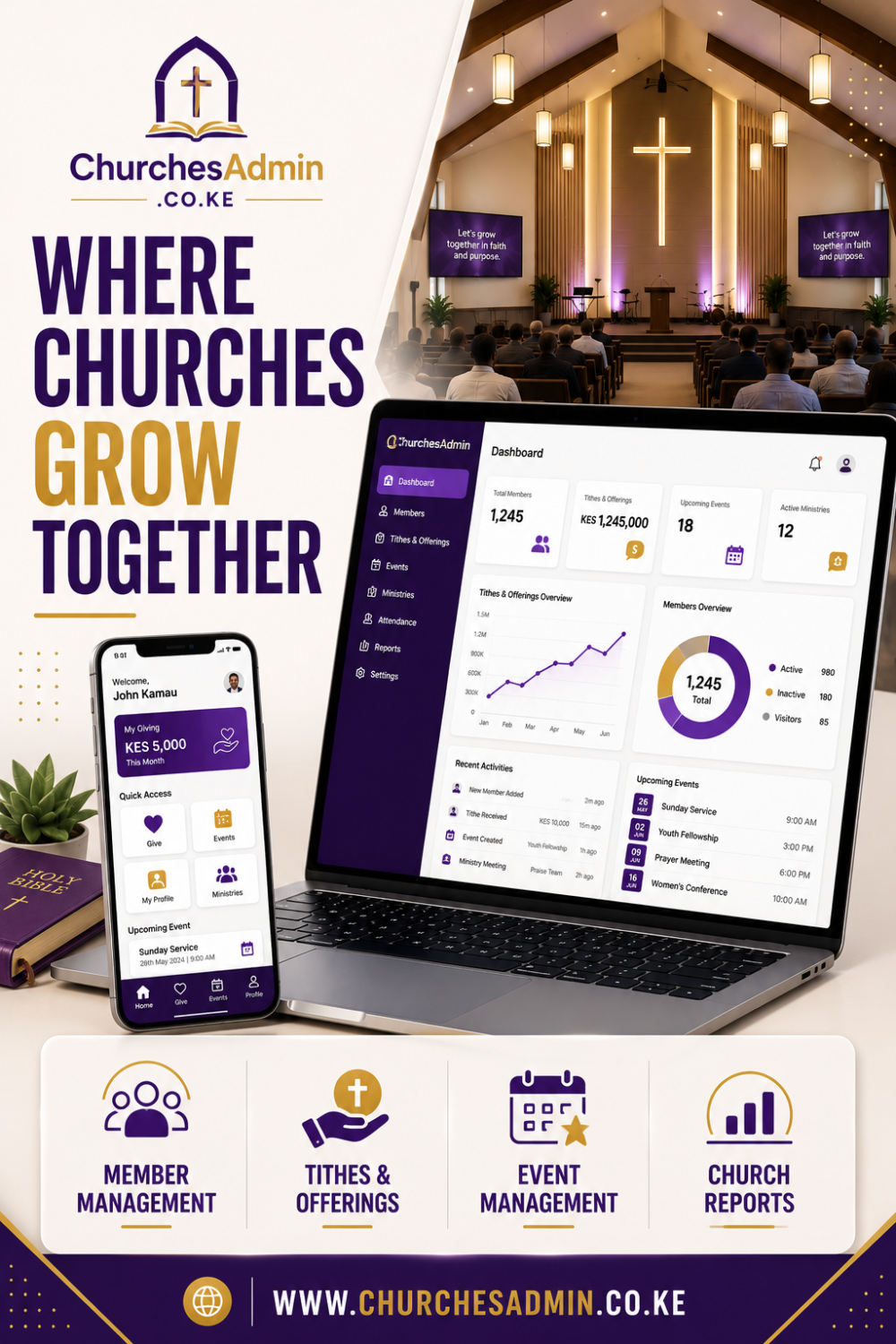
Benefits for Different Stakeholders

A Worship Service Management System benefits everyone involved in planning, leading, and participating in church worship services. From pastors and worship leaders to musicians, volunteers, media teams, administrators, and church members, an organized system improves communication, scheduling, accountability, and collaboration. As churches across Kenya continue to expand, a Worship Service Management System ensures every worship service is well-coordinated and spiritually enriching.

Benefits for Pastors

Pastors oversee worship services while balancing many other ministry responsibilities. Planning multiple services, coordinating ministry leaders, approving schedules, and ensuring every service aligns with the church’s vision can be demanding.

A Worship Service Management System helps pastors to:

  • View complete worship schedules.
  • Approve service plans.
  • Monitor ministry coordination.
  • Track volunteer participation.
  • Review sermon schedules.
  • Receive ministry updates.
  • Monitor attendance reports.
  • Improve service planning.

Instead of managing numerous spreadsheets and communication groups, pastors can oversee every worship service from one centralized dashboard.


Benefits for Worship Leaders

Worship leaders coordinate musicians, vocalists, choirs, rehearsals, and service flow.

A Worship Service Management System enables worship leaders to:

  • Schedule rehearsals.
  • Organize worship sets.
  • Assign musicians.
  • Share song lists.
  • Coordinate vocal teams.
  • Manage rehearsal attendance.
  • Communicate with team members.
  • Prepare services efficiently.

This improves preparation while reducing last-minute confusion.


Benefits for Church Administrators

Church administrators support worship planning by coordinating facilities, volunteers, communication, and logistics.

Using a Worship Service Management System, administrators can:

  • Schedule church facilities.
  • Coordinate ministry calendars.
  • Manage volunteer assignments.
  • Reserve equipment.
  • Generate reports.
  • Track service preparation.
  • Organize church events.
  • Improve operational efficiency.

Automation reduces administrative work while improving organization.


Benefits for Volunteers

Volunteers are essential to successful worship services.

A Worship Service Management System provides volunteers with:

  • Service schedules.
  • Ministry assignments.
  • Rehearsal reminders.
  • Event notifications.
  • Equipment instructions.
  • Team communication.
  • Training schedules.
  • Volunteer updates.

Clear communication allows volunteers to serve confidently and effectively.


Benefits for Technical Teams

Media operators, sound engineers, lighting technicians, livestream teams, and presentation operators rely on organized planning.

A Worship Service Management System helps technical teams by providing:

  • Equipment schedules.
  • Service run sheets.
  • Presentation requirements.
  • Audio preparation.
  • Livestream planning.
  • Technical checklists.
  • Event coordination.
  • Maintenance schedules.

This ensures every technical aspect of the worship service is properly prepared.


Benefits for Church Members

Members benefit from better-organized worship services that begin on time, run smoothly, and provide meaningful worship experiences.

Benefits include:

  • Well-organized services.
  • Better worship experiences.
  • Improved communication.
  • Consistent announcements.
  • Organized special events.
  • Better ministry coordination.
  • Enhanced participation.
  • Stronger church engagement.

A Worship Service Management System contributes to a welcoming and well-prepared worship environment.


Improving Efficiency Through Automation

Churches perform many repetitive planning activities before every worship service.

A Worship Service Management System automates these processes while improving consistency.

Automated Volunteer Scheduling

The system can schedule:

  • Worship leaders.
  • Choir members.
  • Musicians.
  • Ushers.
  • Hospitality teams.
  • Children’s ministry volunteers.
  • Security personnel.
  • Technical teams.

Scheduling conflicts are minimized while volunteer participation improves.


Service Planning Workflows

Church leaders can organize:

  • Sermon topics.
  • Worship songs.
  • Scripture readings.
  • Communion services.
  • Offering segments.
  • Special presentations.
  • Announcements.
  • Prayer sessions.

Planning workflows ensure every service follows a well-prepared structure.


Resource Reservations

A Worship Service Management System manages bookings for:

  • Worship halls.
  • Projectors.
  • Sound systems.
  • Musical instruments.
  • Meeting rooms.
  • Livestream equipment.
  • Lighting systems.
  • Church vehicles.

Centralized scheduling prevents double bookings and improves resource utilization.


Automated Communication

The platform automatically sends:

  • Volunteer reminders.
  • Rehearsal schedules.
  • Service updates.
  • Team announcements.
  • Prayer requests.
  • Event invitations.
  • Technical notifications.
  • Last-minute schedule changes.

Automation reduces manual communication while improving reliability.


Instant Reporting

Leadership can generate reports covering:

  • Worship attendance.
  • Volunteer participation.
  • Ministry schedules.
  • Equipment utilization.
  • Rehearsal attendance.
  • Event preparation.
  • Service planning.
  • Team performance.

Reliable reporting supports continuous improvement.


Compliance, Security and Risk Management

Church planning systems contain valuable organizational information that should be protected carefully.

A Worship Service Management System should include strong security measures.

Role-Based User Access

Different ministry teams require different access permissions.

Pastors, worship leaders, administrators, technical teams, and volunteers should only access information relevant to their responsibilities.

This strengthens accountability while protecting sensitive information.


Secure Cloud Storage

Cloud-based storage protects worship planning information from:

  • Hardware failures.
  • Fire.
  • Theft.
  • Flood damage.
  • Accidental deletion.

Automatic backups ensure ministry information remains secure.


Audit Logs

Every update made within the Worship Service Management System is recorded automatically.

Audit logs monitor:

  • Schedule updates.
  • Volunteer assignments.
  • Resource bookings.
  • User activity.
  • Service planning changes.
  • Equipment reservations.

These records improve transparency and simplify administration.


Data Privacy

Member and volunteer information should be protected using secure authentication, encrypted databases, and controlled user permissions.

Responsible information management strengthens confidence throughout the church.


Business Continuity

Cloud-based systems allow worship planning to continue even if church offices become temporarily inaccessible.

Authorized leaders can continue preparing services securely from any location.


Why Churches Admin Is the Ideal Solution

Modern churches require more than simple calendars or scheduling applications. They need a comprehensive church management platform designed specifically for ministry.

Churches Admin provides a powerful Worship Service Management System that integrates seamlessly with:

  • Membership management.
  • Volunteer management.
  • Attendance tracking.
  • Event management.
  • Pastoral care.
  • Communication tools.
  • Giving management.
  • Financial administration.
  • Ministry reporting.
  • Leadership dashboards.

Instead of managing multiple disconnected systems, churches coordinate every aspect of worship planning from one secure platform.

Churches Admin strengthens collaboration, improves organization, simplifies administration, and supports long-term ministry growth.


Future Trends

Technology continues improving church worship planning.

The future of the Worship Service Management System will include even more intelligent capabilities.

Artificial Intelligence

AI will help churches:

  • Recommend volunteer schedules.
  • Identify planning conflicts.
  • Suggest worship team rotations.
  • Generate service summaries.
  • Predict resource requirements.

Pastors and worship leaders remain in control while technology improves administrative efficiency.


Mobile Worship Planning

Future Worship Service Management System platforms will allow ministry leaders to:

  • Approve schedules.
  • Update service plans.
  • Communicate with volunteers.
  • Access worship resources.
  • Monitor preparations.

Smartphone access improves flexibility and responsiveness.


Fully Integrated Church Platforms

Future systems will connect seamlessly with:

  • Membership databases.
  • Attendance systems.
  • Volunteer management.
  • Communication platforms.
  • Giving systems.
  • Event registration.
  • Church mobile apps.
  • Livestream platforms.

This creates one connected ecosystem for church administration.


Predictive Ministry Analytics

Advanced reporting will help churches forecast:

  • Volunteer requirements.
  • Worship attendance.
  • Equipment usage.
  • Ministry growth.
  • Event participation.
  • Resource allocation.

These insights support proactive planning and better decision-making.


Enhanced Worship Collaboration

Future platforms will allow worship teams, pastors, musicians, and technical staff to collaborate in real time, making service preparation faster, more transparent, and more efficient.


Getting Started

Implementing a Worship Service Management System begins with evaluating your church’s current worship planning process.

Consider the following questions:

  • How are worship services currently planned?
  • How are volunteers scheduled?
  • How are rehearsals coordinated?
  • How are church resources reserved?
  • How are ministry teams informed about schedule changes?
  • Which planning activities consume the most administrative time?
  • How can automation improve worship preparation?

Successful implementation includes:

  1. Organizing existing worship schedules.
  2. Creating ministry team structures.
  3. Importing volunteer information.
  4. Configuring church resources.
  5. Assigning user permissions.
  6. Training worship leaders and administrators.
  7. Monitoring service reports.
  8. Continuously improving worship planning processes.

Following these steps enables churches to transition smoothly to a modern Worship Service Management System while improving coordination and enhancing every worship experience.


Conclusion

Planning excellent worship services requires careful coordination, effective communication, and strong teamwork. As churches continue to grow, manual scheduling methods become increasingly difficult to manage. A Worship Service Management System enables churches to centralize worship planning, coordinate volunteers, manage resources, automate communication, and monitor service performance through one integrated platform.

By reducing administrative work, improving collaboration, strengthening accountability, and providing real-time reporting, a Worship Service Management System allows pastors, worship leaders, administrators, and volunteers to focus on creating meaningful worship experiences rather than managing logistics. Organized planning leads to smoother services, better volunteer engagement, and stronger ministry effectiveness.

For churches throughout Kenya, Churches Admin provides a comprehensive Worship Service Management System integrated with membership management, attendance tracking, volunteer coordination, pastoral care, communication tools, giving management, financial administration, event management, and ministry reporting. This all-in-one solution equips churches with everything needed to deliver organized, impactful, and spiritually enriching worship services while supporting sustainable ministry growth.

Church Ministry Planning Software: The Complete Guide to Effective Ministry Planning and Church Growth in Kenya

Church Ministry Planning Software

Church Ministry Planning Software

Church Ministry Planning Software is transforming how churches organize, coordinate, and execute their ministry activities. Every thriving church depends on careful planning to ensure that worship services, outreach programs, discipleship classes, youth ministries, children’s activities, missions, conferences, volunteer schedules, and community initiatives run smoothly. As churches continue to grow, manual planning methods such as notebooks, spreadsheets, paper calendars, and scattered communication channels become increasingly difficult to manage. A modern Church Ministry Planning Software solution centralizes planning processes, improves collaboration, and enables church leaders to focus more on ministry than administration.

Ministry planning is much more than creating event schedules. It involves setting goals, assigning responsibilities, coordinating volunteers, managing resources, tracking progress, monitoring budgets, and ensuring every ministry aligns with the church’s vision and mission. A comprehensive Church Ministry Planning Software platform gives pastors, administrators, ministry leaders, and volunteers the tools they need to work together efficiently while maintaining clear communication throughout the church.

Across Kenya, churches are embracing digital transformation to improve ministry effectiveness and administrative efficiency. Growing congregations require better planning systems that support multiple ministries operating simultaneously. Whether organizing weekly worship services, leadership meetings, evangelism campaigns, Bible study programs, or annual conferences, Church Ministry Planning Software helps every department stay organized and accountable.

Whether your church serves a local congregation, multiple campuses, or regional ministries, investing in Church Ministry Planning Software strengthens teamwork, improves ministry coordination, enhances resource management, and supports sustainable church growth.


Table of Contents


Why Ministry Planning Matters

Every successful ministry begins with careful planning. Churches coordinate dozens of activities every month, including worship services, discipleship programs, leadership meetings, outreach events, conferences, children’s ministry, youth fellowship, missions, counseling sessions, volunteer schedules, and community projects.

A Church Ministry Planning Software solution enables church leaders to organize these activities within one centralized platform, ensuring every ministry understands its responsibilities, deadlines, and available resources. Instead of relying on handwritten notes or disconnected spreadsheets, leaders gain access to structured planning tools that improve visibility across every department.

Good ministry planning also strengthens accountability. Pastors and ministry leaders can monitor progress, evaluate completed activities, identify challenges early, and make informed decisions based on accurate information. As churches continue expanding, Church Ministry Planning Software becomes increasingly valuable for maintaining consistency while supporting long-term ministry goals.


Challenges of Manual Planning

Many churches continue planning ministry activities using paper calendars, notebooks, spreadsheets, and multiple messaging groups. While these methods may appear sufficient for smaller congregations, they often create significant challenges as ministry activities increase.

Common challenges include:

  • Scheduling conflicts.
  • Poor communication.
  • Missed deadlines.
  • Duplicate planning.
  • Limited visibility across ministries.
  • Difficulty assigning responsibilities.
  • Inconsistent reporting.
  • Manual follow-up.
  • Resource conflicts.
  • Inefficient volunteer coordination.

A Church Ministry Planning Software platform addresses these challenges by centralizing planning, improving communication, and providing real-time updates for everyone involved.

Rather than reacting to problems, church leaders can proactively coordinate ministry activities with greater confidence.


Essential Features

Selecting the right Church Ministry Planning Software requires understanding the features that best support ministry administration.

Ministry Calendar

Maintain one centralized calendar for worship services, conferences, outreach events, meetings, and ministry activities.

Task Management

Assign responsibilities, deadlines, and progress updates to ministry leaders and volunteers.

Volunteer Coordination

Schedule volunteers, monitor availability, and organize ministry teams efficiently.

Resource Scheduling

Manage church halls, meeting rooms, vehicles, equipment, sound systems, projectors, and other shared resources.

Budget Planning

Track ministry budgets, planned expenses, and financial allocations.

Reporting Dashboard

Generate reports showing ministry progress, volunteer participation, completed activities, upcoming events, and planning performance.

A comprehensive Church Ministry Planning Software combines these features into one integrated platform that supports effective ministry coordination.


Coordinating Church Ministries

Churches often oversee multiple ministries operating simultaneously.

A Church Ministry Planning Software system enables churches to coordinate:

  • Worship ministry.
  • Youth ministry.
  • Children’s ministry.
  • Women’s fellowship.
  • Men’s fellowship.
  • Evangelism teams.
  • Missions departments.
  • Hospitality teams.
  • Prayer ministries.
  • Leadership development.

Each ministry can manage its own activities while remaining aligned with the overall church calendar and strategic objectives.

This improves organization while reducing scheduling conflicts.


Managing Resources and Volunteers

Ministry planning depends on effective resource management.

A Church Ministry Planning Software platform helps churches coordinate:

  • Volunteer assignments.
  • Equipment reservations.
  • Meeting rooms.
  • Church vehicles.
  • Worship schedules.
  • Training sessions.
  • Budget allocations.
  • Ministry materials.

Organized resource management prevents conflicts while ensuring every ministry has the support needed to succeed.

Volunteers also receive clear schedules and responsibilities, improving engagement and accountability.


Improving Ministry Collaboration

Successful churches encourage collaboration between ministries.

A Church Ministry Planning Software solution enables pastors, ministry leaders, administrators, and volunteers to work together using one centralized platform.

Departments can share calendars, coordinate events, assign responsibilities, exchange updates, and monitor project progress without relying on disconnected communication methods.

Improved collaboration reduces misunderstandings while strengthening teamwork throughout the church.


Reporting and Ministry Insights

Church leaders require accurate information to evaluate ministry effectiveness.

A Church Ministry Planning Software platform generates reports covering:

  • Ministry activities.
  • Volunteer participation.
  • Event completion.
  • Resource utilization.
  • Budget performance.
  • Planning timelines.
  • Leadership assignments.
  • Strategic goals.

These reports enable pastors and church boards to understand ministry performance while making informed decisions for future planning.

Reliable reporting also strengthens accountability across every department.


Supporting Church Growth

Healthy ministry planning directly supports healthy church growth.

A Church Ministry Planning Software solution allows leaders to organize expanding ministries without increasing administrative complexity.

As membership grows, churches can maintain consistent planning processes, coordinate additional volunteers, manage larger events, and support new ministry initiatives while maintaining high organizational standards.

Strong planning enables churches to focus on discipleship, outreach, and spiritual growth rather than administrative challenges.


Church Ministry Planning Software in Kenya

Churches across Kenya continue to expand their ministries, requiring better planning systems that support modern church administration. Congregations in Nairobi, Mombasa, Kisumu, Nakuru, Eldoret, Thika, and many other regions coordinate numerous ministries serving diverse communities.

A Church Ministry Planning Software solution helps churches centralize planning, improve ministry collaboration, strengthen volunteer coordination, and optimize resource utilization. Instead of managing separate calendars, spreadsheets, and communication groups, leaders gain one unified planning platform.

Solutions such as Churches Admin provide integrated Church Ministry Planning Software alongside membership management, attendance tracking, volunteer management, pastoral care, financial administration, communication tools, and ministry reporting. This integrated approach simplifies church administration while supporting effective ministry planning.

As churches continue embracing digital transformation, Church Ministry Planning Software will remain a critical tool for improving ministry effectiveness, strengthening leadership collaboration, and supporting sustainable church growth throughout Kenya.

Benefits for Different Stakeholders

A Church Ministry Planning Software solution benefits every person involved in church leadership and ministry. From pastors and church administrators to ministry leaders, volunteers, finance teams, and church members, organized planning creates better coordination, improves accountability, and supports successful ministry execution. As churches continue to expand across Kenya, a Church Ministry Planning Software platform ensures every ministry works together toward the same mission and vision.

Benefits for Pastors

Pastors oversee multiple ministries while providing spiritual leadership for the entire congregation. Managing ministry schedules, leadership meetings, outreach programs, conferences, counseling sessions, and church events manually can become overwhelming.

A Church Ministry Planning Software enables pastors to:

  • View the complete church ministry calendar.
  • Monitor ministry progress.
  • Track strategic goals.
  • Coordinate leadership meetings.
  • Approve ministry plans.
  • Allocate church resources.
  • Monitor volunteer engagement.
  • Access ministry performance reports.

With organized planning tools, pastors spend less time coordinating activities and more time leading and serving the congregation.


Benefits for Church Administrators

Church administrators coordinate the daily operations that keep ministries running efficiently.

Using a Church Ministry Planning Software, administrators can:

  • Manage ministry schedules.
  • Organize church facilities.
  • Coordinate church events.
  • Assign ministry resources.
  • Track planning deadlines.
  • Prepare leadership reports.
  • Maintain ministry calendars.
  • Improve administrative efficiency.

Automation eliminates unnecessary paperwork while improving organization across every department.


Benefits for Ministry Leaders

Each ministry requires careful planning to achieve its objectives.

A Church Ministry Planning Software allows ministry leaders to:

  • Plan ministry activities.
  • Schedule volunteers.
  • Assign responsibilities.
  • Track project progress.
  • Reserve church resources.
  • Coordinate team meetings.
  • Monitor ministry budgets.
  • Generate ministry reports.

Leaders gain better visibility while improving collaboration with other church departments.


Benefits for Volunteers

Volunteers play an essential role in every successful ministry.

A Church Ministry Planning Software helps volunteers by providing:

  • Clear schedules.
  • Ministry assignments.
  • Event reminders.
  • Training notifications.
  • Volunteer calendars.
  • Resource information.
  • Team communication.
  • Task updates.

Organized planning helps volunteers prepare effectively while increasing accountability.


Benefits for Church Boards

Church boards are responsible for governance, planning, and strategic oversight.

A Church Ministry Planning Software provides board members with:

  • Ministry performance reports.
  • Strategic planning updates.
  • Budget monitoring.
  • Resource allocation summaries.
  • Volunteer engagement statistics.
  • Church growth indicators.
  • Leadership dashboards.
  • Long-term planning information.

These insights support informed decision-making while strengthening accountability.


Benefits for Church Members

Members experience better ministry because church activities become more organized.

Benefits include:

  • Well-planned church events.
  • Improved ministry coordination.
  • Better volunteer support.
  • Timely communication.
  • Organized discipleship programs.
  • Consistent worship services.
  • Improved community outreach.
  • Greater ministry participation.

A Church Ministry Planning Software contributes to a more organized and welcoming church environment.


Improving Efficiency Through Automation

Planning ministries manually often involves repetitive administrative work.

A Church Ministry Planning Software automates many routine tasks while improving overall efficiency.

Automated Ministry Calendars

The system automatically organizes:

  • Worship services.
  • Bible studies.
  • Leadership meetings.
  • Prayer meetings.
  • Youth programs.
  • Children’s ministry.
  • Conferences.
  • Community outreach.

Everyone works from the same up-to-date schedule.


Volunteer Scheduling

Volunteer assignments can be created automatically based on ministry needs and availability.

This reduces scheduling conflicts while improving participation.


Task Management

A Church Ministry Planning Software automatically assigns:

  • Ministry responsibilities.
  • Deadlines.
  • Follow-up reminders.
  • Progress updates.
  • Approval workflows.
  • Resource requests.
  • Event preparation tasks.
  • Leadership assignments.

Automation improves accountability throughout every ministry.


Resource Management

Church facilities and equipment can be reserved electronically, including:

  • Worship halls.
  • Meeting rooms.
  • Church vehicles.
  • Projectors.
  • Sound systems.
  • Musical instruments.
  • Conference equipment.
  • Ministry materials.

This prevents booking conflicts while maximizing resource utilization.


Instant Reporting

Leadership can immediately generate reports covering:

  • Ministry progress.
  • Volunteer participation.
  • Event completion.
  • Budget performance.
  • Resource utilization.
  • Planning timelines.
  • Department activities.
  • Strategic objectives.

Reliable reporting supports informed leadership decisions.


Compliance, Security and Risk Management

Church planning systems contain valuable organizational information that should be protected carefully.

A Church Ministry Planning Software platform should include comprehensive security features.

Role-Based Access

Pastors, administrators, ministry leaders, volunteers, and board members should only access information relevant to their responsibilities.

Role-based permissions strengthen accountability while protecting sensitive information.


Secure Data Storage

Cloud-based storage protects ministry information from:

  • Hardware failure.
  • Theft.
  • Fire.
  • Flooding.
  • Accidental deletion.

Automatic backups ensure church planning information remains safe.


Audit Trails

Every activity performed within the Church Ministry Planning Software should be recorded automatically.

Audit logs monitor:

  • Ministry updates.
  • Calendar changes.
  • Task assignments.
  • User activity.
  • Resource bookings.
  • Planning approvals.

This improves transparency while simplifying administration.


Data Privacy

Church planning information should be protected using secure authentication, encryption, and controlled user access.

Responsible data management strengthens confidence among church leaders and ministry teams.


Business Continuity

Cloud-based systems allow ministry planning to continue even when physical offices become inaccessible.

Authorized users can securely access planning information from anywhere.


Why Churches Admin Is the Ideal Solution

Churches require more than a basic calendar application. They need an integrated platform designed specifically for ministry planning and church administration.

Churches Admin provides a comprehensive Church Ministry Planning Software solution that integrates seamlessly with:

  • Membership management.
  • Volunteer management.
  • Attendance tracking.
  • Event management.
  • Pastoral care.
  • Communication tools.
  • Financial administration.
  • Giving management.
  • Ministry reporting.
  • Leadership dashboards.

Instead of using multiple disconnected systems, churches manage every aspect of ministry planning from one secure platform.

Churches Admin strengthens collaboration, improves planning, increases accountability, and supports sustainable ministry growth.


Future Trends

Technology continues transforming church administration.

The future of Church Ministry Planning Software will include more intelligent planning and collaboration tools.

Artificial Intelligence

AI will assist church leaders by:

  • Recommending ministry schedules.
  • Predicting volunteer requirements.
  • Identifying planning conflicts.
  • Generating planning summaries.
  • Suggesting resource allocations.

This supports better decision-making while reducing administrative workloads.


Mobile Ministry Planning

Pastors and ministry leaders will increasingly manage ministry activities using smartphones and tablets.

Mobile access allows leaders to:

  • Update ministry schedules.
  • Approve requests.
  • Communicate with volunteers.
  • Track ministry progress.
  • Access reports.

This improves flexibility while maintaining organized planning.


Integrated Church Ecosystems

Future Church Ministry Planning Software solutions will connect with:

  • Membership databases.
  • Attendance systems.
  • Giving platforms.
  • Volunteer management.
  • Communication tools.
  • Event registration.
  • Church websites.
  • Mobile applications.

Complete integration creates a seamless church administration experience.


Predictive Ministry Analytics

Advanced reporting will help churches forecast:

  • Volunteer needs.
  • Ministry growth.
  • Resource requirements.
  • Budget trends.
  • Event participation.
  • Leadership capacity.

These insights support proactive planning rather than reactive management.


Collaborative Planning Tools

Future platforms will allow ministry leaders to collaborate in real time, making planning faster, more transparent, and more effective.


Getting Started

Implementing a Church Ministry Planning Software solution begins with evaluating your church’s existing planning processes.

Consider these questions:

  • How are ministry activities currently planned?
  • Are multiple calendars being used?
  • How are volunteers coordinated?
  • How are church resources scheduled?
  • How are ministry budgets managed?
  • Which planning tasks consume the most time?
  • How can automation improve ministry effectiveness?

Successful implementation includes:

  1. Organizing ministry calendars.
  2. Importing ministry information.
  3. Creating department structures.
  4. Assigning user permissions.
  5. Configuring volunteer schedules.
  6. Training pastors and ministry leaders.
  7. Monitoring planning reports.
  8. Continuously improving ministry workflows.

Following these steps helps churches transition smoothly to a modern planning system while strengthening ministry coordination.


Conclusion

Effective ministry requires intentional planning, strong collaboration, and organized administration. As churches continue to grow, relying on paper calendars, spreadsheets, or disconnected communication methods becomes increasingly difficult. A Church Ministry Planning Software solution enables churches to centralize planning, coordinate ministries, manage volunteers, schedule resources, and monitor ministry performance from one secure platform.

By automating administrative tasks, improving communication, providing real-time reporting, and strengthening accountability, Church Ministry Planning Software empowers church leaders to focus on discipleship, outreach, worship, and pastoral ministry rather than administrative challenges. Organized planning creates stronger ministries, more engaged volunteers, and better experiences for every church member.

For churches throughout Kenya, Churches Admin offers a fully integrated Church Ministry Planning Software solution alongside membership management, attendance tracking, volunteer coordination, pastoral care, communication tools, financial administration, event management, and leadership reporting. This comprehensive platform equips churches with the tools they need to plan effectively, serve faithfully, and support sustainable ministry growth for years to come.

Congregation Communication Platform: The Complete Guide to Strengthening Church Communication in Kenya

Congregation Communication Platform

Congregation Communication Platform

Congregation Communication Platform is transforming the way churches connect with members, ministry leaders, volunteers, and visitors. Effective communication is one of the foundations of a healthy church because it keeps the congregation informed, engaged, encouraged, and connected throughout the week. Whether sharing service announcements, prayer requests, ministry updates, event reminders, or emergency notices, a modern Congregation Communication Platform ensures that every message reaches the right people at the right time.

As churches continue to grow, communication becomes more complex. A congregation may consist of hundreds or even thousands of members serving in different ministries, attending different services, belonging to various small groups, and participating in multiple church activities. Managing communication through phone calls, printed notices, numerous WhatsApp groups, or individual text messages often results in confusion, inconsistent messaging, and missed updates. A centralized Congregation Communication Platform solves these challenges by bringing all communication tools into one secure and organized system.

Across Kenya, churches are embracing digital communication to improve member engagement while reducing administrative workloads. Modern church communication is no longer limited to Sunday announcements. Members expect timely updates through SMS, email, mobile notifications, church portals, and digital newsletters. A Congregation Communication Platform enables churches to communicate consistently while maintaining personal relationships and strengthening the sense of community that defines church life.

Whether your church serves a local congregation, multiple campuses, or regional ministries, investing in a Congregation Communication Platform helps improve coordination, increase participation, strengthen ministry collaboration, and ensure every member remains informed and connected.


Table of Contents


Why Church Communication Matters

Clear communication is essential for every successful church. Members rely on accurate information to participate in worship services, Bible studies, prayer meetings, conferences, outreach activities, volunteer opportunities, leadership meetings, and community events. Without organized communication, important information can easily be missed, leading to lower participation and unnecessary confusion.

A Congregation Communication Platform enables churches to deliver timely messages through multiple channels while ensuring consistency across every ministry. Instead of relying on fragmented communication methods, church leaders can manage announcements, reminders, newsletters, and ministry updates from one centralized location.

Good communication also strengthens relationships. Members who receive regular updates are more likely to stay engaged, participate in church activities, volunteer in ministries, and maintain strong connections with church leadership. As congregations continue to expand, a Congregation Communication Platform becomes increasingly valuable for maintaining meaningful communication with every member.


Common Communication Challenges

Many churches still depend on manual communication methods that become increasingly difficult to manage as the congregation grows.

Common challenges include:

  • Missed announcements.
  • Duplicate messages.
  • Outdated contact information.
  • Poor ministry coordination.
  • Too many communication channels.
  • Delayed event reminders.
  • Difficulty reaching specific groups.
  • Limited communication reporting.
  • Inconsistent messaging.
  • Time-consuming manual follow-up.

A Congregation Communication Platform addresses these challenges by providing one centralized communication hub where every message can be planned, delivered, and monitored efficiently.

Church leaders spend less time managing communication and more time serving the congregation.


Essential Features

Selecting the right Congregation Communication Platform requires understanding which features best support effective church communication.

Multi-Channel Messaging

Communicate through SMS, email, mobile notifications, and church portals from one platform.

Member Segmentation

Send targeted messages to ministries, age groups, volunteer teams, leadership groups, or the entire congregation.

Event Notifications

Automatically notify members about upcoming services, conferences, seminars, outreach programs, and ministry meetings.

Prayer Request Communication

Share prayer updates with authorized groups while respecting privacy and confidentiality.

Communication Scheduling

Prepare messages in advance and schedule automatic delivery.

Reporting Dashboard

Track delivery statistics, communication history, engagement levels, and message performance.

A comprehensive Congregation Communication Platform combines these capabilities into one secure solution that improves communication throughout the church.


Improving Member Engagement

Member engagement depends heavily on regular, meaningful communication.

A Congregation Communication Platform helps churches keep members informed about:

  • Weekly services.
  • Bible study programs.
  • Prayer meetings.
  • Youth activities.
  • Children’s ministry.
  • Community outreach.
  • Volunteer opportunities.
  • Church celebrations.
  • Leadership updates.
  • Special events.

Consistent communication encourages greater participation while helping members feel connected throughout the week rather than only on Sundays.

The platform also supports follow-up with visitors, new members, and inactive members through personalized communication workflows.


Supporting Ministry Communication

Every ministry within the church requires effective communication.

A Congregation Communication Platform enables ministry leaders to coordinate worship teams, ushers, children’s ministry, youth ministry, women’s fellowship, men’s fellowship, media teams, hospitality teams, security teams, and outreach ministries using one centralized communication system.

Instead of creating multiple independent communication groups, churches maintain consistent messaging while allowing ministries to communicate with their specific teams efficiently.

This improves organization while strengthening collaboration across departments.


Managing Church Events

Churches organize numerous events throughout the year.

A Congregation Communication Platform helps leaders promote and coordinate:

  • Sunday services.
  • Conferences.
  • Leadership seminars.
  • Prayer meetings.
  • Youth camps.
  • Worship nights.
  • Evangelism programs.
  • Fundraising events.
  • Community outreach.
  • Special celebrations.

Automated reminders improve attendance while reducing administrative work.

Members receive accurate information well before every event, making planning easier for both attendees and organizers.


Reporting and Communication Insights

Effective communication requires continuous evaluation.

A Congregation Communication Platform provides reports covering:

  • Message delivery.
  • Communication history.
  • Member engagement.
  • Event participation.
  • Ministry communication.
  • Follow-up activities.
  • Notification performance.
  • Communication trends.

These insights enable church leaders to improve communication strategies while ensuring important information reaches the congregation effectively.


Building Stronger Church Relationships

Strong churches are built on strong relationships.

A Congregation Communication Platform strengthens those relationships by encouraging regular interaction between church leaders and members. Timely communication helps members feel informed, appreciated, and connected, while ministry leaders can respond more quickly to questions, prayer needs, and service opportunities.

Whether welcoming first-time visitors, celebrating birthdays, sharing testimonies, or encouraging members during difficult seasons, organized communication supports a caring and engaged church community.

By reducing communication gaps, churches create an environment where members participate more actively and remain connected to the life and mission of the church.


Congregation Communication Platform in Kenya

Churches throughout Kenya are increasingly adopting digital communication tools as congregations grow and member expectations evolve. Members now expect to receive church updates through mobile phones, email, SMS, and online platforms in addition to traditional Sunday announcements.

A Congregation Communication Platform enables churches in Nairobi, Mombasa, Kisumu, Nakuru, Eldoret, Thika, and across Kenya to communicate efficiently with thousands of members while maintaining organized records of every message.

Solutions such as Churches Admin provide an integrated Congregation Communication Platform alongside membership management, attendance tracking, volunteer coordination, event management, pastoral care, financial administration, and ministry reporting. Rather than relying on multiple disconnected communication tools, churches can manage all member communication from one secure platform.

As churches continue embracing digital transformation, a Congregation Communication Platform will remain an essential tool for strengthening member engagement, improving ministry coordination, and supporting sustainable church growth throughout Kenya.

Benefits for Different Stakeholders

A Congregation Communication Platform creates value for every person involved in church life. From pastors and church administrators to ministry leaders, volunteers, members, and visitors, effective communication strengthens relationships, improves participation, and ensures that everyone remains informed. As churches across Kenya continue to grow, a Congregation Communication Platform becomes an essential tool for building a connected and engaged congregation.

Benefits for Pastors

Pastors communicate with their congregation almost every day. Whether sharing devotional messages, prayer requests, service announcements, leadership updates, or emergency information, timely communication is critical to effective ministry.

A Congregation Communication Platform enables pastors to:

  • Send church-wide announcements instantly.
  • Communicate with specific ministry groups.
  • Share weekly devotionals.
  • Send prayer requests and encouragement messages.
  • Notify members about schedule changes.
  • Monitor communication reports.
  • Improve member follow-up.
  • Strengthen pastoral engagement.

Instead of relying on multiple communication channels, pastors can manage all church communication from one centralized platform.


Benefits for Church Administrators

Church administrators are responsible for coordinating communication across multiple ministries and departments.

Using a Congregation Communication Platform, administrators can:

  • Maintain updated contact databases.
  • Schedule announcements.
  • Coordinate church events.
  • Send bulk SMS and email messages.
  • Monitor delivery reports.
  • Manage communication history.
  • Organize ministry contact groups.
  • Improve administrative efficiency.

Automation reduces manual work while ensuring communication remains accurate and consistent.


Benefits for Ministry Leaders

Every ministry requires clear and consistent communication.

A Congregation Communication Platform allows ministry leaders to:

  • Communicate with ministry members.
  • Share meeting reminders.
  • Coordinate volunteer schedules.
  • Send event updates.
  • Organize training sessions.
  • Track communication history.
  • Improve ministry participation.
  • Strengthen teamwork.

This improves collaboration while reducing confusion across different church departments.


Benefits for Volunteers

Volunteers rely on timely communication to perform their responsibilities effectively.

With a Congregation Communication Platform, volunteers receive:

  • Service schedules.
  • Ministry announcements.
  • Event reminders.
  • Prayer updates.
  • Training notifications.
  • Emergency alerts.
  • Volunteer coordination messages.
  • Appreciation communications.

Better communication helps volunteers prepare for their responsibilities and remain actively engaged.


Benefits for Church Members

Church members benefit from receiving accurate information through organized communication.

Benefits include:

  • Timely service reminders.
  • Ministry announcements.
  • Event invitations.
  • Prayer updates.
  • Bible study notifications.
  • Leadership communications.
  • Church newsletters.
  • Community outreach information.

A Congregation Communication Platform helps members remain connected throughout the week rather than only during Sunday services.


Benefits for Visitors

First-time visitors often decide whether to return based on how welcomed and informed they feel.

Using a Congregation Communication Platform, churches can automatically send:

  • Welcome messages.
  • Thank-you notes.
  • Church information.
  • Membership class invitations.
  • Event updates.
  • Prayer support.
  • Follow-up reminders.
  • Ministry recommendations.

Organized communication creates a welcoming environment that encourages visitors to become active members.


Improving Efficiency Through Automation

Church communication involves many repetitive tasks that can easily consume administrative time.

A Congregation Communication Platform automates these activities while improving communication quality.

Automated Announcements

Church leaders can schedule announcements in advance for:

  • Sunday services.
  • Midweek fellowships.
  • Prayer meetings.
  • Conferences.
  • Leadership meetings.
  • Youth programs.
  • Children’s ministry.
  • Community outreach events.

Scheduled communication ensures members receive important information on time.


Event Reminders

The system automatically reminds registered attendees about:

  • Service times.
  • Conference dates.
  • Volunteer meetings.
  • Training sessions.
  • Fundraising activities.
  • Worship rehearsals.
  • Church seminars.
  • Outreach programs.

This reduces missed events while increasing participation.


Communication Workflows

A Congregation Communication Platform can automate communication for:

  • New visitors.
  • New members.
  • Baptism classes.
  • Volunteer recruitment.
  • Prayer requests.
  • Event registrations.
  • Birthday greetings.
  • Anniversary celebrations.

Automation ensures every member receives consistent communication.


Emergency Notifications

When unexpected situations arise, church leadership can quickly notify the entire congregation or selected ministry groups.

Examples include:

  • Venue changes.
  • Service cancellations.
  • Emergency prayer requests.
  • Community support initiatives.
  • Urgent leadership announcements.

Fast communication improves coordination during unexpected situations.


Communication Reporting

Leadership can monitor:

  • Message delivery.
  • Open rates.
  • Response rates.
  • Member engagement.
  • Campaign performance.
  • Communication history.
  • Ministry participation.
  • Event attendance.

Reliable analytics help improve future communication strategies.


Compliance, Security and Risk Management

Church communication systems store valuable member information that should be protected carefully.

A Congregation Communication Platform should include comprehensive security features.

Role-Based Access

Different users require different communication permissions.

Pastors, administrators, ministry leaders, and volunteers should only access information appropriate to their responsibilities.


Secure Member Information

Member contact information should be stored securely using encrypted databases and secure authentication.

This protects personal information while maintaining efficient communication.


Audit Logs

Every communication activity should be recorded automatically.

Audit trails monitor:

  • Messages sent.
  • User activity.
  • Contact updates.
  • Communication history.
  • Group management.
  • Notification scheduling.

This improves accountability and administrative oversight.


Privacy Protection

A Congregation Communication Platform should respect member privacy by ensuring communication preferences and personal information are handled responsibly.

Maintaining privacy strengthens trust between church leadership and members.


Reliable Data Backup

Automatic backups ensure communication records remain protected against accidental deletion or hardware failure.

Churches can recover important information whenever necessary.


Why Churches Admin Is the Ideal Solution

Churches need more than a simple messaging application. They require an integrated communication platform designed specifically for ministry.

Churches Admin includes a powerful Congregation Communication Platform that integrates with:

  • Membership management.
  • Attendance tracking.
  • Volunteer management.
  • Event registration.
  • Pastoral care.
  • Giving management.
  • Leadership dashboards.
  • Ministry reporting.
  • Prayer request management.
  • Visitor follow-up.

Instead of managing multiple communication tools, churches can coordinate every interaction from one secure system.

Churches Admin improves communication, strengthens member engagement, reduces administrative work, and supports long-term ministry growth.


Future Trends

Technology continues reshaping church communication.

The future of the Congregation Communication Platform will include even more intelligent communication capabilities.

Artificial Intelligence

AI will help churches personalize communication, recommend follow-up actions, summarize engagement reports, and optimize message delivery.

Pastors remain in control while technology improves efficiency.


Mobile-First Communication

Future Congregation Communication Platform solutions will increasingly prioritize smartphones, enabling members to receive updates, respond to invitations, register for events, and communicate with ministry leaders directly from mobile devices.


Omnichannel Messaging

Future communication platforms will combine:

  • SMS.
  • Email.
  • Push notifications.
  • Mobile apps.
  • Church portals.
  • Social media integration.
  • Digital newsletters.
  • Web notifications.

This ensures members receive information through their preferred communication channels.


Smart Engagement Analytics

Churches will gain deeper insights into:

  • Member engagement.
  • Communication preferences.
  • Event participation.
  • Ministry involvement.
  • Follow-up effectiveness.

These insights help improve long-term communication strategies.


Personalized Member Experiences

Future systems will deliver personalized messages based on ministry involvement, age groups, volunteer roles, attendance history, and member preferences.

This creates stronger engagement while reducing unnecessary communication.


Getting Started

Implementing a Congregation Communication Platform begins with evaluating your church’s current communication processes.

Consider the following questions:

  • How do we currently communicate with members?
  • Are contact records accurate and complete?
  • Which communication channels are most effective?
  • How are ministry groups managed?
  • Are announcements delivered consistently?
  • How much time is spent sending messages manually?
  • How can automation improve communication?

Successful implementation includes:

  1. Updating member contact information.
  2. Organizing ministry communication groups.
  3. Configuring communication channels.
  4. Training pastors and administrators.
  5. Scheduling regular announcements.
  6. Automating common communication workflows.
  7. Monitoring communication reports.
  8. Continuously improving engagement strategies.

Following these steps helps churches maximize the value of their communication platform while strengthening member relationships.


Conclusion

Strong communication is one of the foundations of a healthy and growing church. As congregations expand, relying on manual messaging, printed notices, or disconnected communication channels becomes increasingly difficult. A Congregation Communication Platform enables churches to centralize communication, automate announcements, improve member engagement, strengthen ministry coordination, and ensure every member remains informed.

By combining secure communication tools, automated workflows, reporting dashboards, and integrated church administration, a Congregation Communication Platform helps church leaders communicate more effectively while reducing administrative workloads. Members benefit from timely updates, stronger relationships, and greater participation in church life.

For churches across Kenya, Churches Admin provides a comprehensive Congregation Communication Platform integrated with membership management, attendance tracking, volunteer coordination, pastoral care, giving management, event management, and ministry reporting. This all-in-one solution empowers churches to build stronger connections, improve communication, and support sustainable ministry growth for years to come.

Church Pastoral Care Management Software: The Complete Guide to Strengthening Pastoral Ministry and Member Care in Kenya

Church Pastoral Care Management Software

Church Pastoral Care Management Software

Church Pastoral Care Management Software is transforming how churches provide compassionate, organized, and effective pastoral care to their congregations. Pastoral care is one of the most important responsibilities within any church. It involves supporting members through prayer, counseling, hospital visits, family challenges, bereavement, spiritual guidance, discipleship, and many other aspects of Christian life. As churches continue to grow, managing these responsibilities manually becomes increasingly difficult. A modern Church Pastoral Care Management Software solution helps church leaders organize pastoral activities while ensuring that every member receives the attention and care they deserve.

Many churches rely on notebooks, spreadsheets, phone contacts, or individual memory to manage pastoral responsibilities. While these methods may work for small congregations, they often become ineffective as membership expands. Important follow-ups may be delayed, counseling appointments overlooked, visitation records misplaced, and member needs forgotten. Church Pastoral Care Management Software addresses these challenges by centralizing pastoral information into one secure platform that pastors, church administrators, and authorized ministry leaders can access whenever needed.

Churches throughout Kenya are embracing digital administration to strengthen ministry without losing the personal relationships that define pastoral care. Whether serving a local fellowship, a growing urban church, or a multi-campus ministry, Church Pastoral Care Management Software helps pastors spend less time managing paperwork and more time serving people. By organizing member records, prayer requests, counseling notes, visitation schedules, and follow-up activities, churches can provide consistent and meaningful care throughout every stage of a member’s spiritual journey.


Table of Contents


Why Pastoral Care Matters

Pastoral care is at the heart of every thriving church. Members seek guidance during joyful moments such as weddings, child dedications, and baptisms, as well as during difficult seasons including illness, financial hardship, grief, family conflict, and spiritual struggles. Providing timely and compassionate support strengthens faith, builds trust, and reinforces the church community.

A Church Pastoral Care Management Software system enables pastors to maintain organized records of member interactions, ensuring that every individual receives appropriate follow-up and ongoing support. Instead of relying on memory or scattered notes, leaders can quickly access member histories, prayer requests, counseling records, and visitation schedules.

Pastoral care also strengthens long-term member engagement. Members who feel cared for are more likely to remain active in church life, participate in ministries, invite others to church, and grow spiritually. As churches expand, a Church Pastoral Care Management Software solution becomes essential for maintaining high-quality pastoral support while managing increasing administrative responsibilities.


Challenges Churches Face

Providing consistent pastoral care becomes more challenging as congregations grow.

Common challenges include:

  • Missed follow-up appointments.
  • Forgotten prayer requests.
  • Poor record keeping.
  • Lost counseling notes.
  • Difficulty coordinating pastoral visits.
  • Limited communication between ministry leaders.
  • Inconsistent member follow-up.
  • Manual scheduling.
  • Lack of reporting.
  • Difficulty identifying members requiring urgent care.

A Church Pastoral Care Management Software solution helps churches overcome these challenges by organizing all pastoral information in one secure system.

Instead of searching through notebooks or multiple communication channels, pastors can access complete member care records instantly, improving both efficiency and consistency.


Essential Features

Selecting the right Church Pastoral Care Management Software requires understanding the features that best support effective ministry.

Member Care Profiles

Maintain detailed member profiles containing contact information, family details, ministry involvement, counseling history, visitation records, and prayer requests.

Counseling Records

Securely document counseling sessions while maintaining confidentiality and appropriate access controls.

Visitation Scheduling

Plan and manage hospital visits, home visits, bereavement support, and pastoral appointments.

Prayer Request Management

Track prayer requests, assign follow-up responsibilities, and monitor answered prayers.

Follow-Up Management

Schedule reminders for member visits, counseling sessions, and spiritual check-ins.

Reporting Dashboard

Generate reports showing follow-up completion, visitation activities, counseling trends, and member care performance.

A comprehensive Church Pastoral Care Management Software platform combines these features into one centralized solution that supports both ministry and administration.


Managing Member Care

Effective pastoral ministry requires understanding each member’s unique circumstances.

A Church Pastoral Care Management Software solution enables churches to maintain organized records covering:

  • Family information.
  • Membership status.
  • Prayer needs.
  • Counseling history.
  • Hospital visits.
  • Home visits.
  • Spiritual milestones.
  • Ministry participation.
  • Volunteer involvement.
  • Pastoral notes.

These records allow pastors to provide personalized care while ensuring important information remains organized and accessible.

Members benefit from more consistent follow-up and stronger pastoral relationships.


Counseling and Follow-Up

Counseling is one of the most sensitive responsibilities within pastoral ministry.

A Church Pastoral Care Management Software platform allows authorized pastors to securely record counseling sessions, schedule future appointments, document action plans, and monitor ongoing support while protecting confidentiality.

Follow-up reminders ensure that members experiencing personal challenges receive continued care rather than being unintentionally overlooked.

Organized counseling management improves pastoral effectiveness while strengthening trust between church leadership and the congregation.


Improving Communication

Pastoral care depends on timely communication.

A Church Pastoral Care Management Software solution enables pastors and ministry leaders to communicate effectively through:

  • Prayer updates.
  • Appointment reminders.
  • Counseling confirmations.
  • Hospital visit notifications.
  • Bereavement support.
  • Ministry announcements.
  • Encouragement messages.
  • Follow-up communications.

Improved communication strengthens relationships while ensuring members receive support when they need it most.


Reporting and Ministry Insights

Reliable information helps church leaders improve pastoral ministry.

A Church Pastoral Care Management Software platform generates reports showing:

  • Counseling activities.
  • Member follow-up.
  • Visitation schedules.
  • Prayer requests.
  • Care response times.
  • Ministry participation.
  • Volunteer involvement.
  • Pastoral workload.

These insights help church leadership evaluate ministry effectiveness while identifying opportunities for improvement.

Data-driven decisions support stronger pastoral care without replacing personal relationships.


Strengthening Church Administration

Pastoral care works best when integrated with broader church administration.

A Church Pastoral Care Management Software solution connects member care with attendance records, volunteer management, event participation, ministry involvement, and church communication.

This integrated approach ensures every department has access to appropriate information while reducing duplication and administrative inefficiencies.

Church leaders gain a more complete understanding of each member’s journey within the church.


Church Pastoral Care Management Software in Kenya

Churches across Kenya continue to experience significant growth, increasing the demand for organized pastoral care. Congregations in Nairobi, Mombasa, Kisumu, Nakuru, Eldoret, Thika, and other regions often manage hundreds or thousands of members with diverse pastoral needs.

A Church Pastoral Care Management Software solution enables churches to coordinate pastoral activities efficiently while preserving the personal relationships that define Christian ministry. From hospital visitation and counseling to prayer support and member follow-up, digital tools help pastors remain connected with their congregations.

Solutions such as Churches Admin provide integrated Church Pastoral Care Management Software capabilities alongside membership management, volunteer coordination, attendance tracking, communication tools, financial administration, and ministry reporting. This enables pastors and church administrators to manage pastoral responsibilities from one secure platform while dedicating more time to spiritual leadership and member care.

As churches continue embracing digital transformation, Church Pastoral Care Management Software will play an increasingly important role in strengthening pastoral ministry, improving member engagement, and supporting sustainable church growth throughout Kenya.

Benefits for Different Stakeholders

A Church Pastoral Care Management Software solution benefits everyone involved in the life of the church. While pastors are the primary users, church administrators, ministry leaders, cell group leaders, volunteers, and members all experience improvements in communication, organization, and pastoral support. As churches continue to grow across Kenya, a Church Pastoral Care Management Software platform ensures that no member is forgotten and every pastoral need is managed with care and consistency.

Benefits for Pastors

Pastors carry the responsibility of shepherding the congregation through every stage of life. From counseling and discipleship to hospital visits, funerals, weddings, and spiritual guidance, their responsibilities continue to increase as the church grows.

A Church Pastoral Care Management Software helps pastors by providing immediate access to member records, pastoral histories, prayer requests, counseling notes, and follow-up schedules.

Pastors can:

  • Monitor ongoing pastoral care activities.
  • Schedule home and hospital visits.
  • Track counseling appointments.
  • Record confidential pastoral notes.
  • View member participation history.
  • Follow up with inactive members.
  • Assign care responsibilities.
  • Generate pastoral care reports.

Instead of relying on memory or handwritten notes, pastors have organized information available whenever they need it.


Benefits for Church Administrators

Church administrators coordinate many activities that support pastoral ministry.

A Church Pastoral Care Management Software enables administrators to:

  • Register new members.
  • Organize pastoral appointments.
  • Maintain accurate member records.
  • Coordinate visitation schedules.
  • Generate administrative reports.
  • Support ministry leaders.
  • Track follow-up activities.
  • Improve communication across departments.

Automation reduces paperwork while improving coordination between pastors and administrative staff.


Benefits for Ministry Leaders

Department leaders often work closely with pastors to provide ongoing care for members.

Using a Church Pastoral Care Management Software, ministry leaders can:

  • Monitor ministry members.
  • Receive follow-up assignments.
  • Coordinate prayer support.
  • Organize visitation teams.
  • Track ministry engagement.
  • Record member interactions.
  • Communicate with volunteers.
  • Identify members requiring additional support.

This strengthens teamwork while improving member care across every ministry.


Benefits for Cell Group Leaders

Small groups play a vital role in pastoral care.

A Church Pastoral Care Management Software allows cell group leaders to:

  • Track attendance.
  • Record member needs.
  • Submit prayer requests.
  • Schedule follow-up visits.
  • Report pastoral concerns.
  • Monitor member participation.
  • Coordinate care activities.
  • Strengthen discipleship.

Pastors receive timely updates while maintaining oversight across multiple small groups.


Benefits for Volunteers

Care teams, visitation ministries, prayer teams, and hospitality volunteers benefit from improved coordination.

A Church Pastoral Care Management Software provides:

  • Clear assignments.
  • Visitation schedules.
  • Prayer request updates.
  • Event reminders.
  • Volunteer coordination.
  • Better communication.
  • Organized ministry records.
  • Improved accountability.

Volunteers become more effective because responsibilities are clearly communicated.


Benefits for Church Members

Members receive more consistent pastoral support through organized follow-up and communication.

Benefits include:

  • Faster pastoral response.
  • Better counseling coordination.
  • Timely hospital visits.
  • Organized prayer support.
  • Improved follow-up.
  • Stronger discipleship.
  • Better communication.
  • Greater sense of belonging.

A Church Pastoral Care Management Software strengthens relationships between church leadership and the congregation while ensuring every member feels valued.


Improving Efficiency Through Automation

Churches perform many repetitive pastoral care tasks every week.

A Church Pastoral Care Management Software automates these activities, allowing pastors to dedicate more time to ministry.

Automated Follow-Up

The system automatically reminds pastors and ministry leaders when members require:

  • Hospital visits.
  • Home visits.
  • Counseling sessions.
  • Prayer follow-up.
  • Membership orientation.
  • Bereavement support.
  • Family visits.
  • Spiritual check-ins.

No important follow-up is forgotten.


Appointment Scheduling

Pastoral appointments can be scheduled digitally, reducing conflicts and improving time management.

Members receive appointment confirmations and reminders while pastors maintain organized calendars.


Prayer Request Management

A Church Pastoral Care Management Software centralizes prayer requests submitted during services, online forms, mobile applications, or ministry meetings.

Prayer teams can monitor requests, assign follow-up, and celebrate answered prayers.


Communication Automation

Church leaders can automatically send:

  • Encouragement messages.
  • Prayer updates.
  • Counseling reminders.
  • Appointment confirmations.
  • Visitation notifications.
  • Ministry announcements.
  • Event invitations.
  • Follow-up communications.

Automation improves consistency while reducing administrative work.


Care Reporting

Pastoral care reports can be generated instantly, allowing leadership to monitor:

  • Counseling activities.
  • Home visits.
  • Hospital visits.
  • Follow-up completion.
  • Prayer requests.
  • Member engagement.
  • Care response times.
  • Ministry performance.

Reliable reporting supports better ministry planning.


Compliance, Security and Risk Management

Pastoral care records contain highly confidential information.

A Church Pastoral Care Management Software must provide strong security and privacy protections.

Role-Based Permissions

Only authorized pastors and designated leaders should access confidential counseling records and pastoral notes.

Role-based permissions protect member privacy while supporting accountability.


Secure Data Storage

Cloud-based storage with automatic backups protects pastoral records from:

  • Hardware failure.
  • Fire.
  • Theft.
  • Flood damage.
  • Accidental deletion.

Critical ministry information remains secure.


Audit Trails

Every update within the Church Pastoral Care Management Software is recorded automatically.

Activity logs monitor:

  • Counseling record updates.
  • Member profile changes.
  • Appointment scheduling.
  • User activity.
  • Follow-up completion.

This improves transparency while supporting responsible administration.


Confidentiality

Maintaining confidentiality is essential for effective pastoral ministry.

Secure authentication, encrypted databases, and controlled user access help protect sensitive member information.

Trust between pastors and members is strengthened when confidentiality is maintained.


Business Continuity

Digital pastoral records remain accessible even when physical offices become unavailable.

Authorized church leaders can continue providing ministry without interruption.


Why Churches Admin Is the Ideal Solution

Churches across Kenya require technology specifically designed for ministry rather than general customer relationship management software.

Churches Admin includes a comprehensive Church Pastoral Care Management Software module that integrates seamlessly with:

  • Membership management.
  • Attendance tracking.
  • Volunteer management.
  • Prayer request management.
  • Event management.
  • Church communication.
  • Financial administration.
  • Ministry reporting.
  • Leadership dashboards.
  • Visitor follow-up.

Instead of maintaining multiple disconnected systems, churches can manage pastoral care alongside every other aspect of church administration from one secure platform.

Churches Admin improves organization, strengthens communication, enhances member care, and supports long-term ministry growth.


Future Trends

Technology continues enhancing how churches care for their members.

The future of Church Pastoral Care Management Software will include even more intelligent features.

Artificial Intelligence

AI will help summarize pastoral reports, recommend follow-up priorities, identify members requiring attention, and support ministry planning.

Pastors remain responsible for ministry while technology provides administrative assistance.


Mobile Pastoral Care

Pastors and ministry leaders will increasingly manage pastoral activities using secure mobile applications.

They will be able to:

  • Record visitation notes.
  • Update counseling sessions.
  • Access member profiles.
  • Submit prayer updates.
  • Schedule appointments.
  • Communicate with ministry teams.

This improves flexibility while maintaining organized records.


Integrated Church Platforms

Future Church Pastoral Care Management Software solutions will connect with:

  • Membership databases.
  • Giving systems.
  • Attendance records.
  • Volunteer management.
  • Small groups.
  • Event registration.
  • Communication platforms.

Integration creates one complete church management ecosystem.


Predictive Care Analytics

Advanced analytics will help churches identify members who may require additional pastoral support based on attendance, ministry participation, and follow-up history.

This allows proactive rather than reactive pastoral care.


Digital Discipleship

Future systems will support spiritual growth by integrating discipleship pathways, Bible study participation, mentorship programs, and leadership development into pastoral care records.


Getting Started

Implementing a Church Pastoral Care Management Software solution begins with evaluating your church’s current pastoral care processes.

Consider these questions:

  • How are pastoral visits currently recorded?
  • How are counseling sessions documented?
  • How are prayer requests managed?
  • How are follow-up activities tracked?
  • Which administrative tasks consume the most pastoral time?
  • How are member records maintained?
  • How can digital systems improve pastoral ministry?

Successful implementation includes:

  1. Organizing existing pastoral records.
  2. Importing member information.
  3. Configuring pastoral care categories.
  4. Assigning user permissions.
  5. Training pastors and ministry leaders.
  6. Creating follow-up workflows.
  7. Monitoring reports regularly.
  8. Continuously improving member care processes.

Following these steps helps churches transition smoothly to a modern pastoral care system while maintaining personal ministry relationships.


Conclusion

Pastoral care is one of the most meaningful responsibilities entrusted to church leadership. As congregations continue to grow, providing consistent care through manual processes becomes increasingly difficult. A Church Pastoral Care Management Software solution enables churches to organize counseling, visitation, prayer support, follow-up activities, and member care from one secure platform.

By centralizing pastoral information, automating routine administrative tasks, improving communication, and providing valuable ministry insights, a Church Pastoral Care Management Software helps pastors devote more time to serving people and less time to paperwork. Churches benefit from stronger organization, better accountability, and more effective pastoral ministry.

For churches throughout Kenya, Churches Admin offers a fully integrated Church Pastoral Care Management Software solution alongside membership management, attendance tracking, volunteer coordination, financial administration, communication tools, event management, and ministry reporting. This comprehensive platform empowers churches to deliver compassionate, organized, and consistent pastoral care while building stronger relationships and supporting sustainable ministry growth.

Digital Church Records Management

Digital Church Records Management

Digital Church Records Management has become an essential part of modern church administration. Every church generates valuable information every day, from member registrations and attendance records to baptism records, marriages, volunteer information, financial reports, ministry activities, and pastoral care notes. Managing these records manually can quickly become overwhelming as a church grows. A reliable Digital Church Records Management system enables churches to organize, secure, retrieve, and maintain important information efficiently while allowing church leaders to focus more on ministry than paperwork.

Churches across Kenya are embracing digital transformation to improve efficiency, reduce administrative workloads, and strengthen communication. Instead of storing records in filing cabinets, notebooks, spreadsheets, or multiple disconnected systems, churches are adopting centralized digital platforms that provide secure access to information whenever it is needed. Digital Church Records Management ensures that important church records are never misplaced, duplicated, or lost due to manual processes.

Whether your church serves a small local congregation or a large multi-campus ministry, investing in Digital Church Records Management provides long-term benefits through improved organization, faster reporting, stronger accountability, and better decision-making. It also creates a reliable historical archive that preserves important church information for future generations.


Table of Contents


Why Church Records Matter

Church records are more than administrative documents—they represent the history, growth, and ministry of a congregation. Accurate records help church leaders understand their members, monitor ministry activities, plan future initiatives, and provide effective pastoral care.

A Digital Church Records Management system allows churches to maintain comprehensive information about members, visitors, volunteers, leaders, ministries, attendance, giving, baptisms, weddings, funerals, and church events in one centralized location.

Reliable records support informed decision-making and ensure leaders can access important information quickly whenever it is needed. Instead of searching through paper files or multiple spreadsheets, authorized users can retrieve records within seconds.

As churches continue growing, Digital Church Records Management becomes increasingly important for maintaining consistency, accuracy, and accountability throughout the organization.


Challenges of Manual Record Keeping

Many churches still rely on paper files or basic spreadsheets to manage church information. While these methods may work for small congregations, they often become inefficient as membership increases.

Common challenges include:

  • Lost or misplaced records.
  • Duplicate member information.
  • Difficulty updating records.
  • Time-consuming searches.
  • Inconsistent reporting.
  • Limited collaboration between departments.
  • Risk of damaged paper files.
  • Poor data security.
  • Manual report preparation.
  • Limited historical tracking.

A Digital Church Records Management solution addresses these challenges by centralizing information, automating updates, and improving accessibility.

Church leaders spend less time managing paperwork and more time serving their congregation.


Key Features of a Digital System

Choosing the right Digital Church Records Management solution requires understanding the features that support effective church administration.

Essential features include:

Centralized Member Database

Maintain complete member profiles with contact details, family relationships, ministry involvement, attendance history, and pastoral notes.

Attendance Management

Track attendance for worship services, Bible studies, prayer meetings, conferences, and special events.

Sacramental Records

Store baptism, confirmation, marriage, child dedication, and funeral records securely.

Ministry Management

Organize ministries, departments, volunteer teams, and leadership structures.

Document Storage

Store church policies, certificates, meeting minutes, reports, and official documents digitally.

Reporting Dashboard

Generate reports that provide insights into church growth, ministry participation, attendance trends, and membership statistics.

A comprehensive Digital Church Records Management platform combines all these capabilities into one secure and accessible system.


Managing Member Information

Every church depends on accurate member information to provide effective pastoral care and ministry support.

A Digital Church Records Management system enables churches to maintain detailed records including:

  • Personal information.
  • Contact details.
  • Family members.
  • Membership status.
  • Ministry participation.
  • Volunteer history.
  • Attendance records.
  • Giving records where appropriate.
  • Prayer requests.
  • Pastoral care notes.

Having this information readily available allows pastors and ministry leaders to respond quickly to member needs while maintaining organized and accurate records.


Supporting Church Administration

Church administration involves numerous responsibilities that require accurate information and efficient processes.

A Digital Church Records Management platform simplifies tasks such as:

  • Registering new members.
  • Updating member profiles.
  • Managing church departments.
  • Coordinating ministry leaders.
  • Preparing reports.
  • Organizing church events.
  • Tracking volunteer participation.
  • Maintaining official records.

Automation reduces repetitive administrative work while improving overall productivity.


Improving Data Accuracy

Accurate information is essential for effective ministry.

A Digital Church Records Management solution minimizes errors by ensuring all departments work from one centralized database.

Updates made by authorized users become immediately available throughout the system, eliminating duplicate records and inconsistent information.

Improved data accuracy also strengthens reporting, communication, and long-term planning.


Reporting and Insights

Church leaders require reliable information to make informed decisions.

A Digital Church Records Management system generates reports covering:

  • Membership growth.
  • Attendance trends.
  • Ministry participation.
  • Volunteer engagement.
  • Visitor follow-up.
  • Demographic analysis.
  • Event participation.
  • Leadership reports.

These insights help pastors, administrators, and church boards understand how the church is growing and where improvements may be needed.

Instead of relying on estimates, leaders gain access to accurate, real-time information.


Security and Data Protection

Church records contain sensitive personal information that should be protected carefully.

A Digital Church Records Management platform should include:

  • Role-based user permissions.
  • Secure cloud storage.
  • Automatic backups.
  • Audit logs.
  • Data encryption.
  • Multi-user access controls.

These features protect member information while improving accountability and compliance with responsible data management practices.

Church leaders can confidently manage records knowing valuable information is secure.


Digital Church Records Management in Kenya

Churches throughout Kenya are rapidly adopting digital administration systems to improve efficiency and support ministry growth. As congregations become larger and ministry activities become more diverse, maintaining accurate records manually becomes increasingly difficult.

A Digital Church Records Management solution enables churches in Nairobi, Mombasa, Kisumu, Nakuru, Eldoret, Thika, and across Kenya to centralize member information, improve reporting, strengthen communication, and support better decision-making.

Solutions such as Churches Admin provide integrated Digital Church Records Management capabilities alongside membership management, volunteer coordination, attendance tracking, financial administration, communication tools, and ministry reporting. Rather than simply storing records, the platform helps churches transform administrative information into valuable insights that strengthen ministry and improve service delivery.

As churches continue embracing digital transformation, Digital Church Records Management will remain a vital foundation for effective administration, stronger accountability, and sustainable ministry growth.

Benefits for Different Stakeholders

A Digital Church Records Management solution benefits everyone involved in church administration and ministry. From pastors and church administrators to ministry leaders, volunteers, finance teams, and members, accurate digital records improve efficiency, communication, and decision-making. As churches continue to grow across Kenya, having a centralized Digital Church Records Management system ensures that everyone works with accurate and up-to-date information.

Benefits for Pastors

Pastors oversee many aspects of church life, including pastoral care, discipleship, counseling, leadership development, and strategic planning. Access to reliable records allows them to minister more effectively.

With a Digital Church Records Management system, pastors can:

  • View complete member profiles.
  • Monitor attendance trends.
  • Access baptism and membership records.
  • Track pastoral visits.
  • Review ministry participation.
  • Identify members requiring follow-up.
  • Prepare leadership reports.
  • Plan ministry initiatives using accurate information.

Instead of searching through paper files or multiple spreadsheets, pastors can retrieve the information they need within seconds.


Benefits for Church Administrators

Church administrators are responsible for maintaining records, coordinating departments, preparing reports, and supporting church operations.

A Digital Church Records Management system enables administrators to:

  • Register new members quickly.
  • Update member information.
  • Organize ministry departments.
  • Maintain church documents.
  • Track attendance records.
  • Generate management reports.
  • Coordinate church events.
  • Improve administrative efficiency.

Automation reduces repetitive work while improving accuracy throughout the organization.


Benefits for Ministry Leaders

Ministry leaders depend on accurate records to coordinate their departments effectively.

A Digital Church Records Management solution allows ministry leaders to:

  • Access ministry member lists.
  • Monitor participation.
  • Track volunteer service.
  • Communicate with ministry members.
  • Plan departmental activities.
  • Generate ministry reports.
  • Follow up with inactive members.
  • Identify leadership opportunities.

This creates stronger ministry coordination while improving member engagement.


Benefits for Volunteers

Volunteers benefit from organized administration because ministry schedules, communication, and assignments become easier to manage.

Using a Digital Church Records Management platform, volunteers receive:

  • Accurate ministry assignments.
  • Updated contact information.
  • Event notifications.
  • Training schedules.
  • Volunteer records.
  • Better communication.
  • Organized serving opportunities.
  • Improved ministry coordination.

Well-organized records help volunteers serve more confidently and effectively.


Benefits for Church Members

Members experience improved service because church leaders have immediate access to accurate information.

Benefits include:

  • Faster registration.
  • Better communication.
  • Improved pastoral care.
  • Easier event participation.
  • Accurate membership records.
  • Better ministry coordination.
  • Timely follow-up.
  • Stronger community engagement.

A Digital Church Records Management system contributes to a more organized and welcoming church environment.


Improving Efficiency Through Automation

Church administration involves many repetitive activities that can be automated.

A Digital Church Records Management solution reduces manual work while improving productivity.

Digital Member Registration

New members can register electronically, reducing paperwork and ensuring information is stored accurately from the beginning.

Digital forms also minimize data entry errors.


Automatic Record Updates

Changes to member information are updated instantly across the entire system.

This eliminates duplicate records and ensures every department works with current information.


Attendance Automation

Attendance can be recorded digitally during:

  • Sunday services.
  • Prayer meetings.
  • Bible studies.
  • Conferences.
  • Youth meetings.
  • Children’s ministry.
  • Leadership meetings.
  • Special church events.

Historical attendance information becomes immediately available for reporting.


Automated Communication

A Digital Church Records Management system can integrate with communication tools to send:

  • Church announcements.
  • Event reminders.
  • Prayer updates.
  • Birthday greetings.
  • Anniversary messages.
  • Ministry notices.
  • Volunteer schedules.
  • Follow-up messages.

Automation improves consistency while reducing administrative workload.


Instant Reporting

Church leaders no longer need to compile reports manually.

Reports can be generated instantly for:

  • Membership statistics.
  • Attendance trends.
  • Ministry participation.
  • Visitor follow-up.
  • Leadership meetings.
  • Church boards.
  • Annual reports.
  • Strategic planning.

Compliance, Security and Risk Management

Church records contain confidential information that should be protected carefully.

A Digital Church Records Management system should include robust security features that protect both member information and church records.

Role-Based User Permissions

Different users require different levels of access.

Pastors, administrators, ministry leaders, finance officers, and volunteers should only access information relevant to their responsibilities.

This strengthens both security and accountability.


Secure Cloud Storage

Cloud-based storage protects church records against:

  • Hardware failure.
  • Fire damage.
  • Theft.
  • Flooding.
  • Accidental deletion.

Regular backups ensure valuable information is never permanently lost.


Audit Trails

Every record update should be tracked automatically.

Audit logs record:

  • User activity.
  • Profile updates.
  • Document changes.
  • Attendance edits.
  • Record modifications.

This improves transparency while simplifying administration.


Data Privacy

A Digital Church Records Management platform should protect personal information through secure authentication, encryption, and responsible access controls.

Maintaining privacy strengthens member confidence in church leadership.


Business Continuity

Digital systems allow churches to continue operating even when physical offices become inaccessible.

Authorized leaders can securely access records whenever necessary.


Why Churches Admin Is the Ideal Solution

As churches across Kenya continue modernizing their administrative processes, they require technology designed specifically for ministry rather than generic business software.

Churches Admin provides a complete Digital Church Records Management solution that centralizes church information while integrating seamlessly with:

  • Membership management.
  • Volunteer management.
  • Attendance tracking.
  • Giving management.
  • Event management.
  • Communication tools.
  • Ministry reporting.
  • Leadership dashboards.
  • Financial administration.
  • Visitor follow-up.

Instead of maintaining multiple disconnected databases, churches can manage all administrative activities from one secure platform.

Churches Admin reduces paperwork, improves collaboration, strengthens accountability, and supports long-term ministry growth.


Future Trends

Technology continues shaping the future of church administration.

The next generation of Digital Church Records Management systems will become even more intelligent and user-friendly.

Artificial Intelligence

AI will help summarize reports, identify attendance patterns, recommend follow-up activities, and support leadership planning.


Mobile Administration

Church leaders will increasingly manage records securely using smartphones and tablets, enabling ministry to continue from anywhere.


Integrated Church Platforms

Future Digital Church Records Management solutions will connect seamlessly with:

  • Online giving.
  • Volunteer management.
  • Small groups.
  • Event registration.
  • Communication systems.
  • Church websites.
  • Mobile applications.

This creates one unified church management ecosystem.


Digital Document Archives

Historical records including baptisms, marriages, leadership appointments, and church minutes will be preserved digitally for future generations.


Predictive Church Analytics

Advanced analytics will help churches forecast membership growth, ministry participation, attendance trends, and resource requirements.

This supports more proactive leadership and strategic planning.


Getting Started

Implementing a Digital Church Records Management system begins with evaluating your church’s existing records and administrative processes.

Ask questions such as:

  • Where are our records currently stored?
  • Which records are still paper-based?
  • How accurate is our member database?
  • How are attendance records maintained?
  • How are church documents archived?
  • Which reports require the most time to prepare?
  • How can digital systems improve efficiency?

A successful implementation includes:

  1. Organizing existing church records.
  2. Digitizing paper documents.
  3. Importing member information.
  4. Creating ministry departments.
  5. Assigning user permissions.
  6. Training pastors and administrators.
  7. Generating regular reports.
  8. Continuously reviewing data quality.

Following these steps allows churches to transition smoothly from manual record keeping to modern digital administration.


Conclusion

Effective administration is essential for healthy church growth, and accurate records form the foundation of every successful ministry. As churches expand, manual systems become increasingly difficult to maintain, leading to inefficiencies, inconsistent information, and unnecessary administrative work.

A Digital Church Records Management solution enables churches to centralize information, improve data accuracy, automate administrative processes, strengthen security, and provide church leaders with reliable reports for informed decision-making. By digitizing records and integrating ministry operations into one secure platform, churches can devote more time to serving people and advancing their mission.

For churches across Kenya, Churches Admin offers a comprehensive Digital Church Records Management solution that combines membership management, attendance tracking, volunteer coordination, giving management, communication tools, event management, and leadership reporting in one platform. This integrated approach helps churches build stronger administrative foundations while supporting sustainable ministry growth for years to come

Church Giving Analytics Platform

Church Giving Analytics Platform

Church Giving Analytics Platform is changing the way churches understand and manage financial stewardship. Every church depends on faithful giving to support ministry, outreach, missions, staff, maintenance, community projects, and future growth. While recording tithes and offerings is important, understanding the data behind those contributions is even more valuable. A modern Church Giving Analytics Platform helps church leaders transform financial records into meaningful insights that improve planning, accountability, and decision-making.

As churches continue to grow, financial management becomes more complex. Donations may come through cash, bank transfers, mobile money services such as M-Pesa, online payment gateways, standing orders, and fundraising campaigns. Without a centralized system, finance teams often struggle to consolidate this information and produce accurate reports. A Church Giving Analytics Platform eliminates these challenges by bringing all giving information together in one secure location while generating real-time reports and dashboards.

Churches across Kenya are increasingly embracing digital technology to strengthen financial accountability and improve stewardship. Rather than relying on spreadsheets or manual calculations, church leaders can use a Church Giving Analytics Platform to monitor giving patterns, identify trends, forecast income, evaluate fundraising initiatives, and ensure financial resources are used wisely. This not only supports better administration but also strengthens trust among members who expect transparency in how church finances are managed.

Whether your church is a growing local congregation, a large cathedral, or a multi-campus ministry, investing in a Church Giving Analytics Platform enables leaders to make informed decisions that support sustainable ministry growth while remaining faithful stewards of every contribution.


Table of Contents


Why Giving Analytics Matter

Church finances are much more than numbers in a ledger. Every donation represents a member’s commitment to supporting God’s work. Church leaders have a responsibility to ensure these contributions are managed wisely, transparently, and effectively.

A Church Giving Analytics Platform gives pastors, finance committees, and administrators access to meaningful insights instead of raw financial records. Rather than simply knowing how much money was received, leaders can understand giving trends, compare performance over different periods, evaluate fundraising campaigns, and identify opportunities to strengthen stewardship education.

Financial insights also improve long-term planning. Churches can forecast expected income, prepare realistic budgets, prioritize ministry investments, and respond more effectively to changing economic conditions.

As ministries expand, the value of a Church Giving Analytics Platform continues to grow because accurate financial intelligence becomes essential for sustainable decision-making.


Challenges Churches Face

Many churches continue to rely on spreadsheets, handwritten registers, or basic accounting software that records transactions without providing meaningful analysis.

Common challenges include:

  • Difficulty tracking multiple giving categories.
  • Limited financial reporting.
  • Time-consuming manual calculations.
  • Inconsistent monthly reports.
  • Poor visibility into donation trends.
  • Challenges monitoring fundraising campaigns.
  • Delayed financial information.
  • Difficulty reconciling digital and cash giving.
  • Limited forecasting capabilities.
  • Reduced financial transparency.

A Church Giving Analytics Platform solves these problems by consolidating giving records into one centralized database while generating automatic reports that support faster and more informed decision-making.

Instead of spending hours compiling financial information, finance teams can focus on stewardship, planning, and ministry support.


Essential Features

Selecting the right Church Giving Analytics Platform requires understanding which features provide the greatest value for church leadership.

Real-Time Dashboards

Interactive dashboards display current giving performance, campaign progress, and financial summaries immediately.

Giving Category Analysis

Churches can separately analyze:

  • Tithes
  • Offerings
  • Missions
  • Building Funds
  • Welfare Contributions
  • Youth Ministry Giving
  • Thanksgiving Offerings
  • Special Fundraising Campaigns

while maintaining consolidated financial reporting.

Trend Analysis

Historical comparisons help churches identify seasonal patterns and long-term growth.

Executive Reports

Pastors and finance committees receive comprehensive financial summaries without manually compiling information.

Budget Monitoring

Actual giving can be compared against planned budgets, helping leadership manage ministry finances responsibly.

Visual Analytics

Charts, graphs, and dashboards simplify financial analysis and improve presentation during leadership meetings.

A comprehensive Church Giving Analytics Platform combines these features into one easy-to-use system that supports both operational efficiency and strategic planning.


Understanding Donation Trends

One of the greatest advantages of a Church Giving Analytics Platform is its ability to identify financial trends that would otherwise remain hidden.

For example, churches may observe increased giving during annual conferences, building campaigns, or holiday services while experiencing lower giving during certain months of the year. Understanding these trends enables finance teams to prepare budgets more effectively.

Trend analysis also helps leaders evaluate whether giving is growing alongside church membership or whether additional stewardship teaching may be beneficial.

Rather than making assumptions, churches use accurate data to guide ministry decisions.

A Church Giving Analytics Platform transforms financial history into practical insights that strengthen long-term stewardship.


Improving Financial Planning

Every ministry initiative requires financial planning.

Whether launching community outreach programs, supporting missionaries, expanding church facilities, purchasing equipment, or employing additional staff, leaders need reliable financial information before making major decisions.

A Church Giving Analytics Platform helps churches:

  • Forecast future giving.
  • Compare income across multiple years.
  • Evaluate campaign performance.
  • Monitor departmental funding.
  • Identify budget variances.
  • Improve cash flow planning.
  • Allocate ministry resources wisely.
  • Prepare strategic financial plans.

These capabilities help churches remain financially healthy while supporting continued ministry growth.


Supporting Ministry Growth

Healthy financial management directly supports healthy ministry growth.

A Church Giving Analytics Platform provides leadership with accurate financial intelligence that helps determine when ministries can expand, when new outreach projects are affordable, and how resources should be distributed among departments.

Rather than relying solely on historical experience, churches gain objective insights that improve planning confidence.

Finance committees, pastors, elders, and ministry leaders all benefit from reliable reports that demonstrate how financial resources support the church’s mission.

Good stewardship creates stronger ministries and greater confidence throughout the congregation.


Reporting and Financial Visibility

Financial reporting should be timely, accurate, and easy to understand.

A Church Giving Analytics Platform automatically generates reports such as:

  • Daily Giving Reports
  • Weekly Financial Summaries
  • Monthly Donation Reports
  • Annual Giving Comparisons
  • Campaign Performance Reports
  • Ministry Funding Reports
  • Budget Analysis Reports
  • Giving Trend Dashboards

These reports enable leadership to review church finances without manually compiling data from multiple systems.

Real-time visibility improves governance while supporting informed financial decisions.


Building Trust Through Transparency

Transparency strengthens confidence between church leadership and members.

A Church Giving Analytics Platform promotes accountability by providing accurate financial records, detailed audit trails, and comprehensive reporting.

Church boards and finance committees can confidently review financial performance knowing the information is accurate and current.

Members also benefit because transparent financial management demonstrates responsible stewardship of every contribution entrusted to the church.

Transparency encourages generosity by reinforcing confidence in church leadership and financial governance.


Church Giving Analytics in Kenya

Churches throughout Kenya are increasingly adopting digital financial solutions as electronic giving becomes more common through M-Pesa, online banking, bank transfers, card payments, and other digital payment methods.

A Church Giving Analytics Platform enables churches in Nairobi, Mombasa, Kisumu, Nakuru, Eldoret, Thika, and across the country to consolidate giving information from multiple payment channels into one centralized reporting system.

Solutions like Churches Admin provide integrated giving analytics alongside church administration features such as membership management, event management, volunteer coordination, attendance tracking, and financial reporting. This allows church leaders to gain a complete picture of ministry operations while strengthening financial stewardship.

As churches continue embracing technology, a Church Giving Analytics Platform will remain an essential tool for improving accountability, supporting strategic planning, and ensuring every financial decision contributes to sustainable ministry growth.

Benefits for Different Stakeholders

A Church Giving Analytics Platform provides value to everyone involved in church administration and ministry. While finance teams are the primary users, the insights generated benefit pastors, church boards, ministry leaders, donors, auditors, and the congregation. By turning financial data into actionable information, a Church Giving Analytics Platform helps every stakeholder make better decisions and strengthens confidence in the church’s stewardship.

Benefits for Pastors

Pastors carry the responsibility of leading the church spiritually while ensuring that resources are managed wisely. A Church Giving Analytics Platform gives pastors access to financial dashboards that summarize giving performance without requiring them to analyze complex accounting records.

With accurate reports, pastors can:

  • Monitor overall financial health.
  • Measure the success of fundraising campaigns.
  • Plan ministry expansion confidently.
  • Allocate ministry resources wisely.
  • Prepare annual ministry budgets.
  • Support strategic planning.
  • Strengthen financial accountability.
  • Make informed leadership decisions.

Instead of waiting for monthly financial summaries, pastors can access up-to-date information whenever they need it.


Benefits for Finance Teams

Finance teams spend significant time recording offerings, reconciling donations, preparing reports, and maintaining financial records.

A Church Giving Analytics Platform simplifies these responsibilities by providing:

  • Automated financial reporting.
  • Real-time dashboards.
  • Donation trend analysis.
  • Budget comparison tools.
  • Giving category summaries.
  • Campaign performance reports.
  • Easy reconciliation.
  • Secure financial records.

Automation reduces manual work while improving reporting accuracy.


Benefits for Church Boards

Church boards require reliable financial information before approving budgets, ministry projects, or capital investments.

Using a Church Giving Analytics Platform, board members receive accurate reports that clearly show:

  • Monthly income.
  • Annual giving trends.
  • Budget performance.
  • Ministry funding.
  • Campaign progress.
  • Financial forecasts.
  • Department allocations.
  • Overall financial sustainability.

These insights improve governance and support responsible decision-making.


Benefits for Ministry Leaders

Every ministry depends on financial resources to carry out its mission.

Youth ministries, children’s ministries, worship teams, missions departments, women’s fellowships, men’s ministries, and community outreach programs all benefit from better financial planning.

A Church Giving Analytics Platform enables ministry leaders to understand funding availability, evaluate spending, and prepare realistic ministry plans that align with the church’s financial goals.


Benefits for Donors

Church members appreciate knowing that their contributions are managed responsibly.

A Church Giving Analytics Platform strengthens donor confidence through improved transparency, accurate reporting, and responsible stewardship.

Although individual giving remains confidential, members benefit from knowing that church leadership uses reliable systems to manage financial resources effectively.

Transparency encourages long-term generosity and strengthens trust within the congregation.


Improving Efficiency Through Automation

Church financial administration involves many repetitive processes.

A Church Giving Analytics Platform automates these tasks, allowing finance teams to focus on stewardship instead of paperwork.

Automated Data Collection

Donations received through cash, M-Pesa, bank transfers, online payment gateways, and card payments can be consolidated into one reporting system.

This eliminates duplicate data entry while improving reporting accuracy.


Automatic Financial Dashboards

Leadership can instantly access:

  • Daily giving.
  • Weekly giving.
  • Monthly income.
  • Annual comparisons.
  • Campaign performance.
  • Department funding.
  • Budget status.
  • Donation trends.

Real-time visibility improves planning and decision-making.


Automated Report Generation

Instead of manually preparing financial reports every month, a Church Giving Analytics Platform automatically generates professional reports for:

  • Finance committees.
  • Church boards.
  • Senior pastors.
  • Ministry leaders.
  • Annual general meetings.

Automation significantly reduces administrative workloads.


Budget Monitoring

The system continuously compares actual giving with planned budgets.

Leadership can immediately identify:

  • Budget surpluses.
  • Budget deficits.
  • Spending trends.
  • Revenue growth.
  • Campaign progress.

This supports proactive financial management.


Campaign Tracking

Fundraising initiatives for church construction, missions, welfare, youth conferences, or community outreach can all be monitored using a Church Giving Analytics Platform.

Leadership gains real-time visibility into campaign progress and donor participation.


Compliance, Security and Risk Management

Churches manage sensitive financial information that requires strong security.

A Church Giving Analytics Platform should include robust security measures that protect financial records while supporting accountability.

Role-Based Access

Finance officers, pastors, auditors, and administrators should only access information appropriate to their responsibilities.

Role-based permissions improve both security and accountability.


Secure Financial Records

All financial information should be stored securely with encrypted databases and regular backups.

Cloud-based systems also improve disaster recovery.


Audit Trails

Every financial transaction and report modification should be recorded automatically.

Audit logs help churches monitor:

  • Record updates.
  • Financial adjustments.
  • User activity.
  • Report generation.
  • System access.

This strengthens governance and simplifies financial reviews.


Data Protection

A Church Giving Analytics Platform should protect donor information through strong privacy controls and secure authentication.

Responsible data management strengthens trust throughout the congregation.


Financial Accountability

Accurate analytics improve accountability by ensuring church leaders can clearly demonstrate how financial resources are received, managed, and allocated.

This strengthens confidence among members and supports responsible stewardship.


Why Churches Admin Is the Ideal Solution

As churches across Kenya continue embracing digital transformation, they require solutions designed specifically for church administration rather than generic accounting software.

Churches Admin includes a powerful Church Giving Analytics Platform that integrates seamlessly with church membership management, attendance tracking, volunteer coordination, event management, communication tools, and financial administration.

The platform enables churches to:

  • Monitor giving trends.
  • Analyze donation performance.
  • Generate executive dashboards.
  • Track fundraising campaigns.
  • Produce financial reports.
  • Compare budgets.
  • Improve stewardship.
  • Strengthen accountability.
  • Support strategic planning.
  • Centralize church administration.

By combining giving analytics with complete church management, Churches Admin provides leaders with the information they need to make confident ministry decisions while reducing administrative complexity.


Future Trends

Technology continues transforming church financial management.

The future of a Church Giving Analytics Platform will include even more intelligent reporting and automation.

Artificial Intelligence

AI will help churches identify giving patterns, predict future income, recommend budget adjustments, and summarize financial performance automatically.


Predictive Financial Analytics

Churches will increasingly forecast future giving based on historical trends, seasonal patterns, membership growth, and campaign performance.

This supports more accurate financial planning.


Mobile Financial Dashboards

Pastors and finance leaders will access giving reports securely from smartphones and tablets, allowing informed decisions from anywhere.


Integrated Digital Giving

Future platforms will connect seamlessly with:

  • M-Pesa.
  • Bank transfers.
  • Card payments.
  • Online giving portals.
  • Mobile applications.

This provides complete financial visibility from every giving channel.


Advanced Ministry Intelligence

Future reporting will combine giving analytics with attendance, membership growth, volunteer participation, and event engagement to provide a complete picture of church health.


Getting Started

Implementing a Church Giving Analytics Platform begins with evaluating your church’s current financial management processes.

Consider the following questions:

  • How are donations currently recorded?
  • Which payment methods are accepted?
  • How are reports prepared?
  • How much time is spent on financial reconciliation?
  • Are giving trends easy to identify?
  • Are budgets monitored regularly?
  • Do leaders receive timely financial reports?

Once these needs are understood, churches can successfully implement a Church Giving Analytics Platform by following these steps:

  1. Organize existing financial records.
  2. Import historical giving data.
  3. Configure giving categories.
  4. Integrate digital payment methods.
  5. Train finance teams and administrators.
  6. Create executive dashboards.
  7. Review reports regularly.
  8. Use analytics to improve financial planning.

A structured implementation ensures churches maximize the value of their financial data while improving transparency and stewardship.


Conclusion

Financial stewardship is one of the most important responsibilities entrusted to church leadership. As churches grow and giving channels become more diverse, relying on manual reporting or basic accounting tools is no longer sufficient. A Church Giving Analytics Platform provides church leaders with the insights needed to understand giving trends, strengthen accountability, improve budgeting, and make informed ministry decisions.

By centralizing financial data, automating reports, and delivering real-time analytics, a Church Giving Analytics Platform empowers pastors, finance committees, and church boards to manage resources with wisdom and transparency. It enables churches to move beyond simply recording donations and instead use financial intelligence to support sustainable ministry growth.

For churches throughout Kenya, Churches Admin offers an integrated Church Giving Analytics Platform that combines giving analytics with membership management, volunteer coordination, attendance tracking, communication tools, and comprehensive church administration. By adopting this solution, churches can strengthen financial stewardship, build greater trust with their congregations, and confidently plan for future ministry opportunities.

Ministry Volunteer Management System: The Complete Guide to Organizing and Empowering Church Volunteers in Kenya

Ministry Volunteer Management System

Ministry Volunteer Management System

Ministry Volunteer Management System is becoming an essential solution for churches that want to build strong volunteer teams, improve ministry coordination, and create a culture of servant leadership. Volunteers are the heartbeat of every church. They welcome visitors, lead worship, mentor young people, organize events, manage media, coordinate outreach programs, and support countless other ministry activities. As churches grow, managing these volunteers manually becomes increasingly difficult. A structured Ministry Volunteer Management System helps churches organize people, schedules, communication, and responsibilities from one centralized platform while allowing leaders to focus more on ministry than administration.

Whether your church has twenty volunteers or several hundred serving across multiple ministries, having an organized system improves efficiency, accountability, and engagement. Churches throughout Kenya are increasingly embracing digital solutions to simplify volunteer management while maintaining the personal relationships that make ministry meaningful.

Instead of relying on spreadsheets, handwritten schedules, printed rosters, or numerous messaging groups, a modern Ministry Volunteer Management System provides one secure platform where pastors, administrators, ministry leaders, and volunteers can collaborate effectively. The result is better planning, improved communication, increased participation, and stronger ministry impact.


Table of Contents


Why Volunteer Management Matters

Every thriving church depends on dedicated volunteers who willingly give their time and talents to serve God and support the congregation. From ushers and worship teams to children’s ministry teachers, media personnel, hospitality teams, security teams, prayer coordinators, and outreach volunteers, every ministry relies on committed individuals working together.

A Ministry Volunteer Management System provides the structure needed to coordinate these teams efficiently. Instead of spending hours creating schedules, sending reminders, or updating attendance records, ministry leaders can manage volunteer activities from one platform.

Effective volunteer management ensures that every ministry has the right people serving at the right time. It also prevents burnout by distributing responsibilities fairly and identifying opportunities for new members to become involved. Churches that invest in organized volunteer management often experience higher volunteer satisfaction, better ministry continuity, and stronger engagement across the congregation.

As churches expand their programs and outreach efforts, the importance of a reliable Ministry Volunteer Management System becomes even greater. It enables leaders to scale ministry operations without sacrificing organization or personal care.


Common Volunteer Management Challenges

Many churches begin with informal volunteer coordination, which works well for small congregations. However, as attendance grows, these methods often become difficult to manage.

Some common challenges include:

  • Last-minute schedule changes.
  • Volunteers forgetting service dates.
  • Uneven distribution of responsibilities.
  • Limited communication between ministry leaders.
  • Difficulty tracking volunteer attendance.
  • Lack of centralized volunteer records.
  • Missed opportunities to recruit new volunteers.
  • Poor follow-up with inactive team members.
  • Duplicate scheduling.
  • Limited reporting on volunteer participation.

A Ministry Volunteer Management System addresses these challenges by providing one centralized location where volunteer information, schedules, communication, and ministry assignments are managed efficiently.

Without proper systems, church leaders often spend unnecessary time resolving scheduling conflicts instead of focusing on discipleship and ministry development.


Essential Features to Consider

Choosing the right Ministry Volunteer Management System requires understanding the needs of both church leadership and volunteers.

An ideal solution should include comprehensive volunteer profiles that contain contact information, ministry assignments, availability, skills, training history, attendance records, and communication logs.

Additional features should include:

Volunteer Database

A searchable volunteer directory helps ministry leaders quickly locate team members and update records whenever necessary.

Ministry Assignments

Volunteers can be assigned to multiple ministries while maintaining accurate service histories.

Scheduling Tools

Automated scheduling reduces manual work and minimizes conflicts between ministry teams.

Communication Features

Built-in SMS, email, and notification tools ensure volunteers receive timely updates regarding services, rehearsals, meetings, and events.

Attendance Tracking

Recording volunteer attendance helps ministry leaders identify participation trends and recognize faithful service.

Reporting Dashboard

Real-time reports provide valuable insights into volunteer engagement, ministry growth, staffing needs, and overall participation.

A comprehensive Ministry Volunteer Management System brings all these capabilities together into one easy-to-use platform.


Building Strong Volunteer Teams

Successful churches intentionally build volunteer cultures where people feel appreciated, equipped, and inspired to serve.

A Ministry Volunteer Management System supports this goal by making it easier to recruit, onboard, and retain volunteers. New members who express interest in serving can complete registration forms, indicate their skills and interests, and be matched with suitable ministry opportunities.

Ministry leaders can also maintain records of volunteer experience, spiritual gifts, certifications, and training programs. This ensures that individuals are placed in roles where they can serve effectively while continuing to grow spiritually.

Recognition also plays an important role in volunteer retention. Churches can use reports to celebrate milestones such as years of service, exceptional commitment, or participation in major ministry initiatives. By acknowledging volunteers consistently, churches create an environment where people feel valued and motivated to continue serving.

Strong volunteer teams are built through intentional leadership, clear communication, and organized coordination—all of which are strengthened by a Ministry Volunteer Management System.


Improving Ministry Communication

Communication is one of the biggest challenges facing volunteer ministries. Volunteers often belong to different departments and serve on different schedules, making consistent communication essential.

A Ministry Volunteer Management System allows churches to send targeted messages to individual ministries or the entire volunteer workforce. Worship teams can receive rehearsal reminders, children’s ministry volunteers can receive classroom assignments, and outreach teams can receive event updates from one centralized platform.

This approach eliminates confusion caused by scattered messaging channels while ensuring every volunteer receives accurate and timely information.

Communication can include:

  • Weekly serving schedules.
  • Event announcements.
  • Training invitations.
  • Prayer requests.
  • Emergency updates.
  • Ministry newsletters.
  • Meeting reminders.
  • Appreciation messages.

Consistent communication strengthens teamwork and encourages greater volunteer commitment.


Scheduling and Coordination

One of the greatest advantages of a Ministry Volunteer Management System is automated scheduling. Instead of manually creating weekly rosters, ministry leaders can assign volunteers based on availability, skills, ministry preferences, and previous service history.

Automated scheduling reduces errors, prevents double-booking, and ensures every ministry has adequate coverage.

Volunteers benefit by receiving schedules well in advance, allowing them to plan accordingly. Ministry leaders gain confidence knowing that every service, rehearsal, conference, or outreach activity is properly staffed.

Scheduling tools can also accommodate recurring assignments, substitute volunteers, and special events, making ministry coordination far more efficient than traditional manual methods.


Volunteer Training and Development

Effective ministry depends not only on recruiting volunteers but also on equipping them for long-term service.

A Ministry Volunteer Management System enables churches to track training sessions, certifications, orientation programs, leadership development courses, and ministry workshops. Leaders can monitor which volunteers have completed required training and identify individuals ready for greater responsibility.

This structured approach supports leadership succession and helps churches develop future ministry leaders from within their own congregation.

Training records also improve consistency by ensuring every volunteer understands church policies, ministry expectations, and best practices before serving.


Reporting and Performance Tracking

Reliable data enables church leaders to make informed decisions about volunteer ministry.

A Ministry Volunteer Management System provides reports on volunteer participation, attendance, ministry staffing levels, service frequency, and engagement trends. These insights help leaders identify ministries that require additional volunteers, recognize highly engaged team members, and improve overall ministry planning.

Instead of relying on assumptions, church leadership can use accurate information to allocate resources effectively and strengthen volunteer engagement.


Supporting Church Growth in Kenya

Churches across Kenya continue to expand through evangelism, church planting, youth ministries, community outreach, and social impact programs. As congregations grow, volunteer management becomes increasingly important to sustaining healthy ministry operations.

A Ministry Volunteer Management System enables churches in Nairobi, Mombasa, Kisumu, Nakuru, Eldoret, Thika, and other regions to coordinate volunteers efficiently while maintaining strong relationships with those who serve. Whether organizing Sunday services, crusades, conferences, community outreach initiatives, or discipleship programs, churches benefit from centralized volunteer management.

Solutions such as Churches Admin help churches simplify volunteer coordination, improve ministry communication, organize service schedules, maintain volunteer records, and generate valuable reports that support better decision-making. Rather than replacing ministry, these digital tools strengthen the administrative foundation that allows pastors and ministry leaders to focus on serving people.

Benefits for Different Stakeholders

A Ministry Volunteer Management System benefits every person involved in church ministry. While the primary purpose is to organize volunteers, its impact extends far beyond scheduling. It improves communication, accountability, leadership development, and the overall ministry experience for everyone in the church. As churches grow in Kenya, having a structured system becomes increasingly important for maintaining excellence in ministry operations.

Benefits for Pastors

Pastors are responsible for providing spiritual leadership while ensuring that church ministries function effectively. However, managing dozens or even hundreds of volunteers manually can consume valuable time that should be devoted to preaching, counseling, discipleship, and prayer.

A Ministry Volunteer Management System helps pastors by providing a complete overview of volunteer participation across every department. Instead of requesting updates from multiple ministry leaders, pastors can access reports showing volunteer involvement, attendance, upcoming schedules, ministry staffing levels, and areas that require additional support.

The system also allows pastors to identify emerging leaders, monitor ministry growth, and ensure volunteers are serving according to their gifts and calling. This improves overall ministry effectiveness while allowing pastors to focus more on shepherding the congregation.


Benefits for Church Administrators

Church administrators often coordinate the operational side of ministry. Their responsibilities include maintaining volunteer records, preparing schedules, communicating announcements, organizing events, and supporting ministry leaders.

Using a Ministry Volunteer Management System, administrators can:

  • Maintain centralized volunteer records.
  • Assign ministry roles.
  • Update contact information.
  • Prepare volunteer reports.
  • Coordinate church-wide events.
  • Manage volunteer documentation.
  • Organize ministry calendars.
  • Improve communication across departments.

By reducing repetitive administrative work, administrators become more productive and better equipped to support church leadership.


Benefits for Ministry Leaders

Every ministry leader depends on reliable volunteers to serve effectively.

Whether leading worship, media, hospitality, children’s ministry, youth ministry, security, protocol, missions, or prayer teams, leaders require accurate information and dependable scheduling.

A Ministry Volunteer Management System allows ministry leaders to:

  • Create volunteer schedules.
  • View volunteer availability.
  • Assign serving responsibilities.
  • Monitor attendance.
  • Communicate instantly with volunteers.
  • Record ministry participation.
  • Track volunteer development.
  • Identify future team leaders.

These capabilities improve ministry organization while strengthening relationships between leaders and volunteers.


Benefits for Volunteers

Volunteers want to serve confidently without confusion about schedules or responsibilities.

A Ministry Volunteer Management System improves the volunteer experience by providing:

  • Clear serving schedules.
  • Automatic reminders.
  • Ministry announcements.
  • Training notifications.
  • Event invitations.
  • Volunteer history.
  • Easy communication with leaders.
  • Better recognition for faithful service.

Volunteers spend less time seeking information and more time serving effectively.

When volunteers feel organized, informed, and appreciated, they are more likely to remain actively involved in ministry.


Benefits for Church Members

Although members may not serve in formal leadership roles, they benefit significantly from well-organized volunteer ministries.

Members experience:

  • Better hospitality.
  • More organized worship services.
  • Improved children’s ministry.
  • Efficient event coordination.
  • Stronger community outreach.
  • Better visitor experiences.
  • Faster ministry response.
  • Greater overall church excellence.

A well-managed volunteer team creates an environment where every member can worship, grow, and participate comfortably.


Benefits for Visitors

First impressions matter.

Visitors often decide whether to return based on how welcomed and cared for they feel.

When churches use a Ministry Volunteer Management System, welcome teams, ushers, hospitality volunteers, and follow-up ministries work together more efficiently.

Visitors receive:

  • Warm welcomes.
  • Organized guest registration.
  • Follow-up communication.
  • Invitations to newcomer programs.
  • Information about ministries.
  • Prayer support.
  • Personal connections.

An organized volunteer structure creates a welcoming church environment that encourages long-term engagement.


Improving Efficiency Through Automation

Automation has transformed how churches manage volunteer ministries.

Rather than performing repetitive administrative work manually, leaders can automate many routine tasks through a Ministry Volunteer Management System.

Volunteer Registration

New volunteers can register digitally by submitting their contact information, ministry interests, availability, skills, and previous serving experience.

This eliminates paper forms while creating accurate volunteer records immediately.


Automated Scheduling

One of the most valuable features of a Ministry Volunteer Management System is automated scheduling.

Leaders can generate serving schedules based on:

  • Volunteer availability.
  • Ministry preferences.
  • Previous assignments.
  • Skill requirements.
  • Team rotation.
  • Service frequency.

Automation reduces scheduling conflicts while ensuring volunteers are distributed fairly across ministry responsibilities.


Communication Automation

Instead of sending individual messages repeatedly, churches can automate:

  • Service reminders.
  • Training invitations.
  • Event notifications.
  • Ministry meetings.
  • Prayer requests.
  • Appreciation messages.
  • Emergency announcements.
  • Schedule updates.

Consistent communication strengthens volunteer engagement while saving countless administrative hours.


Attendance Recording

Digital attendance tracking allows ministry leaders to record volunteer participation quickly.

Historical records help identify dependable volunteers while also highlighting individuals who may require encouragement or pastoral follow-up.


Training Management

A Ministry Volunteer Management System can also automate volunteer training reminders, onboarding processes, certification tracking, and leadership development programs.

This ensures every volunteer receives the preparation needed for successful ministry.


Compliance, Security and Risk Management

Volunteer records contain valuable personal information that should be protected carefully.

Every Ministry Volunteer Management System should prioritize security, privacy, and responsible data management.

Role-Based User Permissions

Different users require different levels of access.

Pastors, administrators, ministry leaders, and volunteers should only view information relevant to their responsibilities.

This improves both privacy and accountability.


Secure Data Storage

Volunteer records should be stored securely with regular backups to prevent accidental data loss.

Cloud-based systems provide additional protection against hardware failure and disasters.


Audit Logs

Activity tracking helps churches monitor:

  • Record updates.
  • Schedule changes.
  • Volunteer assignments.
  • User access.
  • Communication history.

Audit trails improve transparency while reducing administrative errors.


Privacy Protection

Churches should always handle volunteer information responsibly by respecting confidentiality and ensuring personal data is used only for ministry purposes.

Building trust encourages greater volunteer participation and confidence in church leadership.


Ministry Accountability

Accurate volunteer records also improve accountability.

Church leaders can demonstrate fairness in scheduling, recognize volunteer contributions appropriately, and make informed ministry decisions based on reliable information.


Why Churches Admin Is the Ideal Solution

As churches continue growing across Kenya, they require technology that strengthens ministry instead of creating additional complexity.

Churches Admin includes powerful volunteer management capabilities designed specifically for churches of all sizes.

The platform helps churches:

  • Maintain complete volunteer records.
  • Coordinate ministry departments.
  • Schedule volunteers efficiently.
  • Improve communication.
  • Track attendance.
  • Organize church events.
  • Generate ministry reports.
  • Strengthen leadership collaboration.
  • Support volunteer development.
  • Centralize church administration.

By bringing all volunteer information into one secure platform, Churches Admin reduces administrative workloads while helping ministry leaders build stronger volunteer teams.

Rather than replacing personal relationships, the platform enhances communication, organization, and ministry effectiveness.


Future Trends

Technology continues changing how churches organize volunteer ministries.

The future of Ministry Volunteer Management System solutions is expected to include several exciting developments.

Artificial Intelligence

AI-powered recommendations may help churches assign volunteers according to skills, availability, previous service, and ministry needs.

Leaders could also receive suggestions for volunteer recruitment and engagement.


Mobile Volunteer Experiences

Future systems will increasingly provide mobile access for:

  • Viewing schedules.
  • Confirming attendance.
  • Receiving ministry updates.
  • Registering for training.
  • Accessing volunteer resources.
  • Communicating with ministry leaders.

Mobile accessibility improves convenience for volunteers serving from different locations.


Predictive Volunteer Analytics

Churches will increasingly use data to identify volunteers who may be experiencing burnout or reduced engagement.

Early insights enable leaders to provide encouragement before volunteers disengage completely.


Integrated Church Platforms

Volunteer management will continue integrating with:

  • Member management.
  • Attendance systems.
  • Event registration.
  • Communication platforms.
  • Giving management.
  • Small group coordination.

Integrated platforms eliminate duplicate work while improving overall church administration.


Digital Leadership Development

Future systems will include personalized learning pathways, ministry certifications, leadership mentoring, and volunteer progression tracking.

This will help churches prepare the next generation of ministry leaders more effectively.


Getting Started

Implementing a Ministry Volunteer Management System begins with evaluating your church’s current volunteer management process.

Consider questions such as:

  • How many volunteers currently serve?
  • Which ministries experience scheduling challenges?
  • How is volunteer information stored?
  • How are volunteers recruited?
  • How are ministry schedules communicated?
  • How is volunteer attendance tracked?
  • Which administrative tasks consume the most time?

Once these questions are answered, churches can implement a structured volunteer management solution that aligns with their ministry goals.

A successful implementation typically includes:

  1. Organizing existing volunteer records.
  2. Creating ministry departments.
  3. Assigning leadership roles.
  4. Importing volunteer information.
  5. Training pastors and ministry leaders.
  6. Introducing volunteers to the platform.
  7. Reviewing reports regularly.
  8. Continuously improving volunteer engagement strategies.

By following these steps, churches can successfully transition from manual processes to a more organized, efficient, and scalable volunteer management system.

Church Membership Engagement Software: A Complete Guide to Building Connected, Growing, and Thriving Churches in Kenya

Church Membership Engagement Software

Church Membership Engagement Software is transforming how churches connect with members, strengthen relationships, and build active faith communities. Modern churches are no longer focused solely on keeping membership records—they are committed to creating meaningful engagement that encourages participation, discipleship, volunteering, and long-term spiritual growth. Whether serving a small congregation or a large multi-campus ministry, churches need reliable digital tools to ensure every member feels valued and connected.

Across Kenya, churches are embracing technology to improve communication, organize ministries, manage events, coordinate volunteers, and follow up with new visitors. Instead of relying on spreadsheets, paper records, or disconnected communication channels, church leaders are implementing centralized platforms that provide a complete view of every member’s journey within the church.

A well-designed Church Membership Engagement Software solution empowers pastors, administrators, ministry leaders, and volunteers to work together efficiently while creating better experiences for members. By automating repetitive administrative tasks and providing valuable insights, churches can dedicate more time to ministry and less time to paperwork.


Table of Contents


Why Member Engagement Matters

A healthy church is built on meaningful relationships rather than attendance alone. Every church desires members who actively participate in worship services, Bible studies, prayer meetings, outreach programs, and ministry activities. However, maintaining these relationships becomes increasingly difficult as congregations grow.

Church Membership Engagement Software provides churches with the tools needed to understand member involvement and ensure no one feels overlooked. Instead of reacting when members stop attending, church leaders can identify trends early and provide timely pastoral care.

Engaged members are more likely to volunteer, invite others to church, contribute financially, participate in discipleship programs, and become future ministry leaders. This makes engagement one of the most important indicators of a thriving church community.

Rather than viewing engagement as a single event, churches should see it as an ongoing journey that begins with welcoming visitors and continues through spiritual development, leadership training, and lifelong service.


Challenges Churches Face

Many churches continue to experience challenges that limit their ability to effectively engage members. These challenges often increase as ministries expand.

Common challenges include:

  • Incomplete member records
  • Difficulty following up with visitors
  • Poor communication across ministries
  • Limited volunteer coordination
  • Manual attendance tracking
  • Disconnected ministry databases
  • Lack of engagement reporting
  • Missed birthdays and anniversaries
  • Difficulty identifying inactive members
  • Time-consuming administrative work

Without Church Membership Engagement Software, leaders often spend valuable ministry time searching for information, updating spreadsheets, or contacting members individually. This reduces efficiency and makes consistent follow-up difficult.

Churches also struggle when information is scattered across notebooks, messaging groups, emails, and individual computers. A centralized platform eliminates these problems by keeping everything organized in one secure location.


Key Features to Look For

Choosing the right Church Membership Engagement Software requires understanding the needs of both church leaders and congregation members.

An effective solution should include comprehensive member profiles containing contact information, family relationships, ministry involvement, attendance history, giving records where appropriate, communication history, and pastoral notes.

Additional features may include:

Member Directory

A searchable database allows authorized leaders to quickly locate members and access relevant information whenever needed.

Attendance Tracking

Monitoring attendance trends helps pastors identify members who may require encouragement or follow-up.

Communication Tools

Integrated SMS, email, and notifications enable churches to share announcements, devotionals, prayer requests, and event reminders efficiently.

Small Group Management

Life groups, Bible study groups, youth fellowships, and ministry teams can all be managed within one centralized platform.

Volunteer Scheduling

Churches can organize ushers, choir members, media teams, children’s ministry volunteers, security teams, and hospitality teams using automated schedules.

Event Registration

Special conferences, retreats, seminars, fundraising activities, and outreach events become easier to organize through online registration.

Reporting Dashboard

Leaders benefit from real-time insights into attendance, engagement, volunteer participation, and ministry growth.

Together, these features make Church Membership Engagement Software an essential operational platform for modern churches.


Improving Communication Across the Church

Communication is one of the strongest foundations of member engagement. Churches regularly need to inform members about service schedules, prayer meetings, conferences, youth activities, leadership meetings, and community outreach programs.

Unfortunately, relying solely on announcements during Sunday services often leaves many members uninformed.

With Church Membership Engagement Software, churches can deliver personalized communication through multiple channels while maintaining consistent messaging.

Examples include:

  • Weekly devotionals
  • Prayer updates
  • Event reminders
  • Ministry announcements
  • Volunteer schedules
  • Children’s ministry notices
  • Youth fellowship updates
  • Leadership communications

Instead of sending messages manually to multiple groups, leaders can communicate with specific ministries, age groups, volunteer teams, or the entire congregation from one platform.

Improved communication strengthens relationships and encourages greater participation throughout church life.


Supporting Ministry Growth

Growing churches require systems that can scale alongside expanding ministries.

As congregations increase, leaders need visibility into how members are engaging across different ministries. Church Membership Engagement Software helps churches understand which ministries are growing, where additional volunteers are needed, and which programs generate the highest participation.

Ministry leaders can evaluate attendance trends, identify opportunities for improvement, and allocate resources more effectively.

Youth ministries can monitor student involvement.

Women’s ministries can organize fellowship activities.

Men’s ministries can coordinate mentorship programs.

Children’s ministries can improve parent communication.

Mission departments can organize outreach projects.

The software becomes a central hub connecting every ministry while maintaining consistent member information.


Managing Volunteers and Service Teams

Volunteers play an essential role in church operations. From worship teams to media departments, hospitality teams, ushers, security personnel, and community outreach groups, volunteers contribute countless hours of service.

Managing these teams manually often results in scheduling conflicts, communication gaps, and volunteer burnout.

Church Membership Engagement Software simplifies volunteer management by allowing ministry leaders to:

  • Assign service schedules
  • Track availability
  • Send reminders
  • Record participation
  • Manage team rosters
  • Coordinate training sessions
  • Monitor volunteer engagement

Volunteers appreciate receiving timely schedules and clear communication, while leaders gain confidence that every service is properly staffed.


Visitor Follow-Up and Member Retention

Every first-time visitor represents an opportunity to grow God’s kingdom. However, effective follow-up requires organization and consistency.

Many churches lose contact with visitors because information is misplaced or follow-up responsibilities are unclear.

A quality Church Membership Engagement Software platform enables churches to capture visitor information immediately and assign follow-up activities to pastors, ministry leaders, or welcome teams.

Automated reminders ensure that no visitor is forgotten.

Follow-up activities may include:

  • Welcome messages
  • Phone calls
  • Home visits
  • Invitation to membership classes
  • Small group recommendations
  • Prayer support
  • Event invitations

Consistent follow-up significantly improves member retention while creating a welcoming church culture.


Using Data to Strengthen Ministry

Church leadership decisions are most effective when supported by reliable information.

Modern Church Membership Engagement Software provides dashboards and reports that help leaders understand how the congregation is growing.

Useful insights include:

  • Membership growth
  • Attendance patterns
  • Volunteer participation
  • Ministry engagement
  • Visitor conversion
  • Event participation
  • Small group involvement
  • Communication effectiveness

These reports help pastors identify strengths, address challenges, and plan future ministry initiatives with confidence.

Rather than relying on assumptions, church leaders can make informed decisions that support sustainable growth.


Church Membership Engagement in Kenya

Churches throughout Kenya are experiencing significant growth, creating both opportunities and administrative challenges. Urban congregations in Nairobi, Mombasa, Kisumu, Nakuru, Eldoret, and other towns often manage thousands of members across multiple ministries and service schedules.

Digital transformation is enabling Kenyan churches to improve member engagement without losing the personal relationships that define ministry. By combining pastoral care with modern technology, churches can strengthen communication, improve accountability, and support discipleship more effectively.

Solutions such as Churches Admin are designed to help churches centralize member information, coordinate ministries, improve volunteer management, streamline communication, and provide church leaders with valuable reporting tools. Rather than replacing ministry, these platforms support pastors and administrators by reducing administrative workloads and enabling more intentional member engagement.

As churches continue embracing digital solutions, Church Membership Engagement Software will remain an essential foundation for building stronger, healthier, and more connected faith communities throughout Kenya.

Benefits for Different Stakeholders

A successful church thrives when every stakeholder is equipped with the right tools to fulfill their responsibilities effectively. Church Membership Engagement Software benefits everyone involved in ministry, from senior pastors to first-time visitors.

Benefits for Pastors

Pastors carry the spiritual responsibility of shepherding the congregation. As membership grows, maintaining personal connections with every individual becomes increasingly challenging.

With Church Membership Engagement Software, pastors can:

View complete member profiles in one place.
Monitor attendance and identify members who may need pastoral care.
Track prayer requests and follow-up activities.
Access ministry participation records.
Receive reports on church growth and engagement.
Coordinate pastoral visits more effectively.

These capabilities help pastors spend more time ministering to people instead of managing paperwork.

Benefits for Church Administrators

Church administrators often oversee daily operations that keep the ministry running smoothly.

A centralized platform simplifies responsibilities such as:

Managing member records.
Registering new members.
Coordinating church events.
Organizing ministry departments.
Preparing reports for church leadership.
Maintaining accurate communication lists.

Instead of updating multiple spreadsheets, administrators work from a single secure database.

Benefits for Ministry Leaders

Youth leaders, worship leaders, children’s ministry coordinators, women’s fellowship leaders, men’s ministry coordinators, and other departmental heads all require accurate information.

Church Membership Engagement Software enables ministry leaders to:

Communicate with ministry members.
Track attendance.
Schedule meetings.
Assign volunteers.
Measure participation.
Follow up with inactive members.

This creates stronger ministry teams and improves accountability.

Benefits for Volunteers

Volunteers are the backbone of many church activities.

With an organized engagement platform they receive:

Service schedules.
Automated reminders.
Ministry announcements.
Training notifications.
Event assignments.
Volunteer history.

Clear communication reduces confusion while improving reliability.

Benefits for Church Members

Members experience a more connected church community through:

Faster communication.
Easier event registration.
Better ministry involvement.
Consistent follow-up.
Stronger pastoral support.
Opportunities to serve.

Every member feels seen, valued, and connected.

Benefits for Visitors

The first few interactions often determine whether visitors return.

Using Church Membership Engagement Software, churches can ensure visitors receive:

Welcome messages.
Follow-up calls.
Invitations to newcomer classes.
Information about ministries.
Prayer support.
Event invitations.

A structured follow-up process leaves a lasting positive impression.

Improving Efficiency Through Automation

Church administration involves many repetitive tasks that consume valuable time.

Automation enables leaders to focus on ministry while the system handles routine processes.

Examples include:

Automated Member Registration

New members can be added quickly with standardized information, reducing manual data entry errors.

Attendance Automation

Attendance can be recorded digitally during services, Bible studies, conferences, and small group meetings.

Historical attendance records become instantly available.

Communication Automation

Churches can automatically send:

Service reminders.
Birthday wishes.
Anniversary greetings.
Event notifications.
Volunteer reminders.
Prayer meeting invitations.

Automation ensures members receive timely communication without requiring repetitive manual work.

Event Registration

Members can register online for:

Conferences.
Retreats.
Seminars.
Youth camps.
Leadership training.
Community outreach programs.

Administrators can monitor registrations in real time.

Volunteer Scheduling

Instead of creating schedules manually each week, ministry leaders can assign volunteers digitally while avoiding scheduling conflicts.

Follow-Up Workflows

Visitor follow-up can include automated reminders that notify pastors or ministry leaders when action is required.

This reduces the likelihood of visitors being overlooked.

Compliance, Security and Risk Management

Churches manage sensitive personal information that requires responsible handling.

Church Membership Engagement Software should provide strong security measures that protect both members and church leadership.

Important considerations include:

Secure Member Records

Personal information should only be accessible to authorized users.

Role-based permissions help ensure ministry leaders view only information relevant to their responsibilities.

Data Backup

Regular backups reduce the risk of losing valuable membership records due to hardware failure or accidental deletion.

Cloud-based storage also improves disaster recovery.

Audit Trails

Activity logs help administrators understand:

Who updated records.
When changes occurred.
What information was modified.

This improves accountability throughout the organization.

Privacy Protection

Churches should respect member privacy by handling personal information responsibly and communicating clearly about how member data is used.

Financial Accountability

Where engagement systems integrate with church giving modules, accurate reporting improves transparency and accountability.

This strengthens trust within the congregation.

Why Churches Admin Is an Ideal Solution

As churches continue growing across Kenya, they need technology that supports ministry rather than complicating it.

Churches Admin is designed to simplify church administration while strengthening member engagement.

The platform helps churches centralize member information, improve communication, coordinate ministries, and enhance pastoral care without replacing the personal relationships that define ministry.

Key capabilities include:

Comprehensive member management.
Ministry organization.
Volunteer coordination.
Attendance tracking.
Event management.
Visitor follow-up.
Reporting dashboards.
Secure member database.
Communication tools.
Multi-user access.

Rather than using multiple disconnected systems, churches can manage daily operations from one integrated platform.

The result is better organization, improved collaboration, and stronger engagement across the entire congregation.

Future Trends

Technology continues to reshape church administration while supporting more effective ministry.

The future of Church Membership Engagement Software is likely to include:

Artificial Intelligence

AI-powered assistants may help churches identify engagement trends, recommend follow-up actions, and summarize ministry reports.

Predictive Analytics

Church leaders will increasingly use data to identify members who may require encouragement before they disengage.

Mobile-First Ministry

Members increasingly expect mobile access to:

Event registration.
Prayer requests.
Ministry updates.
Church directories.
Volunteer schedules.

Mobile experiences will continue becoming a standard expectation.

Integrated Digital Giving

Future engagement platforms will connect member participation with secure digital giving systems, improving reporting and convenience.

Smarter Communication

Communication tools will become increasingly personalized, ensuring members receive information relevant to their ministries and interests.

Stronger Community Building

Technology will continue supporting—not replacing—personal relationships by helping churches connect members more intentionally.

Getting Started

Selecting the right Church Membership Engagement Software begins with understanding your church’s current needs and future goals.

Consider questions such as:

How many members do we manage?
Which ministries require better coordination?
How do we currently communicate?
How do we follow up with visitors?
How do we monitor engagement?
Which administrative tasks consume the most time?

Once these needs are identified, church leaders can evaluate software that supports both operational efficiency and long-term ministry growth.

Implementation is most successful when churches:

Organize existing member records.
Train pastors and administrators.
Introduce ministry leaders to the platform.
Import member information carefully.
Encourage consistent use across departments.
Review reports regularly.
Continuously improve engagement strategies.

A thoughtful implementation process allows churches to maximize the benefits of digital administration while maintaining their focus on serving people.

Conclusion

Healthy churches are built on meaningful relationships, effective communication, and intentional discipleship. As congregations grow, maintaining these connections becomes increasingly complex without the right systems in place.

Church Membership Engagement Software provides the structure needed to strengthen member relationships, improve ministry coordination, enhance volunteer management, and support informed leadership decisions. By centralizing member information, automating routine administrative tasks, and delivering valuable insights, churches can devote more time to spiritual care and community impact.

For churches across Kenya seeking to build stronger, more connected congregations, platforms such as Churches Admin provide a practical and scalable solution that supports both present-day ministry needs and future growth. Investing in the right technology today creates a stronger foundation for discipleship, engagement, and sustainable ministry for years to come.
Church Membership Engagement Software

Church Membership Engagement Software

Church Membership Engagement Software

Church Membership Engagement Software

Church Membership Engagement Software

Church Administration Reporting Platform – Complete Guide to Church Reporting, Analytics, and Ministry Performance

Church Administration Reporting Platform – Complete Guide to Church Reporting, Analytics, and Ministry Performance

Church Administration Reporting Platform

Church administration generates enormous amounts of information every day. Attendance records, membership growth, financial reports, event participation, volunteer activities, cell group performance, prayer ministry, pastoral care, discipleship programs, giving trends, and ministry operations all produce valuable data that church leaders need to make informed decisions. Without an organized reporting system, this information becomes difficult to analyze and use effectively.

Many churches throughout Kenya still rely on spreadsheets, printed reports, handwritten summaries, and manual presentations during leadership meetings. While these methods may provide basic insights, they often require significant administrative effort and rarely offer real-time visibility. Reports may be delayed, inconsistent, incomplete, or difficult to compare over time, making strategic planning more challenging.

A Church Administration Reporting Platform provides a centralized digital solution that transforms operational church data into meaningful reports, dashboards, and performance analytics. Instead of gathering information manually from multiple ministries and departments, church leaders can access comprehensive reports instantly through one integrated platform.

Modern churches require more than monthly summaries.

Membership reports.

Attendance analytics.

Financial reporting.

Volunteer statistics.

Event performance.

Ministry dashboards.

Pastoral care reports.

Giving trends.

Leadership analytics.

Everything becomes more valuable when reporting operates from one centralized platform.

A Church Administration Reporting Platform consolidates information across every ministry.

Attendance updates automatically.

Financial summaries remain synchronized.

Membership records stay current.

Volunteer statistics update continuously.

Leadership dashboards display real-time insights.

Historical reporting becomes immediately accessible.

Church leaders gain complete visibility into every aspect of church administration.

Historical reporting also provides valuable long-term intelligence.

Leadership teams evaluate attendance growth, membership trends, ministry expansion, volunteer participation, financial stewardship, event success, discipleship progress, outreach effectiveness, and operational performance across multiple years.

These insights support strategic decision-making while strengthening long-term ministry planning.

Security remains equally important.

Reports, financial information, member records, leadership dashboards, and ministry analytics remain protected through encrypted databases, secure authentication, role-based permissions, and automated backups.

Whether serving a local congregation, regional ministry, cathedral, denomination, or multi-campus church, implementing a Church Administration Reporting Platform creates a professional reporting environment that strengthens leadership, improves accountability, simplifies administration, and supports sustainable church growth throughout Kenya.


Table of Contents

  • Understanding Church Administration Reporting Platform
  • Why Church Reporting Matters
  • Core Features of Church Administration Reporting Platform
  • Membership and Attendance Reporting
  • Ministry Performance Analytics
  • Financial and Giving Reports
  • Leadership Dashboards and Decision Support
  • Challenges of Manual Church Reporting

Understanding Church Administration Reporting Platform

Every church department generates valuable operational information.

Membership registrations.

Attendance records.

Financial transactions.

Volunteer participation.

Prayer ministry.

Cell groups.

Discipleship.

Events.

Pastoral care.

Managing these reports manually becomes increasingly difficult as churches grow.

A Church Administration Reporting Platform centralizes reporting into one intelligent system.

Reports update automatically.

Leadership dashboards remain current.

Department statistics synchronize continuously.

Church executives access reliable information without waiting for manual report preparation.

Historical reporting also strengthens ministry planning.

Church leaders evaluate ministry performance, attendance growth, financial stewardship, member engagement, volunteer participation, outreach effectiveness, and church expansion through meaningful visual analytics.

These insights improve decision-making while strengthening organizational leadership.


Why Church Reporting Matters

Effective leadership depends upon reliable information.

Without organized reporting, churches frequently struggle to monitor ministry growth, evaluate financial stewardship, measure attendance trends, identify leadership opportunities, and allocate resources effectively.

Manual reporting often delays leadership decisions.

A Church Administration Reporting Platform eliminates these challenges through centralized analytics.

Leadership gains immediate visibility.

Departments become measurable.

Performance indicators remain current.

Strategic planning improves significantly.

The church therefore strengthens accountability while supporting sustainable ministry growth.


Core Features of Church Administration Reporting Platform

A professional reporting platform combines numerous analytical capabilities.

Real-time dashboards.

Membership reporting.

Attendance analytics.

Financial reporting.

Giving summaries.

Volunteer statistics.

Event reports.

Cell group analytics.

Pastoral care reporting.

Prayer ministry statistics.

Leadership dashboards.

Interactive charts.

Cloud synchronization.

Role-based permissions.

Mobile accessibility.

Historical reporting.

These capabilities provide church leaders with comprehensive operational intelligence.


Membership and Attendance Reporting

Membership growth remains one of the strongest indicators of church health.

A Church Administration Reporting Platform enables churches to monitor new member registrations, baptisms, transfers, attendance trends, visitor follow-up, and retention through detailed analytical reports.

Leadership identifies growth opportunities while strengthening pastoral care.


Ministry Performance Analytics

Every ministry contributes differently to church growth.

A Church Administration Reporting Platform enables leadership teams to compare ministry participation, volunteer engagement, discipleship progress, outreach effectiveness, leadership development, and departmental performance using interactive dashboards.

Ministry leaders therefore receive meaningful performance insights that support continuous improvement.


Financial and Giving Reports

Financial stewardship supports effective ministry.

A Church Administration Reporting Platform consolidates offering reports, tithes, donations, campaign giving, departmental budgets, expenditure summaries, reconciliation reports, and financial trends into one secure reporting environment.

Church leaders evaluate stewardship alongside ministry performance through integrated dashboards.


Leadership Dashboards and Decision Support

Church leadership requires accurate information.

A Church Administration Reporting Platform transforms operational data into strategic business intelligence.

Pastors and executive teams monitor church performance, compare ministry growth, evaluate leadership objectives, identify operational challenges, and make informed ministry decisions using real-time reports.

Leadership therefore becomes proactive, informed, and data-driven.


Challenges of Manual Church Reporting

Many churches continue preparing reports through notebooks, spreadsheets, printed summaries, and departmental presentations.

Although manageable initially, these methods become increasingly inefficient as church operations expand.

Reports become delayed.

Information becomes inconsistent.

Historical comparisons become difficult.

Leadership meetings consume valuable administrative time.

Strategic planning becomes more challenging.

A Church Administration Reporting Platform eliminates these challenges through centralized reporting, automated analytics, leadership dashboards, ministry comparisons, historical reporting, and scalable church administration.

For churches, ministries, denominations, dioceses, and Christian organizations throughout Kenya, implementing a Church Administration Reporting Platform creates a professional reporting environment that strengthens leadership, improves accountability, simplifies administration, enhances ministry oversight, and supports sustainable church growth.

Benefits for Church Leaders and Senior Pastors

Church leaders are responsible for making decisions that influence the spiritual growth, operational effectiveness, financial stewardship, and long-term vision of the church. Every ministry generates valuable information, but without organized reporting, leadership often depends on delayed summaries, spreadsheets, or verbal updates that provide only a partial picture of church performance.

A Church Administration Reporting Platform gives pastors, bishops, elders, executive pastors, church secretaries, and church administrators complete visibility into every aspect of church operations through one centralized dashboard.

Instead of waiting for ministry leaders to prepare monthly reports manually, church executives can access real-time information whenever they need it.

Membership growth.

Attendance trends.

Giving reports.

Volunteer participation.

Prayer ministry.

Cell groups.

Discipleship.

Events.

Pastoral care.

Financial performance.

Everything updates automatically.

One of the greatest advantages is improved strategic leadership.

Church leaders can immediately identify ministries experiencing growth, departments requiring additional support, attendance fluctuations, volunteer shortages, giving trends, and opportunities for expansion.

Leadership decisions become data-driven rather than assumption-based.

Historical reporting also provides valuable long-term insights.

Church executives compare annual attendance, ministry performance, outreach effectiveness, financial stewardship, volunteer engagement, member retention, and leadership development across multiple years.

These insights support better planning while strengthening the church’s long-term vision.

As churches continue growing throughout Kenya, a Church Administration Reporting Platform provides the leadership intelligence required to guide sustainable ministry growth.


Benefits for Church Administrators and Ministry Leaders

Church administrators coordinate numerous operational activities every week.

Preparing reports.

Collecting attendance.

Compiling financial information.

Monitoring ministry activities.

Supporting leadership meetings.

Coordinating departments.

Managing these responsibilities manually often requires many hours of administrative work.

A Church Administration Reporting Platform automates report generation across every ministry.

Attendance reports update instantly.

Membership statistics remain synchronized.

Financial summaries become available automatically.

Volunteer reports generate continuously.

Department performance dashboards remain current.

Church administrators therefore spend less time preparing reports and more time supporting ministry activities.

Ministry leaders also benefit from greater visibility.

Children’s ministry.

Youth ministry.

Women’s ministry.

Men’s fellowship.

Prayer ministry.

Evangelism.

Choir.

Media.

Hospitality.

Each department can monitor its own performance through dedicated dashboards.

Leaders evaluate attendance, participation, volunteer involvement, outreach activities, and ministry objectives using accurate information.

These capabilities strengthen accountability while encouraging continuous ministry improvement.


Benefits for Finance Committees and Church Boards

Church finance committees and governing boards depend upon accurate information when evaluating church performance.

Budget planning.

Financial stewardship.

Project funding.

Operational expenses.

Giving trends.

Capital development.

A Church Administration Reporting Platform integrates financial reporting with ministry analytics, allowing leadership committees to evaluate financial health alongside ministry growth.

Board members receive reliable reports before meetings.

Historical comparisons become available instantly.

Budget planning improves.

Decision-making becomes faster and more informed.

The platform also improves transparency by ensuring financial and operational reports remain standardized across every reporting period.

These improvements strengthen governance while increasing confidence in church administration.


Benefits for Church Members

Church members may not directly interact with leadership dashboards, but they experience the results of informed leadership decisions.

A Church Administration Reporting Platform helps church leaders identify ministries that require additional support, improve pastoral care, strengthen discipleship, expand outreach, and allocate resources more effectively.

Members therefore experience better organized services.

More responsive pastoral care.

Improved ministry coordination.

Better communication.

Healthier church growth.

Well-supported volunteer teams.

More effective discipleship programs.

As leadership becomes more informed, the entire congregation benefits from stronger ministry delivery and improved church operations.


Improving Church Administration Through Automation

Traditional reporting often depends on spreadsheets, printed summaries, handwritten reports, and manual calculations.

Preparing reports may consume several days every month.

Collecting ministry updates.

Verifying attendance.

Reconciling financial information.

Preparing leadership presentations.

Updating historical records.

A Church Administration Reporting Platform automates these processes.

Reports generate automatically.

Dashboards update continuously.

Attendance synchronizes instantly.

Financial summaries remain current.

Performance indicators calculate automatically.

Historical comparisons become immediately available.

Automation significantly reduces administrative workloads while improving reporting accuracy across the entire church.

As churches continue expanding into multiple campuses and ministries, automation enables leadership teams to manage increasingly complex operations without increasing reporting effort.


Compliance, Security, and Leadership Accountability

Church administration includes highly sensitive information.

Financial records.

Member information.

Attendance histories.

Giving reports.

Leadership reports.

Volunteer statistics.

Pastoral care records.

Strategic planning documents.

A Church Administration Reporting Platform protects this information through encrypted databases, secure authentication, role-based access controls, automated backups, and comprehensive audit trails.

Every report.

Every dashboard.

Every financial summary.

Every ministry update.

Every leadership review.

Everything remains securely documented.

Only authorized users receive access according to their responsibilities.

Historical reporting also supports annual general meetings, denominational reporting, board meetings, financial audits, strategic planning, leadership transitions, and ministry evaluations.

These capabilities strengthen accountability while protecting confidential church information.


Why ChurchesAdmin Is the Ideal Solution

ChurchesAdmin is designed specifically to help churches, ministries, dioceses, denominations, and Christian organizations manage administration through one integrated church management platform.

A Church Administration Reporting Platform becomes significantly more valuable when integrated with member management, attendance tracking, financial management, event administration, volunteer coordination, ministry management, pastoral care, communication tools, prayer ministry, and leadership dashboards.

ChurchesAdmin combines all these capabilities into one centralized cloud-based solution.

Senior pastors monitor church performance through real-time dashboards.

Church administrators generate reports automatically.

Finance committees evaluate stewardship effectively.

Ministry leaders monitor departmental performance continuously.

Executive leadership gains meaningful operational intelligence that supports informed decision-making.

Whether serving a local congregation or a denomination with multiple churches throughout Kenya, ChurchesAdmin provides the scalability required to support growing church operations.

By centralizing reporting and automating administrative workflows, ChurchesAdmin helps churches improve leadership effectiveness, strengthen accountability, simplify administration, enhance ministry oversight, and support sustainable church growth.


Future Trends

Church administration continues evolving through artificial intelligence, cloud computing, predictive analytics, and advanced business intelligence.

Future Church Administration Reporting Platform solutions will automatically identify ministry trends, forecast attendance growth, predict giving patterns, recommend leadership actions, and highlight departments requiring additional support.

Artificial intelligence may help church leaders identify declining engagement, evaluate ministry effectiveness, forecast budget requirements, and recommend strategic priorities.

Cloud-based reporting platforms will continue improving accessibility, allowing church executives to monitor church performance securely from anywhere.

Mobile applications will provide pastors and ministry leaders with instant access to dashboards, financial summaries, attendance analytics, ministry reports, and operational statistics directly from their smartphones.

As churches throughout Kenya continue embracing digital transformation, intelligent reporting platforms will become essential tools for strategic leadership and sustainable ministry growth.


Getting Started

Implementing a Church Administration Reporting Platform begins by evaluating how reports are currently collected, prepared, and presented.

Church leaders should review attendance reporting, financial reporting, ministry performance measurement, volunteer management, communication workflows, leadership meetings, and long-term strategic objectives.

The next step involves selecting a platform capable of integrating reporting with member management, attendance tracking, financial administration, volunteer coordination, ministry management, pastoral care, communication tools, and event management.

Training senior pastors, ministry leaders, church administrators, finance committees, executive boards, and department heads is equally important.

Every leadership team should understand how centralized reporting improves visibility, accountability, and decision-making.

ChurchesAdmin provides complete implementation services including dashboard configuration, ministry reporting setup, financial integration, leadership analytics, staff training, and ongoing technical support.

By implementing a Church Administration Reporting Platform, churches throughout Kenya can strengthen leadership, improve accountability, automate reporting, enhance strategic planning, simplify administration, support informed decision-making, and establish a scalable digital foundation for long-term church growth.

Church Resource Scheduling Software – Complete Guide to Managing Church Facilities, Equipment, and Ministry Resources

Church Resource Scheduling Software – Complete Guide to Managing Church Facilities, Equipment, and Ministry Resources

Church Resource Scheduling Software

Churches manage numerous resources every day to support worship services, ministry activities, conferences, Bible studies, weddings, funerals, youth meetings, prayer gatherings, leadership seminars, and community outreach programs. Meeting halls, sanctuaries, classrooms, vehicles, musical instruments, projectors, sound systems, chairs, tents, generators, buses, and other ministry resources must be scheduled carefully to avoid conflicts and ensure every event runs successfully.

Many churches throughout Kenya still manage resource bookings using paper calendars, notebooks, spreadsheets, phone calls, WhatsApp messages, or verbal communication. While these methods may be manageable for smaller congregations, they quickly become inefficient as churches grow. Double bookings, scheduling conflicts, unavailable equipment, poor communication, and administrative delays often affect ministry operations.

A Church Resource Scheduling Software provides a centralized digital platform that enables churches to schedule, allocate, monitor, and manage facilities, equipment, volunteers, and ministry resources from one secure system. Instead of relying on disconnected booking processes, churches can automate reservations, approvals, notifications, availability tracking, reporting, and resource utilization through one integrated platform.

Modern churches require more than paper booking registers.

Facility reservations.

Equipment scheduling.

Volunteer allocation.

Vehicle bookings.

Meeting room management.

Calendar coordination.

Approval workflows.

Communication.

Reporting.

Everything becomes more effective when resource scheduling operates from one centralized platform.

A Church Resource Scheduling Software synchronizes every aspect of resource management.

Facilities remain available.

Equipment reservations update automatically.

Volunteers receive assignments.

Departments coordinate bookings.

Church leaders monitor utilization through real-time dashboards.

Scheduling conflicts are prevented before they occur.

Historical scheduling information also becomes valuable.

Church leaders evaluate facility utilization, equipment demand, ministry activities, volunteer allocation, event frequency, operational efficiency, and future resource requirements through detailed reporting.

These insights support better planning while maximizing the value of church assets.

Security is equally important.

Booking records, facility schedules, equipment inventories, and ministry calendars remain protected through encrypted databases, secure authentication, role-based permissions, and automated backups.

Whether serving a local congregation, cathedral, regional ministry, denomination, or multi-campus church, implementing a Church Resource Scheduling Software creates a professional resource management environment that improves coordination, strengthens communication, simplifies administration, and supports sustainable church growth throughout Kenya.


Table of Contents

  • Understanding Church Resource Scheduling Software
  • Why Resource Scheduling Matters
  • Core Features of Church Resource Scheduling Software
  • Facility and Venue Scheduling
  • Equipment and Asset Management
  • Volunteer and Ministry Coordination
  • Calendar Management and Notifications
  • Reporting and Resource Utilization Analytics
  • Challenges of Manual Resource Scheduling

Understanding Church Resource Scheduling Software

Church ministries depend on numerous shared resources.

Sanctuaries.

Conference halls.

Classrooms.

Musical instruments.

Projectors.

Sound systems.

Vehicles.

Computers.

Office spaces.

Meeting rooms.

Managing these resources manually becomes increasingly difficult as church activities expand.

A Church Resource Scheduling Software centralizes every aspect of scheduling into one intelligent platform.

Bookings remain organized.

Availability updates automatically.

Departments coordinate efficiently.

Approvals become streamlined.

Church leaders monitor resource utilization through real-time dashboards.

Historical scheduling information also strengthens long-term planning.

Church executives evaluate facility usage, equipment demand, ministry scheduling, volunteer allocation, event frequency, and operational efficiency through detailed analytics.

These insights support informed decisions while maximizing ministry resources.


Why Resource Scheduling Matters

Well-organized scheduling ensures that ministry activities run smoothly.

Without structured scheduling systems, churches frequently experience double bookings, equipment shortages, scheduling conflicts, communication breakdowns, and inefficient resource utilization.

Manual administration often increases unnecessary workloads.

A Church Resource Scheduling Software eliminates these challenges through centralized scheduling.

Resources remain visible.

Availability stays current.

Approvals become faster.

Departments coordinate effectively.

Church leadership gains confidence that every ministry activity has the resources required for success.


Core Features of Church Resource Scheduling Software

A professional scheduling platform combines numerous operational capabilities.

Facility reservations.

Equipment scheduling.

Vehicle booking.

Volunteer coordination.

Meeting calendars.

Approval workflows.

Availability monitoring.

Conflict prevention.

Notification management.

Department scheduling.

Resource utilization reporting.

Cloud synchronization.

Role-based permissions.

Mobile accessibility.

Historical scheduling.

Interactive dashboards.

These capabilities provide churches with complete visibility into ministry resources.


Facility and Venue Scheduling

Every church event requires suitable facilities.

A Church Resource Scheduling Software enables churches to reserve sanctuaries, fellowship halls, classrooms, conference rooms, prayer rooms, sports grounds, and other venues through centralized booking calendars.

Availability updates instantly.

Double bookings are prevented.

Leaders coordinate ministry activities with greater confidence.


Equipment and Asset Management

Church ministries depend on numerous shared assets.

Microphones.

Speakers.

Projectors.

Musical instruments.

Generators.

Vehicles.

Computers.

Recording equipment.

A Church Resource Scheduling Software enables churches to reserve equipment alongside facility bookings while tracking availability, maintenance schedules, and utilization.

Equipment management therefore becomes significantly more organized.


Volunteer and Ministry Coordination

Successful church events require coordinated volunteer support.

A Church Resource Scheduling Software enables churches to assign ushers, media teams, worship teams, security personnel, hospitality volunteers, drivers, and technical support alongside event schedules.

Responsibilities remain visible.

Communication improves.

Ministry coordination becomes significantly more efficient.


Calendar Management and Notifications

Church activities often involve multiple departments.

A Church Resource Scheduling Software centralizes calendars while automatically sending booking confirmations, reminders, schedule updates, approval notifications, and resource availability alerts.

Church leaders remain informed while reducing communication delays.


Reporting and Resource Utilization Analytics

Every booking generates valuable operational information.

A Church Resource Scheduling Software transforms scheduling data into meaningful reports.

Church leaders evaluate facility utilization, equipment demand, volunteer allocation, ministry activity, event frequency, and scheduling efficiency through interactive dashboards.

Historical reporting supports better budgeting and future expansion planning.


Challenges of Manual Resource Scheduling

Many churches continue managing facilities and equipment through notebooks, spreadsheets, printed calendars, and messaging groups.

Although manageable initially, these methods become increasingly inefficient as ministry activities expand.

Double bookings become common.

Communication becomes inconsistent.

Resource conflicts increase.

Administrative workloads grow.

Reporting becomes difficult.

A Church Resource Scheduling Software eliminates these challenges through centralized scheduling, automated notifications, conflict prevention, resource tracking, reporting, and scalable ministry coordination.

For churches, ministries, denominations, dioceses, and Christian organizations throughout Kenya, implementing a Church Resource Scheduling Software creates a professional resource management environment that improves organization, strengthens communication, simplifies administration, maximizes asset utilization, and supports sustainable church growth.

Benefits for Church Leaders and Senior Pastors

Every ministry depends on well-managed resources to serve the congregation effectively. Worship services require sound equipment and musical instruments. Bible study classes need classrooms. Conferences require halls, projectors, chairs, and registration areas. Community outreach programs often require church vehicles, tents, public address systems, and volunteers. As churches continue expanding, coordinating these shared resources becomes increasingly challenging without a structured scheduling system.

A Church Resource Scheduling Software gives pastors, bishops, elders, executive pastors, church administrators, and ministry directors complete visibility into every church resource through one centralized dashboard.

Instead of relying on notebooks, spreadsheets, WhatsApp messages, phone calls, or printed calendars, church leaders can manage every booking from a single platform.

Church halls.

Sanctuaries.

Meeting rooms.

Vehicles.

Sound systems.

Projectors.

Musical instruments.

Volunteers.

Equipment.

Everything remains synchronized automatically.

One of the greatest advantages is improved ministry coordination.

Church leaders immediately know which facilities are available, which equipment has already been reserved, and which ministry activities require additional resources.

Double bookings become virtually eliminated.

Scheduling conflicts are detected automatically before they affect ministry activities.

Leadership teams also gain valuable operational insights.

Facility usage.

Equipment demand.

Volunteer allocation.

Department scheduling.

Event frequency.

Resource availability.

Historical reports allow churches to identify which resources are used most frequently and where future investments may be necessary.

As churches throughout Kenya continue growing, a Church Resource Scheduling Software provides the operational structure required to maximize ministry effectiveness while protecting valuable church resources.


Benefits for Church Administrators and Ministry Coordinators

Church administrators often coordinate dozens of ministry activities every week.

Sunday services.

Prayer meetings.

Youth fellowships.

Choir rehearsals.

Leadership meetings.

Marriage seminars.

Children’s ministry.

Community outreach.

Managing these events manually requires considerable administrative effort.

A Church Resource Scheduling Software automates the scheduling process.

Booking requests update instantly.

Approvals become digital.

Calendar conflicts disappear.

Notifications reach ministry leaders automatically.

Every booking remains searchable.

Historical schedules remain accessible.

Administrators no longer spend hours confirming venue availability or resolving scheduling conflicts.

Ministry coordinators also benefit from improved communication.

Every department can view approved bookings according to assigned permissions.

Meeting preparations become easier because required facilities and equipment remain clearly documented.

These improvements significantly reduce administrative workloads while strengthening ministry collaboration.


Benefits for Ministry Leaders and Volunteers

Every ministry leader depends on reliable access to church resources.

Worship teams require rehearsal rooms and musical equipment.

Children’s ministry requires classrooms and teaching materials.

Media teams need cameras, projectors, and sound equipment.

Outreach teams may require vehicles and public address systems.

A Church Resource Scheduling Software enables ministry leaders to reserve resources well in advance while receiving immediate confirmation of availability.

Volunteer coordination also improves.

Media teams.

Hospitality.

Security.

Transport.

Technical support.

Cleaning teams.

Every volunteer receives organized schedules and assignment notifications.

Responsibilities become clearer.

Preparation improves.

Last-minute confusion decreases significantly.

Volunteers spend more time serving ministry rather than searching for unavailable equipment or venues.


Benefits for Church Members

Church members also benefit from organized resource scheduling.

Services begin on time.

Meeting venues remain prepared.

Equipment functions properly.

Community events become well coordinated.

Wedding ceremonies.

Funerals.

Prayer meetings.

Bible study groups.

Leadership training.

Everything runs more smoothly because church resources have been reserved and organized in advance.

Members also experience better communication.

Room changes.

Event updates.

Schedule adjustments.

Venue information.

Everything can be communicated promptly through centralized scheduling tools.

These improvements create a more organized worship environment while strengthening confidence in church leadership.


Improving Church Operations Through Automation

Traditional scheduling often depends upon handwritten calendars, spreadsheets, printed booking sheets, emails, and phone calls.

Administrators spend many hours every week confirming reservations, updating schedules, coordinating departments, and resolving conflicts.

A Church Resource Scheduling Software automates the complete scheduling process.

Booking requests update immediately.

Availability synchronizes automatically.

Notifications are delivered instantly.

Approvals become digital.

Conflict detection occurs automatically.

Utilization reports generate continuously.

Automation significantly reduces administrative effort while improving scheduling accuracy across the entire church.

As churches continue adding ministries, facilities, campuses, and community programs, automation enables leadership teams to manage increasing operational complexity without increasing administrative workloads.


Compliance, Security, and Resource Accountability

Church facilities and equipment represent valuable ministry assets.

Vehicles.

Sound equipment.

Projectors.

Musical instruments.

Furniture.

Buildings.

Computers.

Recording equipment.

Meeting spaces.

A Church Resource Scheduling Software protects scheduling information through encrypted databases, secure authentication, role-based permissions, automated backups, and comprehensive audit trails.

Every booking.

Every approval.

Every schedule update.

Every equipment reservation.

Every facility allocation.

Everything remains securely documented.

Historical scheduling records also support maintenance planning, budgeting, insurance documentation, leadership accountability, facility management, and long-term operational planning.

These capabilities strengthen stewardship while maximizing the lifespan and utilization of church resources.


Why ChurchesAdmin Is the Ideal Solution

ChurchesAdmin is designed specifically to help churches, ministries, dioceses, denominations, and Christian organizations manage ministry resources through one integrated church management platform.

A Church Resource Scheduling Software becomes significantly more valuable when integrated with event management, member administration, volunteer coordination, facility management, communication tools, attendance tracking, ministry calendars, financial reporting, and leadership dashboards.

ChurchesAdmin combines all these capabilities into one centralized cloud-based solution.

Church leaders monitor facility usage in real time.

Administrators coordinate bookings efficiently.

Ministry leaders reserve resources with confidence.

Volunteers receive organized schedules.

Executive leadership gains valuable operational insights through interactive dashboards.

Whether serving a local congregation or a denomination managing multiple churches throughout Kenya, ChurchesAdmin provides the scalability required to support growing ministry operations.

By centralizing resource scheduling and automating booking workflows, ChurchesAdmin helps churches improve organization, strengthen communication, simplify administration, maximize asset utilization, and support sustainable church growth.


Future Trends

Church resource management continues evolving through artificial intelligence, cloud computing, predictive analytics, and mobile technology.

Future Church Resource Scheduling Software solutions will automatically recommend available facilities, predict resource demand, optimize scheduling patterns, and suggest maintenance schedules based on utilization history.

Artificial intelligence may help churches identify underutilized resources, forecast future facility requirements, recommend volunteer allocations, and optimize ministry calendars.

Cloud-based scheduling platforms will continue improving accessibility, allowing authorized church leaders to manage bookings securely from anywhere.

Mobile applications will enable ministry leaders to reserve facilities, receive approvals, view calendars, monitor equipment availability, and manage volunteer schedules directly from their smartphones.

As churches throughout Kenya continue embracing digital transformation, intelligent resource scheduling systems will become essential tools for improving operational efficiency and maximizing ministry effectiveness.


Getting Started

Implementing a Church Resource Scheduling Software begins by evaluating how church facilities, equipment, volunteers, and ministry resources are currently managed.

Church leaders should review booking procedures, approval workflows, communication methods, maintenance schedules, calendar management, resource inventories, and long-term operational goals.

The next step involves selecting a platform capable of integrating resource scheduling with event management, member records, volunteer coordination, attendance tracking, communication tools, financial reporting, and ministry administration.

Training church administrators, ministry coordinators, facility managers, pastors, department leaders, and volunteers is equally important.

Every ministry team should understand how centralized scheduling improves coordination, accountability, and operational efficiency.

ChurchesAdmin provides complete implementation services including facility setup, equipment inventories, booking workflows, calendar configuration, reporting dashboards, communication tools, staff training, and ongoing technical support.

By implementing a Church Resource Scheduling Software, churches throughout Kenya can improve resource utilization, automate scheduling, strengthen communication, simplify administration, eliminate booking conflicts, enhance ministry coordination, and establish a scalable digital foundation for long-term church growth.